Mini Strawberry & Chocolate Cakes
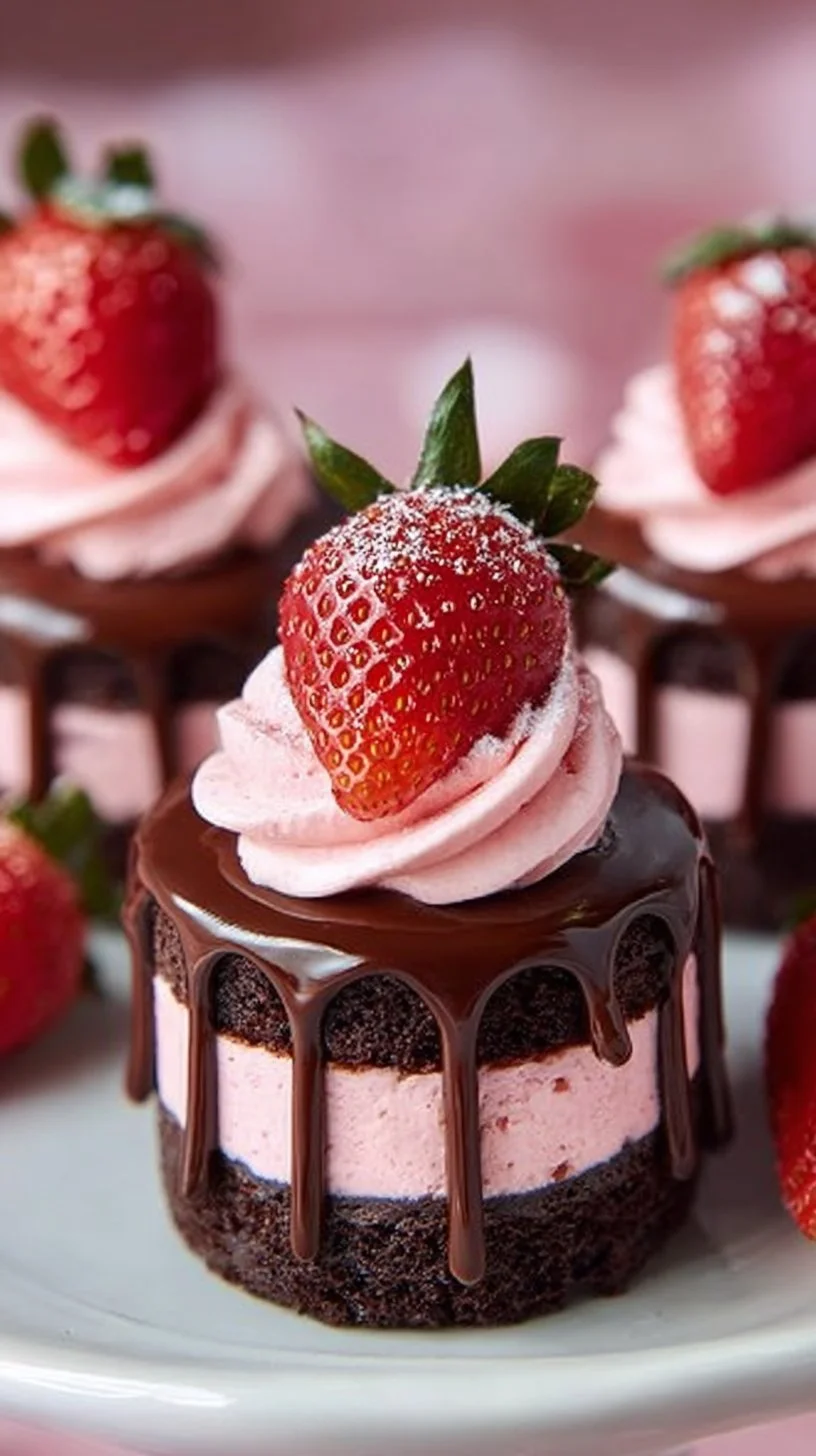
There is a particular magic in miniature desserts: the way a small cake can hold an entire story, a whole afternoon, and the concentrated pleasure of chocolate meeting fruit. Mini Strawberry & Chocolate Cakes are the sort of thing I have found myself chasing from market stalls in Barcelona to tearooms in Kyoto—each iteration a fold in a larger map of taste. These tiny layered confections carry a soft, nostalgic weight: a childhood birthday, a seaside picnic, a café at dusk. If you are drawn to compact, celebratory sweets, you might recognize a kinship with other bite-sized delights like mini Easter cheesecakes, where ritual and season breathe life into diminutive cakes. In this piece I travel with a recipe in hand, listening for the echoes of place and memory that live in every crumb.
The origin story & regional influence behind this dish
The union of strawberry and chocolate reads like a love story written across continents. Strawberries—once wild foragers’ finds—became symbols of spring and festival in Europe, their ruby flesh celebrated in royal gardens and rustic stalls alike. Chocolate, whose deep-chocolate notes trace back to Mesoamerican ceremonies and colonial trade routes, entered European kitchens like an exotic guest and never left. Together they became a small rite: a pairing that balances tartness and bittersweet richness.
Mini cakes, specifically, owe much to the European tradition of petits gâteaux—from French pâtisseries where delicate pastries are meant for sharing, to English tea culture where small cakes accompany conversation and steam. The practice of scaling down a cake is practical (portion control, portability) and ceremonial: small cakes are offered as tokens at holidays and intimate gatherings. That sensibility traveled and adapted: in the Americas, handheld layer cakes became party staples; in East Asia, petite, artful cakes evolved within the language of precision and presentation. For that reason, the Mini Strawberry & Chocolate Cakes feel both cosmopolitan and terraced in local histories—part festival, part everyday warmth.
How to make Mini Strawberry & Chocolate Cakes
Making these cakes is as much about assembly of feeling as it is of ingredients. Imagine the oven’s soft hum as a kind of hearth-song, the butter’s scent rising like a familiar greeting. The method is simple and inviting: a basic batter transforms into tender little cakes, which, once cooled, become canvases for bright chopped strawberries and glossy whipped cream or chocolate ganache. In many regions, such miniatures are layered not only with fruit and cream but with memory—jam from a grandmother’s jar, a spoon of liqueur saved for special company, a secret spice. The step-by-step routine in this recipe is straightforward and meant to preserve the honest pleasure of eating: bake, cool, fill, and crown.
Ingredients :
1 cup all-purpose flour, 1 cup granulated sugar, 1/2 cup unsweetened cocoa powder, 1 tsp baking powder, 1/2 tsp baking soda, 1/4 tsp salt, 1/2 cup unsalted butter, softened, 2 large eggs, 1/2 cup buttermilk, 1 tsp vanilla extract, 1 cup fresh strawberries, chopped, 1/2 cup heavy cream (for whipped cream or ganache), 2 oz dark chocolate (for ganache, optional)
Directions :
- Preheat the oven to 350°F (175°C) and grease a muffin tin., 2. In a bowl, mix flour, sugar, cocoa powder, baking powder, baking soda, and salt., 3. In another bowl, cream the butter and sugar, then add eggs, buttermilk, and vanilla., 4. Combine the wet and dry ingredients and mix until just combined., 5. Divide the batter into the muffin tin and bake for 18-20 minutes., 6. Cool the cakes completely before frosting., 7. Prepare whipped cream or ganache (heat cream and pour over chocolate to melt)., 8. Layer the cakes with strawberry filling and top with whipped cream or ganache., 9. Garnish with additional chopped strawberries and serve.
Ingredients through a cultural & historical lens
Each ingredient in these cakes carries a lineage. Flour, a humble grain, is the agricultural story of a region: wheat fields in temperate Europe, corn in parts of the Americas, rice flours in Asia—here, the all-purpose flour is a global neutral, a canvas for flavors. Sugar speaks to colonial networks, the refineries and plantations that made sweetness widely available; its presence in a recipe is a reminder of trade histories and changing economies. Cocoa powder is the most geopolitically charged: cacao’s path from Central American groves to European salons transformed it into a versatile partner for fruit. Butter, eggs, and buttermilk evoke pastoral life, dairy traditions that differ by climate: where buttermilk in Northern climes is common, other cultures might use fermented milk or yogurt in similar roles. Fresh strawberries have their own calendar, their rhythm tied to spring markets and local varieties—tiny alpine berries in Italy, larger, juicy cultivars in California, each lending subtle differences in perfume and sweetness.
In many towns, the strawberries you use tell a story: a vendor’s stall might carry the varietal names passed down through generations, and a baker will favor one for its acidity or fragrance. Even the choice between whipped cream and dark ganache is cultural: whipped cream suggests celebration and lightness; ganache hints at indulgence with a European sommelier’s sensibility. These are not merely ingredients—they are place-markers.
Cooking the dish: sensory notes & traditional techniques
Baking these mini cakes produces a multilayered sensory experience. As the batter rises in the oven, a chocolate scent fills the kitchen—earthy and warm with a hint of smoke from the cocoa. When you open the oven, a breath of hot, slightly sweet air releases; the tops reveal a matte, tender crust that gives way to a moist interior. The texture is essential: each cake should be fine-grained and delicate enough to slice without collapsing, yet substantial enough to cradle a spoonful of chopped strawberries and cream.
Traditional technique matters less in this recipe than the reverence with which one treats each component. In some households the butter is beaten until it sings with air, a quiet ritual that yields a lighter crumb; in others the eggs are room-temperature gifts, easing into the batter like late spring. The act of cooling the cakes completely is practiced like patience—rushing will turn the filling into a melted memory rather than a tidy layer. For the topping, whipped cream brings the sound of a bowl’s gentle whirl, an almost meditative shaking of silver, while ganache—warm cream poured over chocolate—has the theatrical moment when glossy silence becomes a ribbon of shine. Both traditions are affectionate, and the choice often depends on festival or mood.
How different regions prepare their version
Across regions, this small cake takes on local accents. In coastal Mediterranean towns, bakers might fold a touch of lemon zest into the batter or macerate the strawberries in a hint of vin santo or local liqueur, lending a sun-washed brightness. In the American South, you might find a version spiced subtly with a whisper of cinnamon or a smear of jam from a family-preserved jar. In Japan, the cakes are often lighter, almost marshmallow-like, with whipped cream used more sparingly and strawberries sliced with geometric precision—a reflection of local aesthetics where balance and minimalism are prized. In parts of Latin America, chocolate’s bitterness is sometimes emphasized against the vibrant tartness of fruit, nodding to cacao’s ancestral bitterness.
Texture choices diverge too: some bakers prefer a slightly denser crumb that can stand up to syrup or liqueur-soaked fruit, whereas European pâtissiers often aim for an ethereal, almost cloud-like base. I recall a seaside pâtisserie in Lisbon where the minis were brushed with a bit of citrus syrup and then layered with strawberries so sweet they tasted of sun and salt air—each bite was a memory of that particular morning light. For inspiration in pairing chocolate and strawberry textures, you might enjoy exploring how others have married these flavors in recipes like chocolate-covered strawberry brownies.
Traditional ways this dish is shared or served
These cakes are inherently communal. They appear at weddings as petite, elegant portions; at children’s parties as festive bites; at neighborhood gatherings as tokens of hospitality. In some cultures, they are presented on communal platters, passed around with the kind of intimacy that blurs host and guest. In others, each person receives their own little cake, a private indulgence wrapped in a public celebration.
Serving rituals vary. In some English-influenced tea traditions, the mini cakes are eaten with a small fork and conversation; in Mediterranean homes they may be served alongside espresso, the bitterness of coffee illuminating the strawberries’ sweetness. At holiday tables they mingle with other confections—imagine a spread including colorful confectioneries like chocolate confetti squares—each piece a different emotion, each bite an interlude.
Gifting these cakes is a quiet tradition in many places. I have watched a neighbor bring a tin of individually wrapped minis to welcome a newborn, the tin itself as meaningful as the contents. Elsewhere, bakers sell them in paper bags tied with string, the packaging a small ritual that respects the fragility within.
Storing the dish without losing its cultural essence
Storage is practical but also cultural: how we keep food says something about how we value it. Mini Strawberry & Chocolate Cakes are best enjoyed fresh, within a day or two, while the strawberries retain their bright snap and the cream its lift. Yet when preservation is needed—perhaps for a journey to visit relatives—folk methods prevail. In some places people layer the cakes with parchment and keep them cool in a clay jar; in city apartments the refrigerator is the chosen method, wrapped gently to avoid condensation that would soften the crumb.
If using ganache, the cakes have a slightly longer life because the chocolate shell can act as a modest seal; whipped cream is more ephemeral, calling for immediate enjoyment. For gifts, I have seen bakers tuck a sachet of desiccant or a sliver of lemon peel to moderate humidity and keep the strawberries from softening too quickly. The point is not merely to prolong shelf-life but to preserve the moment they were meant to evoke: a shared treat, unexpectedly generous, polished with care.
Cultural questions people often ask
People often ask: is this a cake for special occasions or everyday solace? The answer is both. Its size makes it suitable for either a celebratory cluster or an ordinary afternoon when you need a little brightness. Another common question: should one choose whipped cream or ganache? The choice reveals cultural leaning—cream suggests airy celebration, ganache suggests a refined, slightly more indulgent approach.
A recurring curiosity is about substitutions: can one use frozen strawberries? Yes, but tradition prefers fresh, seasonal fruit for its aroma and texture; frozen berries change the mouthfeel and the symbolic tie to a particular season. Folks also ask about making the cakes ahead: you can bake and freeze the unfilled cakes, then assemble on the day, which some families do to keep preparation light while honoring the ritual of shared serving. Those curious about complementary treats often discover that simple confections like chocolate-covered cherry magic bars or easy homemade chocolate fudge sit comfortably in the same holiday pantheon.
A closing note on food, memory & travel
At the heart of any small cake is an invitation—to slow down, to remember, to place a simple pleasure in the center of a room and see what stories come out. The Mini Strawberry & Chocolate Cakes are a passport to small, luminous moments: sunlight on a café table, a hand passing a tin across a kitchen counter, a child’s delighted gasp at the first bite. They are proof that travel isn’t only about changing latitude; it is also about recognizing how certain combinations—strawberries’ bright acidity and chocolate’s deep comfort—resonate in kitchens across the world. In making and sharing them we keep old rituals alive and invent new ones, one miniature at a time.
Conclusion
If you would like a plated example of how others marry strawberries and chocolate in their mini cakes, see SugarHero’s lovely take on Chocolate-Covered Strawberry Mini Cakes, which captures a homey, approachable style. For a slightly different perspective on layering and presentation, Bakerita offers a charming rendition titled Mini Chocolate Strawberry Layer Cake that highlights elegant assembly techniques.
Mini Strawberry & Chocolate Cakes
Ingredients
Method
- Preheat the oven to 350°F (175°C) and grease a muffin tin.
- In a bowl, mix flour, sugar, cocoa powder, baking powder, baking soda, and salt.
- In another bowl, cream the butter and sugar, then add eggs, buttermilk, and vanilla.
- Combine the wet and dry ingredients and mix until just combined.
- Divide the batter into the muffin tin and bake for 18-20 minutes.
- Cool the cakes completely before frosting.
- Prepare whipped cream or ganache by heating cream and pouring it over chocolate to melt.
- Layer the cakes with strawberry filling and top with whipped cream or ganache.
- Garnish with additional chopped strawberries and serve.