3-Ingredient Easy Sugar Cookies
Introduction
This three-ingredient sugar cookie is an exercise in reductionism: sugar, butter, flour. The economy of components requires deliberate technique to coax maximal flavor, structure, and texture from minimal inputs. The recipe’s simplicity is its strength, but also a constraint—there is no leeway for compensating ingredients. Precision in creaming, hydration, handling, and heat management becomes the primary means by which the cookie’s aroma, crumb, and surface finish are engineered. For comparative technique and textural context, examine how texture is prioritized in other compact cookie formulations such as the chewy maple cinnamon cookies, where minimal ingredient lists likewise demand refined thermochemical control.
The culinary logic behind this dish
With three ingredients, every action alters the final balance. Sugar functions both as sweetener and structure modifier: it tenderizes by disrupting gluten formation but also promotes spreading through melting and caramelization. Butter is the principal source of fat and flavor; its water content contributes steam leavening while its melting point determines spread and edge crisping. Flour supplies the dry matrix—gluten development must be limited to maintain a tender crumb, but sufficient to hold creamed air and melted fat. The baking step is the final chemical choreography: Maillard reactions at the edges, caramelization on the top, and vapor-driven expansion that sets the crumb. Understanding these roles allows purposeful manipulation of texture and appearance without changing the ingredient list.
How to make 3-Ingredient Easy Sugar Cookies
The directions provided are concise and effective. The sequence—cream, combine, portion, flatten, bake, cool—follows a logic of aeration, hydration, shaping, and thermal set. Creaming butter with sugar introduces fine air cells that, when surrounded by flour, create a tender lift. Gradual addition of flour integrates the dry matrix without overworking gluten. Portioning uniform tablespoon-sized dough pieces ensures consistent heat transfer during baking; flattening controls final thickness and surface area, which govern bake time and textural contrast between edge and center. Baking at 350°F (175°C) for 10–12 minutes targets a balance where edges achieve light caramelization while centers remain tender. For application of these principles to weeknight menus and fast preparations, consult complementary dishes in the collection of easy dinner recipes that share the same time-saving ethos.
Ingredients :
1 cup sugar, 1 cup butter, softened, 2 cups flour
Directions :
- Preheat your oven to 350°F (175°C)., 2. In a mixing bowl, cream together the sugar and butter until smooth., 3. Gradually add the flour and mix until fully combined., 4. Scoop tablespoon-sized portions of dough and place them on a baking sheet., 5. Flatten each cookie slightly with a fork or your hand., 6. Bake for 10-12 minutes or until the edges are lightly golden., 7. Allow to cool before serving.
Ingredient analysis through a chef’s lens
Sugar: Beyond sweetness, sucrose influences texture. During creaming, sugar crystals mechanically abrade butter, creating stable air pockets. In the oven, sucrose decomposes and participates in Maillard-type reactions (with free amino acids from flour proteins), and directly caramelizes at the surface, producing color and a subtle bitter-sweetness when browned. Managing sugar distribution and surface exposure is crucial to control color and crispness.
Butter: Opt for unsalted butter when possible to control seasoning; salted varieties vary by brand and can introduce inconsistent salt levels. Butter’s triglyceride composition and melting profile shape spread and mouthfeel. Cold butter slows early spread and encourages thicker crumbs; overly warm butter yields rapid spread and thin, flat disks. Slightly softened butter—pliable but still cool—gives predictable creaming performance and controlled spread.
Flour: All-purpose flour provides a middle ground between tenderness and structure. Protein content determines gluten potential; minimal mixing after flour addition preserves a delicate crumb. The flour’s hydration capacity affects dough stiffness; because there is no explicit liquid, butter’s water content and ambient humidity become part of the hydration equation.
Kitchen workflow & technique breakdown
Efficiency and control come from staging. Preheat the oven early so thermal conditions are stable; an oven that cycles while dough rests will yield variable spread. Use a medium bowl for creaming to allow vigorous beating without spillage. Creaming technique: start at low speed to combine sugar and butter, then increase to medium-high for 2–3 minutes until the mixture is paler and slightly aerated—visible as tiny bubbles and a softer texture. When adding flour, fold or beat at low speed in two additions to minimize gluten. Use a small cookie scoop for uniform tablespoon-sized portions; this eliminates guesswork and promotes consistent bake times.
Choose a single, sturdy baking sheet and line with parchment to control heat conduction and prevent localized browning. Space cookies at least 2 inches apart to allow for lateral spread. Flattening: press lightly to achieve about 1/4–1/3 inch thickness; this thickness correlates with the specified 10–12-minute bake time. Thinner disks bake faster and crisp; thicker ones retain a softer center.
Work in temperature-controlled batches. If the butter begins to soften excessively between batches, refrigerate the dough briefly—15 to 30 minutes—so the butter firms and the spread is restrained. Conversely, if dough is too firm, allow it to temper at room temperature for a few minutes before scooping.
For further approaches to fast, repeatable preparations, refer to techniques gathered under quick easy recipes, which emphasize consistency and time management.
Texture control, heat management & timing
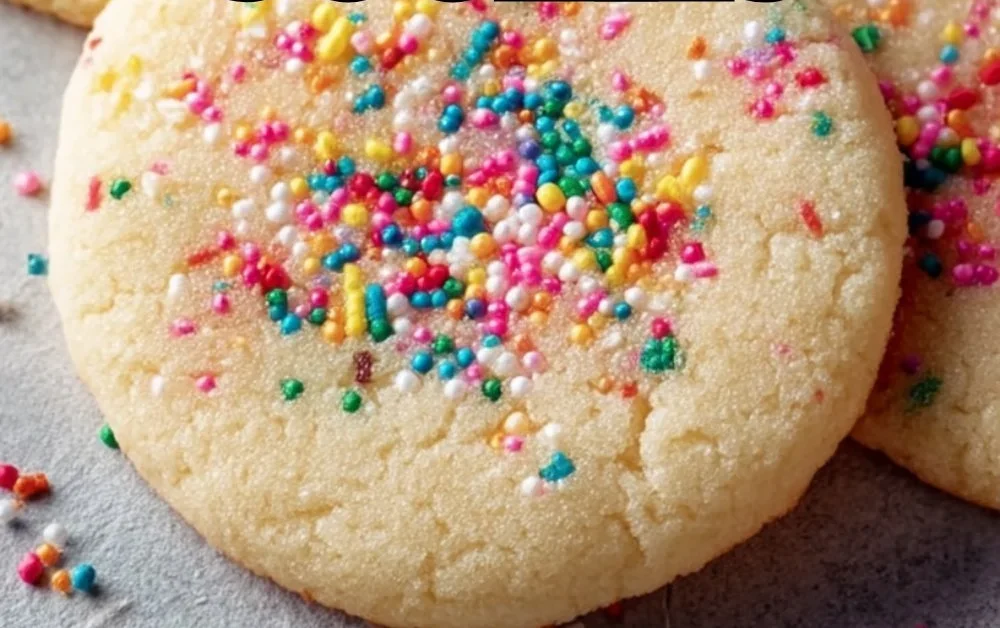
Texture is the product of ingredient state and thermal profile. The oven temperature of 350°F (175°C) balances internal setting and external browning. At that temperature, butter melts sufficiently to promote spread while the flour protein and starch begin to coagulate and gelatinize, respectively. The 10–12 minute window allows for edge caramelization while center proteins set but do not over-dry. Track color as the most reliable indicator: remove when edges are lightly golden and centers still pale — carryover heat will finish the set as the cookies rest.
Heat distribution within the oven matters: use the middle rack for the most even result. If you observe excessive browning on the bottoms, reduce oven rack height or use an insulated baking sheet to diminish direct conduction. In commercial ovens, hot spots can be mitigated by rotating pans midway through the bake. For a crisp edge with a tender center, aim for the lower end of the time window; for uniformly crisp cookies, extend toward the upper limit, watching closely to prevent over-browning.
Humidity and room temperature influence both creaming and baking. On humid days, flour will absorb more moisture and dough will be softer—reduce resting time between scooping and baking. In dry conditions, ensure butter is not over-chilled before creaming.
Professional variations
Without altering ingredients, technique variations will yield distinguishable profiles:
- Knife-shaved surface: after flattening, lightly score the top with a sharp edge to create a controlled fracture line; this intensifies perceived crispness.
- Double-bake strategy: bake for 8 minutes, cool briefly, then bake for an additional 2–3 minutes to dry the surface selectively and increase snap.
- Browned-butter approach (procedural, not ingredient change): Clarify butter by gently heating and immediately cooling; incorporate once it has lost heat but remains liquid—note this subtly modifies the fat’s state but does not add ingredients.
- Temperature modulation: chill scooped dough for 10 minutes to reduce spread and achieve a thicker, chewier interior while maintaining a caramelized edge.
All variations manipulate the same three components through changes in temperature, timing, and handling rather than formula adjustments.
Finishing touches & plating philosophy
Finishing should be understated and precise. A light dusting of fine sugar while warm will create a subtle glint and textural contrast; however, avoid heavy toppings that overwhelm the cookie’s simple profile. Plate on neutral-colored ceramics to let the cookie’s golden edges and pale centers contrast; stack no more than three per plate to preserve crispness. For service in a bakery context, arrange in single layers on sheets of parchment with minimal handling to protect the fragile edges. If presenting on a shared platter, provide tongs to minimize contact, which can transfer body heat and soften the cookies prematurely.
Maintaining quality after cooking
Storage determines how the crisp-tender balance persists. For maximum snap, cool completely on a wire rack, then store in an airtight container with a desiccant packet or a folded paper towel to absorb residual moisture. To retain tenderness, place a small slice of bread in the container; it will donate moisture and maintain a softer center. Avoid refrigeration as it accelerates staling through starch retrogradation. To refresh slightly stale cookies, warm them at 300°F (150°C) for 3–4 minutes—this temporarily reverses some staling by driving off absorbed moisture and restoring surface crispness.
Questions from home cooks (chef answers)
Q: My cookies spread too much and became flat. What changed?
A: Excessive spread usually stems from overly warm butter, insufficient flour incorporation, or high oven temperature differential. Ensure butter is softened but not greasy; cream until aerated but not melted. Add flour gradually and stop when just combined. Verify oven temperature with a reliable probe thermometer; an oven running hot can cause rapid butter melt and exaggerated spread.
Q: The centers remain raw while edges brown. How to fix this?
A: This indicates uneven heat or dough thickness. Flatten uniformly to the recommended thickness to equalize bake. Use the middle rack and ensure pans are not over-crowded. If edges brown too quickly, reduce the oven temperature by 10–15°F and extend the bake to allow internal set without over-browning.
Q: How can I make them chewier without altering ingredients?
A: Increase perceived chew by slightly underbaking—remove when centers are set but still soft. Alternatively, shorten creaming time marginally to reduce incorporated air; less aeration leads to a denser, chewier crumb.
Q: Can I scale the recipe?
A: Yes. Maintain ratios exactly and scale linearly. When scaling up, mixing times and equipment scale non-linearly—use larger bowls and consider mixing in stages to maintain control over aeration and gluten development.
Final chef notes
This three-ingredient sugar cookie exemplifies how technical mastery can elevate minimal recipes. Each step—creaming, folding, portioning, and baking—must be executed with intent. The paucity of ingredients amplifies the significance of temperature, timing, and mechanical action. Treat this formula as a platform for technique study: refine creaming rhythm, learn to read oven coloration, and condition dough to control spread. The result is a cookie that demonstrates how restraint, when guided by precise technique, produces a nuanced balance of aroma, texture, and color.
Conclusion
For additional reference on similar minimal-ingredient approaches and recipe testing methodologies, see the practical three-ingredient sugar cookie write-up at Easy Sugar Cookie Recipe (only 3 ingredients!) | Belly Full and a comparative preparation guide at 3 Ingredient Sugar Cookies – The Modern Nonna.
3-Ingredient Easy Sugar Cookies
Ingredients
Method
- Preheat your oven to 350°F (175°C).
- In a mixing bowl, cream together the sugar and butter until smooth.
- Gradually add the flour and mix until fully combined.
- Scoop tablespoon-sized portions of dough and place them on a baking sheet.
- Flatten each cookie slightly with a fork or your hand.
- Bake for 10-12 minutes or until the edges are lightly golden.
- Allow to cool before serving.