Indulge in Loaded Brownie Cheesecake Cups for a Sweet Escape
There are flavors that arrive like postcards from a summer kitchen—smells that travel ahead of you, carrying wet chocolate, warm sugar, and the soft tang of cream cheese—and there are desserts that arrive like a small, intimate conversation. Loaded Brownie Cheesecake Cups belong to the latter: little vessels of indulgence that cradle memory as much as they carry sugar. Imagine walking through a city at dusk, past a window where someone is folding cream into clouds, the air heavy with cocoa and the low hum of conversation. That atmosphere is what these cups capture. For those who have loved miniature desserts before, this recipe lives in the same family as other bite-sized indulgences; you might find it comforting in the company of a layered, chilled treat similar to the one I once wrote about, which you can explore through this short piece on elegant mini desserts: a note on miniature Black Forest cups.
As a traveler who measures places by their food, I have found that recipes like Loaded Brownie Cheesecake Cups do something generous: they compress big, complicated feelings—home, celebration, consolation—into a single spoonful. The recipe’s architecture is humble: a fudgy base, a cloud of cheese, a satin drizzle. Yet its appeal is global. Whether in a cramped apartment in Brooklyn, a sunlit café in Lisbon, or a tiny festival stall in Manila, the same private joy can be found in that moment when fork meets cream, when texture and temperature reconcile. This piece will trace those flavors and the human stories tied to them, and will gently guide you through how to make these cups in a way that honors both craft and memory.
The origin story & regional influence behind this dish
The Loaded Brownie Cheesecake Cups are a modern confection, but their lineage is genuinely multinational. Brownies, a proud product of American kitchens since the late 19th century, were born out of the marriage between chocolate’s increasing availability and a cultural appetite for portable sweets. Cheesecake, by contrast, has older roots—ancient Greeks served simple cheese-and-wheat tarts at athletic festivals—and in more recent centuries it took on distinctive personalities in places like New York, where cream cheese lent density and tang, and in Central and Eastern Europe, where quark and farmer’s cheese offered lighter textures. When the brownie met the cheesecake, the result was a marriage of decadence and restraint: the dense, bitter-sweet base anchoring the bright, milky topping.
This hybrid dessert is very much a product of late-20th-century food culture, where cross-pollination of regional specialties became a virtue. The cup form speaks of convenience and conviviality: small, shareable, easy to pass around at parties. In American bakeries, the loaded cup—adorned with ganache, caramel, and crumbs—responds to a cultural impulse toward abundance. Elsewhere, such as Latin America or parts of Europe, there are echoes of layered sweets like alfajores or mille-feuille, where texture and contrast govern the pleasure. Every region that embraces the Loaded Brownie Cheesecake Cup remixes it slightly, imparting local syrups, spices, or ceremonial uses. That local stamp is where the dish transforms from a recipe to a story.
How to make Loaded Brownie Cheesecake Cups
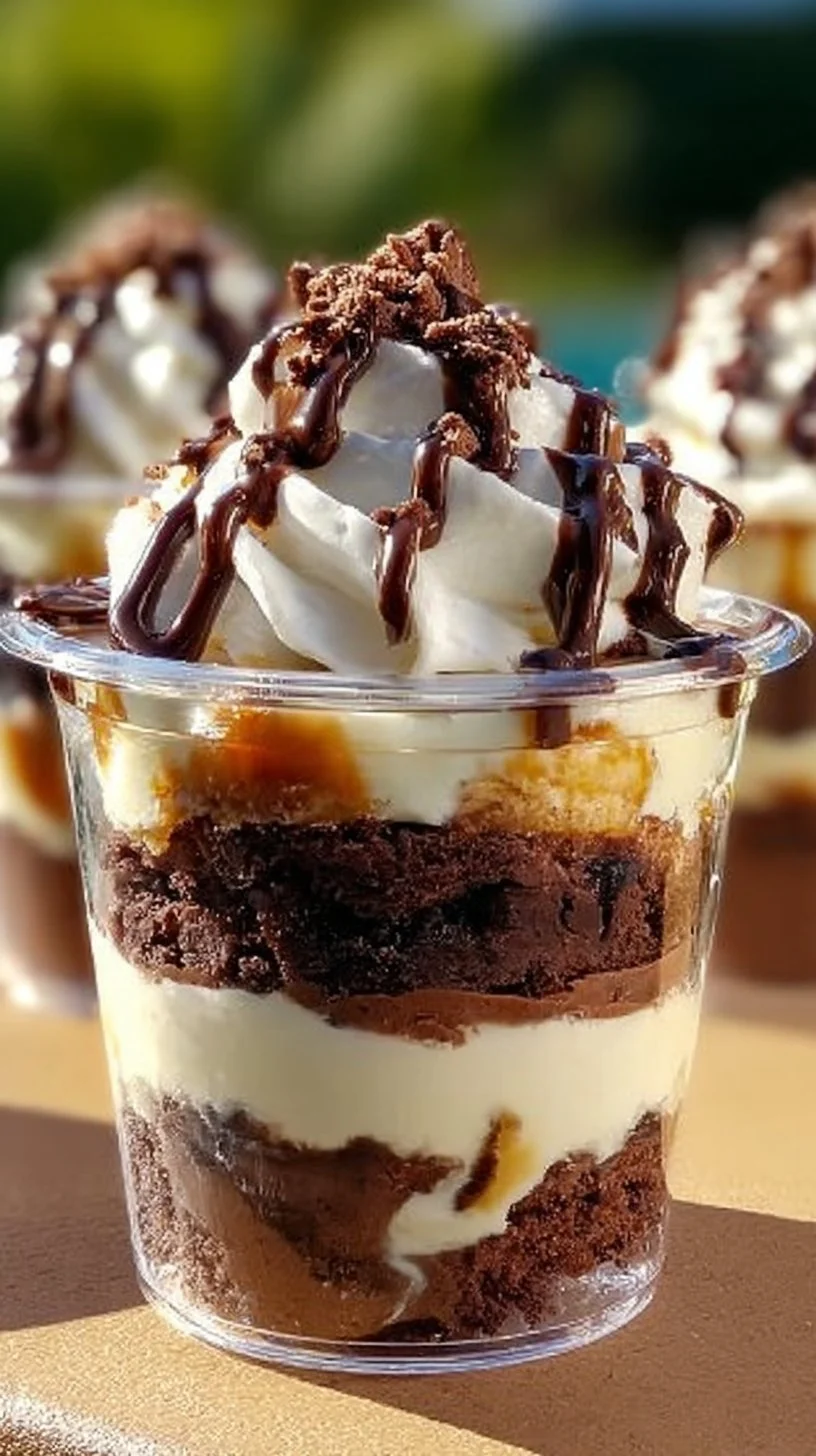
Describing how to make this dessert without turning it into a kitchen manual is an exercise in honoring ritual over instruction. Think of the process as assembling a small monument to sweetness: begin with a base that remembers the oven’s breath—crumbled fudgy brownie meant to anchor the assembly. The cheesecake element is not a heavy slab but a softened, gentle counterpoint that sings of dairies and market mornings. Finally, adornment—chocolate ganache poured like a dark ribbon and amber caramel swirling like a river at sunset—becomes the dessert’s signature flourish.
To the maker, this is less about rigid technique and more about temperament. Use full-fat cream cheese for roundness and depth. Whip the cream until it holds its dignity, like peaks of mountain fog. When you drizzle ganache, let it gloss rather than drown. And if you must reach for convenience—store-bought brownies or sauces—do so with the understanding that food’s meaning often comes from the hands that present it, not only the measures that produce it.
Ingredients :
2 cups Fudgy Brownies (crumbled; feel free to use store-bought for convenience!), 1.5 cups Cream Cheese (softened; use full-fat for the best flavor.), 0.5 cups Powdered Sugar (adjust to taste if you prefer a less sweet dessert.), 1 teaspoon Vanilla Extract (enhances the overall flavor.), 1 cup Heavy Whipping Cream (whipped to stiff peaks; use very cold for the best results!), Chocolate Ganache ((melted chocolate + heavy cream); drizzle for richness.), Caramel Sauce ((store-bought or homemade); adds sweet, rich flavor.), Extra Brownie Crumbs (for topping; adds texture and a delightful finish.)
Directions :
Preparation
Preparation, in the world’s kitchens, is always a choreography of senses. For these cups, the act of breaking brownies into crumbs is tactile: fingers press, release, and collect. There is a smell at this stage—the concentrated, soulful cocoa of a good brownie—and it acts as an initial promise. Softening cream cheese is a small gesture of patience; it should yield easily to a spoon, like conversation between old friends. Whipping cream is almost musical: the soft swell of air building up into satin. Arranging the cups—layer by layer—becomes a quiet ritual, an assembling of contrasts.
Ingredients through a cultural & historical lens
Each ingredient carries its own cultural baggage. The humble brownie, originally an American novelty, echoes the industrial age’s quick-bake culture and the rise of chocolate as everyday companionship. Cream cheese, associated with New York’s Jewish bakeries and Sunday morning bagel shops, brings a story of migration and adaptation; immigrants adjusted recipes to new ingredients, producing a distinctly urban American flavor. Powdered sugar, vanilla, and cream are cosmopolitan; their origins trace trade routes and colonial histories—the vanilla bean’s passage from Mesoamerica to Madagascar and Bourbon plantations, sugar’s painful entwinement with global trade. To put these elements together is to recognize that the sweetest dishes often have complex pasts, stitched with labor, movement, and longing.
Cooking the dish: sensory notes & traditional techniques
There is a poetic sensibility to preparing the Loaded Brownie Cheesecake Cup that privileges sensation over precision. Textural contrast is paramount: the brownie crumbs offer a grittiness that heightens the rich silk of the cream cheese. The whipped cream introduces cold air and lightness, a respite after dense cocoa. Ganache, when warmed and poured, gives a mirror-like surface that refracts light and draws the eye; caramel, with its amber sheen, suggests hearth and sugar-sweet memories. Traditional techniques—like folding whipped cream gently into cheese to preserve air, or tempering melted chocolate so it shines—are less about rigid rules and more about respect for ingredient behavior. In many cultures, such techniques are taught by watching: a grandmother’s wrist, a mother’s whisper, a baker’s patient tilt.
How different regions prepare their version
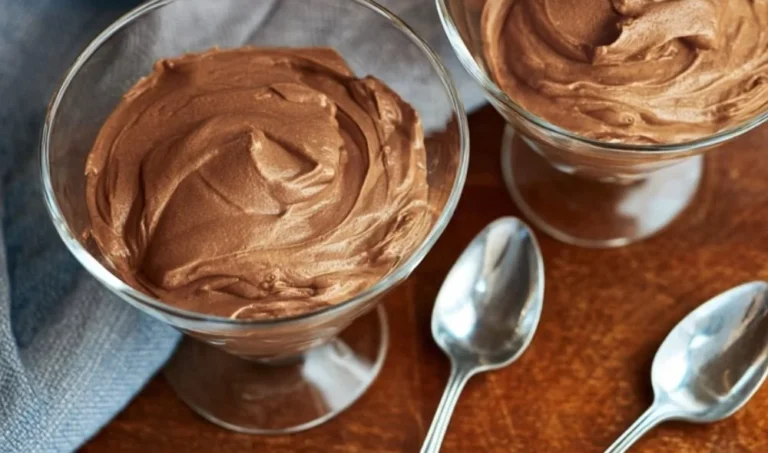
Across regions, the Loaded Brownie Cheesecake Cup adapts with charming fluidity. In parts of the Mediterranean, one might find ricotta or labneh swapped in for cream cheese, yielding a tang that pairs gorgeously with a drizzle of local honey. In Latin America, dulce de leche may supersede caramel, offering a denser, milk-caramel note that evokes family gatherings and late-night conversations. In the United States, topping bars at bakeries allow patrons to choose ganache, salted caramel, or nuts, turning the dessert into a communal ritual. These variations remind us that recipes are less fixed laws than invitations to localize. If you enjoy comparisons among intimate chocolatey cups, there’s a light mousse counterpart that often shares the same dessert table ambience, further detailed here: a meditation on mini chocolate mousse delights.
Traditional ways this dish is shared or served
The cup format lends itself to celebration. Think of birthday parties where children line up like small planets waiting for a scoop, or weddings where tiny desserts pass between guests like whispered well-wishes. In some households, these cups are the dessert of choice after a long, chilly evening—offered with strong coffee and the kind of silence that is comfortable. In other traditions, they are handed out at festivals as tokens of hospitality. The Loaded Brownie Cheesecake Cup functions as both a private solace and a public gift. When you place a cup in someone’s hands, you are offering more than sugar; you are offering reassurance. For occasions where a delicate romantic gesture is desired, these cups can be paired with simple, handwritten notes—a practice celebrated in stories of intimate gatherings that you can read about here: a short reflection on sharing sweets with those we love.
Storing the dish without losing its cultural essence
Storing is an act of preservation and patience. These cups keep best chilled, in a container that preserves their layered contours. But beyond temperature, storage is about memory: a grandmother folding leftovers into a container and lining them with wax paper, a baker arranging them in a display case beneath soft lighting. If you plan to prepare them ahead, think not only of freshness but of context—when will they be eaten, and with whom? A dessert kept for days carries the mark of anticipation; a cup brought from a distant kitchen to a gathering conveys intentionality. Labeling, wrapping, and the small note that sometimes accompanies cooled sweets all reinforce the connection between food and ritual.
Cultural questions people often ask
People often ask whether such a dessert is “authentic.” Authenticity, in culinary life, is elastic. Loaded Brownie Cheesecake Cups are not a relic of a single place; they are a modern, hybrid expression, and their authenticity lies in use and meaning. Another frequent question concerns substitution—can one use different cheeses, or honey instead of caramel? The answer reflects both flavor and story. Swapping ingredients is less about convenience and more about the narratives you wish to tell: a cup made with local cream and a fruit syrup tells the story of place, of season, of markets and neighbors. There are also inquiries about form—why make cups instead of one large cake? The answer is social: cups are portable, shareable, and intimate. They honor the human impulse to parcel joy into neat, generous gifts.
A closing note on food, memory & travel
Travel teaches one truth about desserts like this: they are passports to intimacy. As you fold cream into cheese, as you press crumbs into the curved walls of a cup, you are doing much more than making a treat—you are creating a small, edible invitation. Each bite is an intersection of histories: the chocolate that once crossed oceans, the cheese culture that migrated with families, the caramel that echoes both hearth and industry. In cities I have loved, from seaside towns where fishermen barter the morning’s catch to capital squares where office workers gather in the lull of noon, I have seen similar cups offered as greetings, consolations, and celebrations. The Loaded Brownie Cheesecake Cup carries that universality.
Conclusion
If you are inspired to explore other indulgent sweets and perhaps expand your repertoire beyond these cups, consider ordering limited edition flavors from specialty bakers like Crave Cookies’ seasonal offerings which often echo the playful layering found in miniature desserts. For those seeking handcrafted confections available to ship or pick up, small patisseries such as CC’s Sweets’ online menu showcase how regional bakers reinterpret classic textures and toppings. And if your travels or cravings lead you to waffles and plated desserts that pair beautifully with creamy, caramel accents, take a look at Indulge Waffles and Desserts for inspiration on presentation and serving that honors both flavor and story.
Loaded Brownie Cheesecake Cups
Ingredients
Method
- Start by crumbling the fudgy brownies into small pieces and set aside.
- Soften the cream cheese until it’s easy to mix. This allows for a smoother cheesecake filling.
- Whip the heavy cream until stiff peaks form, ensuring it maintains its volume.
- In a mixing bowl, combine the softened cream cheese, powdered sugar, and vanilla extract. Mix until well blended.
- Gently fold the whipped cream into the cream cheese mixture until fully incorporated.
- Begin assembling the cups by layering the crumbled brownies at the bottom.
- Next, layer the cheesecake filling over the brownie base, smoothing it out for an even finish.
- Drizzle chocolate ganache and caramel sauce over the cheesecake layer.
- Finish with a sprinkle of extra brownie crumbs on top for texture.