Dreamy Garlic Butter Chicken and Bowtie Pasta
Introduction
This rendition of Dreamy Garlic Butter Chicken and Bowtie Pasta is presented with clarity of technique and an emphasis on reproducible outcomes. The composition is deliberately restrained: a clarified garlic-butter base, diced chicken for even cooking, a reduced cream-Parmesan emulsion, and bowtie pasta chosen for its pinched centers and broad surfaces that catch sauce. Each component has a specific function in mouthfeel, flavor balance, and thermal behavior. For reference on building emulsified cream sauces with protein, consider the method used in my treatment of a garlic-butter steak with Parmesan cream sauce, where reduction, fat integration, and timing govern final texture.
The culinary logic behind this dish
At its core this dish is an exercise in controlled emulsification and starch-protein-sauce interaction. The butter and garlic create a fragrant fat phase that extracts and carries volatile aromatics; the diced chicken supplies a lean protein that benefits from quick searing to develop Maillard flavor without overcooking. Heavy cream and Parmesan form the basis of a cohesive sauce: cream supplies emulsion stability and silkiness, while finely grated Parmesan contributes both savory glutamates and structural viscosity as its proteins and emulsifiers incorporate into the cream. Bowtie pasta, because of its shape, offers both surface area and a small pocket for sauce adhesion; this is important when the sauce is light rather than clinging like a béchamel-based sauce.
Salt management and temperature control are critical. Salt added too early to the chicken draws moisture that can inhibit browning; salt applied judiciously at the end of searing and adjusted after sauce reduction ensures both seasoning and the retention of desirable textures. The sequence—cook the pasta, brown aromatics in butter, cook the chicken, then lower heat to finish the sauce—follows the logic of least thermal stress on delicate molecules while maximizing flavor development.
How to make Dreamy Garlic Butter Chicken and Bowtie Pasta
This sequence respects ingredient order and thermal requirements. The technique favors moderate heat for butter aromaticization, higher heat for protein browning, then reduced heat for gentle emulsion formation. Follow the recipe steps exactly for predictable results, adjusting only small timing elements to local equipment and protein piece size.
A practical note on pasta timing: cook the bowties to the package’s al dente mark, then hold them in a colander for a minimal period. Do not let them cool fully or they will seize and become harder to recoat. When you combine cooked pasta with sauce, work quickly while the sauce is warm and fluid to ensure uniform coating.
Ingredients :
8 oz bowtie pasta, 2 tbsp butter, 4 garlic cloves, minced, 1 lb chicken breast, diced, 1 cup heavy cream, 1/2 cup grated Parmesan cheese, Salt and pepper to taste, Fresh parsley for garnish
Directions :
- Cook the bowtie pasta according to package instructions. Drain and set aside.
- In a large skillet, melt the butter over medium heat. Add the minced garlic and sauté until fragrant.
- Add the diced chicken, season with salt and pepper, and cook until the chicken is cooked through.
- Reduce the heat, pour in the heavy cream and stir, then add the Parmesan cheese and stir until melted and smooth.
- Toss in the cooked pasta until well coated with the sauce.
- Garnish with fresh parsley before serving.
Ingredient analysis through a chef’s lens
- Bowtie pasta (8 oz): The bowtie’s geometry provides a combination of flat surface and pinch points; it is ideal for light, clingy emulsions because sauce collects in the creased center. The protein-to-pasta ratio here favors a creamy coating without overwhelming the mouth with starch.
- Butter (2 tbsp): Butter serves as the primary heat-transfer medium and flavor carrier. Its milk solids brown at moderate temperatures, contributing a subtle nuttiness to the overall profile. Two tablespoons create a thin film sufficient for garlic aromaticization and initial contact with protein.
- Garlic (4 cloves, minced): Mincing increases surface area, accelerating the release of sulfurous aroma compounds. Garlic becomes bitter if scorchingly hot; therefore, monitoring heat and allowing gentle perspiration rather than aggressive frying protects its sweetness.
- Chicken breast (1 lb, diced): Dicing to uniform size shortens cook time and secures even doneness. Small pieces permit a fast sear and maintain tender interiors when exposed to high initial heat.
- Heavy cream (1 cup) and Parmesan (1/2 cup): Heavy cream provides body and an emulsifying matrix; Parmesan, when finely grated, melts into the cream forming a cohesive, slightly thickened sauce because of its proteins and emulsifiers. The relative proportions yield a sauce that coats rather than puddles.
- Salt and pepper: Seasoning stages matter. Light salting before searing can be used, but final adjustment after sauce formation ensures seasoning accounts for cheese salt content and any reduction.
- Fresh parsley: A large-leaf herb like parsley brightens and adds a textural herbaceous contrast; it should be used sparingly to preserve the sauce’s silky structure.
In a comparative context, this formula closely resembles other Parmesan-centric preparations where controlled reduction and cheese incorporation determine final viscosity, similar in concept to the sauce approach used for Parmesan-crusted chicken with creamy garlic sauce.
Kitchen workflow & technique breakdown
Sequence and mise en place are essential. Start by bringing water to a vigorous boil for the bowties; salt the water assertively—pasta water should taste slightly seawater-like—to impart seasoning directly to the starch. While the pasta cooks, prepare the chicken: dice into consistent pieces, blot dry with paper towels to promote browning, and keep the garlic minced and ready.
Use one large skillet with a wide surface area to maintain even heat and prevent crowding the chicken. Crowd the pan and you’ll induce steaming rather than browning. Melt butter over medium heat, then reduce slightly when adding garlic—this avoids burning and gives you a gently aromatic base. After garlic has softened and become fragrant, increase heat marginally and add the chicken in a single layer. Let the exterior develop color without moving pieces too often; for diced chicken a minute or two per side should suffice depending on pan temperature.
Once chicken is cooked through, lower the heat for sauce building. If your pan has fond (browned bits), deglaze subtly with a tablespoon or two of pasta water or warm cream to incorporate those flavor compounds. Then add heavy cream, stirring to bring temperature up evenly before adding grated Parmesan. Maintain gentle heat—too high will cause the dairy proteins to separate.
Finally, toss the drained pasta into the skillet while the sauce is still warm and fluid. The last-minute toss enables the pasta to pick up residual starch from the sauce and combine—this is when texture integration occurs.
Texture control, heat management & timing
Texture in this dish depends on three controlled elements: pasta doneness, chicken moisture, and sauce emulsion stability.
- Pasta doneness: Aim for al dente—firm to the bite but cooked through. Overcooked pasta rapidly absorbs sauce and turns limp; undercooked pasta resists sauce adhesion.
- Chicken moisture: Diced chicken cooks quickly and can become dry if overexposed to heat. Use high heat only for short periods to develop exterior Maillard color, then finish on medium to ensure the interior reaches 165°F without over-drying. Rest briefly in the pan off heat as you build the sauce so juices redistribute.
- Sauce emulsion: Heavy cream tolerates moderate heat, but aggressive boiling can cause fat separation and a grainy texture. Keep the pan at a low simmer when adding Parmesan and stir consistently. Grated Parmesan should be fine-textured so it melts quickly; large shards take longer and can clump. If the sauce appears too thin, a short reduction over medium-low heat will concentrate flavor and improve cling; if it separates, remove from heat, whisk, and add a small splash of reserved pasta water to re-emulsify.
Timing notes: Pasta and chicken should reach completion within a narrow window. Ideally, begin finishing the sauce as the pasta nears its al dente moment so the final toss is immediate and the components are at compatible temperatures.
Professional variations
Respecting the original ingredient list, variation in technique can yield distinct profiles without adding new ingredients.
- Browning intensity: A slightly higher initial sear on the chicken will increase Maillard-derived complexity—do this only with careful moisture control to prevent dryness.
- Fond utilization: After searing chicken, deglaze the pan with a small amount of hot pasta water before adding cream. This captures concentrated flavor and helps with sauce adhesion.
- Emulsion refinement: For a silkier finish, temper a small ladle of warm cream into grated Parmesan off heat before combining with the remaining cream in the skillet; this reduces the risk of cheese clumping.
- Cut size modulation: Slightly larger chicken pieces provide a more meaty presence and contrast against the pasta folds; smaller dice integrates more uniformly for a balanced mouthful.
For cross-application technique references, consult treatments that focus on one-pot cohesion or textural contrasts such as the structural integration seen in a mac and cheese meatloaf casserole where sauce-to-starch ratios are critical.
Finishing touches & plating philosophy
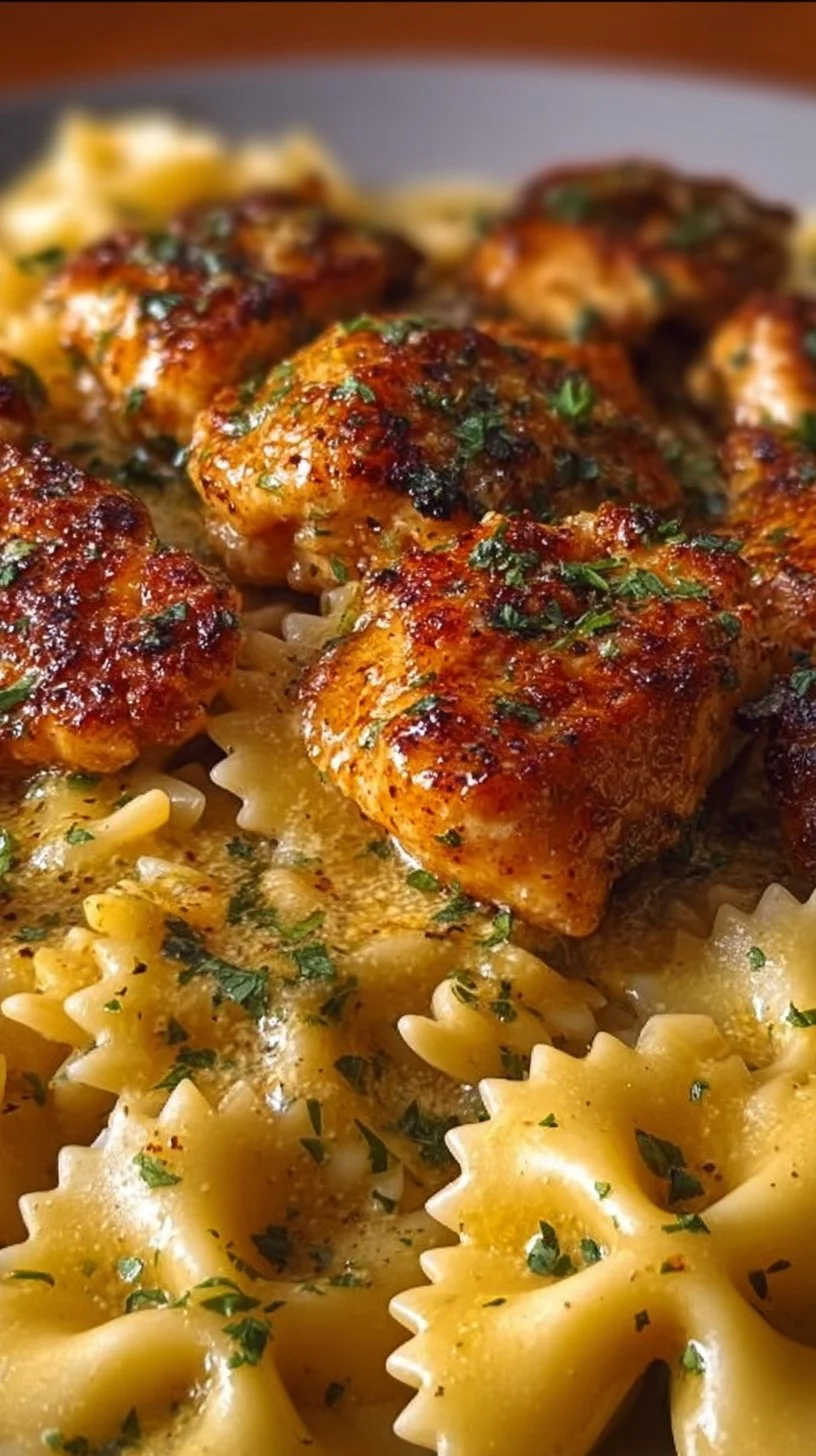
Finish with restrained garnish: a light scattering of finely chopped parsley introduces a fresh, green note and a subtle textural lift against the sauce’s silk. Plate slightly heaped to showcase sauce cling; ensure no excess pooled cream at the plate’s base, which signals over-thin sauce or over-dressed pasta. A small grind of cracked black pepper on top will offer a contrasting aromatic bite.
Serve on warm plates to preserve temperature and mouthfeel. Use a fork and spoon to create a neat nest, twisting the pasta into a composed portion so each bite contains pasta, chicken, and sauce in balance.
Maintaining quality after cooking
If you must hold the dish briefly, keep it off direct heat with the lid ajar; ambient heat will preserve emulsion stability. For longer holds, cool slightly and rewarm gently over very low heat with a splash of reserved pasta water or cream to reconstitute the sauce—avoid high heat which accelerates separation. Reheating in a covered skillet while stirring maintains cohesion better than a microwave, which can unevenly raise temperatures and break emulsions.
Leftovers will thicken as the starches absorb liquid; when reheating, add measured liquid (cream or pasta water) incrementally to regain the intended saucy consistency and bring back a fresh texture.
Questions from home cooks (chef answers)
Q: How do I prevent the garlic from burning?
A: Control the pan temperature. Sweat the minced garlic over medium or medium-low heat in butter until it releases aroma and becomes translucent; avoid any rapid browning. Add the chicken after the garlic has softened to reduce exposure time to heat.
Q: My sauce became grainy—why, and how to fix it?
A: Graininess arises when cheese overheats and separates or when cream curdles from excessive heat. Remove the pan from heat, whisk vigorously, and add a splash of warm pasta water to re-emulsify. If separation persists, strain and start a small fresh cream base, then slowly whisk the separated sauce into it off heat.
Q: Can I use pre-grated Parmesan?
A: Pre-grated cheeses often contain anti-caking agents that impede smooth melting. For optimum silk and melt, use finely grated, fresh Parmesan.
Q: How to adjust for more sauce?
A: Increase heavy cream in small increments (1–2 tablespoons at a time) and adjust Parmesan accordingly, being mindful of salt.
Final chef notes
This preparation is intentionally direct: it relies on precise thermal control and measured timing rather than complex ingredient lists. The dish rewards attention to doneness, the quality and fineness of the grated cheese, and the proper handling of dairy during sauce formation. The result should be a cohesive plate where the garlic-butter aroma, savory Parmesan depth, and tender diced chicken coexist in balanced proportion, with bowtie pasta functioning as an effective carrier of the sauce.
Conclusion
For additional inspiration on Parmesan-forward chicken-pasta techniques, consult the Copy Cat Spicy Chicken Romano adaptation which explores complementary seasoning approaches. If you are interested in close variations on garlic-Parmesan pasta with chicken, the recipe for Garlic Parmesan Pasta with Chicken demonstrates alternate emulsification and ingredient proportion choices. For one-pot methodology that emphasizes vegetable incorporation and simplified workflow, review the One Pot Creamy Garlic Chicken and Veggie Pasta.
Dreamy Garlic Butter Chicken and Bowtie Pasta
Ingredients
Method
- Cook the bowtie pasta according to package instructions. Drain and set aside.
- In a large skillet, melt the butter over medium heat. Add the minced garlic and sauté until fragrant.
- Add the diced chicken, season with salt and pepper, and cook until the chicken is cooked through.
- Reduce the heat, pour in the heavy cream and stir, then add the Parmesan cheese and stir until melted and smooth.
- Toss in the cooked pasta until well coated with the sauce.
- Garnish with fresh parsley before serving.