Honey Sriracha Salmon Bowls: A Sweet and Spicy Delight
Introduction
The Honey Sriracha Salmon Bowls represent a harmonious blend of contrasting flavors—sweet, spicy, and umami—while offering a nutritious and visually appealing culinary experience. At the heart of this dish is the salmon, expertly marinated to enhance its natural flavors, combined with fresh vegetables and a creamy sauce that elevates the overall profile. This recipe not only satisfies the palate but also emphasizes the importance of technique in achieving texture and balance. Through a careful exploration of each element, one can truly appreciate the artistry of this dish.
The culinary logic behind this dish
The orchestration of flavors in Honey Sriracha Salmon Bowls is rooted in the principles of balance and harmony. The sweet notes of honey juxtapose the fiery heat of sriracha, creating a multi-dimensional taste experience that invites further exploration. Incorporating ingredients like soy sauce brings depth through umami, while the fresh avocado, cucumber, and edamame contribute texture and hydration to the bowl.
Marinating the salmon is a fundamental step that allows the fish to absorb the marinade’s flavors, enhancing every bite. The viscosity of honey helps create a glaze that coats the salmon, while sriracha adds a pungent kick. The choice of low-sodium soy sauce or tamari ensures that the overall saltiness is controlled, allowing the natural flavors of the salmon to shine through.
The texture contrasts play an integral role in this dish. The tender, flaky salmon, once beautifully seared, meets the creamy avocado, crunchy cucumber, and soft edamame, culminating in a symphony of usability that is as delightful to the palate as to the eye. Each ingredient is chosen not only for its flavor but also for its ability to contribute to the overall mouthfeel of the dish.
How to make Honey Sriracha Salmon Bowls
To embark on crafting the Honey Sriracha Salmon Bowls, it is essential to prepare the ingredients meticulously and follow the steps methodically to ensure a harmonious outcome.
Ingredients:
- 4 (4-6 ounce) salmon fillets: Choose fresh, high-quality salmon, which is essential for flavor and texture.
- 3 tablespoons low-sodium soy sauce or tamari: This ingredient provides the salty backbone without overpowering the dish.
- 2 tablespoons honey: A natural sweetener that enhances the salmon’s rich flavor and helps create a caramelized glaze.
- 2 tablespoons sriracha: This sauce introduces a bold spice that will elevate the entire dish.
- 2 teaspoons minced garlic: Adds aromatic robustness that pairs well with the fish.
- 3 tablespoons water: This thins the marinade slightly, ensuring it can coat the salmon evenly.
- 2 cups cooked white rice: Serves as a neutral base that absorbs flavors.
- 1 avocado, diced: Introduces creaminess and a contrasting texture that balances the dish.
- 1 cucumber, sliced: Provides a crisp, refreshing texture to the bowl.
- 1 cup cooked edamame: Adds a slight bite and protein component.
- ½ cup sriracha mayo: Offers creaminess and additional heat; adjust according to taste.
- Red pepper flakes: Enhances the heat aspect, adjustable based on personal preference.
- Sesame seeds: Introduces a nutty flavor and visual aesthetic, sprinkled for that finishing touch.
Directions:
- Cut the salmon fillets into 1-inch cubes. Removing the skin can be preferred as it may alter the texture experience, although it is perfectly edible. Kitchen shears can facilitate this process deftly, ensuring even cuts.
- Marinate the salmon: In a large bowl, whisk together the soy sauce (or tamari), honey, sriracha, minced garlic, and water until fully combined. Whisking is vital as it ensures that the honey integrates seamlessly with the other ingredients, avoiding clumping.
- Add the salmon cubes to the marinade. It is essential to allow the salmon to marinate for at least 20 minutes, although an hour is optimal. The refrigeration is crucial for food safety. During this time, the fish absorbs the marinade, making it tasty.
- Heat a large skillet: Using medium-high heat, add a splash of oil in a well-prepared non-stick skillet. This prevents sticking and promotes a satisfactory sear. Avoid overcrowding the skillet, as this will trap steam, inhibiting the desired searing effect.
- Cook the salmon: Place the marinated salmon cubes in the skillet and cook for 2-3 minutes on each side, aiming for a golden crust while ensuring they remain juicy internally. The salmon is properly cooked when it flakes easily with minimal pressure from a fork.
- Add the reserved marinade: Once the salmon is cooked through, pour in the leftover marinade. Allow it to simmer for a few minutes until it thickens—this step enhances the flavor concentration as the heat reduces the sauce.
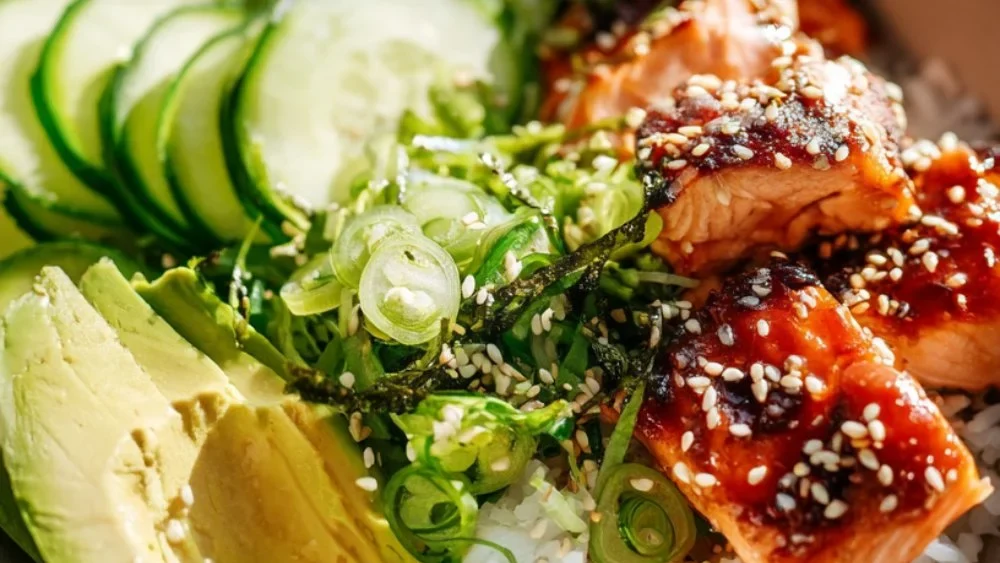
- Assemble your bowls: Begin with a generous base of cooked rice, then artfully arrange the honey sriracha salmon, avocado, cucumber, and edamame. Presentation matters, encouraging creativity in the arrangement to enhance visual appeal.
- Drizzle sriracha mayo: A critical step for flavor enhancement, ensuring that the amount of sriracha mayo suffices to complement but not overwhelm the other tastes.
- Finishing touches: Sprinkle red pepper flakes and sesame seeds over the bowls according to your preference, enhancing both texture and flavor.
- Serve immediately: The dish should be served right away, ensuring that the vibrant flavors and temperatures are at their peak.
Ingredient analysis through a chef’s lens
Each ingredient in the Honey Sriracha Salmon Bowls is purposefully selected to achieve a comprehensive culinary experience. The salmon, as the star ingredient, provides high-quality protein and omega-3 fatty acids, making it a nutritious choice. The cooking technique—searing—must be executed with precision. A high heat ensures the Maillard reaction occurs, promoting a richer flavor profile and appealing texture.
Honey serves as a natural sweetener that not only enhances flavor but also aids in the caramelization process during cooking. Sriracha, while contributing heat, also adds depth through the fermentation process involved in creating the sauce. The garlic offers aromatic complexity that beautifully complements the fish.
Rice functions as a neutral base, absorbing the flavors from the salmon and sauce, allowing each bite to be equally delicious. The vegetables—avocado, cucumber, edamame—introduce contrasting textures that promote a complex mouthfeel while adding freshness to the dish.
Kitchen workflow & technique breakdown
An effective kitchen workflow is critical for successfully executing the Honey Sriracha Salmon Bowls. Begin by preparing all ingredients in advance, measuring out quantities and pre-chopping vegetables. This mise en place creates an organized environment, minimizing stress during cooking.
- Marination: Initiate marination early, allowing sufficient time for flavor development.
- Cooking progression: Heat the skillet while the salmon marinates, so both processes run concurrently, optimizing time.
- Cook in batches: It may be necessary to work in batches when cooking the salmon to maintain temperature and achieve ideal searing.
Following this structured workflow will ensure that the dish is completed efficiently without sacrificing quality.
Texture control, heat management & timing
Texture is vital in creating a compelling dish, particularly in the Honey Sriracha Salmon Bowls. The contrasting textures—from the flaky salmon to the creamy avocado and crisp cucumber—must all be managed carefully. Achieving this harmony requires attention to cooking time and temperature.
Salmon should be cooked just until it flakes easily; overcooking can lead to dry fish. Searing techniques should focus on high heat to develop that crisp crust, followed by a slightly lower temperature when reducing the marinade, allowing for careful control over sauce thickness without burning.
The rice must be fluffy, serving as an underlayer that complements the salmon instead of competing with its texture. Maintaining a careful eye on timing for each component ensures that every element is textured perfectly within the bowl.
Professional variations
While the core recipe stands strong, professional chefs may explore variations to introduce additional dimensions or accommodate dietary considerations. Finishing the dish with a citrus element—such as lime or lemon zest—can elevate the flavor significantly, adding brightness and contrast.
For a gluten-free version, ensure tamari is used, enabling individuals with dietary restrictions to enjoy the creation. Seared vegetables could replace the rice, offering an entirely different texture and flavor profile. Experimenting with different fish, such as tuna or tofu for a vegetarian option, can broaden the accessibility and appeal of this dish.
Finishing touches & plating philosophy
Plating is integral to elevating the perception of any dish. For the Honey Sriracha Salmon Bowls, consider utilizing a wide, shallow bowl that allows each element to be showcased. Place the rice as the base, arranging the salmon cubes like a mosaic across the surface. The vibrant green of the avocado and bright cucumber slices should contrast beautifully with the orange hue of the salmon and the creamy sriracha mayo drizzled artfully on top.
Essence of plating focuses not just on aesthetics but also on guiding the diner’s experience. Elements scattered judiciously around the bowl invite exploration, visually leading the diner to understand each component’s role. Final garnishes of sesame seeds and red pepper flakes should be liberally applied but with attention to maintaining balance and not overwhelming the rest of the ingredients.
Maintaining quality after cooking
While the Honey Sriracha Salmon Bowls are best enjoyed immediately, maintaining quality during storage is possible. Store leftover components separately to prevent moisture transfer and loss of texture. The salmon, when properly stored, remains tender for up to two days; however, the freshness of the vegetables will decline.
Reheating preparations must be performed with care. Gently warming the salmon in a skillet over low heat ensures it does not dry out. The rice can be steamed back to life, reviving its texture, while fresh vegetables should ideally be consumed cold or freshly prepared to maintain their crunch and vibrant flavors.
Questions from home cooks (chef answers)
- How do I ensure my salmon is perfectly cooked?
- Monitor closely as it cooks; salmon should be translucent at the center when you cut into it. If it flakes easily with a fork and appears opaque, it is likely done.
- Can I substitute the salmon for another protein?
- Yes, options such as chicken or tofu can work; however, adjust cooking times accordingly since they vary significantly in cooking duration.
- What if I prefer a milder dish?
- Consider reducing the amount of sriracha in the marinade and mayo, or even substitute it with a mild chili sauce to lessen heat while still incorporating flavor.
Final chef notes
The Honey Sriracha Salmon Bowls serve as a testament to the beauty of culinary simplicity, achieved through thoughtful technique and balanced flavors. By understanding the components’ roles within the dish, chefs and home cooks alike can confidently replicate this creation, showcasing the bright, bold flavors that epitomize the essence of modern cooking. Embrace the process with precision and patience, and each element will converge to create a memorable dining experience.
Honey Sriracha Salmon Bowls
Ingredients
Method
- Cut the salmon fillets into 1-inch cubes, removing skin if preferred.
- In a large bowl, whisk together soy sauce, honey, sriracha, minced garlic, and water until fully combined.
- Add salmon cubes to the marinade and marinate for at least 20 minutes, preferably 1 hour.
- Prepare cooked rice while salmon marinates.
- Heat a large non-stick skillet over medium-high heat and add a splash of oil.
- Cook the marinated salmon cubes for 2-3 minutes on each side until a golden crust forms.
- Pour in the reserved marinade and simmer for a few minutes until it thickens.
- Start with a base of cooked rice, then artfully arrange salmon, avocado, cucumber, and edamame.
- Drizzle with sriracha mayo and sprinkle red pepper flakes and sesame seeds on top.
- Serve immediately for best flavor and temperature.