Strawberry Matcha Sago
Introduction
There are recipes that arrive like postcards from a place you have never visited, and then there are recipes that feel like an old photograph in your palm—warm to the touch, the edges slightly worn by fingers that once held it. Strawberry Matcha Sago, for me, belongs to the latter. I first encountered it on a humid afternoon in a coastal café where the windows fogged with stories of two shores. The bowl was simple: translucent pearls, pale green milk, and a scatter of strawberry like quick, red punctuation. But its presence was resonant, as if every spoonful whispered of migration, colonial encounters, and the small rebellions of home cooks who made global ingredients intimate.
“SOFIA” is how I think of that afternoon: sunlight slanting through fronds, the distant hum of motorbikes and market cries, and the unmistakable whiff of coconut and green tea. It is a name I have since given to the recipe in my notebook—not an instruction, but an invocation. This introduction is an invitation to sit at a table that stretches across oceans and seasons, and to let this humble dessert teach you about place, history, and the tenderness of everyday ritual.
The origin story & regional influence behind this dish
Strawberry Matcha Sago is a modern convergence: sago pearls carrying the culinary memory of Southeast Asia, matcha bringing centuries of Japanese tea ceremony refinement, and strawberries—their sweet acidity—acting like a migrant note that brightens the whole. To trace its origin is to trace trade winds and human curiosity. Sago, a starch extracted from the pith of tropical palms, has been a staple in the diets of people from the Malay Archipelago to Papua New Guinea for generations. In many coastal towns, sago pearls became the dessert-language of wet markets and seaside stalls—translucent orbs that glistened under the glare of midday sun.
Matcha, powdered green tea, traveled a different route. Born of the Zen temples of Japan and steeped in ritual, matcha in the past century has found new life beyond tea bowls. Its vegetal perfume and slightly bitter cadence pair unexpectedly well with the creamy, floral notes of coconut milk, a pairing that likely gained traction in regions where Japanese and Southeast Asian culinary worlds met—port cities, expatriate neighborhoods, and contemporary cafés eager to blend tradition with novelty.
Strawberries are less a native fruit of these regions and more a global adoptee. Their inclusion signals change—temperate crops grown in highland farms or imported from afar, then folded into local desserts by cooks who love contrast. That contrast—fragile red fruit against creamy green milk and chewy pearls—is what gives this dish its emotional weight. It tells a story of adaptation, of ingredients reinvented, of homes that remember and reshape foreign flavors until they feel like belongings.
How to make Strawberry Matcha Sago
The way this dish arrives at your table—simple, layered, and unassuming—belies the histories contained in each component. Here, without alteration, is the recipe as it was given, a small map to follow.
Ingredients :
1 cup sago pearls, 2 cups water, 1 cup coconut milk, 2 tablespoons matcha powder, 1/4 cup sugar (to taste), 1 cup strawberries (chopped), 1/2 cup coconut jellies (optional)
Directions :
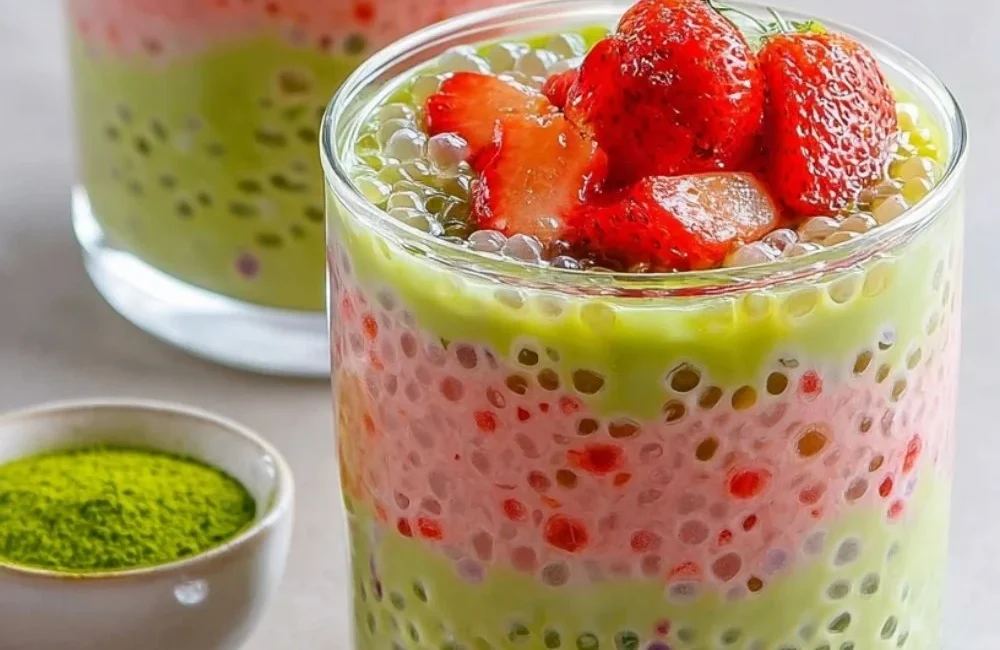
- In a pot, bring water to a boil and add sago pearls. Cook until they turn translucent, about 10-15 minutes. Drain and rinse under cold water., 2. In a separate saucepan, combine coconut milk, matcha powder, and sugar. Heat gently while stirring until sugar dissolves., 3. In serving bowls, layer the cooked sago, chopped strawberries, and coconut jellies., 4. Pour the matcha milk over the layers and serve chilled or at room temperature.
These are not just instructions; they are the brief, quietly authoritative notes of a bowl practiced into being. There is a rhythm here: a simmering patience, a gentle melding of flavors, and a final, generous pouring that seals the memory into place.
Ingredients through a cultural & historical lens
Each ingredient reads like a line in a longer travelogue. Sago pearls speak of palms and labor—of communities in which sago is not an exotic item but a daily carbohydrate, pounded and processed with hands that know their palms by touch. Coconut milk is the marrow of coastal kitchens, its scent—sweet, nutty, faintly mineral—immediately evocative of seaside markets and the slow chatter of afternoon cooking. Matcha introduces ceremony into this rustic world: a powdered concentration of green tea that has carried metaphysical meanings in teahouses and temple gardens. Its umami-green aroma is at once assertive and meditative.
Sugar and strawberries, comparatively recent imports in many tropical culinary histories, tell of colonial exchange and modern agriculture. Where sugar once redefined economies and landscapes, it now softens the matcha’s edges. Strawberries, cultivated in elevated farms or greenhouses, are often folded into local recipes as a sign of seasonal celebration or a small luxury. Coconut jellies, optional but evocative, conjure the festive air of communal tables at weddings and festivals—little translucent cubes that shimmer like tiny favors.
When these ingredients meet, they are not merely combined; they converse. The starchiness of sago anchors; the coconut milk cushions; the matcha clarifies; the strawberry brightens. Together they make something greater than their parts: a dish that is at once global and intimately local.
Cooking the dish: sensory notes & traditional techniques
Making this dessert feels less like following a checklist and more like attending to a weathered ritual. Boiling sago pearls is a moment of attention—watching them go from opaque to glassy is watching a transformation, akin to sea glass smoothing under tide. Rinsing them under cold water is a sudden, refreshing interlude; imagine a small coastal breeze on the tongue that clears away any residual starch and leaves a clean, slightly chewy bite.
Heating coconut milk with matcha is a fragrant ceremony. The matcha blossoms when met with warmth—its grassy perfume unfurling, tempered by the rich, fatty scent of coconut. Stirring the two together releases a quiet steam that smells of temple herb gardens and Sunday markets. Sugar, when added, is not just sweetness but a social lubricant—it softens the austerity of matcha and makes the dessert speak in a more familiar, domestic voice.
Texture is crucial here. The sago must be tender yet resilient, the coconut milk silky, the strawberries yielding but not collapsing. The optional coconut jellies introduce a playful bounce, a childhood memory of sliced jelly fingers and carnival stalls. Serve the dish chilled to let the flavors settle, or at room temperature when the day leans autumnal and you want the green tea to breathe more openly.
How different regions prepare their version
Walk through the markets of Kuala Lumpur, Taipei, or a Japanese-Peruvian neighborhood in Lima, and you will find cousins of this dish—each shaped by local habits. In parts of Southeast Asia, sago often appears with palm sugar and pandan leaf infusion—pandan lending a sweet, grassy perfume similar to matcha’s vegetal note. There, strawberries might be replaced with mango or jackfruit, tropical fruits that offer their own acidic balance.
In Japan-inspired cafés, the emphasis might tilt more toward the matcha: a thicker, more potently green slurry, sometimes sweetened with condensed milk for a richer mouthfeel. In fusion kitchens of cosmopolitan cities, chefs layer textures more theatrically: toasted coconut, sesame tuile, or a drizzle of yuzu syrup for a citrus lift. Where strawberries are scarce, pickled or macerated berries might be used—still red, still lively, but carrying a tang that resonates with preserved fruit traditions.
Each variant is a conversation between local abundance and the original spirit of the dessert: a chewy base, a green tea heart, and a bright fruit note. The differences are less about correctness and more about how place reinterprets import.
Traditional ways this dish is shared or served
Shared food is a social language. Strawberry Matcha Sago, in many households, is not plated for formality but spooned from a communal bowl at family gatherings—birthdays, cooling evenings after long workdays, or as a sweet bridge between a light lunch and stories told over coffee. In festival settings, small cups of sago desserts circulate as tokens of comfort. The optional coconut jellies often make an appearance at celebrations, where the texture signals festivity and abundance.
There is a quiet intimacy to sharing a bowl of sago. One person tapping the side of the bowl with a spoon to signal “finish this” or a child quietly stealing the last strawberry are gestures that stitch this dessert into memory. In cafés, it is often presented in clear glass—an aesthetic choice that honors the layered beauty and invites slow, visual savoring before the first spoonful. Hospitality, in many cultures, is demonstrated through offerings of sweet, cool dishes; this sago, with its gentle sweetness and soothing textures, acts as a balm and an emblem of welcome.
Storing the dish without losing its cultural essence
Preserving the integrity of Strawberry Matcha Sago requires a soft touch. Sago pearls, once cooked, continue to absorb liquid; they should be stored separately from the matcha milk if you want to maintain texture. In many traditional kitchens, leftovers are repurposed rather than simply refrigerated—perhaps turned into a breakfast porridge warmed with coconut milk, a different ritual for a different time of day.
If you must store the assembled dessert, keep it in an airtight container and consume within 24 hours to avoid the sago becoming overly swollen and the strawberries losing their bite. If refrigeration dulls the perfume of matcha, bring the bowl briefly to room temperature before serving so the flavors can breathe again. These small acts—separating components, gentle reheating—are less about technique and more about respect: respect for the textures and aromas that make the dish more than nutrition, and respect for the memory of those who first set these ingredients together.
Cultural questions people often ask
People naturally want to know: Is this authentic? What is the “correct” fruit? Should matcha be strong or subtle? Such questions reflect a hunger for boundaries where culinary traditions are, in truth, porous. Authenticity is often less absolute than relational—rooted in how ingredients are treated, in who cooks and for whom, and in the stories the dish carries. The “correct” fruit is whatever makes the bowl sing where you are; in Japan, a thinly sliced local strawberry might be the norm, while in tropical markets, mango or tropical berries will do the same work.
Another common question: can I replace matcha? You can, but you would be shifting the soul of the dish. Matcha is not merely flavor; it is a texture and an odor that alters the entire molecular mood of the dessert. And yet, cuisine thrives on substitution. The point is to be intentional—know what you are giving up and what you are gaining.
A closing note on food, memory & travel
The true gift of dishes like Strawberry Matcha Sago is how they map human movement: of ingredients, of ideas, of people making their homes in new places. They remind us that food is not static; it accumulates stories, absorbs seasons, and attains meaning in the hands of those who serve it. Eating such a bowl is an act of translation—a way to taste another place while bringing it back into the comfort of your own kitchen.
I have eaten similar bowls on wooden verandas and in subway-side cafés, and each time the experience is different—colored by sunlight, by company, by the quiet hum of a city. But the memory is similar: a gentle hush, a spoon soft against glass, and the world outside softened, for a moment, by something sweet and green and a little chewy. It is an intimacy that travels well.
Conclusion
If you would like a variation with additional notes and photos, this recipe on Strawberry Matcha Sago – Takes Two Eggs offers a home-cook’s visual guide and tips. For a different perspective that draws from mango-sago traditions and playful adaptations, see the reflection and recipes in Matcha Sago – by Winnie – the homemeide newsletter.
Strawberry Matcha Sago
Ingredients
Method
- In a pot, bring water to a boil and add sago pearls. Cook until they turn translucent, about 10-15 minutes.
- Drain and rinse the sago pearls under cold water to stop the cooking process.
- In a separate saucepan, combine coconut milk, matcha powder, and sugar. Heat gently while stirring until sugar dissolves.
- In serving bowls, layer the cooked sago, chopped strawberries, and coconut jellies.
- Pour the matcha milk over the layers.
- Serve chilled or at room temperature.