Sno Ball Brownies Recipe
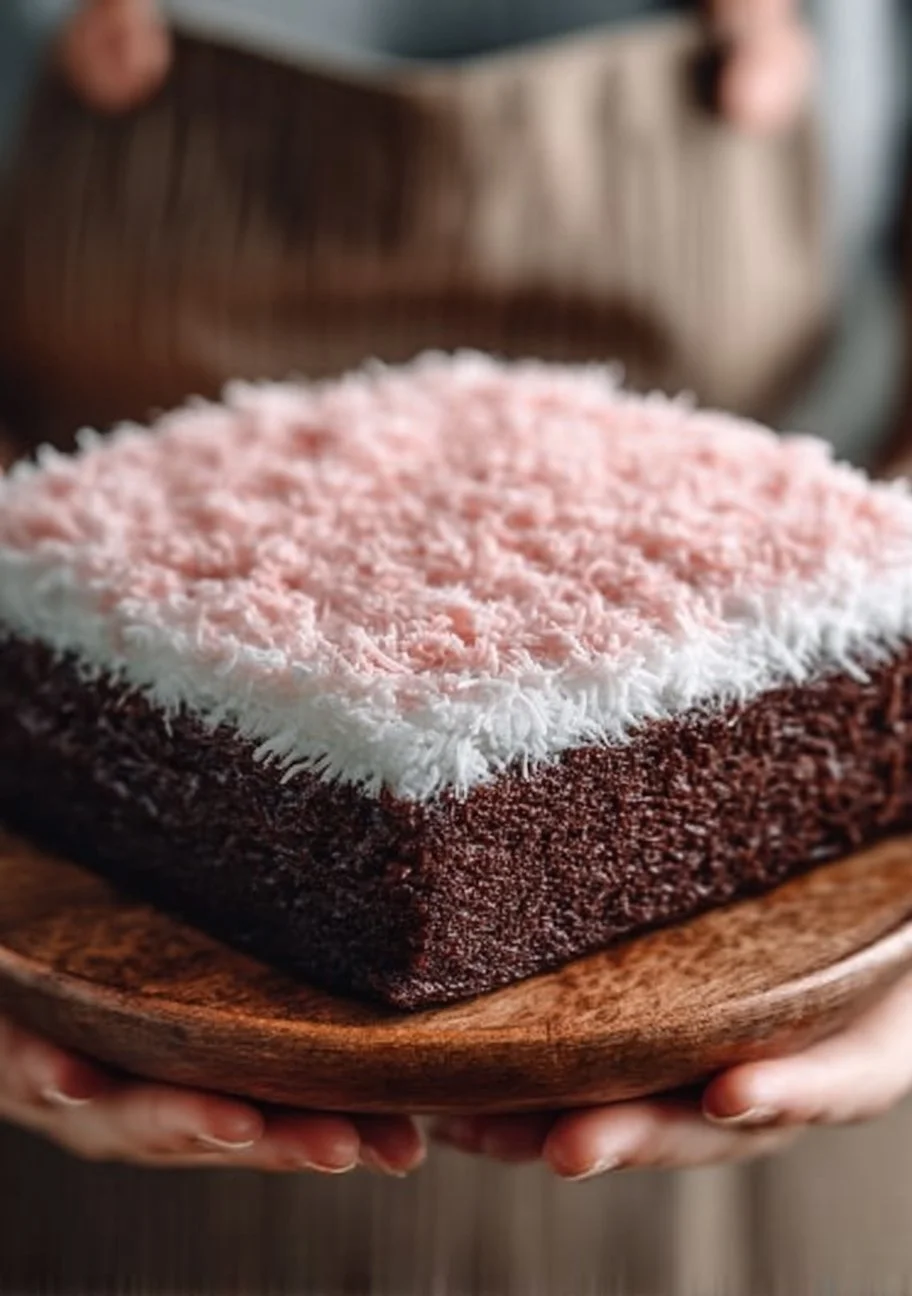
Sno Ball Brownies combine concentrated chocolate density with a lifted, glossy marshmallow-coconut cap that contrasts temperature, texture and sweetness in a single composed bite. The construction is deliberately layered: a fudgy, chocolate-forward base; a pliant, aerated marshmallow layer; and an abrasive, toasty coconut finish. Each element requires discipline in timing and heat control to preserve the textural contrasts that define the finished square.
For reference on balancing dense chocolate bases with lighter toppings, consult the technique used in chocolate-covered strawberry brownies, which also rely on careful timing between cool-down and topping application. This article will explain why each step in the provided recipe exists, how to execute it with professional precision, and how to anticipate and correct common problems in the pastry and confection phases.
The culinary logic behind this dish
The recipe articulates two competing goals: maximum chocolate concentration in the base and a pristine, stable marshmallow topping that adheres to the brownie without sliding or becoming syrupy. The brownies are compacted with low flour and modest leavening; that ratio favors a dense crumb that resists moisture migration from the marshmallow layer. The marshmallow topping uses heated cream and butter to partially solubilize and loosen the fluff or mini marshmallows so they form a cohesive, spreadable matrix. Coconut provides a textural counterpoint and a fat component that integrates with the butter in the marshmallow, improving mouthfeel and mouth-coating balance.
Flavor development is straightforward but intentional. Melting butter and combining it with sugar before incorporating eggs sets up a base where the sugar begins to hydrate and butter-soluble flavor compounds bloom. Cocoa is responsible for bitter-sweet backbone and astringency; balanced against the marshmallow’s sucrose and the coconut’s fatty aromatics, the overall profile remains vibrant rather than cloying. Timing—both for bake and cool—dictates whether these layers remain discrete or collapse into each other.
How to make Sno Ball Brownies
The directions specify preparatory, baking, and topping operations in sequence. Execute each with attention to surface temperature and tactile feel rather than arbitrary times alone.
Start by preparing the pan: grease or line an 8×8-inch pan with parchment. This is not cosmetic—parchment ensures clean release without excessive heat loss during unmolding, which can compromise the brownie’s edge structure.
Combine melted butter and granulated sugar while the butter is still warm. Warming allows partial dissolution of sugar granules and ensures a smoother initial emulsion when eggs are added. Stir in whole eggs and vanilla; mix until homogeneous. Overbeating at this stage will incorporate excessive air into a batter designed to be dense, so mix until the ingredients are just combined and glossy.
Sift or add cocoa powder, flour, salt, and baking powder into the wet mix and fold until smooth. The goal is a cohesive batter with minimal aeration; overworked gluten will stiffen the crumb. If using mini chocolate chips, fold them in gently to prevent clumping and ensure even distribution. Spread the batter evenly in the prepared pan to achieve uniform thickness that bakes predictably.
Bake at 350°F (175°C) for 20–25 minutes. Rely on the toothpick test coupled with visual cues: edges should pull slightly from the pan and the center should present a few moist crumbs but not wet batter. Removing at this stage prevents overbaking, preserving a fudgy interior necessary to contrast the marshmallow cap.
Cooling is deliberate: let the brownies cool completely in the pan. Applying the marshmallow while the brownies are warm will cause the topping to melt through and compromise the interface. Slightly warm brownies can also trap steam under the marshmallow, creating a soggy layer after refrigeration.
For the marshmallow layer, warm the heavy cream, butter and vanilla over medium-low until hot and the butter is melted—avoid boiling. The objective is to use heat to plasticize the marshmallow fluff or melt mini marshmallows into a uniform, glossy spread. Stir until smooth, remove from heat, and let the mixture cool just enough to thicken slightly; hot enough to remain spreadable, cool enough not to dissolve the brownie’s surface or create condensation.
Spread the marshmallow mixture over the cooled brownies and immediately sprinkle with shredded coconut, pressing gently so it integrates with the marshmallow. Refrigerate for about 30 minutes to allow the topping to set and firm; chilling stabilizes the marshmallow matrix and firms the coconut adhesion so clean slices are achievable.
Ingredients :
1/2 cup (1 stick) unsalted butter, melted, 1 cup granulated sugar, 2 large eggs, 1 teaspoon vanilla extract, 1/3 cup unsweetened cocoa powder, 1/2 cup all-purpose flour, 1/4 teaspoon salt, 1/4 teaspoon baking powder, 1/2 cup mini chocolate chips (optional), 1 cup shredded coconut (sweetened or unsweetened), 1/2 cup marshmallow fluff or mini marshmallows, 1/2 cup heavy cream, 1 tablespoon butter, 1/4 teaspoon vanilla extract
Directions :
Preheat your oven to 350°F (175°C) and grease or line an 8×8-inch baking pan with parchment paper. In a medium bowl, combine the melted butter and granulated sugar. Stir in the eggs and vanilla extract until well combined. Add the cocoa powder, flour, salt, and baking powder, mixing until smooth. If using, fold in the mini chocolate chips. Pour the brownie batter into the prepared baking pan and spread it evenly., Bake for 20-25 minutes or until a toothpick inserted into the center comes out with only a few moist crumbs. Be careful not to overbake. Let the brownies cool completely in the pan., In a small saucepan, combine the heavy cream, butter, and vanilla extract. Heat over medium-low heat until the mixture is hot and the butter is melted, but not boiling. Stir in the marshmallow fluff or mini marshmallows and continue stirring until the marshmallows are fully melted and smooth. Remove from heat and let cool slightly., Once the brownies have cooled, spread the marshmallow mixture evenly over the top. Then, sprinkle the shredded coconut on top, pressing gently to ensure it sticks to the marshmallow layer., Place the brownies in the refrigerator for about 30 minutes to allow the topping to set and firm up. Once set, slice the brownies into squares and serve.
Ingredient analysis through a chef’s lens
Each ingredient contributes a functional property in addition to flavor. The melted butter supplies fat for tenderness, is a carrier for cocoa-soluble flavor molecules, and influences mouth coating. Granulated sugar provides sweetness and slight textural grittiness if not fully dissolved; this is why combining sugar with warm butter before adding eggs helps smoothness. Eggs supply structure and emulsion; two eggs here create enough binding without turning the brownie cakey.
Cocoa powder provides the bitter backbone and should be unsweetened for predictable balance with the marshmallow topping. The small quantity of flour (1/2 cup) minimizes gluten formation to keep the interior dense and moist. The minimal baking powder prevents collapse; its sole role is to ensure the brownie is not completely flat. Mini chocolate chips are optional textural inclusions that deliver bursts of molten chocolate when warm.
For the topping, heavy cream increases the marshmallow’s fluidity and contributes dairy fat to round the sugar edge. Butter enriches and stabilizes the sheen, while vanilla layers aromatic complexity. Coconut choice (sweetened vs. unsweetened) modifies final sweetness and toasting behavior—unsweetened will toast more readily and deliver nutty aromatic notes, while sweetened will augment overall saccharinity.
Kitchen workflow & technique breakdown
Sequence and staging reduce risk. Prepare parchment-lined pan and measure all dry and wet ingredients in advance (mise en place). Warm the butter first, combine sugar and butter, then add eggs—this sequence reduces the chance of scrambled eggs or broken emulsion. Sift or whisk dry ingredients separately so you can incorporate them in one smooth action.
Bake while you ready the saucepan for the marshmallow topping; timing should place topping preparation only after the brownies have fully cooled. Chill the baking surface in an even environment—the refrigeration step is brief to firm the topping but not to dry the brownie interior. When slicing, use a warm, dry knife wiped clean between cuts for precise squares; a chilled topping is more likely to yield clean cuts.
If you seek technique variations or alternative topping assemblies, examine the compact confection approach used in Oreo cookie balls for guidance on forming and stabilizing small, coated confections; the same attention to moisture and fat ratio applies.
Texture control, heat management & timing
Texture control rests on three pivots: bake time, cooling, and topping temperature. Underbake the brownie slightly rather than overbaking; residual heat will finish gelatinization but will not evaporate as much moisture, maintaining fudginess. Cool completely on a rack to allow internal steam to dissipate; a warm brownie will release steam under the marshmallow, producing a wet boundary layer.
For the marshmallow, maintain medium-low heat—too high and the cream will boil, introducing air and destabilizing the glossy matrix; too low and the marshmallow will not fully plasticize and may form a grainy surface. Cool the marshmallow mixture until it is spreadable but not hot; testing by touching a spoon and gauging thickness is a reliable tactile method. Refrigeration for 30 minutes is a guideline; if your kitchen is warm or your marshmallow layer is thick, extend refrigeration to achieve firm setting.
Professional variations
To adapt the dessert for different service contexts without altering ingredient quantities, consider technique-focused variations: torch the coconut briefly for immediate service to introduce fresh char aromatics, or spread the marshmallow thinly and torch it to create a brûléed exterior while preserving the marshmallow interior. For portable service, pipe the marshmallow into individual tart shells rather than applying a pan-wide cap.
If you want to experiment with textural contrasts inspired by small confections, examine the mechanical binding and rolling method used for Oreo cookie balls—the principle of controlled moisture-to-fat ratios applies when producing stable, handheld sweets.
Finishing touches & plating philosophy
Plating is minimal: the finished brownie is a composed bite where clean edges and even topping distribution communicate technical control. For plated dessert service, trim the sides to reveal an even brownie profile, then place a single square on a warmed plate to offset the cooling effect of the marshmallow. A small swipe of unsweetened cocoa or a micro-dust of toasted coconut adjacent to the square provides aromatic framing without competing for sweetness.
If presenting multiple squares, alternate orientations so the toasted coconut faces up uniformly; use a bench scraper to move stacks and avoid damaging the marshmallow finish. For buffet or catering service, set brownies on parchment-lined trays and refrigerate until service; avoid exposed heat sources that will soften the topping.
Maintaining quality after cooking
Storage discipline preserves the intended textural relationships. Refrigerate assembled brownies in a single layer or with parchment sheets separating layers to avoid adhesion. Chilled, they will retain structure for several days; bring pieces to slightly below room temperature before service to restore optimal mouthfeel—the brownies should be cool but not refrigerator-cold.
If you must transport, use a rigid container and refrigerate until departure; place the container in a cooler with ice packs but avoid direct contact with ice which would introduce condensation. For make-ahead strategy, you can bake and cool the brownies up to 48 hours before topping; prepare and cool the marshmallow overlay immediately prior to service to minimize sogginess. For broader meal-planning approaches that address timing and batch production, consult resources on efficient kitchen practices and storage techniques in the context of weeknight recipe management for efficient scheduling and storage.
Questions from home cooks (chef answers)
Q: My marshmallow topping became grainy. What caused it?
A: Graininess stems from insufficient heat to fully plasticize the marshmallow or the introduction of undissolved sugar crystals. Reheat gently with additional cream, stirring until smooth, but avoid boiling. If irreparably grainy, remove and remake the topping.
Q: The coconut turned limp against the marshmallow—how do I keep it crunchy?
A: Use unsweetened, well-toasted coconut if crunch is desired. Toasting immediately before application provides maximum crispness. Alternatively, reduce surface moisture by allowing the marshmallow to set briefly before adding coconut; pressing too hard can compact moisture into the shreds.
Q: My brownies spread and became cakey. Why?
A: Overworking the batter or using too much flour produces a cakey structure. Mix dry ingredients in gently and stop once incorporated. Also check oven temperature accuracy—an oven running cool can prolong bake time and alter crumb set.
Q: Why refrigerate only 30 minutes? Can I leave them longer?
A: Thirty minutes is a minimum to firm the marshmallow cap; longer refrigeration is acceptable and will firm the topping further, but prolonged cold storage increases the perception of density in the brownie. Allow refrigerated pieces to temper slightly before serving.
Final chef notes
This recipe is an exercise in balance—sustaining a dense chocolate foundation while creating a stable, glossy marshmallow finish that resists moisture migration. Precision in temperature, measured timing, and respectful handling of aeration are the technical levers that determine success. Small tactile tests—spoon-thickness of the marshmallow, the toothpick test for brownies, and a gentle press to confirm coconut adhesion—are more reliable than clock time alone. Treat each stage as a discrete operation: produce a fully cooled base, a correctly temperature-controlled topping, and a brief firming period in refrigeration to lock the composition.
Conclusion
For a similar recipe and step-by-step photos, see Sno Ball Brownies – South Your Mouth, which offers a complementary home-kitchen interpretation. A Southern approach with slightly different technique and presentation can be found at Sno Ball Brownies – Spicy Southern Kitchen. For another variant that details topping and coconut application in context, review Sno Ball Brownies {aka Chocolate Brownies Topped with … for additional visual and procedural cues.
Sno Ball Brownies
Ingredients
Method
- Preheat your oven to 350°F (175°C) and grease or line an 8×8-inch baking pan with parchment paper.
- In a medium bowl, combine the melted butter and granulated sugar. Stir in the eggs and vanilla extract until well combined.
- Add cocoa powder, flour, salt, and baking powder, mixing until smooth.
- If using, fold in the mini chocolate chips. Pour the brownie batter into the prepared baking pan and spread it evenly.
- Bake for 20-25 minutes or until a toothpick inserted into the center comes out with only a few moist crumbs.
- Let the brownies cool completely in the pan.
- In a small saucepan, combine the heavy cream, butter, and vanilla extract. Heat over medium-low heat until the mixture is hot and the butter is melted, but not boiling.
- Stir in the marshmallow fluff or mini marshmallows and continue stirring until fully melted and smooth. Remove from heat and let cool slightly.
- Once the brownies have cooled, spread the marshmallow mixture evenly over the top.
- Sprinkle the shredded coconut on top, pressing gently to ensure it sticks.
- Place the brownies in the refrigerator for about 30 minutes to allow the topping to set.
- Once set, slice the brownies into squares and serve.