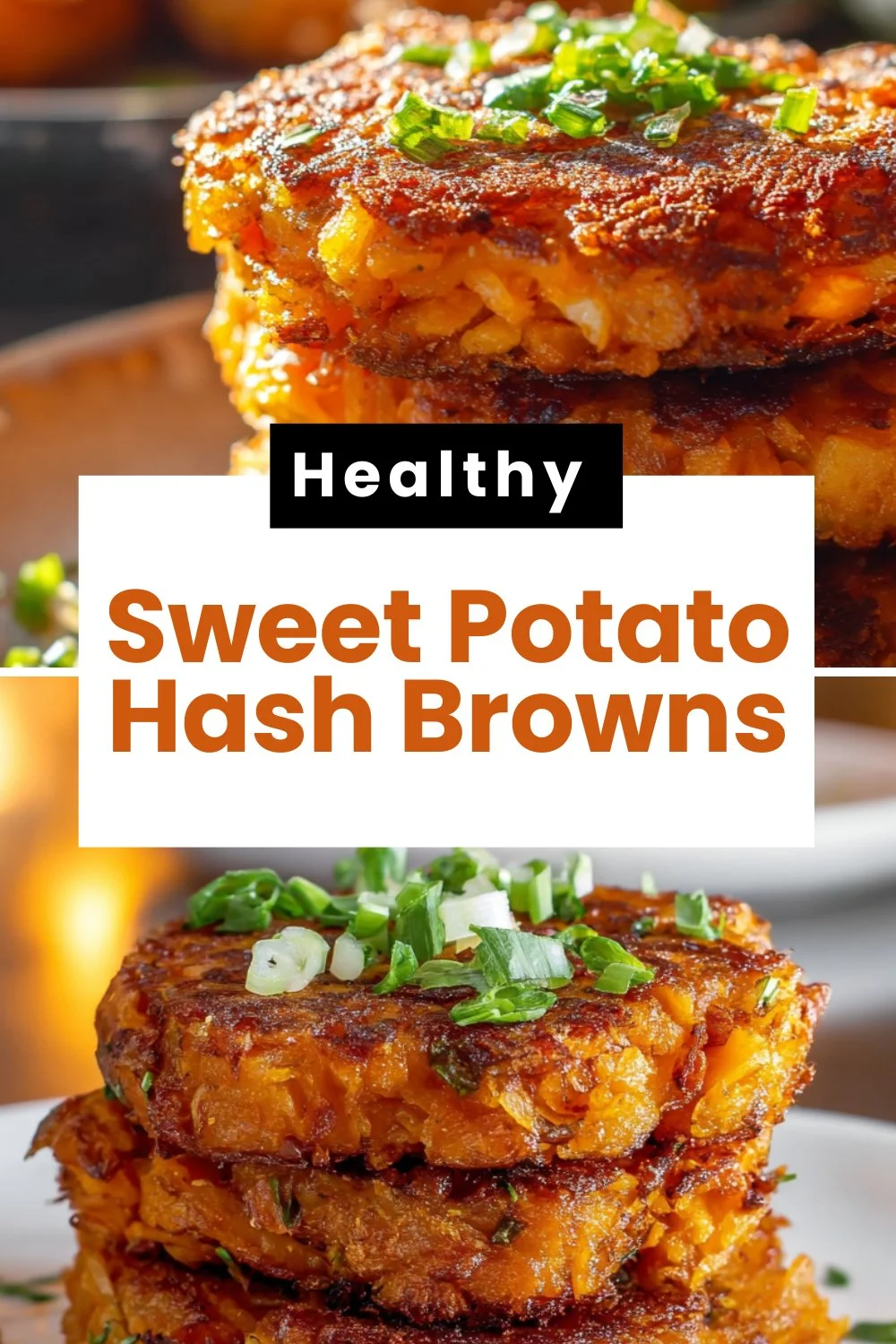
Healthy Sweet Potato Hash Browns
Introduction
Morning has always been my favorite time to listen to a place. Before traffic swells and voices layer over one another, the kitchen speaks first—through sizzling oil, the scrape of a grater against a cutting board, the gentle steam rising from a pan. It’s in these quiet moments that dishes like sweet potato hash browns reveal their deeper stories. What appears, at first glance, to be a simple breakfast is often a map of migration, adaptation, and memory.
I first fell in love with this dish not in a restaurant, but in a borrowed kitchen in Oaxaca, where a friend grated sweet potatoes grown in her uncle’s milpa. Later, I tasted versions in Brooklyn brunch cafés, in coastal Spain where batatas are prized for their sweetness, and in West African homes where sweet potatoes are cooked with reverence and restraint. Each time, the dish felt familiar yet newly accented—like a song hummed in different languages.
This article is not just about how to cook sweet potato hash browns. It’s about why we do. It’s about how a humble root vegetable crosses borders, how heat and fat coax out sweetness, and how crisp edges can anchor us to home, even when we are far from it.
The Origin Story & Regional Influence Behind This Dish
Hash browns, as a concept, trace their roots to Europe—particularly Switzerland’s rösti, a grated potato cake cooked until golden and shared at the table rather than plated individually. When European immigrants brought potato traditions to North America, the dish evolved into what we now recognize as hash browns: shredded, pan-fried, and often served with eggs.
Sweet potatoes entered this narrative later, carried along ancient trade routes from Central and South America outward to Africa, Asia, and eventually Europe. Indigenous to the Americas, sweet potatoes were cultivated long before colonial contact, valued for their resilience and nourishment. When paired with the hash brown technique, they transformed the dish—not just nutritionally, but emotionally. Sweetness replaced neutrality. Earthiness replaced starch.
In the American South, sweet potatoes became deeply tied to both survival and celebration. In Caribbean kitchens, they were spiced and fried. In parts of Asia, they were grated and pan-cooked as street food snacks. The idea of shaping them into hash browns feels less like invention and more like convergence—a meeting of methods across continents.
Ingredients Through a Cultural & Historical Lens
Every ingredient in this recipe carries quiet history.
Sweet potatoes have fed civilizations through drought and abundance alike. Rich in fiber and vitamins, they were often considered “poor food,” yet today they anchor modern wellness culture. Their natural sugars caramelize under heat, creating depth without excess.
Onion, grated finely and squeezed of moisture, is the backbone of countless global dishes. From sofrito to mirepoix, onions offer sweetness, savor, and aroma—the holy trinity of comfort.
Olive oil brings the Mediterranean into the pan. Its fruitiness tempers the sweetness of the potatoes while encouraging crisp edges. Historically, olive oil symbolized abundance and hospitality; here, it acts as both flavor and medium.
Garlic powder and paprika speak to adaptation. Fresh garlic may not always be available, but its essence endures. Paprika—born of New World peppers and embraced by Europe—adds warmth and color without overpowering.
Salt and pepper are the quiet negotiators, drawing out moisture, sharpening sweetness, and ensuring balance.
Together, these ingredients create something greater than their sum—proof that simplicity, when respected, needs no embellishment.
Cooking the Dish: Sensory Notes & Traditional Techniques
Grating sweet potatoes is an intimate act. Your hands turn orange, the scent becomes faintly floral, and the rhythm of motion slows the mind. The crucial step—squeezing out moisture—is where patience pays dividends. Wrapped in a kitchen towel, the shreds release water, making room for crispness.
As olive oil warms in the skillet, it releases a grassy perfume. The moment the sweet potatoes hit the pan, there’s a soft hiss—not aggressive, but promising. Flattening the mixture into an even layer is essential. This is not a stir-fry; it’s a communion between vegetable and heat.
Five to seven minutes later, the edges begin to bronze. Paprika blooms. Onion sweetens. When you flip the hash browns, the underside reveals itself—golden, crisp, and fragrant. Another few minutes, and the dish is complete.
This method mirrors traditional pan-frying techniques found across cultures: patience over agitation, respect for heat, and trust in time.
How Different Regions Prepare Their Version
In the American Southwest, you’ll find sweet potato hash browns laced with cumin and chilies, often topped with eggs and salsa. In Korea, grated sweet potatoes are bound into pancakes—hotteok-adjacent, crisp and chewy. In West Africa, similar preparations are served alongside stews, soaking up spice and sauce.
Mediterranean cooks might add herbs like rosemary or thyme, letting fragrance lead. In parts of Europe, they are served as a base for mushrooms or soft cheeses. Each version reflects what’s nearby, what’s seasonal, and what feels like home.
What remains constant is the technique: grating, drying, pan-frying. It’s a shared language spoken with different accents.
Traditional Ways This Dish Is Shared or Served
Sweet potato hash browns are rarely eaten alone. They belong to tables where conversation lingers. In brunch settings, they arrive beside eggs, avocado, or cured fish. In home kitchens, they’re scooped directly from the pan, shared between generations.
I’ve eaten them standing at counters, seated on stoops, and wrapped in tortillas for impromptu meals. They invite customization—a dollop of sour cream, fresh herbs, or a protein of choice—yet remain complete on their own.
Their versatility makes them democratic. Breakfast, lunch, or dinner; weekday or celebration—they adapt without losing identity.
Storing the Dish Without Losing Its Cultural Essence
Leftovers, when treated with care, extend the life of a meal—and its memory. Let the hash browns cool completely before storing them in an airtight container in the refrigerator for up to three days. Freezing is also possible, though reheating in a skillet or oven is essential to restore crispness.
Avoid the microwave if you can. The goal is to reawaken texture, not just heat. In many cultures, reheating is considered a continuation of cooking, not an afterthought. Treat it as such.
Cultural Questions People Often Ask
Can I use regular potatoes instead of sweet potatoes?
Yes, though the dish will shift in both flavor and nutrition. Sweet potatoes carry cultural weight tied to resilience and sweetness born of necessity.
Is this dish vegan?
Yes, entirely. Many traditional versions around the world are plant-based by default.
How long does it take to cook?
About fifteen minutes—proof that meaningful food doesn’t always require long hours.
A Closing Note on Food, Memory & Travel
When I cook sweet potato hash browns, I’m never just making breakfast. I’m remembering hands that taught me to grate carefully, kitchens warmed by conversation, and mornings shaped by patience rather than urgency. Food like this reminds us that culture lives not only in grand feasts, but in quiet rituals repeated over time.
Wherever you are when you cook this dish—whether in a sunlit apartment or a borrowed kitchen far from home—know that you’re participating in a global story. One rooted in the earth, shaped by heat, and shared in love.
Healthy Sweet Potato Hash Browns
Ingredients
Method
- Peel and grate the sweet potatoes and onion.
- Squeeze out excess moisture using a clean kitchen towel.
- In a large skillet, heat olive oil over medium heat.
- Add the grated sweet potatoes, onion, salt, pepper, garlic powder, and paprika to the skillet.
- Flatten the mixture into an even layer and cook until golden brown, about 5-7 minutes.
- Flip and cook the other side until crispy and cooked through, another 5-7 minutes.
- Serve warm.
Notes
Healthy Sweet Potato Hash Browns
Ingredients
Method
- Peel and grate the sweet potatoes and onion.
- Squeeze out excess moisture using a clean kitchen towel.
- In a large skillet, heat olive oil over medium heat.
- Add the grated sweet potatoes, onion, salt, pepper, garlic powder, and paprika to the skillet.
- Flatten the mixture into an even layer and cook until golden brown, about 5-7 minutes.
- Flip and cook the other side until crispy and cooked through, another 5-7 minutes.
- Serve warm.