French Onion Chicken Orzo Casserole
Introduction
In the realm of culinary artistry, certain dishes transcend the mere act of eating and evolve into profound symbols of culture, memory, and connection. The French Onion Chicken Orzo Casserole is one such dish—a comforting amalgamation of flavors, textures, and aromas that, when brought to the table, becomes a vessel for personal stories and communal bonds. This dish invites you to reminisce, to gather around a table, and to savor not just the food itself, but the rich tapestry of history and tradition it represents. With every bite, you embark on a journey through time, evoking memories of warmth, love, and shared experiences that define our very existence.
The origin story & regional influence behind this dish
The roots of the French Onion Chicken Orzo Casserole can be traced back to the culinary traditions of France, where the humble onion is celebrated for its versatility and depth of flavor. Onion soup, derived from the rustic kitchens of the French countryside, gained popularity in Paris during the 18th century, evolving from a peasant dish to a gastronomic delight often crowned gold with melted cheese. Here, the sweet caramelization of onions brings out an essence of nature’s bounty, connecting consumers back to the earth.
While the casserole itself isn’t purely French, its components celebrate a confluence of various cultural influences. Orzo—a pasta that resembles grains of rice—originates from Italian cuisine, further enriched by the addition of savory, shredded chicken that offers a hearty dimension. In the amalgamation of these elements, we see a beautiful representation of how regional cuisines often intersect and blend. The use of cream and cheese weaves in the comforting nature often found in warm Mediterranean fare, providing a satisfying richness that draws you in, much like the embrace of an old friend.
Tradition plays a vital role in shaping our tastes. In regions where winter blankets the land, hearty casseroles like this one become commonplace, embodying the essence of comfort food. In Italy and France alike, food is more than sustenance; it serves as a canvas for expressing love, celebration, and community. Sharing a casserole at a gathering embodies familial ties—each person, laden with their stories, passes on whispers of joy, hardship, and shared human experience with every helping.
How to make French Onion Chicken Orzo Casserole
Cooking this dish is not merely a task; it is an act of creation infused with nostalgia and anticipation. Each layer plays an integral role in weaving together the complex tapestry of flavors that emerges when you wait patiently for the onions to caramelize, allowing their sweetness to bloom. With every stirring motion, every sizzling sound, you embark on a sensory journey that reaches beyond the kitchen—a moment of connection to the past, evoking scenes of familial gatherings and festive dinners.
Ingredients
- 2 tablespoons unsalted butter
- 1 tablespoon olive oil
- 2 large yellow onions (thinly sliced)
- 1 teaspoon sugar
- 1/2 teaspoon salt
- 3 garlic cloves (minced)
- 1 1/2 cups orzo pasta
- 2 cups cooked shredded chicken (rotisserie works well)
- 1/2 teaspoon dried thyme
- 1/4 teaspoon black pepper
- 2 cups low-sodium chicken broth
- 1 cup heavy cream (or half and half for lighter option)
- 1 1/2 cups shredded mozzarella cheese
- 1/2 cup grated Parmesan cheese
- Optional: 1/2 teaspoon Worcestershire sauce or balsamic glaze (for added depth)
Directions
- Caramelize the Onions: In a large oven-safe skillet or Dutch oven, melt the butter and olive oil over medium heat. Add sliced onions, sugar, and salt. Cook for 20–25 minutes, stirring occasionally, until the onions are deeply golden and caramelized. Stir in the minced garlic during the last 1–2 minutes.
- Add Orzo and Chicken: Stir in the orzo and cook for 2 minutes, allowing it to lightly toast. Add shredded chicken, thyme, pepper, and Worcestershire if using. Mix well.
- Pour in Liquids: Add the chicken broth and cream. Bring to a gentle simmer. Reduce heat to low, cover, and let it cook for 8–10 minutes, stirring occasionally, until the orzo is tender.
- Add Cheese: Stir in 1 cup mozzarella and the Parmesan cheese. Mix until melted and creamy.
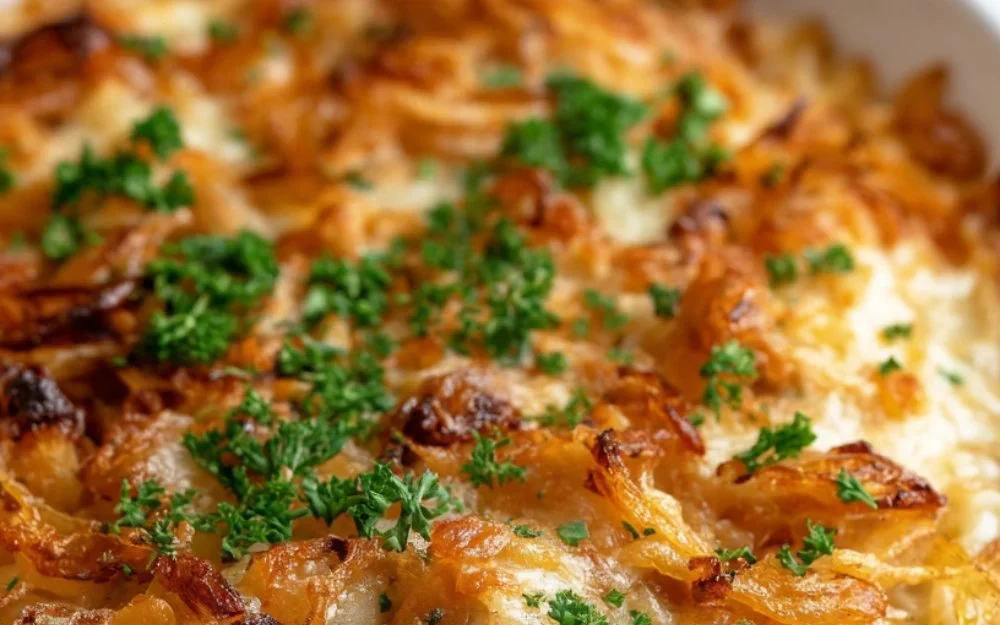
- Bake the Casserole: Preheat the oven to 375°F (190°C). Sprinkle the remaining 1/2 cup mozzarella over the top. Bake uncovered for 10–15 minutes until bubbly and golden on top.
- Serve: Let it rest for 5–10 minutes before serving. Garnish with fresh thyme or parsley if desired.
Ingredients through a cultural & historical lens
Assembling the ingredients for the French Onion Chicken Orzo Casserole is like gathering pieces of a storied past, each component steeped in cultural significance. The two large yellow onions serve not just as a base but also as a symbol of the transformative power of cooking, showcasing how humble ingredients can create gourmet experiences when treated with love and care. Onions were one of the earliest cultivated vegetables, roaming through ancient civilizations—from the Egyptians, who revered them as sacred, to the Greeks, who esteemed them for their restorative powers.
The vital role of dairy is emphasized by the luxurious heavy cream and the meld of mozzarella and Parmesan—the fusion of these cheeses represents the ongoing culinary dialogue between regions. Mozzarella, with its roots in Italy, evokes the allure of sun-drenched fields while Parmesan whispers stories of Italian kitchens, where small-scale artisans craft this cheese with devotion.
Additionally, chicken—the heart of the dish—pays homage to the rich tradition of poultry farming found in both France and Italy. Meditative, herb-infused approaches highlight the cultural ethos of honoring ingredients. Whether rotisserie-style or lovingly prepared at home, cooked chicken embodies care and community, as birds are often shared, exchanged, and served at large family gatherings.
Each thread of flavor stitches together experiences from local farms, bustling markets, and kitchens humming with activity—a gorgeous reminder that food is the very fabric of connectivity and storytelling.
Cooking the dish: sensory notes & traditional techniques
As the onions gather a golden hue, the scent fills the air—a tantalizing aroma that softens the heart and invigorates the mind, embodying countless memories of gathered family and friends. The process of caramelizing onions is a ritualistic dance that speaks to patience and craft; their sweet notes bloom and deepen, inviting the richness of garlic, a staple that elevates dishes across various cultural landscapes.
When orzo hits the skillet and gently toasts, the kitchen becomes alive with an enticing nuttiness, mingling harmoniously with the savory combination of chicken and herbs. The arrival of broth and cream heralds an aromatic cloud that cocoons you like a warm embrace, whispering promises of warmth and richness. As the dish nears completion, the final flourish of cheese melts into the mix, forming a bubbling layer of golden magnificence that beckons to be savored.
Traditional techniques flourish here, drawing on time-honored methods that have been passed down through generations. The method of slowly building flavors through the careful sautéing of ingredients guarantees each bite is imbued with robust depth—a dance of harmonies benevolently cradling traditions from across Europe.
How different regions prepare their version
Diversity is the essence of culture, and thus, resplendent variations of the French Onion Chicken Orzo Casserole exist across different regions. In the southern parts of France, you may find a more pronounced influence of herbs and spices, such as thyme and tarragon, lending an earthiness that enriches the casserole’s spirit. Cooks often incorporate local cheeses—perhaps a creamy Roquefort or a sharp Comté—to personalize it further, celebrating the ingredients of their terroir.
In parts of Italy, you might come across variations that emphasize tomatoes, drawing on the traditional “alla caprese” style—infusing the dish with the bright acidity of sun-ripened tomatoes alongside the gems of basil. The rustic, earthy flavors become palpable as cooks experiment with seasonal ingredients available to them, perpetuating the evolving story of food narratives.
In other Mediterranean regions, saffron may find its way into the mix, heralded for both its vibrant color and luxurious flavor. Here, dishes often serve not just as meals but as celebrations of communal life—signifying how cooking becomes an orchestra of diversification and cultural assimilation that echoes throughout history.
Traditional ways this dish is shared or served
One of the most profound aspects of food is its intrinsic ability to unite people, and the French Onion Chicken Orzo Casserole is no exception. Serving this dish at any family gathering is akin to an embrace—a beacon of comfort that fosters connection and companionship. Commonly, it graces tables during chillier months, where hearts yearn for warmth. As family and friends gather, the casserole becomes a centerpiece, surrounded by vibrant salads and crusty, warm bread awaiting to be dipped into the comforting embrace of gooey cheese.
Traditionally, it might be served family-style, with the host dishing generous portions onto plates while laughter and stories flow effortlessly between guests—each forkful igniting reminiscences of past gatherings and holidays spent together. It fosters a sense of community, where the collective act of sharing food creates an invisible bond, threading history, love, and memory through shared experiences.
In the modern day, this casserole finds its place as a favorite dish for potlucks, evoking nostalgia as people from diverse backgrounds ultimately find common ground over this shared culinary experience. The act of passing the casserole around is a ritual, one of nurturing that transcends cultures and speaks to the heart of human connection.
Storing the dish without losing its cultural essence
Storing the French Onion Chicken Orzo Casserole requires careful attention to ensure that the cultural essence remains intact. Ideally, leftovers should be kept in an airtight container, where the creamy, cheesy depths can be preserved. One can often find that casseroles become even better on the second day as flavors meld overnight, a common practice echoed across different cooking traditions that celebrate the beauty of food’s transformation over time.
Reheating in the oven, covered with foil, helps retain moisture while avoiding the blushing of cheese. A sprinkle of fresh thyme or parsley can serve as a vibrant resurrection of the dish’s original presentation, an homage to the passion and craft that went into making it in the first place.
Ultimately, how we care for our food directly mirrors how we care for our relationships, invoking the idea that, just like a cherished recipe, our shared memories deserve to be preserved and shared, nourished with love and longing.
Cultural questions people often ask
As one shares the narrative and experience surrounding the French Onion Chicken Orzo Casserole, several questions may arise, unearthing the broader cultural implications tied to food. People often wonder about the origins of certain ingredients—such as the significance of onions in different cuisines, or whether the celebrated cheese traditions overlap across cultures. Explorations into family stories, passed-down recipes, and individual adaptations can lead to heartwarming tales filled with joy, laughter, and sometimes, tears.
There’s often curiosity around regional variations and substitutions—what happens if one moves from an abundant cheese region to a cheese-deficient one? The dialogue around these alterations serves as a testament to food’s adaptability—a microcosm of human experience echoed through the lens of culinary heritage.
Another frequently asked question revolves around the sharing of meals; why do we gravitate toward specific dishes during holidays, or how do casseroles encapsulate broader family histories? Here, the answers lead into rich conversations about culture, belonging, and how food shapes the fabric of our everyday lives, uniting us through shared sustenance and loving memories.
A closing note on food, memory & travel
As we reflect on the essence encapsulated within the French Onion Chicken Orzo Casserole, it becomes evident that food is more than mere nourishment; it is an embodiment of memory, culture, and travel. Each recipe carries with it stories of those who came before us—their struggles, their triumphs, and their love laced with every bite. Through the ingredients, aromas, and rituals surrounding the dish, we glimpse human experiences that transcend geographic borders and cultural differences.
Sharing a meal, particularly one so rich in history as this casserole, allows us to journey across time and space, drawing us closer to each other while celebrating our unique narratives. So, as you prepare this hearty dish in your kitchen, remember the stories that permeate its essence—the whispers of onions in the skillet, the laughter that accompanies the passing of plates, and the warmth of family reunions that call us back to our roots. In this culinary voyage, we discover not only the world of flavors but also the beauty of humanity, forever intertwined with food, memory, and our travels through life.
French Onion Chicken Orzo Casserole
Ingredients
Method
- In a large oven-safe skillet or Dutch oven, melt the butter and olive oil over medium heat.
- Add sliced onions, sugar, and salt. Cook for 20–25 minutes, stirring occasionally, until the onions are deeply golden and caramelized.
- Stir in minced garlic during the last 1–2 minutes of caramelizing.
- Stir in the orzo and cook for 2 minutes, allowing it to lightly toast.
- Add shredded chicken, thyme, pepper, and Worcestershire sauce if using. Mix well.
- Add the chicken broth and cream. Bring to a gentle simmer. Reduce heat to low, cover, and let it cook for 8–10 minutes, stirring occasionally, until the orzo is tender.
- Stir in 1 cup mozzarella and the Parmesan cheese. Mix until melted and creamy.
- Preheat the oven to 375°F (190°C).
- Sprinkle the remaining 1/2 cup mozzarella over the top. Bake uncovered for 10–15 minutes until bubbly and golden on top.
- Let it rest for 5–10 minutes before serving. Garnish with fresh thyme or parsley if desired.