Classic Cherry Delight
Introduction
Classic Cherry Delight is a composed, refrigerated dessert that relies on precise layering and textural contrast rather than thermal transformation. As a classically structured cold-set sweet, it pairs a compacted graham cracker base with a stabilized cream layer and a high-acid fruit topping. Execution hinges on three technical priorities: an even, cohesive crust; a smooth, stable cream component; and an intact fruit finish that preserves color and glossy appeal. This article examines each element from a professional perspective, describing the why behind technique choices, the sensory cues to watch for, and approaches for consistent results suited to both home and small-production settings.
The culinary logic behind this dish
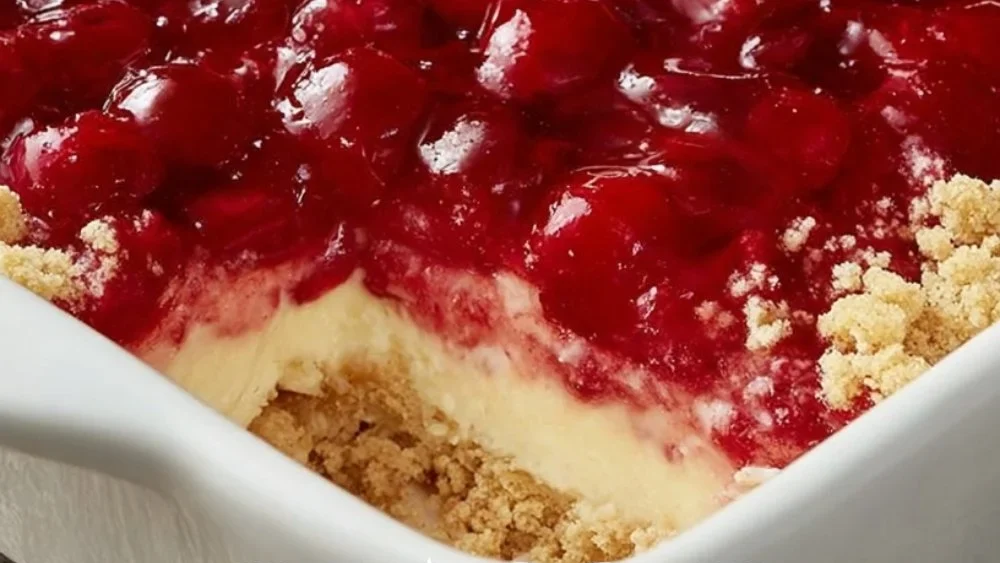
From a culinary-design viewpoint, Classic Cherry Delight is about balances: fat versus acid, crunch versus cream, and sweetness versus brightness. The graham cracker crumbs supply dry, toasty starch and surface area to accept butter as a binder; the butter’s melt and subsequent solidification set the texture of the base. Cream cheese and powdered sugar create a dense, slightly tangy layer whose fat and protein matrix stabilizes whipped topping; this is the structural heart of the dish and must be smooth to avoid disruptive textural pockets. Cool Whip (commercial stabilized whipped topping) contributes aeration and a lighter mouthfeel, facilitating contrast with the thick, glossy cherry pie filling. The cherry layer is both visual crown and the acid note that cleanses the palate. Structurally, each layer must be compatible in firmness to allow clean slicing without slumping.
How to make Classic Cherry Delight
Execution reduces to two aggregate operations: CRUST and FILLING. For the crust, the culinary objective is to convert granular graham crackers into a cohesive, slightly firm platform. The graham crumbs need to be uniformly coated with melted butter to create continuous fat bridges that solidify and bind the crumbs. Pressing technique and vessel selection affect density: a firm, even press produces slices that hold shape; an uneven press yields fragmentation and irregular release.
For the filling, the key is to achieve homogeneity and stability without over-working. Cream cheese should be fully softened to permit gentle incorporation of powdered sugar and vanilla; any residual lumps will manifest as textural defects in the finished product. Folding Cool Whip into the cream-cheese base must retain some aeration while avoiding breakdown of the whipped structure—slow, deliberate turns rather than rapid mixing preserve volume. Final assembly requires layering the cream evenly over the firm crust and smoothing the surface to provide a flat platform for the cherry topping. The cherry pie filling should be spread gently to maintain the fruit’s shape and the filling’s glossy gel.
Ingredients :
- 7 tablespoons unsalted butter
- 1 1/2 cups graham cracker crumbs (about 9 whole crackers)
- 3 tablespoons granulated sugar
- 8 ounces cream cheese, softened
- 1 cup powdered sugar
- 1 teaspoon pure vanilla extract
- 1 container cool whip, 8 ounces,
- 1 can cherry pie filling, 21 ounces
Directions :
CRUST, FILLING
Ingredient analysis through a chef’s lens
Each component has a defined functional role. Unsalted butter is the binding fat; choose high-quality butter with a clean milk note to avoid off-flavors in the crust. Graham cracker crumbs provide starch, caramelized flavor, and granular body—uniform particle size is important for predictable compaction. Granulated sugar adds a touch of crystalline texture and sweetness in the crust; its inclusion also modifies the setting point by altering moisture interactions.
Cream cheese contributes acidity, body and protein that will interact with the aerated topping to form a stable emulsion. Powdered sugar contains cornstarch which helps to dry and stabilize the cream base; it also dissolves more readily than granulated sugar, producing a satin mouthfeel. Pure vanilla extract is a low-concentration flavor enhancer; its volatile aromatics lift the dairy notes.
Cool Whip is a pre-stabilized aerated product that introduces volume without the need for time-consuming stabilization techniques. The cherry pie filling is a cooked preserve with thickening agents (typically modified starch) and provides both color and tart-sweet counterpoint. Understanding these roles allows targeted adjustments—if using a fresh whipped cream instead of Cool Whip, for instance, one must account for its lower stability and adjust technique accordingly.
Kitchen workflow & technique breakdown
Efficient production begins with mise en place and thermal sequencing. Soften the cream cheese sufficiently at room temperature to permit clean incorporation; this reduces mechanical stress during mixing that could introduce graininess. Melt the butter just prior to use to avoid premature absorption of ambient moisture into the crumbs. Line or choose a pan that allows for consistent wall heights; a rimmed tray maintains layer confinement.
Start by mixing crumbs, sugar and melted butter until all particles appear evenly coated. Use a flat-bottomed measure or tamping tool to press the mixture into an even layer—apply steady, layered pressure rather than pounding, to avoid compaction gradients. For the cream layer, whip or beat the softened cream cheese to a smooth, lump-free consistency before adding powdered sugar and vanilla. When incorporating Cool Whip, transfer the cream-cheese mixture into a larger vessel and fold in thirds to maintain aeration. Assembly should be immediate after filling is homogenous to reduce time at room temperature where separation could begin. Chill sufficiently to set before attempting to cut and serve.
Texture control, heat management & timing
Texture is governed by temperature and mechanical handling. The crust must be allowed to firm so the fat phase solidifies; inadequate chilling yields a sandy, collapsing base. Conversely, over-chilling immediately before slicing may harden the cream excessively, risking fracture rather than a clean cut. The cream layer benefits from gentle chilling to allow the powdered sugar and cream cheese matrix to bond with the aeration from Cool Whip. The cherry topping should be at a cool-to-room temperature when applied; if too warm, it can cause the cream layer to weep, blurring visual delineation.
Timing is about patience: allow the assembled dessert a minimum set period in refrigeration to reach equilibrium. This will depend on container depth and ambient refrigeration temperature. Use tactile cues (slight resistance to a finger press) and visual cues (gloss stability on the cherry layer, absence of surface condensation) to determine readiness. If preparing in advance for service, account for a tempering window—remove the dessert to finish at a controlled pace rather than exposing it to warm room conditions immediately before plating.
Professional variations
In professional kitchens, variations are used to adapt texture, flavor intensity, or service needs without compromising the original recipe. For increased structural integrity, substitute part of the Cool Whip with stabilized whipped cream (use gelatin or a commercial stabilizer) to create a denser cream that holds taller slices. To amplify flavor, brown the butter before combining with crumbs to introduce nutty, caramel notes—monitor closely to avoid burning. For a gluten-free approach, use crushed gluten-free biscuits in place of graham crackers while maintaining the same particle size.
For plated portions, consider using the same ingredient ratios in smaller ring molds to achieve individual servings with precise edges. Another option is to macerate fresh cherries briefly with a controlled amount of sugar and citrus zest before folding into the pie filling—this requires care to prevent additional moisture from thinning the gel stable.
Finishing touches & plating philosophy
Plating should prioritize clean lines and visual stratification. The top cherry layer should maintain its high-gloss sheen; avoid excessive handling that will dull the surface. When slicing, use a knife warmed under hot water and wiped dry between cuts to achieve razor-like edges and prevent drag. Serve on a chilled plate to slow softening on the pass.
Garnish choices should be restrained: a small grating of dark chocolate offers bitter contrast without distracting from the iconic cherry crown, while a micro sprig of mint provides aromatic lift if desired. Avoid heavy syrups or additional sauces that will compromise textural balance. Presentation is about highlighting the layers—let the deep red cherry layer remain the focal point, framed by a smooth, pale cream and a compact golden crust.
Maintaining quality after cooking
Even though this is a no-bake, refrigeration-dependent preparation, storage principles apply. Keep the assembled dessert covered and refrigerated to prevent absorption of ambient odors and surface dehydration. If storing longer than 48 hours, place a sheet of plastic wrap directly on the cherry surface to minimize skinning and moisture migration. Thin slices are preferable for service after 72 hours as the cream may densify and the crust can soften progressively.
For transport, immobilize the dessert in a container that prevents lateral motion; thermal insulation slows warming during transit. If you must prepare the components in advance for off-site assembly, keep the crust and cream separate and layer on location to preserve optimal texture relationships.
Questions from home cooks (chef answers)
Q: Can I substitute regular whipped cream for Cool Whip?
A: Yes, but use a stabilizer—gelatin, cream of tartar, or instant stabilizer—to maintain structure. Unstabilized whipped cream will collapse over time and allow the cream-cheese layer to compress.
Q: Is baking the crust necessary?
A: Not strictly. Baking firms the crust more rapidly and intensifies the toasty aromatics; however, sufficient compaction and chilling can provide adequate structural integrity without heat. The choice depends on desired texture and time available.
Q: How do I prevent the cherry topping from making the cream weep?
A: Ensure the cherry filling is chilled and set; avoid applying a warm topping. Additionally, chill the cream layer until it resists a gentle finger press before topping.
Q: How should I slice for clean portions?
A: Use a long, thin-bladed knife warmed briefly under hot water, wiped dry between cuts. Make one decisive pull rather than a sawing motion.
Final chef notes
Precision in temperature, particle size, and handling defines success for Classic Cherry Delight. Small adjustments—like ensuring uniformly fine graham crumbs or fully softened cream cheese—significantly reduce variability. Respect the roles of each ingredient and minimize aggressive mechanical actions that compromise aeration or emulsification. Balance is the design principle: the graham base should provide a steady foundation, the cream layer should be silky and stable, and the cherry topping should contribute bright acidity and visual clarity. With careful attention to technique and timing, this composed dessert yields consistent, refined slices suitable for both casual gatherings and formal service.
Conclusion
For a reference implementation and step-by-step visualization of this classic composition, see Classic Cherry Delight – My Country Table, and for an alternative presentation and serving suggestions consult Cherry Delight Dessert – The First Year.
Classic Cherry Delight
Ingredients
Method
- Mix graham cracker crumbs, granulated sugar, and melted butter until evenly coated.
- Press the mixture into the bottom of a lined pan evenly, applying layered pressure.
- Beat the softened cream cheese until smooth and lump-free.
- Gradually add powdered sugar and vanilla extract, mixing until fully combined.
- Gently fold in the cool whip, maintaining aeration.
- Spread the cream mixture evenly over the crust.
- Top with cherry pie filling, spreading gently to preserve the fruit’s shape.
- Chill the assembled dessert for at least 4 hours to set.
- Slice using a warm, dry knife for clean edges.