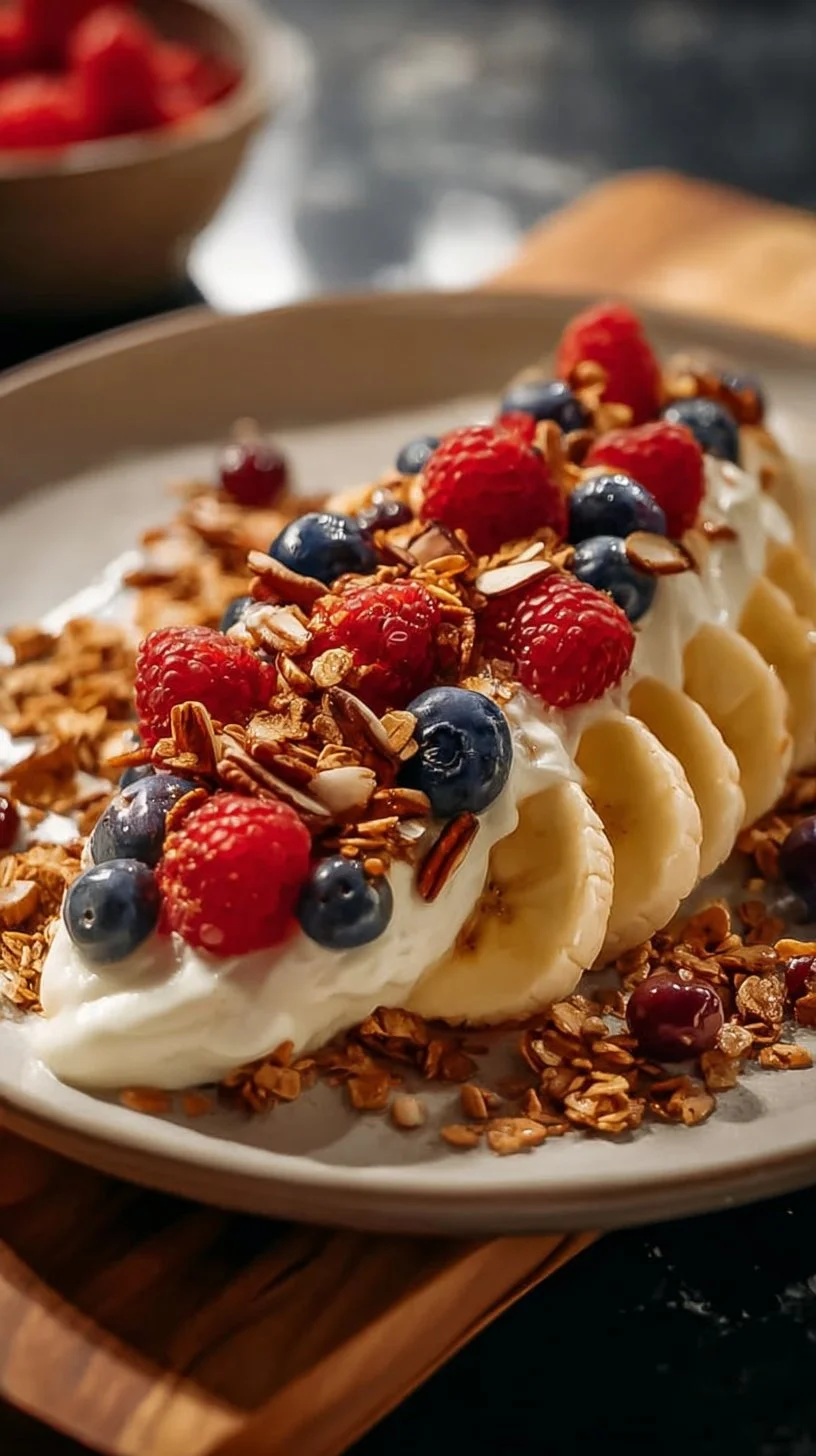
Breakfast Banana Split
AARON Introduction
As a nutrition specialist, I view simple, familiar recipes as opportunities to build daily habits that support digestion, stable energy, and long-term wellbeing. The Breakfast Banana Split is a breakfast idea that borrows the enjoyable ritual of the classic dessert but translates it into a nutrient-forward morning meal. It centers on a whole fruit base (banana), a concentrated protein source (Greek yogurt), fiber and texture from granola, and colorful antioxidants from fresh berries. These familiar ingredients make it easy to adopt and to tailor to individual needs.
This article will walk through why this combination works from a digestion and nutrient-density perspective, how to prepare the recipe as presented, and practical ways to tweak it for specific goals like more protein, fewer added sugars, or better gut comfort. If you enjoy playful spins on morning foods, you may also like variations that combine fruit and chocolate or freeze components for a different texture; one creative approach that pairs well with fruit-based breakfasts is described in this viral banana bark recipe, which uses similar flavor ideas in a snackable format.
How this recipe supports overall wellness
The Breakfast Banana Split brings together carbohydrate from fruit, protein from Greek yogurt, and fiber plus healthy fats (depending on optional toppings). This triad is useful for maintaining steady blood glucose and for prolonging fullness through the morning hours. Bananas provide naturally occurring sugars and resistant starch when slightly underripe, which can gently feed beneficial gut bacteria and slow glucose absorption compared with processed sugars. Greek yogurt is a concentrated, fermented dairy option that typically supplies 15–20 grams of protein per cup, which supports muscle maintenance and helps moderate appetite.
From a digestion standpoint, pairing fruit with a protein and fat source can reduce rapid sugar absorption and related gastrointestinal swings (for example, quick energy followed by a slump). The berries contribute polyphenols and vitamin C, and the granola adds whole-grain-derived fiber and chew—helpful for satiety and bowel regularity. For people focused on nutrient density, this dish is a practical, balanced starting point that fits a variety of eating patterns without restrictive rules. If you’re experimenting with texture or snack-style breakfasts, pairing the banana split concept with a crunchy frozen treat can be fun; see a related idea in this viral banana bark recipe for inspiration.
How to make Breakfast Banana Split
This section follows the recipe exactly as provided. I’ll present the Ingredients and Directions verbatim so you can reproduce the dish precisely, then I’ll return to practical notes and small technique tips that don’t alter the recipe itself.
Ingredients :
2 bananas (ripe but firm), 1 cup Greek yogurt (vanilla or plain), 1/2 cup granola, 1/2 cup fresh berries (strawberries, blueberries, raspberries, or a mix), 2 tablespoons honey or maple syrup (optional), Optional toppings: chopped nuts, shredded coconut, mini chocolate chips, chia seeds
Directions :
- Prepare the Bananas – Peel and slice the bananas lengthwise in half. Arrange them in a shallow bowl, cut side up., 2. Add the Yogurt – Spoon Greek yogurt into the center of each banana half, evenly dividing it between servings., 3. Top with Granola and Berries – Sprinkle granola over the yogurt, then add fresh berries on top., 4. Drizzle and Garnish – Drizzle honey or maple syrup if desired. Add optional toppings like nuts or coconut for extra flavor., 5. Serve and Enjoy – Serve immediately for a fresh and nutritious breakfast.
Note on technique without changing the recipe: use ripe-but-firm bananas so they hold shape when sliced; allow berries to reach room temperature for fuller flavor if they were refrigerated; scoop yogurt with a spoon and gently mound so granola sits without immediate sogginess. These little steps help the texture without altering ingredients, measurements, or steps.
Nutrient roles of each main ingredient
Bananas: They supply easily digestible carbohydrates—primarily glucose, fructose, and sucrose—plus potassium and vitamin B6. Potassium supports normal cellular function and fluid balance, while the natural fructooligosaccharides in bananas can have mild prebiotic effects when slightly underripe. For digestion, bananas are generally easy on the stomach and can help normalize bowel movements.
Greek yogurt: This is the primary protein source in the recipe. Compared with regular yogurt, strained Greek yogurt offers concentrated protein and less lactose per volume, which many people find easier to tolerate. It also provides calcium and, if live cultures are present, probiotics that may support gut microbial balance. Protein in the morning slows gastric emptying modestly and helps produce a sustained sense of fullness.
Granola: Granola contributes carbohydrates, fiber, and often some healthy fats depending on nuts or seeds included. Choose granola with whole grains and minimal added sugars to maximize its fiber and micronutrient contribution. The crunchy texture also helps with oral satisfaction, which can influence how full you feel.
Berries: Berries are dense in antioxidants (polyphenols) and vitamin C while being relatively low in calories. Their fiber and water content assist digestion and provide a lower glycemic load compared with many other fruit choices.
Honey or maple syrup: These are optional flavor enhancers that add simple sugars for taste. Used sparingly, they can increase palatability without overwhelming the dish with extra energy. If blood sugar control is a concern, keep the drizzle modest or omit.
Optional toppings (nuts, coconut, mini chocolate chips, chia seeds): Nuts and seeds add healthy fats, protein, and micronutrients like magnesium. Chia seeds contribute omega-3 fats and soluble fiber that can assist with satiety. Mini chocolate chips increase enjoyment; dark chocolate provides polyphenols but also added sugars if used.
For a deeper look at how these components interact in different formats you might explore creative pairings, including one inspired by fruit-chocolate combinations in this viral banana bark recipe.
The preparation method & its health impact
This recipe uses minimal processing: fresh fruit, a spoonful of yogurt, and unmelted granola. Minimal heat or processing preserves heat-sensitive nutrients like vitamin C in berries and keeps live cultures in yogurt intact. Serving the yogurt cold and granola at room temperature maintains texture and reduces the chance that added sugars become more concentrated through heating.
Because all ingredients are assembled rather than cooked, the glycemic behavior is largely driven by the natural sugars in banana and any optional drizzle. Pairing the fruit with protein and fat (yogurt and optional nuts) moderates post-meal blood glucose peaks and offers a gentler digestive experience. The no-cook method also reduces formation of potentially oxidized fats, which can occur with repeated high-temperature cooking of oils.
From a practical perspective, assembling rather than blending preserves fiber structure, which helps slow digestion. If you were to blend everything into a smoothie (not part of the recipe), some studies suggest faster gastric emptying and a slightly higher glycemic response, so the assembled format can be preferable for satiety and steady energy.
Ways to lighten, enrich or modify the dish nutritionally
Although you should not change the recipe as written for replication, here are evidence-based, optional directions you can consider on your own:
To lighten calories: Use plain, low-fat Greek yogurt and choose a low-sugar granola or reduce the granola portion. Skip the honey/maple syrup and any high-calorie toppings.
To increase protein: Add a dollop of plain, high-protein Greek yogurt variety or sprinkle a tablespoon of hemp seeds or chopped almonds on top. These add protein and healthy fats without changing the core recipe steps.
To increase fiber: Choose a granola with whole oats and seeds, or add chia seeds (already listed as optional). Additional berries increase fiber and antioxidant load.
To reduce added sugars: Use plain yogurt and omit honey/maple syrup; instead, rely on ripe fruit for sweetness. If the granola contains sweeteners, swap it for a low-sugar or homemade version.
To support blood sugar stability: Favor slightly underripe bananas for more resistant starch, include a higher-protein yogurt, and add nuts for more fat and protein to slow absorption.
For plant-based preference: Substitute a high-protein plant yogurt (pea or soy-based) and use a granola without honey to keep the dish vegan while maintaining its balance.
All of these adjustments maintain the assembly method but effectively shift macronutrient balance to align with personal goals.
Pairing ideas for a balanced, complete meal
The Breakfast Banana Split can stand alone, or it can be part of a thoughtful morning plate depending on appetite and activity needs.
For a longer morning: Add a whole-grain slice of toast with a thin spread of nut butter for extra complex carbohydrates and sustained energy.
For post-workout recovery: Include a small omelet or a boiled egg on the side to increase total protein and replenish electrolytes.
For light mornings: Pair with a hot herbal tea or a small glass of low-fat milk for hydration and a modest nutrient boost.
For kids: Serve with a small, fun side of fruit or a handful of whole-grain cereal; the playful format often appeals to younger eaters and can encourage fruit intake.
Each pairing idea aims to complement the dish’s balance—more protein for muscle needs, more whole grains for energy, or a small dairy or dairy-alternative for added calcium.
Safe storage, food safety & optimal reheating
Because this recipe is best when served fresh, it’s designed to be eaten immediately. If you prepare components in advance:
Store bananas separately from yogurt and granola; sliced bananas brown quickly due to oxidation. Keep them in an airtight container with a squeeze of lemon juice if you must slice ahead for a short time, though this will alter appearance.
Yogurt can be refrigerated in its original container for several days; once combined with granola and banana, consume within 24 hours for best texture and food safety.
Granola retains crunch when stored in a sealed container at room temperature; if mixed with yogurt, granola will soften over time. Assemble granola at serving to preserve texture.
Reheating is not recommended for this assembly. If you prefer warm components, briefly warm the bananas separately in a skillet for a minute per side before assembling (this would be a personal variation). Avoid microwaving assembled bowls as it changes texture and can warm dairy unpredictably.
Always follow standard food-safety practices: refrigerate perishable items promptly, discard perishable combinations left out more than two hours, and check yogurt for off-odors before use.
Common nutrition questions about this dish
Will the banana’s sugar spike my blood sugar? Paired with protein from Greek yogurt and fat from optional toppings, the banana’s sugar is absorbed more slowly than when fruit is eaten alone. Portion size and ripeness influence glycemic response; slightly firmer bananas have more resistant starch.
Is granola too sugary? Some granolas are high in added sugars. Look for labels with whole grains listed first and minimal added sugars, or use a smaller portion to control sugar intake.
Is Greek yogurt good for gut health? Many Greek yogurts contain live and active cultures that can support gut microbial diversity; however, benefits depend on strain and amount. Plain yogurt avoids added sugars that can offset benefits.
Can children eat this daily? Yes—with attention to portion sizes and variety. Rotate fruits and toppings to increase nutrient diversity and limit daily servings of high-sugar granola.
Is this suitable for weight management? It can be, if portion sizes align with individual energy needs and if topping choices don’t add excess calories. The protein in Greek yogurt supports satiety, which helps with portion control across the day.
Final wellness notes
The Breakfast Banana Split is an approachable, adaptable recipe that emphasizes whole fruit, protein, and texture. Its assembled format preserves nutrients and provides a balanced mix of macronutrients for steady energy and digestive comfort. Small adjustments—like selecting lower-sugar granola, adding nuts for healthy fats, or choosing plain yogurt—can tune the meal to personal goals without removing the enjoyable and familiar elements that make it likely to be eaten consistently. Consistency and variety are both important for long-term wellness: use this recipe as one reliable option among many balanced breakfast choices.
Conclusion
If you want to compare similar takes on the breakfast banana split idea, this version from Breakfast Banana Split – Art From My Table offers another simple presentation that may inspire small variations. For a family-friendly, nutrient-conscious approach, see the Breakfast Banana Split Recipe – SHK – Super Healthy Kids which adapts portions and toppings for children. If you’re seeking a step-by-step, photo-guided method, this Breakfast Banana Split – Downshiftology article provides clear visuals and ingredient notes. For yet another healthy, straightforward approach, review the ideas in Healthy Breakfast Banana Split to gather inspiration on toppings and presentation.
Breakfast Banana Split
Ingredients
Method
- Peel and slice the bananas lengthwise in half. Arrange them in a shallow bowl, cut side up.
- Spoon Greek yogurt into the center of each banana half, evenly dividing it between servings.
- Sprinkle granola over the yogurt, then add fresh berries on top.
- Drizzle honey or maple syrup if desired. Add optional toppings like nuts or coconut for extra flavor.
- Serve immediately for a fresh and nutritious breakfast.