Keto Breakfast Bowl
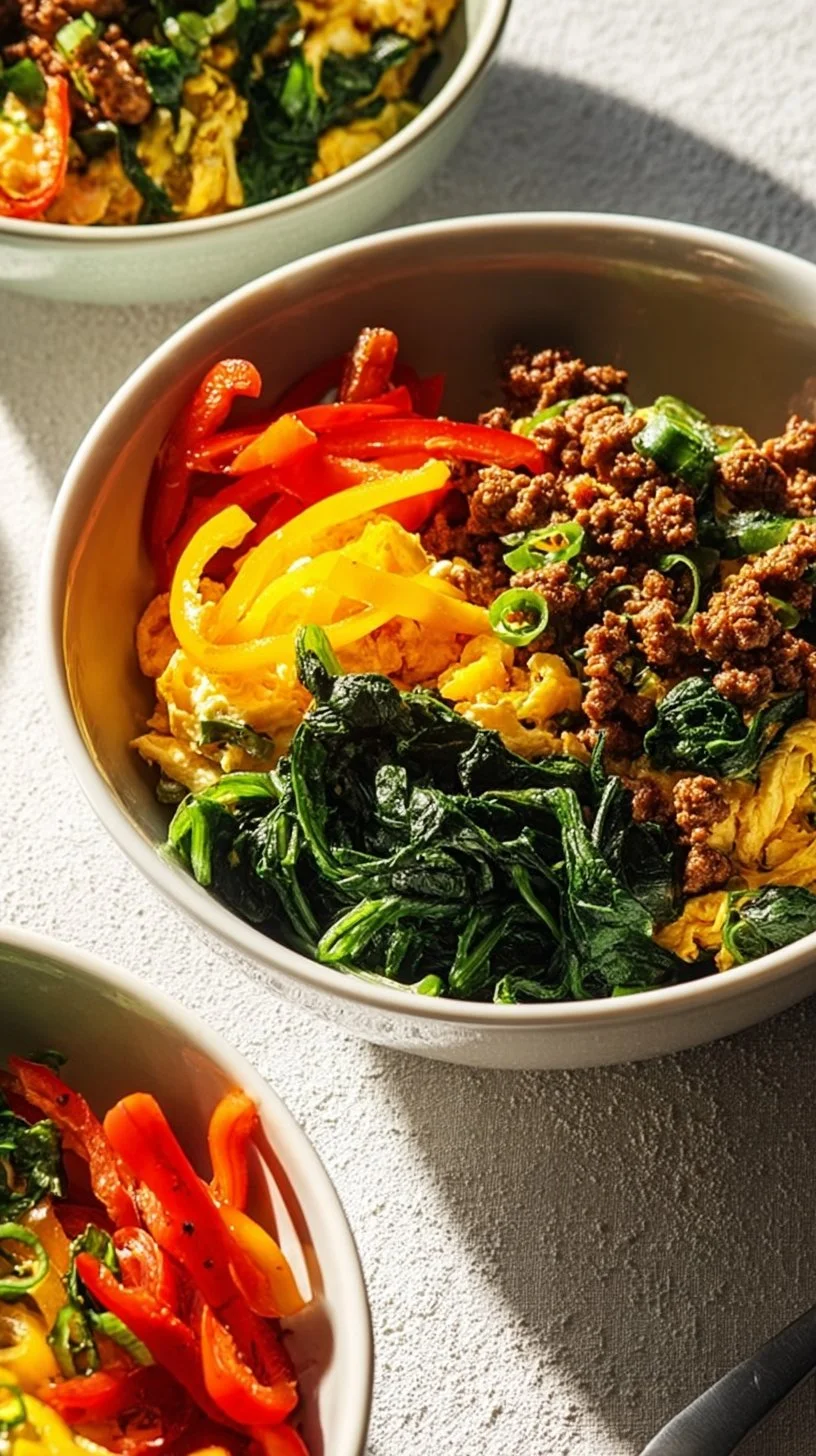
This Keto Breakfast Bowl is a deliberately simple composition that balances fat, protein, and low-carbohydrate vegetables for a morning dish that performs reliably across batches. The recipe’s economy of ingredients—greens, bell pepper, eggs enriched with heavy cream, and breakfast sausage—relies on technique to generate depth of flavor, contrast in texture, and stability for storage. Executed correctly, it yields a bowl where the eggs are silky, the peppers retain a subtle bite and brightness, the greens are gently wilted, and the sausage provides a caramelized, savory counterpoint.
The following exposition approaches the recipe as a professional chef would: isolating each component, explaining why the prescribed sequence matters, and describing precise handling to optimize aroma, color, and mouthfeel. Attention to heat management, pan surface, and timing transforms this modest list into a composed plate that holds up for reheating without collapsing into an indistinct mush.
The culinary logic behind this dish
At its core, the Keto Breakfast Bowl is an exercise in contrast and preservation. Each component is treated separately to control Maillard reaction, moisture content, and texture. Browned sausage builds savory fat and complex meaty flavors that act as the backbone. Eggs, tempered with heavy cream and emulsified in a blender, become an evenly textured custard when scrambled; the cream increases richness and retards coagulation so curds remain tender. Quick sautéing of greens and peppers preserves their color and a degree of crispness; overcooking either will produce limpness and an overbearing vegetal sweetness.
The sequence—greens, peppers, eggs, sausage—uses the same pan to layer flavor while avoiding cross-contamination of textures. Rendering and browning in a hot pan is a two-fold technique: it provides desirable crust on proteins and creates fond on the pan surface that, if managed, can enhance subsequent components. Removing each element as it reaches its ideal state prevents residual heat from continuing to cook delicate components, which is essential for eggs that should remain soft and tender rather than rubbery.
How to make Keto Breakfast Bowl
Follow the recipe’s sequence intentionally. Begin with aromatics and delicate greens to capture their aroma and color; remove them promptly. Use the residual heat and fat to coax sweetness from bell peppers without losing structure. Blend the eggs with cream for a consistent emulsion and scramble them gently to obtain small, custardy curds; remove when still slightly glossy because they will continue to set off the pan. Finally, brown the sausage to build texture and savory depth. Separating and then assembling the components—either into containers for storage or plated together—keeps the textures discrete and the flavors bright when reheated.
Respect the nonstick surface for the eggs; it reduces the need for excess fat and encourages even coagulation. When browning sausage, a higher heat is appropriate to develop color, but reduce immediate heat transfer to avoid hardening the meat’s exterior. For batch cooking, cool components quickly before refrigeration to minimize time in the food-safety danger zone.
Ingredients :
5 oz greens (or baby spinach), 1 clove garlic, crushed, 1 tablespoon olive oil, 1 cup bell peppers, sliced, 1/2 pound breakfast sausage, 6 eggs, 2 tablespoons heavy cream
Directions :
- Heat a large nonstick skillet to medium heat and add 2 teaspoons of olive oil and crushed garlic. Sauté for a minute, then add the greens. Mix to wilt and shrink the greens, seasoning with salt and black pepper if desired. Remove and set aside., 2. In the same pan, heat 1 teaspoon of olive oil and add the bell peppers. Sauté for 4-5 minutes until softened. Remove and set aside., 3. In a blender, combine eggs and cream, blending until combined. Pour into the preheated pan and scramble as you would eggs, then remove and set aside., 4. Again in the same pan, spray with nonstick cooking spray and brown the sausage until cooked through., 5. Divide all components into three containers, or mix together. Store in the freezer or refrigerate.
Ingredient analysis through a chef’s lens
Each ingredient serves a clear functional purpose. The greens (baby spinach) contribute freshness, chlorophyll-driven color, and minimal bulk after wilting—important for a low-carb profile. Garlic acts as an aromatic catalyst; its brief sauté at the start flavors the olive oil and the greens without overpowering them. Olive oil is the pan lubricant and flavor carrier; used sparingly, it permits controlled browning without greasiness.
Bell peppers supply sweetness, crispness, and vibrant color; the limited sauté time allows their skin to soften while keeping structural definition. Breakfast sausage introduces fat and Maillard-derived complexity—its seasoning profile seasonally seasons the entire bowl. Eggs emulsified with heavy cream create a stable, creamy matrix; the cream raises the fat content and introduces silkiness, while blending ensures consistent texture and even cooking.
Understanding the role of each ingredient clarifies why the method isolates components: moisture from greens and peppers must be contained so it does not dilute the eggs or interfere with sausage browning. Likewise, fat distribution influences mouthfeel and reheating resilience.
Kitchen workflow & technique breakdown
Workflow in this recipe is sequential and circular: the skillet is the constant work surface, and each step prepares the pan for the next. Begin with a cold pan brought to medium heat—this gives predictable thermal mass. Add a modest amount of oil and garlic; one minute of sauté is sufficient for garlic to bloom without browning, which would introduce bitterness. Add the greens and toss—clearing the pan promptly prevents them from continuing to cook in residual heat.
When moving to peppers, wipe or distribute the remaining oil to avoid overcrowding; too much moisture or crowded peppers will steam instead of sautéing. For the eggs, preheat the pan slightly higher than the setting used for greens so the eggs coagulate evenly but not quickly. Blending eggs with cream is a mechanical convenience: it incorporates air and emulsifies fat for finer curd structure. Scramble gently with a flexible spatula, folding rather than vigorously stirring, to yield soft ribbons.
Finally, brown the sausage on a higher heat. Use short bursts of contact, turning pieces to expose new surfaces for browning. Let excess fat remain in the pan—this contains flavor for the stored dish—but skim if you prefer a cleaner mouthfeel.
Texture control, heat management & timing
Texture is managed through heat and timing more than ingredients. Greens should be wilted until vibrant dark green and tender—this typically takes less than a minute at medium heat. Overcooking darkens and collapses them. Bell peppers need 4–5 minutes to soften while maintaining a slight snap; aim for translucency at the edges with retained structure in the center.
Eggs need continuous but gentle movement over moderate heat. Remove them when slightly glossy—the carryover heat will finish them. If the pan is too hot, curds will be tight and dry; too low and eggs will spread and form thin sheets. The sausage benefits from initial high contact to form crust then moderated heat to cook through without charring.
Timing the sequence so that each element cools briefly before packing helps preserve texture. Rapid assembly of hot components in a container can induce steam and sogginess; instead, allow a brief resting period so steam dissipates.
Professional variations
Maintaining the ingredient list exactly, you can alter technique to yield different final textures while respecting the recipe. For example, rather than slicing the peppers, julienne them thinner for quicker softening and more surface caramelization in the same time frame. The greens can be briefly blanched and shocked before a fast pan finish to retain even more vivid color and remove excess grit. For the eggs, instead of a continuous scramble, try slow curd formation over lower heat for a custard-like fold that yields larger, creamier curds.
If you prefer bites with more textural contrast without changing ingredients, sauté the sausage until very well-browned and slightly crisp at the edges for a firmer chew, or chop it very small for more even distribution throughout the bowl.
Finishing touches & plating philosophy
Plating should emphasize contrast: pile the eggs for a soft, luminous center; arrange peppers for color bands; place wilted greens to one side to preserve their form. Sausage should be visible as the flavor anchor—either nestled alongside or sprinkled atop in small clusters so each forkful finds fat and umami. In a mise en place for storage, keep components separate or only lightly mixed to preserve texture through reheating.
Season simply and deliberately: a final pinch of salt and freshly cracked black pepper is often sufficient. The aim is clarity—each element should be identifiable both visually and on the palate.
Maintaining quality after cooking
Cooling and storage determine how well this bowl survives refrigeration or freezing. Cool components quickly by spreading them on a shallow tray for a few minutes to lose bulk heat, then portion into airtight containers. Refrigerate within two hours; for longer storage opt to freeze. When refrigerating, keep components separated where possible to avoid moisture migration.
Reheat gently: microwave with short bursts at medium power, stirring between intervals to heat evenly without overcooking the eggs. Alternatively, reheat in a skillet with a splash of water and a lid to generate steam and even temperature distribution. Avoid high, sustained heat which will tighten proteins and produce a dry texture.
Questions from home cooks (chef answers)
Q: Can I use frozen spinach?
A: Yes, but thaw and squeeze out excess water thoroughly before starting. Frozen spinach releases significant moisture that will compromise both the sauté for greens and the texture of the finished bowl if not pressed dry.
Q: Why blend the eggs with cream instead of whisking?
A: Blending creates a uniform emulsion and incorporates micro-air, which produces more consistent curds and an evenly tender scramble. Cream increases fat and delays coagulation, delivering silkier texture and improved mouthfeel.
Q: My sausage browned but remained uncooked inside—what went wrong?
A: High heat can brown the exterior faster than the interior cooks. After achieving color, reduce the heat and continue cooking, turning pieces to transfer heat inward, or partially cover the pan to trap conductive heat, ensuring the center reaches safe temperature without charring.
Q: How do I prevent the peppers from becoming mushy?
A: Sauté them at medium to medium-high heat without overcrowding and stop at the first sign of translucency. Overstirring and excessive time will break down cell walls and produce a soft, mealy texture.
Final chef notes
This Keto Breakfast Bowl rewards disciplined, component-focused execution. The recipe’s simplicity is deceptive; small technical decisions—pan temperature, timing of removal, blending eggs—have outsized effects on the final product. Treat the pan as a staging area rather than a single cooking vessel: manage heat carefully, respect carryover cooking, and aim for textural contrast. When stored and reheated with intention, this composed bowl delivers reliable, high-quality results suitable for both service and make-ahead applications.
Conclusion
For a clear, make-ahead approach to this dish, consult a comparable formulation that emphasizes batch cooking and storage techniques at Make Ahead Keto Breakfast Bowls – All Day I Dream About Food. If you prefer a single-serve perspective with low-carb guidance, see the detailed approach at Low Carb Breakfast Bowl | Low Carb And Single Serve! – KetoConnect. For another technique-driven take on a similar keto bowl, review the variation and seasoning ideas at Keto Breakfast Bowl – Headbanger’s Kitchen. For a straightforward recipe reference that mirrors the composition and storage advice in this article, visit Keto Breakfast Bowl Recipe – My Life Cookbook.
Keto Breakfast Bowl
Ingredients
Method
- Heat a large nonstick skillet to medium heat and add 2 teaspoons of olive oil and crushed garlic. Sauté for a minute, then add the greens. Mix to wilt the greens, and season with salt and black pepper if desired. Remove and set aside.
- In the same pan, heat 1 teaspoon of olive oil and add the bell peppers. Sauté for 4-5 minutes until softened. Remove and set aside.
- In a blender, combine the eggs and heavy cream, blending until combined. Pour into the preheated pan and scramble gently, then remove and set aside.
- Again in the same pan, spray with nonstick cooking spray and brown the sausage until cooked through.
- Divide all components into three containers, or mix together. Store in the freezer or refrigerate.