Tomato Tartlets with Puff Pastry
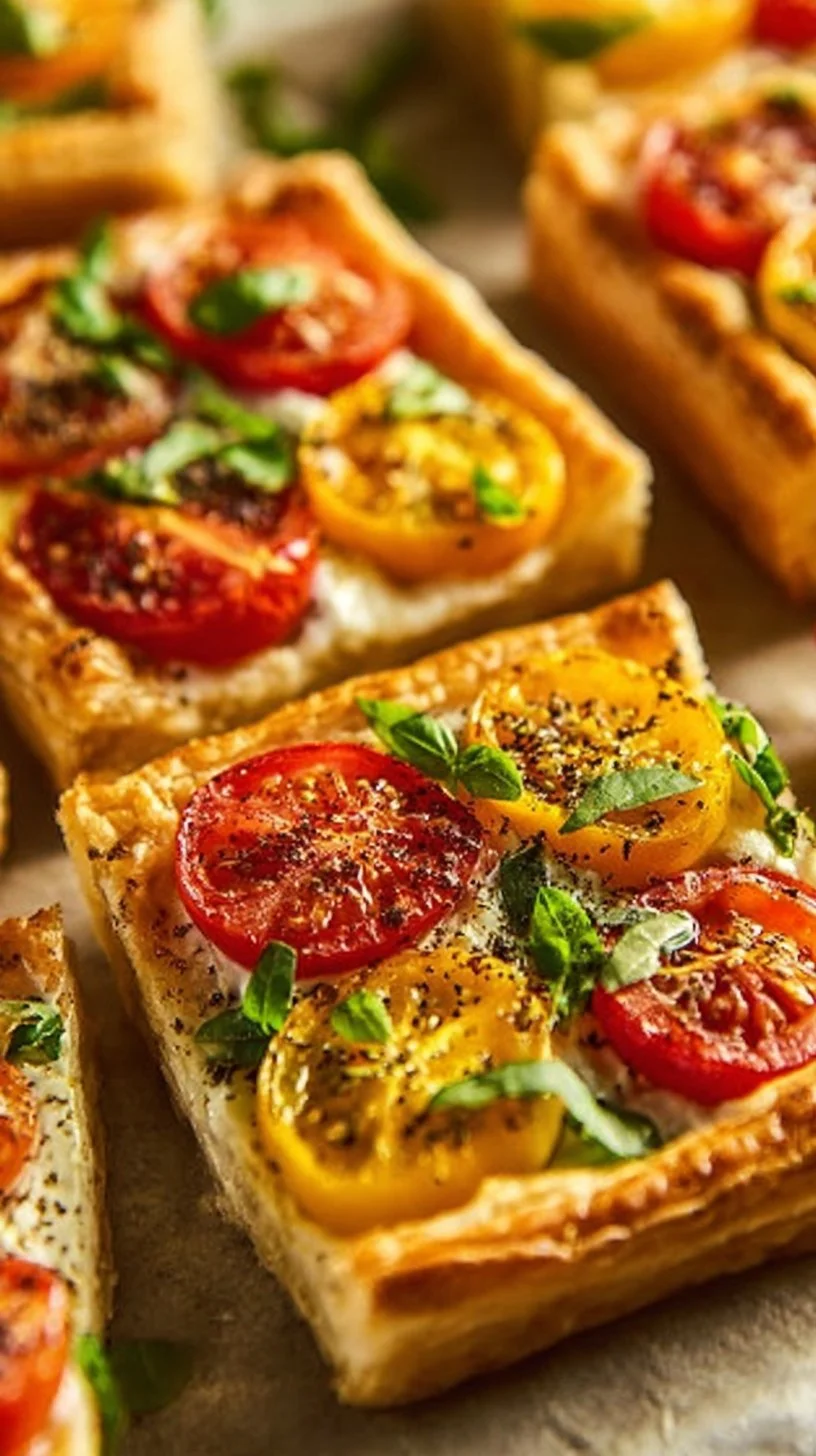
There are recipes that travel lightly—simple ingredients folded together like a pocket of memory—and then there are those that arrive heavy with the sunlight of a place. Tomato Tartlets with Puff Pastry belong to the second kind. I first encountered them in a cramped Parisian bakery that smelled of butter and warm sugar and the slow, grassy perfume of ripe tomatoes. They sat behind glass on a blue enamel tray, the puff pastry’s layers catching the shop light like the pages of a beloved travelogue. One bite was a momentary collapse of flake and cream, a whisper of basil and salt that called up back-roads in Italy, village markets in Provence, and the unhurried lunches of coastal towns where tomatoes are not merely fruit but a way of narrating an afternoon.
Food writers often speak of recipes as if they were passports. This tartlet is a tiny stamp—portable, elegant, and adaptable—able to tell different regional stories depending on the tomatoes, the herbs, and the company it keeps. In the world between kitchens, I have watched it become a summer handshake at an English garden party, a glossy appetizer in a Californian café, and a sunlit street snack in Mediterranean plazas. Each iteration keeps the same essential pattern: a buttery cradle of puff, a soft, creamy heart, and the bright, singing presence of tomato. For another kind of sweet, crafted compactly and with equal charm, some travelers keep a recipe like a souvenir of an island afternoon, similar in small domestic elegance to a coconut dome with chocolate spread I once loved.
The origin story & regional influence behind this dish
The tartlet is a modern heir born from older traditions. The idea of baking fruit and cheese in a flaky pastry reaches back through centuries: the medieval galette, the Italian crostata, and the French tarte fine all share a lineage of baking fruit on a bed of dough and letting the oven perform its slow alchemy. Puff pastry—feuilletage in French—was perfected in the grand kitchens of France and made these small tarts possible on a domestic scale. Yet the heart of this particular flavor story is not the pastry but the tomato: brought to Europe from the Americas in the 16th century, tomatoes moved from curiosity to culinary mainstay in waves, first embraced by southern Italy and later woven into the broader Mediterranean palate.
In coastal Italy, where tomatoes ripen like small suns and basil grows wild along ruined walls, a similar combination—tomato and cheese on pastry or bread—became an afternoon ritual. In France, the tart became a moment of refinement, pared with ricotta or fromage blanc and served with a glass of rosé. In California, the tartlet took on a farmer’s-market ethos: heirloom tomatoes, olive oil from family groves, and a basil snipped between fingers. These regional nuances are less about technique and more about conversation—of terroir and summer, of backyard gardens and local dairies—so that a single recipe can tell many local histories.
How to make Tomato Tartlets with Puff Pastry
There is a quiet choreography to assembling these tartlets—no grand gestures, only the small, satisfying motions that make best use of daylit time. Each step reads like a sentence in a short story: roll out the pastry, slice with care, fold a little edge to hold the filling, and let the tomatoes lay like confident notes on a music sheet. The egg wash gleams like varnish; the crumble of Parmigiano-Reggiano adds a salty, crystalline punctuation. If you wish to witness how a rustic dish can become sublime through small attentions, consider the practice of brushing the tomatoes with olive oil until they look almost lacquered with late-afternoon sun. For a different pairing at a leisurely supper, think of this tartlet alongside a main that offers robust contrast—a rich roast, perhaps—and consult the same kind of savory tradition that carries a garlic butter steak with parmesan cream sauce from skillet to table.
Ingredients :
1 8.5 oz sheet puff pastry (e.g. Pepperidge Farm Puff Pastry), 1 egg, ¾ cup whole milk ricotta cheese (8 oz), ¼ cup grated Parmigiano-Reggiano (4 oz), 1 tsp kosher or sea salt, 1 tsp freshly ground black pepper, 3 tbsp fresh basil (minced, plus more whole leaves for garnish), 1 tsp garlic powder, 1 tsp dried oregano, ½ lb mini heirloom tomatoes (halved, or cherry, grape, or regular heirloom tomatoes sliced), 1 tbsp olive oil, flaky sea salt to finish
Directions :
Heat oven and prepare puff pastry – Preheat the oven to 425°F and line a sheet pan with parchment paper. Place puff pastry on a cutting board and slice into 9 even pieces. Use a knife to slice rectangles inside of each piece, creating roughly a quarter inch perimeter., Make ricotta mixture and egg wash – In a bowl, combine ricotta, parmigiano-reggiano, salt, pepper, basil, garlic powder, and oregano. Whisk an egg in a small bowl and set aside to use as egg wash after assembly., Assemble tartlets – Place the puff pastry rectangles on the baking sheet 1 inch apart. Spoon and spread roughly 1½ tablespoons of the cheese mixture in the middle rectangle of each puff pastry. Top each piece with sliced tomatoes, brush the tomatoes with olive oil, and brush the edges of each puff pastry rectangle with egg wash., Bake – Place in the oven and bake for 20 minutes until the pastry is golden, turning the baking sheet halfway through. Remove from the oven and cool on a wire rack. Top with fresh basil, flaky sea salt, and freshly ground pepper and serve.
Ingredients through a cultural & historical lens
Look at the ingredient list and you see a conversation between the old world and the new: ricotta and Parmigiano-Reggiano carry centuries of Italian dairy tradition, their heritage marked by pasture and season; basil is the green signature of Mediterranean summers; the tomato is the New World fruit that rewrote the flavor map of Europe. Puff pastry, though widely commercial today, carries the patina of French haute cuisine, where time and repetition turned fat and flour into countless delicate leaves. Even the olive oil and flaky sea salt speak of place—their subtleties are map-like, capable of conveying the limestone of Greek groves or the warm clays of Andalusia through scent and mouthfeel. Together, these ingredients are an anthology: each element whispers the story of its origin and, when combined, they narrate a cross-continental history of taste.
Cooking the dish: sensory notes & traditional techniques
The sensory heart of this tartlet is texture. The first sound—light and happiest—is the tender crack of the pastry as your fork presses through its golden fold. The next sensation is a cool creaminess as the ricotta and Parmigiano meet the tongue; Parmigiano’s granularity and umami anchor the airy ricotta. Then the tomatoes, warmed but intact, release a juice like concentrated summer sunlight, bright and slightly acidic, which cuts through the richness with a clarifying note. The basil, sliced finely or torn and scattered, gives the breath of green like wind through a window.
Traditional techniques that resonate with this dish are not strict rules but respectful gestures: letting ingredients come to room temperature so flavors can mingle more honestly; slicing tomatoes to reveal their inner color and fragrance; and giving the puff pastry a clean edge so that the flake can stratify beautifully. In some parts of the Mediterranean, cooks will allow the tomatoes to be lightly salted ahead of baking to coax out excess water and intensify flavor—an old-fashioned patience that rewards time with concentrated taste. For those who like a little theatricality, a final scatter of flaky sea salt moments before serving is a ritual of contrast, catching the light and creating a small, pristine crunch.
How different regions prepare their version
The tartlet is a shape-shifter. In Provence, the cheese layering might be thinner, and the tomatoes larger, each slice arranged like a petal across the pastry. In Naples, you may find a slightly heartier hand, with a smear of tomato paste below the cheese—a descendant of pizza’s savory insistence. In coastal California, the tomatoes are often heirlooms, their color range a painter’s palette, topped with locally pressed olive oil and sometimes a hint of lemon zest. In England, you might encounter a version served warm with a microgreens salad and a dollop of chutney alongside, reflecting the island’s taste for sweet-savory pairings. Across regions, the tartlet adapts not by violating its core but by wearing local clothes—different herbs, olive varieties, or a sprinkle of chili—each addition telling of the place and the people who baked it.
Traditional ways this dish is shared or served
This tartlet fits into many shared rituals. In Mediterranean towns, it has the intimacy of a midday gathering—shared among friends with little plates, conversation braided with the clink of glasses. At garden parties, these serve as elegant finger food, passed around on platters while guests discuss books and travel. In bakeries, they’re sold as an afternoon promise to strangers, wrapped in paper and eaten on park benches. In family kitchens, they become part of a weeknight tradition: a simple dinner with a salad, bread, and an insistence to linger over the table. The dish’s generosity—small, but complete—makes it a favorite for moments that are not grand but are full of human warmth.
Storing the dish without losing its cultural essence
Storing a tartlet is an act of preservation and of respect. In many cultures, leftovers are never merely saved; they are reimagined. To keep the pastry’s integrity, cool them completely and place them in a single layer, separated by parchment, in an airtight container. Reheat briefly in a moderate oven to revive the flake and the warmth; the oven is kinder than the microwave for restoring texture. If you must refrigerate, keep basil separate until serving to preserve its perfume. And if you find yourself with many, think like a Mediterranean homemaker: serve them cold on a picnic blanket with olives and a chilled bottle of wine—storage transformed into a new ritual of place.
Cultural questions people often ask
People often wonder whether a modern, store-bought puff pastry diminishes the authenticity of a dish steeped in artisan tradition. The answer lies in intention: convenience and quality are not enemies when chosen mindfully. Another common question is about ingredient substitution—could goat cheese replace ricotta? Yes, and such substitutions reflect local ecologies and palates, a culinary dialect shift rather than a betrayal. Travelers ask whether this can be a signature for a restaurant or a home cook; oddly, the tartlet thrives in both worlds because it is essentially hospitable: simple enough to be made at home, refined enough to star on a small-plates menu. Finally, people ask: when is the tomato right? The best tomatoes are those that pronounce the season—ripe, fragrant, and unapologetically sun-warmed.
A closing note on food, memory & travel
Food remembers. It remembers the field where the basil was torn, the hands that smeared the cheese into a loving ring, the oven’s steady hum. As a traveler, I have learned that recipes like Tomato Tartlets with Puff Pastry are compasses: they point not only to taste but to the times and places that shaped them. They are intimate cartographies—of summers, of markets, of kitchens where elders taught the young how to fold pastry without hurry. For an evening that wants to fold travel into its smallness, for an afternoon that needs the assured warmth of a shared thing, this tartlet offers the comfort of a conversation that crosses borders yet feels like home. If you enjoy the way small, composed dishes can anchor a table, you might also appreciate lighter tarts and compact desserts that travel well, like these delicate mini Easter cheesecakes with chocolate eggs which bring their own kind of holiday memory to a picnic table. For a heartier companion on a chilly evening, consider serving the tartlets alongside a robust dish such as parmesan-crusted chicken with creamy garlic sauce, and watch how the table’s stories unfold.
Conclusion
In the many kitchens and markets where this recipe lives, it has become a small altar to seasonality and a gentle ambassador of place. For an instructive variation and step-by-step photos, a home cook might enjoy the approachable presentation of Cheesy Heirloom Tomato Tarts with Puff Pastry | PWWB, while those looking for a compact tutorial with clear visuals can find a useful guide in Mini Tomato Tarts Recipe with Puff Pastry – Tara Teaspoon. If you prefer a slightly different aesthetic and narrative around a puff pastry tart, the elegant plating and notes in Puff Pastry Tomato Tart – Vanilla Bean Cuisine complement this recipe beautifully. Wherever you bake them, these tartlets will always arrive bearing the flavor of where you made them and the company you shared them with.
Tomato Tartlets with Puff Pastry
Ingredients
Method
- Preheat the oven to 425°F and line a sheet pan with parchment paper.
- Place puff pastry on a cutting board and slice into 9 even pieces. Use a knife to slice rectangles inside each piece, creating roughly a quarter-inch perimeter.
- In a bowl, combine ricotta, Parmigiano-Reggiano, salt, pepper, basil, garlic powder, and oregano.
- Whisk an egg in a small bowl and set aside to use as egg wash after assembly.
- Place the puff pastry rectangles on the baking sheet 1 inch apart.
- Spoon and spread roughly 1½ tablespoons of the cheese mixture in the middle rectangle of each puff pastry.
- Top each piece with sliced tomatoes, brush the tomatoes with olive oil, and brush the edges of each puff pastry rectangle with egg wash.
- Place in the oven and bake for 20 minutes until the pastry is golden, turning the baking sheet halfway through.
- Remove from the oven and cool on a wire rack. Top with fresh basil, flaky sea salt, and freshly ground pepper before serving.