Parmesan Crusted Chicken with Creamy Garlic Sauce – Easy Family Dinner Recipe
Introduction
Parmesan Crusted Chicken with Creamy Garlic Sauce is a concise study in crust formation, sauce emulsion, and the balance of fat and acidity to elevate simple ingredients into a composed main course. The technique prioritizes predictable texture — a crisp, evenly browned exterior with a tender, juicily cooked interior — and a sauce that clings to the crust without collapsing it. For a comparative method focusing on similar crust and cream-sauce interplay, see this curated recipe which outlines comparable steps and serving suggestions.
The culinary logic behind this dish
This preparation rests on three culinary principles: Maillard development, controlled hydration of the crust, and sauce emulsification. The breadcrumb-Parmesan crust is engineered to maximize surface browning; breadcrumbs provide surface roughness and rapid moisture evaporation while grated Parmesan contributes both fat and proteins that brown at lower temperatures, deepening the savory profile. Dredging in flour then egg creates a progressive adhesive system: flour promotes initial dryness and a uniform protein surface, egg delivers an adhesive protein matrix that binds the crumb to the cutlet, and the crumb mixture establishes the final barrier to moisture loss.
The sauce uses garlic, butter, stock, cream, and additional Parmesan. Garlic sautéed briefly in butter releases aromatic sulfur compounds without burning; adding stock introduces umami and acidity to temper the cream’s richness; reducing concentrates flavor while the cream and Parmesan reintroduce fat and viscosity. The sequence — brown the chicken and rest it, then build the sauce in the same pan — allows fond deglazing and integrates browned flavor compounds into the sauce, yielding a deeper, more cohesive dish.
How to make Parmesan Crusted Chicken with Creamy Garlic Sauce – Easy Family Dinner Recipe
This section presents the exact ingredients and directions for the recipe. Follow the chronology precisely; timing and order are essential to texture and flavor outcomes.
Ingredients :
4 thin chicken cutlets, ½ cup all-purpose flour, 2 large eggs, beaten, 1 cup breadcrumbs, ½ cup grated Parmesan cheese, 2 tbsp olive oil, 2 tbsp butter, 3 garlic cloves, minced, ½ cup chicken broth, 1 cup heavy cream, ¼ cup grated Parmesan (for sauce), Salt & pepper to taste, Fresh parsley or thyme for garnish
Directions :
Prepare Chicken: Season cutlets with salt and pepper., Coat Cutlets: Dredge in flour, dip in egg, then coat with breadcrumb-Parmesan mixture., Pan-Fry: Heat olive oil in skillet. Cook chicken 3–4 minutes per side until golden and crisp. Transfer to plate., Make Sauce: In same skillet, melt butter. Add garlic and sauté until fragrant. Stir in broth, cream, and Parmesan. Simmer until thickened. Season to taste., Combine: Return chicken to skillet, spoon sauce over, and garnish with parsley., Serve: Pair with mashed potatoes, pasta, or roasted vegetables.
While the recipe’s directions are intentionally concise, successful execution requires attention to mise en place, ingredient temperatures, and pan conditions. For a technique crossover using a similar cream-based Parmesan finish on beef, consider this approach in a related preparation that reinforces the same sauce stabilization principles.
Ingredient analysis through a chef’s lens
- Chicken cutlets: Thin, uniformly sized cutlets cook rapidly and permit a controlled crust-to-crumb ratio. Thickness influences carryover cooking; thin cutlets need minimal rest to avoid overcooking.
- Flour: Creates a dry protein interface on the cutlet so the beaten egg adheres evenly; it also moderates surface moisture which can prevent the crust from becoming soggy.
- Eggs: Provide a protein-rich binder that coagulates quickly under heat, anchoring the breadcrumb-Parmesan mixture.
- Breadcrumbs + Parmesan (for crust): Breadcrumbs supply texture and rapid heat conduction for browning; the grated Parmesan melts and crisps, lending a savory, slightly granular crust.
- Olive oil + butter: Olive oil raises the smoke point and promotes even crisping, while butter adds flavor; using both leverages Mediterranean fruity notes with rounded dairy richness.
- Garlic: High-impact aromatics; sulfides form quickly when garlic is sliced or minced. Brief sautéing releases these compounds without bitterness.
- Chicken broth: Adds salt, umami, and a low-fat medium to deglaze the pan and dissolve fond.
- Heavy cream + Parmesan (for sauce): Cream provides mouthfeel and emulsification; combining it with grated cheese yields a stabilized, clingy sauce when heated gently.
- Salt & pepper: Seasoning at multiple stages is essential; initial salt seasons the meat, final seasoning adjusts the sauce.
Kitchen workflow & technique breakdown
Efficiency and sequencing are as important as individual actions. The objective is to maintain a hot pan for crusting while preserving space and time to make a properly reduced sauce.
- Mise en place: Trim, pound (if necessary), and pat the cutlets dry to minimize surface moisture. Set up a three-station breading line (flour -> egg -> breadcrumb-Parmesan) close to the stove to limit handling.
- Pan temperature: Preheat the skillet over medium-high until a bead of water skitters; add oil and ensure it is shimmering before adding chicken. This prevents the crust from absorbing oil and becoming greasy.
- Batch cooking: Avoid crowding; each cutlet needs direct contact with the pan. If the pan becomes crowded, the surface temperature drops, producing steaming instead of frying.
- Resting: Transfer chicken to a plate and tent loosely. Resting equalizes internal temperature and allows the crust to set, reducing risk of breaking when saucing.
- Deglazing and sauce assembly: Reduce heat to medium-low before adding butter; hot pan and fond combine with butter and garlic, then deglaze with broth to lift browned bits. Introduce cream and Parmesan gradually, whisking to integrate and prevent graininess. Finish with a quick simmer to thicken.
For an organized approach to weeknight mains with similar timing considerations, review a selection of recipes categorized for quick dinners at easy dinner recipes.
Texture control, heat management & timing
Texture is the sum of crust quality, internal meat juiciness, and sauce consistency.
- Crust: Achieve immediate sizzle by ensuring cutlets are dry and the pan is hot. Flip once to keep the crust intact — frequent turning interrupts Maillard reactions and increases oil absorption.
- Internal doneness: Because cutlets are thin, rely on timing and visual cues (opaque center, clear juices) rather than thermometers. A properly cooked thin cutlet will register near 150–155°F internally before resting; carryover raises it to a safe finished temperature.
- Sauce viscosity: Gentle simmering reduces the liquid, concentrating both flavor and body. Avoid boiling when cream is present to prevent separation. If the sauce appears too thin, increase the simmer until it lightly coats the back of a spoon; if too thick, thin with a splash of broth.
- Heat control: High heat for searing; then reduce to medium-low for sauce formation. Butter and garlic require lower heat to avoid burning aromatic oils which will impart bitterness.
Professional variations
These controlled variations preserve the recipe’s architecture while offering distinct profiles:
- Nutty crust: Replace ¼ cup breadcrumbs with finely ground panko or almond meal to alter crunch and oil absorption; adjust browning time accordingly.
- Acid finishing: A teaspoon of lemon juice or a splash of white wine in the sauce brightens richness without thinning the emulsion if added off-heat and whisked in.
- Herb infusion: Add thyme springs during sauce reduction for aromatic lift; remove stems before finishing to keep texture clean.
- Browning technique: For an extra-deep crust, finish in a 400°F oven for 3–4 minutes after pan searing to set and crisp without additional oil absorption.
These adjustments require recalibration of timing and heat. Maintain the sauce-to-protein ratio and avoid overloading flavors that will compete with the Parmesan’s umami.
Finishing touches & plating philosophy
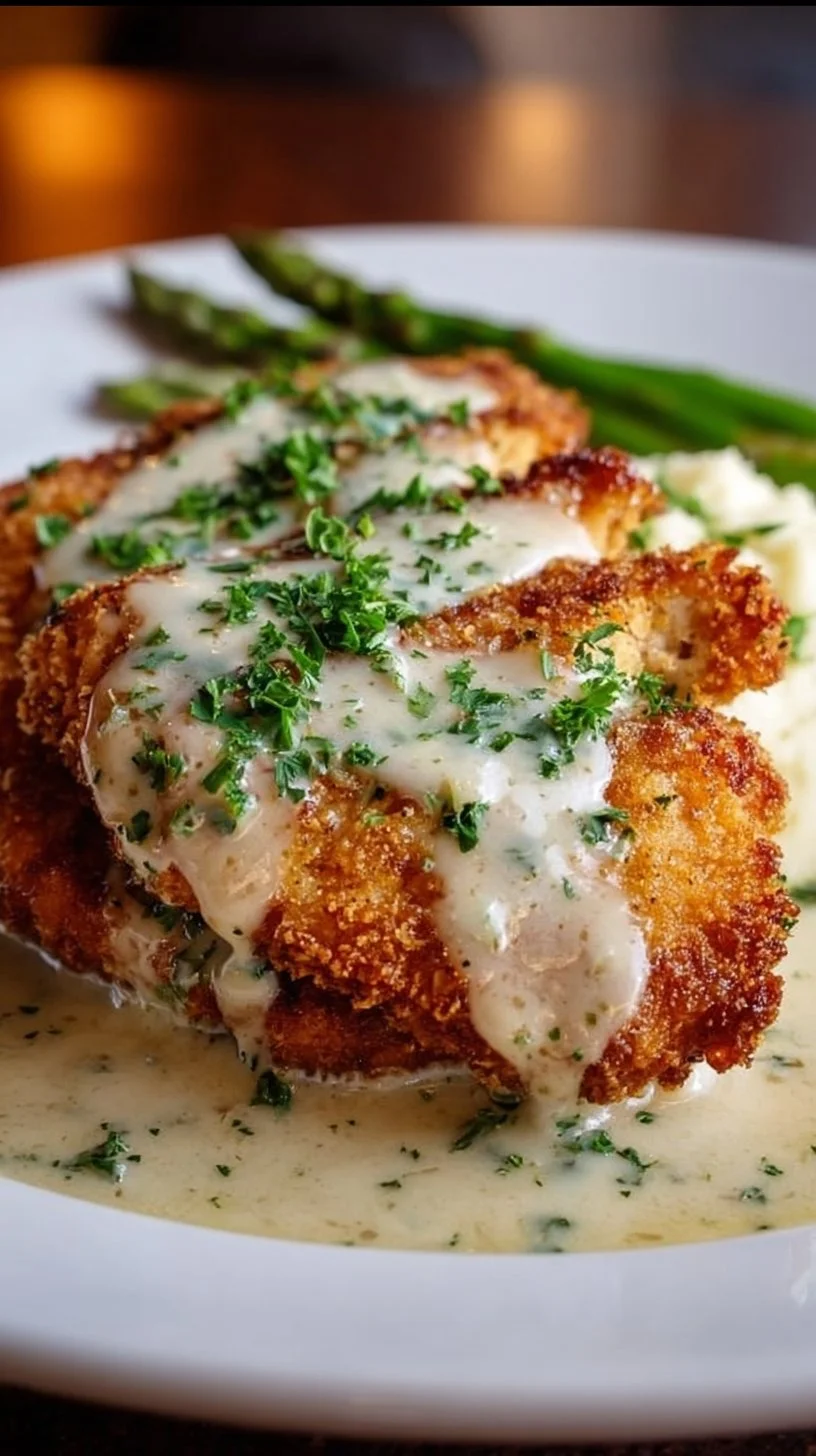
Plating should emphasize contrast — crisp crust against a glossy, reduced sauce. Spoon the sauce around the cutlet rather than flooding it; this preserves crust texture and lets the diner experience both mouthfeels. A scatter of finely chopped parsley or a few leaves of thyme provides a fresh, herbaceous counterpoint and a visual green highlight against the golden crust and pale sauce.
Consider vertical composition: place the cutlet slightly overlapped on a bed of starch (mashed potatoes or pasta) so the sauce naturally pools and is absorbed gradually. If serving with roasted vegetables, arrange them to the side to keep the plate’s center focused on the protein.
For plating inspirations that pair cream-sauced proteins with starches, review a complementary arrangement in a curated pasta-and-protein preparation.
Maintaining quality after cooking
Leftovers can be preserved with minimal compromise to texture if treated properly:
- Short-term: Store chicken and sauce separately. The crust softens in sauce; storing separately preserves texture.
- Reheating: Reheat chicken in a 375°F oven on a rack for 6–8 minutes to reactivate crisping; warm sauce gently over low heat, adding a tablespoon of cream or stock if it has thickened excessively.
- Freezing: Freeze sauce only; dairy-based sauces can separate after freezing and reharnessing via gentle whisking and heat. For longer storage, reduce shelf-stable components (stock) and add cream fresh upon reheating.
Avoid microwaving assembled portions — it collapses the crust and coagulates the sauce unevenly.
Questions from home cooks (chef answers)
Q: How do I prevent the crust from falling off?
A: Ensure the cutlets are patted dry and follow the exact breading order: flour -> egg -> breadcrumb-Parmesan. Do not press excessively into the crumb; a gentle but thorough coating allows the egg proteins to coagulate uniformly. Sear undisturbed to allow the crust to set before flipping.
Q: My sauce became grainy after adding Parmesan. Why?
A: Graininess results from overheating the cheese or adding it to boiling liquid. Lower the heat to medium-low, remove from direct high heat if necessary, and whisk the cheese in gradually. Using finely grated Parmesan reduces clumping and encourages smoother integration.
Q: Can I use chicken breasts instead of cutlets?
A: Yes, but either pound breasts to even thickness or slice them into cutlets to maintain quick, even cooking. Thicker breasts require longer cooking and a finished temperature check to prevent dryness.
Q: How to intensify garlic without bitterness?
A: Mince or press garlic and add it to warm butter, not hot, then allow it to infuse for a shorter period (30–45 seconds) before adding liquid. Alternatively, roast garlic beforehand to add sweetness and depth without sharpness.
Final chef notes
Precision in temperature, sequence, and ingredient state defines success for this dish. The method is straightforward, but each step serves a purpose: dryness for adhesion, progressive binding for crust durability, and controlled reduction for sauce cohesion. Master the rhythm of sear, rest, deglaze, and reduce, and the result will be a composed plate where crust, meat, and sauce exist in deliberate balance.
Conclusion
For a complementary take on a creamy garlic-Parmesan chicken that emphasizes silky sauce texture, consult Creamy Garlic Parmesan Chicken | Gimme Delicious which offers useful tips on sauce stabilization. If you prefer a step-by-step visual guide and additional serving ideas, review Creamy Garlic Parmesan Chicken – Salt & Lavender for plating and timing cues. For another variation with explicit assembly steps, see Parmesan Crusted Chicken with Creamy Garlic Sauce which reinforces the core techniques discussed above.
Parmesan Crusted Chicken with Creamy Garlic Sauce
Ingredients
Method
- Season the chicken cutlets with salt and pepper.
- Dredge the cutlets in flour, dip in beaten eggs, then coat with the breadcrumb-Parmesan mixture.
- Heat olive oil in a skillet over medium-high heat.
- Cook the chicken cutlets for 3-4 minutes per side until golden and crisp. Transfer to a plate and tent loosely with foil.
- In the same skillet, melt butter and add minced garlic, sautéing until fragrant.
- Stir in chicken broth, heavy cream, and additional Parmesan cheese. Simmer until the sauce thickens. Season to taste.
- Return the chicken to the skillet, spoon sauce over it, and garnish with parsley.
- Serve with mashed potatoes, pasta, or roasted vegetables.