Pastel Sugar Cookie Sandwiches Recipe
Introduction
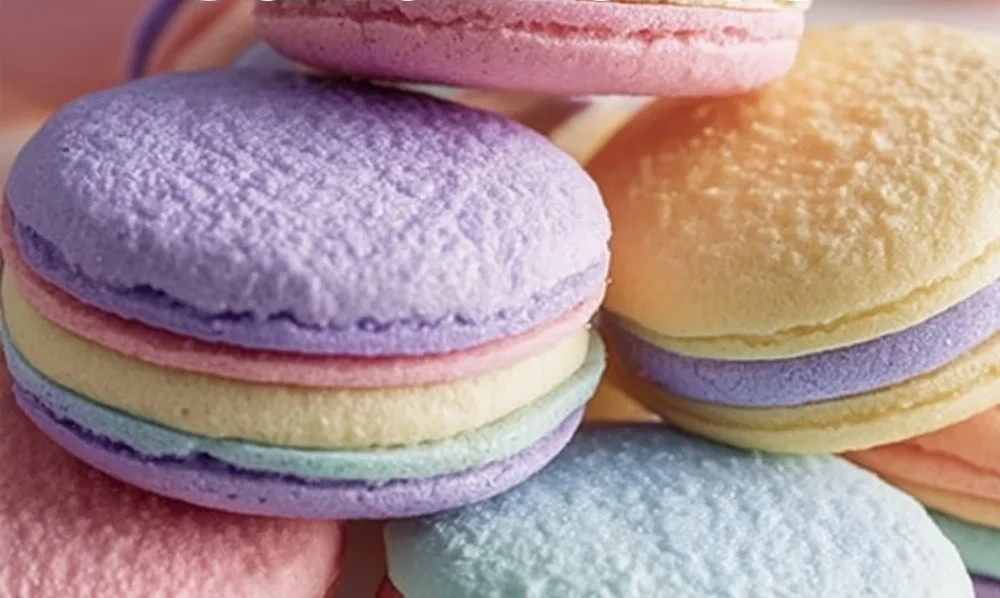
The Pastel Sugar Cookie Sandwiches recipe is a precise exercise in controlled sugar crystallization, gentle gluten development, and color-balanced presentation. The formulation—high butter to flour ratio with modest chemical leavening—produces a cookie that is tender, slightly cakey at the center, and with clean, set edges. When executed with attention to temperature and timing, the pastel hues remain soft and uniform without bleeding into one another. For a contrasting texture and service option, consider the denser sheet format found in sugar cookie bars, which illustrate alternative portioning strategies for similar doughs.
The culinary logic behind this dish
This recipe relies on classical creaming and light chemical leavening to achieve its texture. Creaming butter with granulated sugar incorporates air and partially dissolves sugar crystals, which influences the cookie’s oven rise and internal crumb. The single egg provides structure through coagulated proteins while contributing emulsifying lecithin that keeps the fat and aqueous phases integrated. The relatively high flour content, coupled with a small amount of milk, produces a dough that is pliable but not tacky—ideal for portioning into uniform balls. Baking powder and baking soda are both present to give a balanced lift and fine crumb: baking soda neutralizes any acidity and contributes oven spring, while baking powder provides sustained gas release for even rise.
Coloring with gel food colorings ensures saturation with minimal added liquid, protecting dough hydration and preventing spread. The vanilla filling is a stabilized buttercream: powdered sugar for sweetness and structure, butter for richness and mouthfeel, and cream for controlled aeration. A pinch of salt offsets the sweetness and lifts aromatic vanilla notes. Understanding these interactions—fats for tenderness, sugar for structure and color, leaveners for lift—enables predictable results and intentional textural outcomes.
How to make Pastel Sugar Cookie Sandwiches Recipe
Follow the provided directions exactly, focusing on technique notes and sensory cues at each stage. The process can be divided into four phases: dough development, coloration and portioning, baking and cooling, and filling and assembly.
Begin by creaming butter and granulated sugar until light and aerated; you should see a paler color and a ribbon-like fall when the paddle is lifted. Incorporate the egg and vanilla fully; look for a homogeneous, glossy mass before advancing. When combining dry ingredients, whisk thoroughly to distribute leaveners evenly—this prevents localized over-rise or tunnels. Add the dry ingredients low and slow to avoid overworking the dough; mix only until the flour disappears.
Divide and color the dough using gel colors, kneading just until uniform; excess handling will increase gluten development and yield tougher cookies. Portion with a one-tablespoon scoop to achieve consistent bake times. Bake until the edges are set and the tops show slight fissures; avoid browning. Transfer to a wire rack after a brief rest on the sheet to complete cooling without additional carryover browning. Prepare the filling by creaming butter, then adding powdered sugar and liquid to reach a spreadable consistency; taste and adjust for balance. Pipe or spoon filling between matched cookie pairs and allow a short resting period to settle the buttercream.
Do not change measurements or steps from the directions below—these are calibrated for texture and timing. Sensory checkpoints are provided to help you interpret the outcomes at each stage.
Ingredients :
FOR THE SUGAR COOKIES:, 1 cup unsalted butter, softened, 1 ½ cups granulated sugar, 1 large egg, 2 teaspoons vanilla extract, 2 ¾ cups all-purpose flour, 1 teaspoon baking soda, ½ teaspoon baking powder, ½ teaspoon salt, 2 tablespoons milk, Gel food coloring (pink, yellow, green, blue, and purple), FOR THE VANILLA FILLING:, ½ cup unsalted butter, softened, 2 cups powdered sugar, 2 tablespoons heavy cream or milk, 1 teaspoon vanilla extract, Pinch of salt
Directions :
PREHEAT THE OVEN: Set the oven to 350°F (175°C). Line a baking sheet with parchment paper and set it aside., MAKE THE COOKIE DOUGH: In a large mixing bowl, beat the butter and sugar together until light and fluffy, about 2 minutes. Add the egg and vanilla extract, mixing until fully incorporated., COMBINE THE DRY INGREDIENTS: In a separate bowl, whisk together the flour, baking soda, baking powder, and salt. Gradually add the dry ingredients to the wet ingredients, mixing on low speed. The dough will be thick but soft. Add the milk and mix until combined., COLOR THE DOUGH: Divide the dough into five portions. Using gel food coloring, tint each portion a different pastel color. Knead the coloring into the dough until evenly distributed., SHAPE AND BAKE: Scoop about 1 tablespoon of dough for each cookie and roll it into a smooth ball. Place the dough balls onto the prepared baking sheet, spacing them about 2 inches apart. Bake for 8-10 minutes, until the edges are set and the tops look slightly cracked but not browned. Let the cookies cool on the baking sheet for 5 minutes before transferring them to a wire rack to cool completely., MAKE THE VANILLA FILLING: In a mixing bowl, beat the butter until smooth. Gradually add the powdered sugar, then mix in the heavy cream (or milk), vanilla extract, and a pinch of salt. Continue beating until the mixture is fluffy and spreadable. Adjust consistency by adding more cream if too thick or more powdered sugar if too thin., ASSEMBLE THE COOKIE SANDWICHES: Once the cookies are completely cool, match them into pairs of similar sizes. Using a piping bag or a spoon, spread a generous amount of filling onto the flat side of one cookie. Place a second cookie on top and press gently to spread the filling evenly., SET BEFORE SERVING: Let the cookie sandwiches sit for about 10 minutes to allow the filling to firm up slightly.
Ingredient analysis through a chef’s lens
Each ingredient has a functional role beyond taste. Unsalted butter contributes moisture and flavor; its water content drives steam, which aids lift and creates micro-porosity in the crumb. Granulated sugar not only sweetens but also controls spread by interfering with gluten formation; its crystalline structure also affects creaming. The single egg contributes binding and fat-emulsifying properties; it also yields a slightly elevated protein content for structure. The combination of baking soda and baking powder is chosen to provide immediate and sustained leavening: baking soda offers a quick initial rise and browning control, while baking powder sustains the lift so the top remains slightly cracked rather than collapsed.
Milk is included primarily to adjust dough hydration and to promote a tender crumb; it also aids in dissolving sugar and moderating viscosity for easier portioning. Gel food coloring is specified to maintain the dough’s hydration balance—liquid dyes could over-hydrate and increase spread. For the filling, powdered sugar is both structural and stabilizing; its cornstarch inclusion prevents weeping. Heavy cream modulates the buttercream’s mouthfeel, producing a silkier texture than milk alone. Salt is a flavor amplifier; even a pinch rounds the profile and enhances buttery and vanilla aromatics.
Kitchen workflow & technique breakdown
Efficient mise en place is essential. Bring butter and egg to room temperature simultaneously to ensure even incorporation. Pre-measure dry ingredients and whisk them together to distribute leaveners uniformly—this reduces the need for prolonged mixing later. When creaming, use a paddle attachment at medium speed; two minutes typically suffices, but judge by visual cues: the mixture should be paler and aerated. When adding flour, slow speed and short pulses prevent gluten overdevelopment; stop as soon as streaks disappear.
Divide the dough into five portions on a chilled surface to reduce stickiness when kneading color in. Use a small offset spatula or bench scraper to fold colors rather than rigorous kneading; this minimizes heat transfer from hands and preserves dough texture. Portion with a one-tablespoon scoop on a parchment-lined sheet for consistent geometry. Rotate sheets halfway through baking if your oven has hot spots. Use racks for immediate cooling to stop residual heat from carrying the bake beyond the desired color and interior moisture.
For field efficiency, bake multiple sheets in sequence: while one sheet cools on a rack, prepare the filling. Pipe the filling as soon as it reaches a spreadable, stable consistency—if overwhipped, refrigerate briefly and rewhip to restore spreadability. For pair matching, line cookies by size on a tray to assemble quickly and consistently.
A technical comparison of creaming dynamics and portioning can be found in technique-focused cookie formats such as cake-mix cookie bars, which emphasize alternative methods for achieving uniform textures and shapes.
Texture control, heat management & timing
Texture hinges on balancing spread and internal setting. The target is slight edge set with a soft center. This equilibrium is achieved by controlling oven temperature, bake time, and dough temperature at bake time. A 350°F environment gives predictable Maillard progression without excessive color; monitor the tops for fine cracking and the edges for a matte, set appearance. Remove sheets promptly to prevent carryover heat from browning.
If cookies are browning at the edges before the top shows fissures, reduce oven temperature by 10–15°F or shorten bake time by one minute. If cookies remain doughy after the recommended time, verify oven calibration and ensure dough balls are uniform in size. Cooling on the sheet for five minutes allows the exterior to stabilize while residual steam migrates to the surface; transferring to a wire rack stops the cooking and preserves the desired palate texture.
Filling consistency matters for mouthfeel: a too-thin filling will weep; too-stiff will feel dry and make the sandwich top-heavy. Aim for a buttercream that holds a defined piped ridge but compresses slightly under light pressure.
Professional variations
Variations can be made at the finishing or pairing level without altering the core formula. For greater structural integrity in warmer environments, incorporate 1–2 teaspoons of cornstarch into the filling to reduce weep. To shift aromatic focus, replace one teaspoon of vanilla extract in the cookie dough with ¾ teaspoon finely grated lemon zest for a bright counterpoint; do not change the ingredient list here—this is offered as conceptual variation only for professional settings.
For presentation shifts, assemble as small three-bite sandwiches by reducing scoop size, or press a thin layer of finely chopped, toasted nuts into the perimeter of the filling for textural contrast. For instructions on chewy, spice-forward cookies that refine creaming technique, consider methodology demonstrated in chewy maple-cinnamon cookies, which emphasizes mixing and hydration control.
Finishing touches & plating philosophy
Finishing is an opportunity to refine contrast and visual clarity. The pastel palette should remain soft; avoid adding wet glazes that might bleed color. When plating, use a neutral plate—matte white or stone—to allow the pastel hues to read without competing reflections. Arrange sandwiches with negative space; present in small stacks of three to give height and a sense of abundance. For serviced banquets, place sandwiches on parchment-wrapped boards to prevent sticking and to assist portion control.
Consider temperature at service: cookies assembled at room temperature (around 68–72°F) will exhibit optimal filling texture; chill will firm the buttercream and change mouthfeel. For catering, store assembled sandwiches briefly chilled and bring to service temperature to regain spread softness. For additional guidance on composing multi-course spreads where these cookies serve as a sweet element, consult broader menus like those in easy dinner recipes to align portioning and pacing.
Maintaining quality after cooking
Quality maintenance depends on humidity and temperature. Store unfilled cookies airtight at room temperature for up to three days. If filled, refrigerate for up to four days; allow to equilibrate to room temperature for 20–30 minutes before service to restore creaminess. For longer storage, freeze unfilled dough balls individually on a tray, then transfer to a sealed bag for up to three months; thaw overnight in the refrigerator and bake from chilled, adding one minute to bake time if necessary.
To avoid sogginess, place a thin disc of parchment between fillings and top surfaces when stacking multiple layers in storage. If the filling begins to weep, whip briefly to re-incorporate moisture, or chill slightly to re-solidify fats.
Questions from home cooks (chef answers)
Q: Why do my cookies brown instead of remaining pastel?
A: Browning indicates excess Maillard activity. Reduce oven temperature by 10–15°F, shorten bake time, or use lighter-colored baking sheets that reflect heat. Ensure cookies are baked only until edges are set and tops show slight cracks.
Q: My colors bleed into one another—how can I prevent it?
A: Use gel colors to avoid adding liquid. Keep colors separate until fully kneaded into each portion. Work quickly and keep dough slightly cool; warm dough is more prone to stickiness and bleed.
Q: The filling is too soft at room temperature—what then?
A: Increase powdered sugar gradually to firm, or refrigerate the filled sandwiches for 10–15 minutes to set. For long-term service in warm environments, use stabilized buttercream with a small proportion of cornstarch.
Q: Dough is crumbly—what caused that?
A: Crumbliness usually means insufficient hydration or incomplete incorporation of the egg and milk. Ensure butter is fully creamed and add the milk exactly as directed to reach a pliable, cohesive dough.
Final chef notes
Precision in temperature, proportion, and timing yields repeatable results with these pastel sugar cookie sandwiches. Respect the mechanical roles of each ingredient: butter for tenderness and flavor, sugar for structure and aeration, egg for binding, and leaveners for controlled lift. Use visual and tactile cues—color, dough pliability, edge set, and filling consistency—to judge doneness rather than relying solely on time. Minor adjustments in oven calibration or humidity will require small method adaptations; observe and document changes to refine your process.
Conclusion
For a creative frozen take on pastel cookie sandwiches, review the texture and pairing suggestions in Pastel Sugar Cookie Frozen Yogurt Sandwiches | FAGE USA, which illustrates an alternative service method. If you seek another assembled cookie sandwich technique with detailed step-by-step guidance, consult the practical recipe notes found in Easter Sugar Cookies (Sandwich Cookies Recipe).
Pastel Sugar Cookie Sandwiches
Ingredients
Method
- Preheat the oven to 350°F (175°C). Line a baking sheet with parchment paper and set it aside.
- In a large mixing bowl, beat the butter and sugar together until light and fluffy, about 2 minutes.
- Add the egg and vanilla extract, mixing until fully incorporated.
- In a separate bowl, whisk together the flour, baking soda, baking powder, and salt.
- Gradually add the dry ingredients to the wet ingredients, mixing on low speed until the dough is thick but soft. Add the milk and mix until combined.
- Divide the dough into five portions. Using gel food coloring, tint each portion a different pastel color. Knead until evenly distributed.
- Scoop about 1 tablespoon of dough for each cookie and roll it into a smooth ball. Place the dough balls onto the prepared baking sheet, spacing them about 2 inches apart.
- Bake for 8-10 minutes, until the edges are set and the tops look slightly cracked but not browned.
- Let the cookies cool on the baking sheet for 5 minutes before transferring them to a wire rack to cool completely.
- In a mixing bowl, beat the butter until smooth. Gradually add the powdered sugar, then mix in the heavy cream (or milk), vanilla extract, and a pinch of salt until fluffy and spreadable.
- Once the cookies are completely cool, match them into pairs of similar sizes. Spread a generous amount of filling onto the flat side of one cookie and top with another cookie.
- Let the cookie sandwiches sit for about 10 minutes to allow the filling to firm up slightly.