Quick Strawberry Shortcake Puppy Chow
Introduction
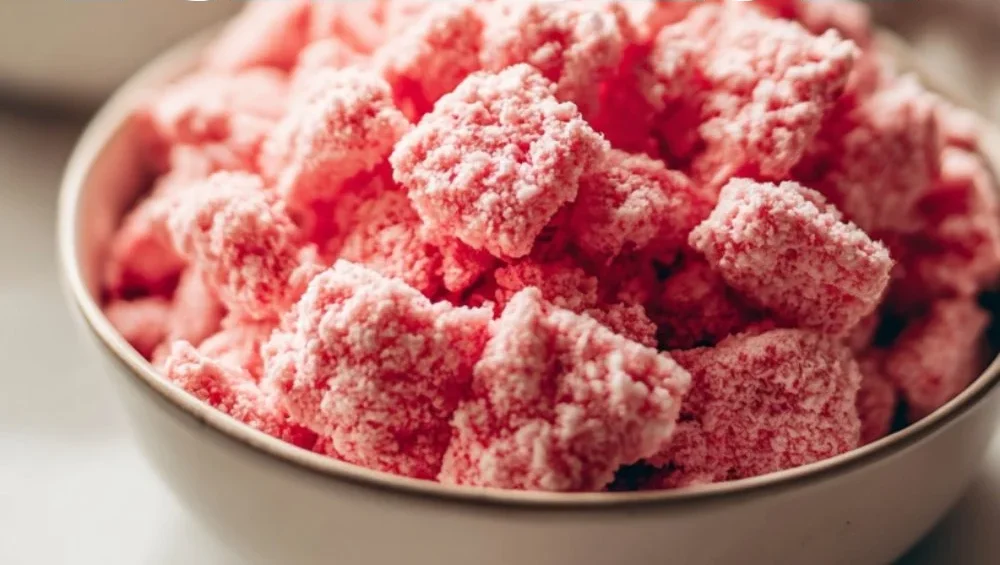
Quick Strawberry Shortcake Puppy Chow is an exercise in controlled simplicity: a handful of ingredients transformed through precise heat control and restrained technique into a snack that balances crispness, sweetness, and a concentrated strawberry note. The preparation demands no baking but requires measured melting, even coating, and prompt cooling to preserve texture. The objective is to deliver a crunchy Rice Chex base uniformly encased in a white chocolate envelope that carries powdered sugar for body and freeze-dried strawberries for concentrated acidity and color. For cooks seeking efficient, replicable results across small-batch sweets, consult the collection of quick and easy recipes for complementary methods and workflow strategies that reinforce the same procedural rigor.
The culinary logic behind this dish
At its core this Puppy Chow is about surface treatment and flavor layering. Rice Chex provides a structurally reliable, low-fat, neutral-tasting matrix with a high surface area to accept coatings. White chocolate functions both as an adhesive and as a fat-sugar carrier; its milk solids and cocoa butter amplify sweetness and mouth-coating richness while acting as a substrate for powdered sugar to adhere. Freeze-dried strawberries supply dehydrated acidity and intense fruit aromatics without introducing moisture that would degrade crispness. Powdered sugar adds a dry, fine-grained finish that counterpoints the gloss of melted white chocolate and enhances perceived sweetness while creating a subtle powdery textural contrast. Butter and vanilla modulate mouthfeel and aromatic complexity: butter brings silk and a subtle savory roundness, vanilla rounds the top notes and hides any graininess. The interplay between dry and coated elements is the primary flavor and texture architecture.
How to make Quick Strawberry Shortcake Puppy Chow
Technique is the principle. The sequence outlined in the directions is optimized to ensure even coating, minimal clumping, and maximal retention of crisp texture. You will distribute heat gently into the white chocolate to avoid scorching, then transfer that fat-sugar matrix immediately onto the cereal to use the chocolate’s fluidity as an even glaze. Rapid, gentle agitation is necessary to coat individual pieces without breaking them; aggressive stirring produces fines and reduces the finished product’s visual and textural appeal. Allowing the coated cereal to cool untouched prevents the powdered sugar from dissolving into syrupy patches and preserves the freeze-dried fruit’s crispness and vibrant color.
For process reference and parallel quick-prep techniques that reinforce these principles, view the quick-easy recipe index, which offers complementary steps for tempering melt-and-coat preparations.
Ingredients :
4 cups Rice Chex cereal, 1 cup white chocolate chips, 1 cup powdered sugar, 1/2 cup freeze-dried strawberries, 1/4 cup unsalted butter, 1/2 teaspoon vanilla extract, Sprinkles (optional)
Directions :
- In a large bowl, add the Rice Chex cereal.
- In a microwave-safe bowl, melt the white chocolate chips and butter together, stirring every 30 seconds until smooth.
- Stir in the vanilla extract.
- Pour the melted chocolate mixture over the cereal, stirring gently to coat.
- Add the powdered sugar and freeze-dried strawberries, and toss gently until well coated.
- Allow to cool completely before serving.
- Optionally, add sprinkles for extra flair!
Ingredient analysis through a chef’s lens
Rice Chex: structurally stable and low in oil, Rice Chex maintains crispness even when coated. The lattice-like surfaces capture the coating mechanically, which reduces the need for excessive chocolate and preserves a desirable cereal-to-coating ratio.
White chocolate chips: formulated for melting, chips often contain stabilizers that help prevent breakdown when gently heated. The critical risk is overheating; white chocolate has a narrow working window because of its cocoa-butter content and milk solids. Heat slowly to avoid graininess or separation.
Powdered sugar: beyond sweetness, powdered sugar provides a dry, velvety finish and acts as a moisture buffer between the chocolate and ambient humidity. Coating while the chocolate is still slightly flowable allows the powdered sugar to adhere uniformly, creating a thin, consistent layer rather than random clumps.
Freeze-dried strawberries: these bring concentrated strawberry aromatics and acidity without water, preserving crispness while delivering an immediate flash of fruit flavor. Pulverized or left in flakes, they contribute both color and a light, sandy texture that contrasts the smoothness of chocolate.
Unsalted butter and vanilla extract: butter increases sheen and softens the chocolate’s snap, improving mouthcoating without making the mixture greasy if you respect proportion and cooling. Vanilla elevates aromatics and smooths perception of sweetness by introducing floral and balsamic notes.
Sprinkles (optional): purely decorative, they add color and a controlled crunchy counterpoint; add them only after the mixture has set sufficiently so they do not sink or melt.
Kitchen workflow & technique breakdown
An efficient workflow reduces error and variability. Set up a mise en place: bowl for cereal, microwave-safe vessel for the chocolate-butter blend, measuring spoons for vanilla, and a separate container for powdered sugar and fruit. Use a large mixing bowl with tall sides to contain tossing action and prevent breakage.
Melting protocol: microwave in 30-second bursts, stirring between each burst. This ensures even heat distribution and prevents localized scorching. When chocolate reaches approximately 90–95°F and is smooth, remove from heat—residual warmth will maintain fluidity. Overheating white chocolate results in grainy texture due to milk protein denaturation and cocoa butter separation.
Coating method: pour the fluid chocolate in a steady stream over the cereal while folding gently with a wide silicone spatula or wooden spoon. Folding minimizes shear and preserves cereal integrity. Work methodically across the bowl in sections to ensure each piece receives an even film of chocolate.
Sugar and freeze-dried fruit incorporation: apply powdered sugar and freeze-dried strawberries while the coating still carries some warmth so the sugar adheres, but after the chocolate has lost its most fluid state to avoid dissolution. Use a large bowl or a paper-bag shaking method if you prefer to minimize hand contact; either technique must be gentle to avoid crushing the cereal.
Texture control, heat management & timing
Texture is the primary criterion of success. Crispness of the cereal, the thinness of the chocolate layer, and the dry finish of the powdered sugar are interdependent. Immediate cooling at ambient temperature is preferred to fast refrigeration; rapid cooling can sweat condensation onto the surface and soften crunch. Instead, allow the mixture to cool in a single layer at cool room temperature on parchment, spreading it thinly to expedite setting without trapping heat.
Heat management matters at two critical junctures: melting and coating. Melt white chocolate to a glossy, pourable state—if it becomes thick or grainy, gently stir in a small fraction of butter to smooth it, but do not add liquid. When coating, work quickly but deliberately: too slow and the chocolate will set before full coverage; too fast and pieces are unevenly coated with excess chocolate pooling on some bits.
Timing: plan the operation so that powdered sugar integration occurs within five to ten minutes of melting, while the chocolate is still tacky but not hot. Cooling to set should take 20–40 minutes depending on batch size and ambient temperature; avoid stacking the finished product until fully rigid.
For comparative workflow strategies and similar quick preparations, review the practical guides in the quick and easy recipes repository to see how timing and sequence affect finish in melt-and-coat applications.
Professional variations
Maintain ingredient proportions but explore texture and flavor contrasts without altering the original recipe’s measurements. For a more pronounced crunch, lightly toast the Rice Chex for 3–4 minutes at 325°F before cooling; this adds Maillard-derived toasty notes that play against the white chocolate’s sweetness. For a more complex chocolate profile while keeping white chocolate as the dominant element, fold in 1–2 tablespoons of finely grated freeze-dried raspberry powder at the powdered sugar stage—this introduces acidity and deepens fruit character without adding moisture.
If color and visual contrast are desired, reserve a small portion (about one-sixth) of melted white chocolate, tint it with a sweep of natural red powdered coloring or beet powder, and pipe thin streaks across the set puppy chow for a decorative stripe. Add sprinkles only after firming to avoid color bleed.
For a gluten-free, nut-free commercial approach, keep strict ingredient sourcing for certified Rice Chex and white chocolate to ensure label claims. For a lower-sugar version, consider substituting a powdered erythritol blend for the powdered sugar, recognizing that mouthfeel and adhesion will change.
Finishing touches & plating philosophy
This snack is primarily eaten from a bowl, but finishing matters for presentation and perceived quality. Use a shallow, wide vessel for serving so the mix is visible and accessible. A natural fiber or ceramic bowl provides contrast to the pale puppy chow; avoid metal, which can reflect light and flatten color. If serving as a component in a dessert spread, portion into small, uniform nests using a cooled copper scoop to maintain shape.
When adding sprinkles, choose textures that complement rather than compete—small nonpareils or sanding sugar work best. Scatter a few larger flakes of freeze-dried strawberry on top for an immediate visual cue to the flavor profile. Keep additional garnishes minimal; the dish’s strengths lie in its subtle interplay of coating and crunch.
Maintaining quality after cooking
Storage is a question of humidity control. Transfer fully cooled Puppy Chow to an airtight container layered with parchment to prevent clumping. Keep it at cool room temperature in a dry environment; refrigeration or freezing introduces moisture migration and will soften the cereal and dull the freeze-dried fruit. If humidity is unavoidable, include food-safe desiccant packets in the storage container to preserve crispness. Shelf life under ideal conditions is roughly 5–7 days; beyond that the chocolate may bloom slightly and powdered sugar will begin to clump.
When transporting, pack in single layers separated by parchment and avoid compressive weight. For large-batch production, set aside a small sampling batch to evaluate changes over time, documenting ambient conditions that correlate with texture loss.
For procedural consistency across small projects and quick-prep dishes, refer to tested workflows at this quick and easy recipes reference for best practices in scaling and storage.
Questions from home cooks (chef answers)
Q: What if my white chocolate seizes and becomes grainy?
A: White chocolate seizes when it overheats or encounters moisture. Remove from heat immediately and stir vigorously; if the texture does not improve, add a small amount of room-temperature unsalted butter (1 teaspoon at a time) and whisk until smooth. Avoid adding water. If rescue fails, temper a fresh batch and restart the coating phase to avoid textural defects.
Q: Can I use fresh strawberries instead of freeze-dried?
A: No. Fresh strawberries introduce water, which will dissolve powdered sugar and make the cereal soggy. Freeze-dried strawberries provide concentrated flavor and color without moisture and are essential to preserving crunch.
Q: How do I prevent clumping when tossing with powdered sugar?
A: Use gentle, even motion and operate while the chocolate coating is tacky rather than fully fluid. If you have a large container, a light inversion or gentle shaking helps distribute powdered sugar evenly without compressing pieces. Spread the mixture on parchment immediately after coating to separate any early clumps while the mixture is still warm enough to be malleable but not sticky.
Final chef notes
Precision in heat, sequencing, and gentle agitation are the pillars of success for Quick Strawberry Shortcake Puppy Chow. Respect the narrow working window of white chocolate, the moisture-sensitive properties of freeze-dried fruit, and the mechanical integrity of Rice Chex. This recipe is intentionally simple; technique elevates it. Small adjustments to toasting, garnish, or presentation can refine the final impression while maintaining the original flavor ratios. Approaching the process like a small-scale pastry operation—clean mise en place, calibrated heat, and controlled agitation—yields a finished product with consistent texture and clear, bright strawberry notes atop a delicate, sweet coating.
Conclusion
For a clear comparison to a similar, well-documented version of this snack and to explore its contextual variations, see the assembled recipe and notes on Strawberry Shortcake Puppy Chow | 12 Tomatoes.
Quick Strawberry Shortcake Puppy Chow
Ingredients
Method
- In a large bowl, add the Rice Chex cereal.
- In a microwave-safe bowl, melt the white chocolate chips and butter together, stirring every 30 seconds until smooth.
- Stir in the vanilla extract.
- Pour the melted chocolate mixture over the cereal, stirring gently to coat.
- Add the powdered sugar and freeze-dried strawberries, and toss gently until well coated.
- Allow to cool completely before serving.
- Optionally, add sprinkles for extra flair!