Easy Cannoli Cake: A Delectable No-Bake Dessert for Every Occasion
Introduction
I first tasted a version of this Easy Cannoli Cake in a bustling kitchen above a narrow street in Palermo, where the scent of chocolate mingled with citrus and the sea. The version there was not layered with store-bought pound cake, but the idea of cannoli—ricotta folded with sugar, flecked with chocolate, shared and celebrated—traveled with me like a passport stamp. Recipes shift and adapt when they cross oceans; this no-bake interpretation is one of those gentle migrations, a comfort-food bridge between Sicily’s pastry counters and the convenience of modern pantries.
In a city where pastry shops display rows of crisp tubes filled minute-by-minute, cannoli is a ritual and a conversation. When I landed back in the States, I found versions softened to meet new rhythms of life: the icebox cake, the family gathering dessert, brought to life by frozen pound cake and whipped ricotta. If you wander my site looking for other comforting sweets, you might enjoy exploring our broader sweet collection, where seasonal memory and technique merge: desserts and sweet treats.
This cake carries the smell of warm kitchens and the hush of late-night conversations. It is simple enough to be made on weekdays, celebratory enough for Sunday dinners, and portable for picnics where a linen cloth is thrown over a crate and laughter refills the air.
The origin story & regional influence behind this dish
Cannoli began in Sicily, born of Arab influence during a time of rich cultural blending. The word “cannolo” refers to a small reed or tube; shells were fried until crisp and then filled, traditionally with sheep’s milk ricotta sweetened with sugar and often scented with citrus peel or a dusting of pistachio. Each town had its subtle twist; in Palermo you might find sweeter fillings and candied orange, while in the countryside, shepherds carried ricotta shaped by rustic spoons, as honest and plain as the earth.
The cannoli cake is a later invention, an Americanized heir that honors the core flavors—ricotta, chocolate, and vanilla—but applies them to a format shaped by frozen cakes, refrigerators, and the desire for no-fuss feasting. It’s a testament to how immigrant kitchens transform old-world techniques into new rituals, much like how wartime scarcity and postwar convenience altered many family dishes. For a deeper look at the story of cannoli’s migration into refrigerated desserts and the proliferation of no-bake interpretations, consider how other Italian classics have been reimagined in modern kitchens: about the evolution of recipes.
There is also a thread of practicality: Sicilian pastries thrive on texture contrast—crisp shell, creamy filling—and the pound cake adds a tender, absorbent partner to the ricotta, absorbing flavors without collapsing under the ganache’s weight.
How to make Easy Cannoli Cake: A Delectable No-Bake Dessert for Every Occasion
Making this cake is less a culinary test than it is an act of assembly and patience. It asks you to be deliberate: slice with care, let textures settle, allow the quiet of refrigeration to do the work. Think of it as layering stories—each cake slice a chapter, each chocolate chip a small punctuation mark of joy.
The recipe uses frozen pound cake as its scaffolding, ricotta as the soul, and a chocolate ganache that glazes the whole with theatrical gloss. It is ideal for days when you want a dessert that tastes like an embrace without hours of labor. When I serve it, I like to place it on a wooden board and listen to the small sounds it makes—the faint crack of chilled ganache pulled by a fork, the soft yielding of cake meeting cream—little noises that become part of the memory.
Ingredients :
16-ounce (454 g) frozen pound cake (family size): The foundation of this cake is the pound cake. Store-bought frozen pound cake is the most convenient option, and it adds a delicate texture that complements the ricotta filling. The Sara Lee All Butter Pound Cake is a popular choice for its rich flavor and consistency, but any store-bought pound cake will work. If you’re unable to find the family-size pound cake, you can buy two smaller 10.75-ounce versions. If you prefer, you can also make your own pound cake from scratch., 15-ounce (425 g) container of whole milk ricotta cheese: Ricotta is the key ingredient in the filling and gives the cake its creamy texture. Whole milk ricotta is recommended because it has a richer flavor compared to part-skim ricotta. Make sure to drain the ricotta if it seems too watery, as excess moisture can affect the texture of the filling., 12 ounces (340 g) mini chocolate chips: These tiny chocolate chips are used to create a delicious, slightly crunchy element in the filling, as well as to top the ganache. The chocolate adds a contrast in flavor and texture that is essential to the overall taste of the cake., 1 teaspoon vanilla extract: Vanilla adds warmth and depth to the ricotta filling. It’s a simple addition that enhances the overall flavor without overpowering the other ingredients., 2 cups (473 ml) heavy whipping cream: The heavy whipping cream is used both in the ganache and to create whipped cream for the filling. Whipping cream has a higher fat content than regular cream, which results in a rich, thick texture. This is crucial for both the ganache and the filling, giving them the right consistency., ¾ cup (88 g) powdered sugar: Powdered sugar is used to sweeten the ricotta filling. It dissolves easily and provides a smooth, creamy texture to the filling without any graininess.
Directions :
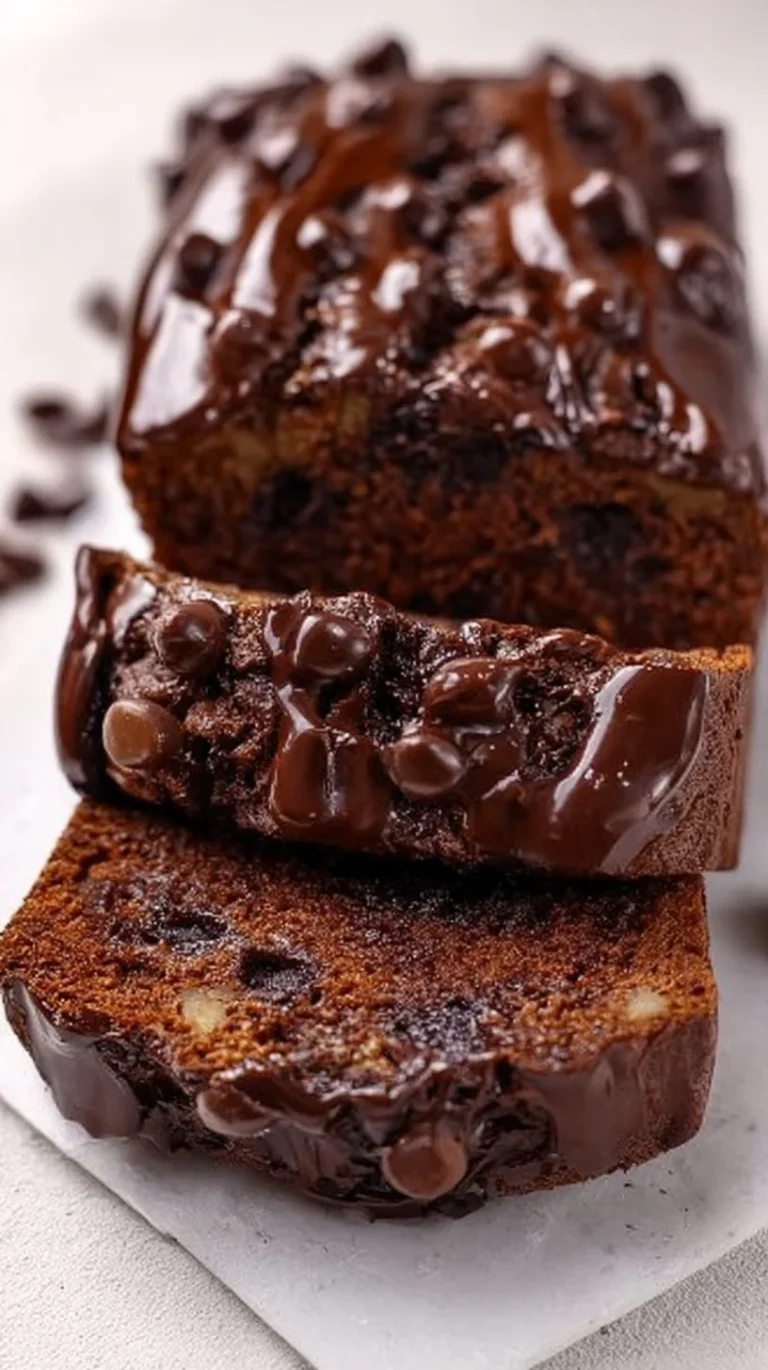
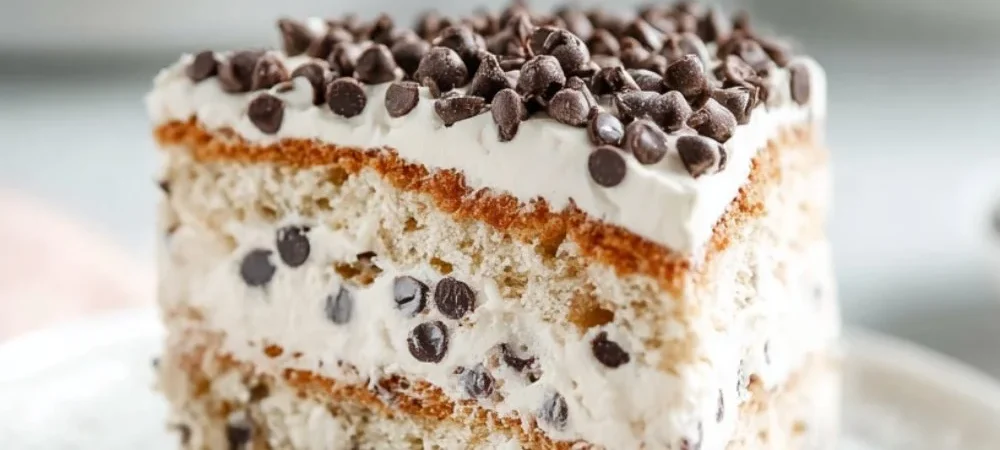
The first step is to prepare the pound cake. If the cake is not already frozen, place it in the freezer for about 30 minutes to make it easier to slice. Freezing the cake slightly helps achieve clean, even slices. Once the pound cake is frozen, use a serrated knife to cut it into ¼-inch slices. The slices should be uniform to ensure that the layers are even. A ruler can be useful to measure and cut the slices accurately. If the slices are thicker than ¼ inch, the layers may not fit into the pan properly, and you may have trouble assembling the cake., To make the ganache, begin by heating 1 cup of heavy whipping cream in a microwave-safe bowl. Microwave it on high for 90 seconds or until it is hot but not boiling. Add 1 cup of mini chocolate chips to the bowl, ensuring that the chips are fully submerged in the cream. Let the mixture sit for 2 minutes to allow the chocolate to soften. Afterward, stir the mixture until it is smooth. If the chocolate doesn’t melt completely, microwave it for an additional 15 seconds at a time, stirring between intervals, until smooth and glossy. Once ready, place the ganache in the refrigerator to chill and firm up while you prepare the filling., In a medium-sized bowl, whisk together the ricotta cheese, powdered sugar, and vanilla extract until smooth. Once combined, fold in ½ cup of mini chocolate chips. These chips will be evenly distributed throughout the filling, adding little bursts of chocolate in every bite., In a separate bowl, whip the remaining 1 cup of heavy whipping cream until stiff peaks form. This can be done using a hand mixer or an immersion blender. If using an immersion blender, it’s best to place the cream in a tall container to prevent splashing. Once the cream is whipped, fold it into the ricotta mixture in two batches. Gently fold half of the whipped cream into the ricotta mixture until just combined, then fold in the remaining whipped cream. The whipped cream will add volume and lightness to the filling, giving it the fluffy texture that makes cannoli cakes so special., Now that the filling and ganache are ready, it’s time to assemble the cake. Begin by layering the sliced pound cake at the bottom of an 8×8-inch or 9×9-inch square pan. The slices should cover the bottom completely, but don’t worry if they overlap slightly. Gently press the cake slices down to eliminate air pockets. Spread half of the cannoli filling over the pound cake layer, smoothing it out evenly with a spatula., Add another layer of pound cake on top of the filling. Gently press the cake pieces down so that the layers adhere to the filling beneath. Then, spread the remaining cannoli filling over the second cake layer. Add one final layer of pound cake on top., Once the cake layers are assembled, take the ganache from the refrigerator and give it a quick stir to ensure it’s smooth and pourable. Pour the ganache evenly over the top of the cake, smoothing it out with a spoon to cover the surface completely. Be generous with the ganache—it should create a glossy, thick layer that adds richness to the cake., Sprinkle the remaining mini chocolate chips over the top of the ganache for a decorative touch. Place the cake in the refrigerator and allow it to chill for at least 3 hours, or overnight if possible. This will give the layers time to set, allowing the cake to hold its shape when sliced. Cover the cake after 15 minutes to prevent the plastic wrap from sticking to the ganache.
Ingredients through a cultural & historical lens
Each ingredient in this cannoli cake carries echoes of place. Ricotta, humble and ancient, has pastoral roots—cheese made in the fields of southern Italy where sheep and goats grazed on thyme-scented hills. Whole milk ricotta brings that richness into a modern kitchen, a reminder of the pastoral rhythms that shaped Sicilian cuisine. The mini chocolate chips are a New World flourish; chocolate, once the stuff of explorers and merchants, has become a universal companion to dairy in desserts across the globe.
Even the frozen pound cake is a chapter of twentieth-century history: industrial baking, refrigeration, and the rise of convenience foods that reshaped domestic life. Some might see it as inauthentic; others, like me, see it as adaptive. Food culture is not a museum but a living conversation. If you are curious about how simple cookies and family recipes travel through time, you might find kinship with other everyday sweets and their stories here: chewy maple cinnamon cookies and kin.
Cooking the dish: sensory notes & traditional techniques
When you open the refrigerator to let the ganache firm, the perfume of chocolate will rise, tempered by the coolness of cream. The ricotta filling has a pale sheen, flecked with chocolate like confetti. The texture is the point of intimacy: the ricotta’s gentle grain against the cloud of whipped cream creates a mouthfeel that is both luxurious and approachable.
Traditional cannoli require a different set of attentions—rolling and frying the shells, draining ricotta to the right dryness, piping with a practiced hand. This no-bake cake borrows the flavor palette without demanding the same labor. It honors the cannoli’s essence through contrast: soft cake against dense cream, the occasional snap of a mini chip, the glossy hush of ganache like a dark sea over a layered shore.
How different regions prepare their version
Across the United States, Italian-American kitchens have invented myriad cannoli-adjacent confections. In New York, you will find ricotta-filled pastries that edge towards sweet cream rather than tang; in Boston’s North End, pastry shops gild their cannoli with pistachios and candied cherry, leaning into color and texture. In Sicily, seasonal accents—candied citron, a dusting of powdered sugar—are more likely than chocolate chips, which are a later import.
The use of pound cake and refrigeration nods to the American icebox cake tradition, a lineage of desserts designed around what a household kept on hand. In coastal towns with Italian immigrant communities, you might find hybrid desserts at church fundraisers: cannoli filling piped between cookie layers, or trifle-style glasses with ricotta, cake, and citrus. Each place adjusts the recipe to local rhythms—what’s available in markets, what families remember, and what their gatherings demand. If you want to tell the story of a local adaptation, writing to learn more about regional foodways is a small act of preservation: reach out and tell your story.
Traditional ways this dish is shared or served
Cannoli, at heart, is ceremonial. In Sicily, they were associated with festivals and celebrations, sometimes prepared for Carnival as a sweet counterpoint to the season’s revelry. The cake version inherits that social role. It is brought to potlucks, wrapped in foil for road trips, placed at the center of an impromptu dinner party where forks scrape and stories spill.
Serve slices with strong coffee or a citrus-scented tea; it stands up to bitter flavors that balance its sweetness. Garnish with a scatter of chopped pistachios or a twist of orange zest to whisper of its Mediterranean ancestry. The ritual is not just in the serving but in the sharing—someone cutting the first slice, another asking for seconds, the dessert acting as a fulcrum for conversation.
Storing the dish without losing its cultural essence
This cake is happiest cold. Refrigeration preserves the contrast of textures and honors the icebox tradition that gave rise to it. Keep it covered to prevent the ganache from blooming with a scab of condensation. If you travel with it, place it in a strong box with frozen gel packs and a cloth to steady its layers. Leftovers will hold for several days; each slice softens internally over time, the pound cake adopting more of the ricotta’s perfume—an evolution rather than a loss.
If you want to freeze slices, do so without the final ganache, wrapping each piece to protect against freezer burn. Thaw in the refrigerator overnight and add a fresh drizzle of ganache before serving; in this way you preserve the ritual of finishing the cake for guests.
Cultural questions people often ask
Is this authentic? Authenticity is a living, contested idea. This cake is not a traditional Sicilian cannolo; rather, it is a cultural conversation—an homage that adapts old flavors to new contexts. People ask if ricotta should be drained; the answer depends on texture preference and climate, but traditional ricotta used in Sicily often carries a drier, more crumbly body that is different from the wetter market ricotta many find today.
Others wonder why pound cake and not sponge: the pound cake offers density to support layers without dissolving in the fridge. Some ask about substitutions—many family cooks reinvent with mascarpone or add citrus; each version tells its maker’s story. Questions about texture, sweetness, and memory are, in the end, invitations to share the recipe across kitchens.
A closing note on food, memory & travel
Food is a map written in taste. This Easy Cannoli Cake is a small cartography of migration: of Sicilian streets and American refrigerators, of shepherds and industrial baking lines, of festivals and weekday suppers. When you cut into this cake, you are participating in a lineage of making and remaking, of translating memory into something edible. The ricotta holds the pastoral, the ganache echoes the boldness of chocolate that crossed seas, and the pound cake reflects the practical tenderness of meals shared under fluorescent kitchen lights.
It is in these translations that recipes become stories, and stories become part of the table.
Conclusion
If you want to explore another no-bake, ricotta-forward dessert, see a thoughtful take in a classic setting at This Italian Kitchen’s No Bake Cannoli Cheesecake, which traces similar flavors through a cheesecake lens. For a modern, playful icebox interpretation, Sheri Silver’s write-up of her cannoli icebox cake offers inspiration for layered chilling and serving ideas.
Easy Cannoli Cake
Ingredients
Method
- Freeze the pound cake for 30 minutes for easier slicing.
- Cut the pound cake into ¼-inch slices using a serrated knife.
- Heat 1 cup of heavy whipping cream in a microwave-safe bowl for 90 seconds.
- Add 1 cup of mini chocolate chips, let sit for 2 minutes, then stir until smooth.
- Chill ganache in the refrigerator.
- Whisk together ricotta cheese, powdered sugar, and vanilla extract in a bowl.
- Fold in ½ cup of mini chocolate chips.
- In a separate bowl, whip the remaining 1 cup heavy cream until stiff peaks form.
- Fold the whipped cream into the ricotta mixture in two batches.
- Layer sliced pound cake at the bottom of an 8x8-inch or 9x9-inch pan.
- Spread half of the cannoli filling over the pound cake layer.
- Add another layer of pound cake over the filling and repeat the process with remaining filling.
- Top with another layer of pound cake.
- Pour ganache over the assembled cake and smooth it out.
- Sprinkle remaining mini chocolate chips on top.
- Refrigerate for at least 3 hours or overnight before serving.