Hearty Blueberry Protein Muffins
Introduction
On a damp morning in a small coastal town, I watched a woman hand a paper-wrapped muffin to a fisherman who had just returned from night waters. He cradled it as if it were a rare kind of bread, and for a moment the world narrowed to the steam rising from the muffin and the salt on his hands. That memory has followed me through markets in Thessaloniki and cafés in Reykjavík, because food like this—simple, nourishing, and rooted in daily ritual—has a way of making places feel like home.
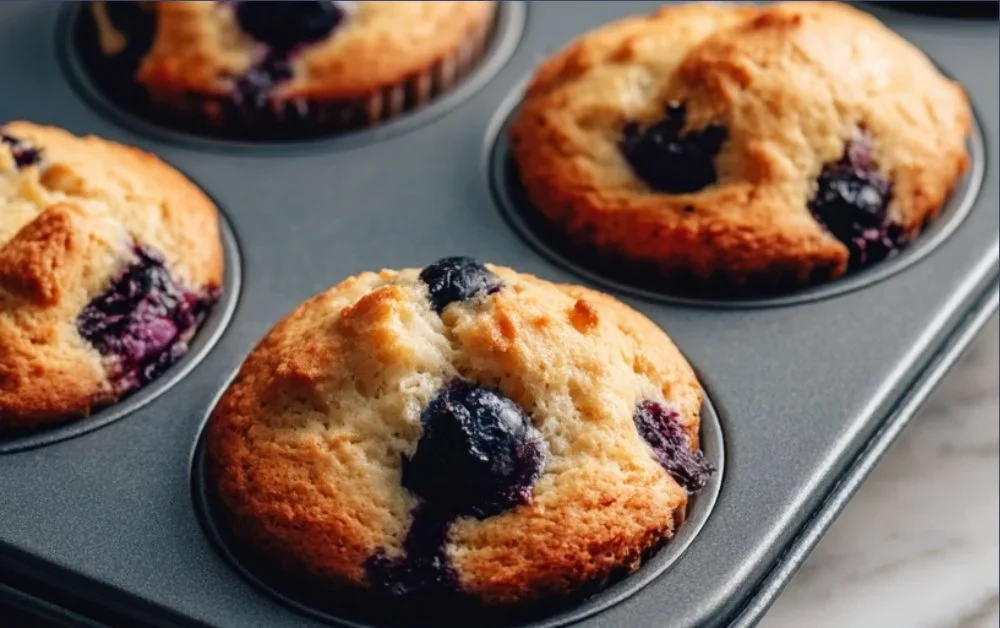
Hearty Blueberry Protein Muffins are not only a practical bake; they are a kind of portable comfort, the sort of thing carried in backpacks on morning hikes, passed between neighbors at dawn, or wrapped and placed on cafe counters for whoever needs a little lift. These muffins smell of warm oats and ripe banana, their crumb dense yet tender, flecked with pops of purple like miniature fields. They speak of kitchens that value sustenance and sweet moments equally: a nutritionist’s pantry for a busy commuter, a grandmother’s secret for a child, an athlete’s pre-run bite, and a traveler’s reliable breakfast.
In the pages ahead I want to walk you through not just how to make these muffins, but how they sit within traditions, how ingredients whisper stories of place and time, and how the simple act of baking becomes a bridge between culture and memory.
The origin story & regional influence behind this dish
The story of a muffin is always a braided tale—of migration, of agriculture, of pragmatic invention. Blueberry muffins, in many permutations, feel quintessentially American because of the wild blueberry’s place in North American soils and lore. Yet when you add hearty oats, creamy Greek yogurt, and protein powder, the recipe becomes a modern hybrid: half rustic pantry item and half contemporary pantry solution.
Rolled oats carry the chill of northern fields where barley and oats were staple grains. Greek yogurt brings a Mediterranean sun: centuries of shepherding and straining milk in a landscape of limestone terraces and olive trees. Bananas, tropical in origin, remind us of colonial trade routes and global produce markets that now deliver fruit to any shore. The protein powder is a distinctly late 20th- and 21st-century addition—an emblem of our era’s emphasis on health optimization and convenience.
Place shapes this muffin in subtle ways. In New England kitchens, one might sift in wild lowbush blueberries with their concentrated flavor. In Athens, yogurt lends a tang and creaminess reminiscent of local spoon desserts. In Oslo, oats are more than filler; they are a cultural anchor—porridge for breakfast, dense breads for the Table of Friluftsliv. These muffins, therefore, are less a single-origin dish and more a collage—each ingredient a postcard from a different landscape.
How to make Hearty Blueberry Protein Muffins
Making these muffins is a small ceremonial act: you gather oats, yogurt, mashed fruit, and an ethical measure of sweetness; you fold in a scatter of blue that recalls both fields and market stalls; then you slide them into warmth and wait. The instructions are straightforward and honest—there is no elaborate technique, only the steady, communal rhythm of mixing, pouring, and baking.
The magic lies in the way textures come together: oats softened by yogurt and banana, protein powder giving a quiet sturdiness, baking powder and soda whispering lift. Blueberries remain pockets of cool, juicy contrast. In kitchens where time is short and taste must be immediate, this recipe becomes a ritual that honors both utility and sweetness.
Ingredients :
1 cup rolled oats, 1 cup Greek yogurt, 2 ripe bananas, mashed, 1/2 cup protein powder (vanilla or unflavored), 1 cup blueberries (fresh or frozen), 1/4 cup honey or maple syrup, 2 eggs, 1 teaspoon baking powder, 1/2 teaspoon baking soda, 1 teaspoon vanilla extract, 1/2 teaspoon salt
Directions :
- Preheat the oven to 350°F (175°C) and line a muffin tin with liners or grease it.
- In a mixing bowl, combine the rolled oats, Greek yogurt, mashed bananas, honey or maple syrup, eggs, and vanilla extract. Mix until well combined.
- In another bowl, whisk together the protein powder, baking powder, baking soda, and salt.
- Combine the dry ingredients with the wet mixture and fold in the blueberries.
- Pour the batter into the muffin tin, filling each cup about 2/3 full.
- Bake for 18-20 minutes, or until a toothpick inserted in the center comes out clean.
- Let the muffins cool for a few minutes in the pan before transferring them to a wire rack to cool completely. Enjoy!
Ingredients through a cultural & historical lens
Each component in this list is a small chapter in the history of food. Rolled oats carry the legacy of northern cereal farming—an inheritance from climates where barley and oats are more dependable than wheat. Oats have always been food for sustenance and warmth, turning up in porridge bowls across the North Atlantic and Central Europe. Greek yogurt traces a pastoral lineage: the slow, deliberate art of straining curds to make a thick, tangy dairy product that has fed shepherds on rocky hills for generations.
Bananas, once exotic and transported by steamships and rail, are emblematic of the global spice routes and modern refrigeration. Honey and maple syrup are both ancient sweeteners—one the nectar of bees that has accompanied humankind since the dawn of agriculture, the other a seasonal birch-and-maple ritual, boiled down in smoke-filled sugar shacks where neighbors gather each spring.
Protein powder is the youngest member of this chorus, reflecting contemporary values: a scientific approach to nutrition, packaged convenience, and a cultural focus on fitness. Paired with fruit and oats, it creates a muffin that is at once ancestral and current—rooted in tradition but adapted to modern lives.
Cooking the dish: sensory notes & traditional techniques
The first scent is oats warming, a warm grain aroma like a hearth more than an oven. Banana adds a perfume of ripe sweetness, while the yogurt gives a faint tang that balances the honey or maple. As the oven door opens, steam carries the mixed scents into the room: toasted oats, baked banana, and a faint floral note from the blueberries when they burst.
Texture is where these muffins declare their identity. The crumb is denser than a classic patisserie muffin—this is not an airy tea cake but a substantial bite. Oats give a gentle chew; yogurt keeps the crumb moist; protein powder lends discreet structure; blueberries punctuate each mouthful with bursts of juice. The top takes on a modest, golden browning, not a glossy crown, inviting you to break one open with your fingers.
In places where traditional techniques matter, baking is communal. In a Portuguese village, the local forno might take a batch and return them with a smoky kiss. In Appalachian kitchens, a cast-iron skillet or stone oven would shift the texture and memory of the bake. Even the act of mashing bananas by hand, as elders often do, is a way to pass down rhythm and touch from one generation to the next.
How different regions prepare their version
Travel the world and you will find these muffins wearing different accents. In Boston and the northeastern U.S., cooks might insist on wild blueberries—small, intensely flavored berries that shrink slightly in the oven and concentrate their sweetness. In Greece, the yogurt might be especially thick, almost strained like skyr, giving a silkier mouthfeel. Scandinavian versions might emphasize oats even more, adding a sprinkling of seeds on top and serving the muffins alongside strong coffee at dawn.
In urban cafés of Tokyo, you might encounter a similar muffin but refined: a smaller portion, a lighter sweetness, perhaps a dusting of powdered sugar as a nod to French influence. In Australia, where banana breads and oat-based bakes are national comforts, bakers might include a touch more maple syrup or a hint of lime zest to brighten it. These variations are not betrayals but conversation: a way for a recipe to recognize the local pantry and palate.
Traditional ways this dish is shared or served
These muffins travel well, and their portability defines some of the rituals around them. In many places, they are handed out at morning markets and church fetes. They are wrapped in cloth for school lunches, laid on picnic cloths beside thermoses of coffee, or placed in baskets at neighborhood barbecues. Serving them warm is a small ceremony: the muffin split open lengthwise with butter melting into its crevices, or eaten as-is, the warmth a simple benediction to the day.
There are also quieter traditions: a mother sliding a muffin into a child’s backpack as a protective charm, a baker setting a tray on the windowsill to cool and to share a slice of comfort with passersby, a coach placing a box in the changing room as a communal refuel after practice. In each instance, sharing is an act of generosity, and the muffin functions as social glue—small, caloric, and symbolic.
Storing the dish without losing its cultural essence
Storage is preservation of both flavor and ritual. These muffins keep well in an airtight container for a few days at room temperature, and the smell of oats and banana will still recall the kitchen where they were baked. Refrigeration extends life but can mute aromas; warming them briefly in a skillet, under a grill, or in a modest toaster oven restores their original vibrancy.
For travelers, freezing is pragmatic: wrapped individually and stashed in a cooler, muffins thaw into a reliable breakfast. But storage is also about memory—placing a note with the muffins for a traveler, or packaging them in waxed paper tied with string, is a ritual that preserves the human element. Even when refrigerated, a little attention—warming, butter, a cup of tea—reanimates the experience, reconnecting stored food with its cultural heartbeat.
Cultural questions people often ask
People often ask: Are these muffins healthy? The honest answer we often give in kitchens around the world is that “healthy” depends on context. Within communities where work is physical and mornings are long, these muffins are nourishing and sustaining. For someone seeking protein and restraint in sugar, they can be an excellent choice. Other questions are about substitutions: can one use different fruit? Yes, but each swap shifts the story; raspberries carry a different seasonality and memory than blueberries.
Another frequent question is about authenticity: Is this a “traditional” recipe? Not in a purist sense. It is a modern tableau of traditional elements. People also ask how to make them lighter or more indulgent; answers vary by place—some will suggest more honey, others a sprinkle of sea salt on top. But the most common question, asked in city bistros and mountain huts alike, is where these muffins belong on a table—which is the same as asking who gets to share them. The answer is always: everyone.
A closing note on food, memory & travel
Travel teaches that recipes are portable forms of memory. A muffin recipe can be read like a map: oats hint of northern fields, yogurt of sun-struck hillsides, bananas of tropical plains, honey of bees and early harvests, protein powder of the now. Wherever you are, making these muffins is an invitation to translate landscape into taste, to make a morning feel like belonging.
When I think of the fisherman and the woman with the paper-wrapped muffin, I think of how food is a small language of care. A muffin is not merely calories; it is an offering, a compact story you can eat. Bake them for strangers, for your own dawn, for someone you love, and notice how a simple recipe turns into an occasion. Each bite is a tiny bridge between the places you have been and the place you are making right now—your kitchen, however humble, becomes a crossroads of flavor and memory.
Conclusion
If you’d like to explore a closely related muffin that inspired many home bakers, take a look at The BEST Blueberry Protein Muffins (Easy Recipe) | Simply Sissom for another interpretation that celebrates blueberry sweetness and portable comfort.
Hearty Blueberry Protein Muffins
Ingredients
Method
- Preheat the oven to 350°F (175°C) and line a muffin tin with liners or grease it.
- In a mixing bowl, combine the rolled oats, Greek yogurt, mashed bananas, honey or maple syrup, eggs, and vanilla extract. Mix until well combined.
- In another bowl, whisk together the protein powder, baking powder, baking soda, and salt.
- Combine the dry ingredients with the wet mixture and fold in the blueberries.
- Pour the batter into the muffin tin, filling each cup about 2/3 full.
- Bake for 18-20 minutes, or until a toothpick inserted in the center comes out clean.
- Let the muffins cool for a few minutes in the pan before transferring them to a wire rack to cool completely.
- Enjoy!