30-Minute Strawberry Spinach Salad
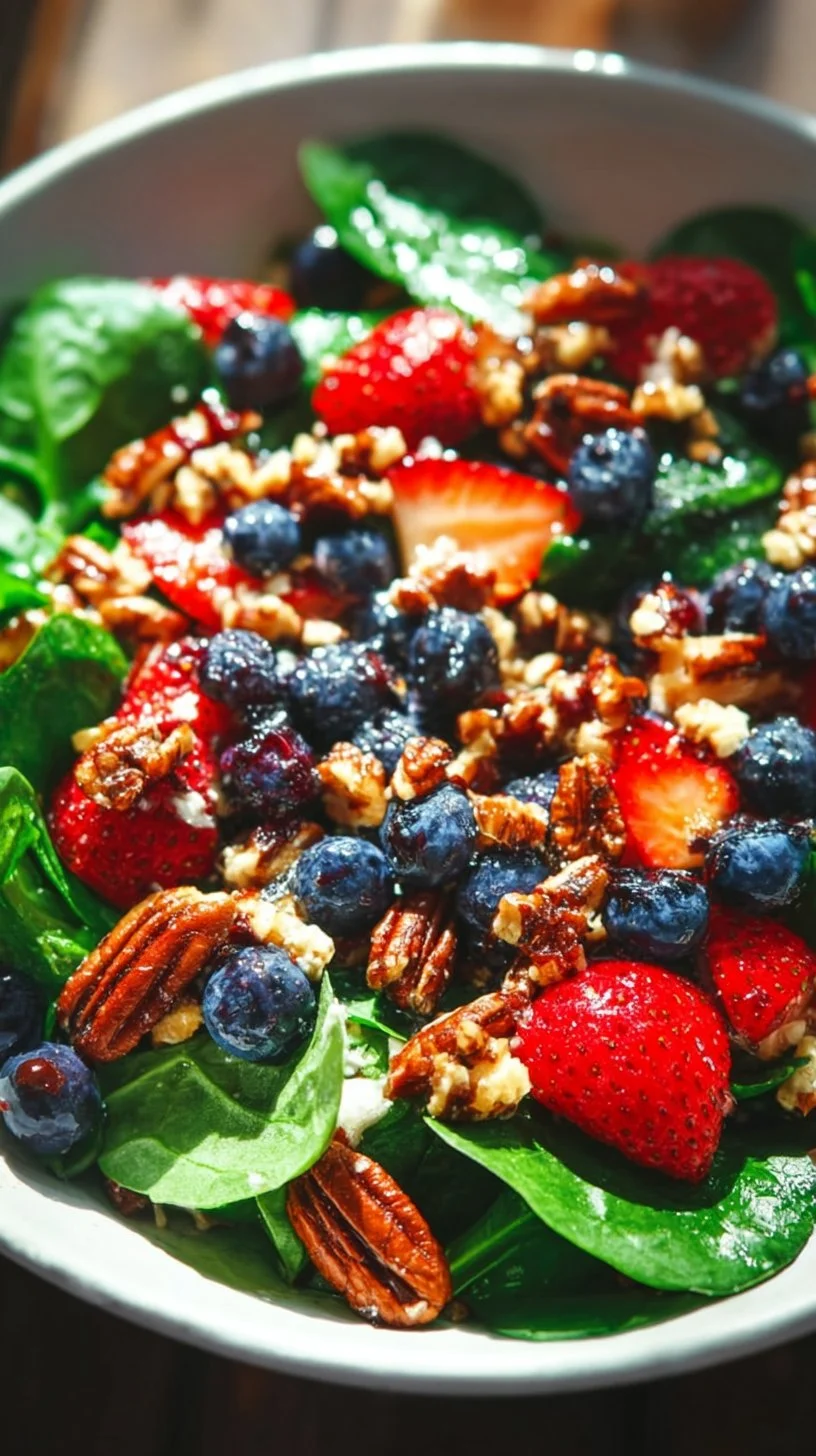
This 30-Minute Strawberry Spinach Salad is an exercise in balance: sweet ripe strawberries, the minerality of spinach, the crisp counterpoint of pecans and the saline creaminess of crumbled feta, all brightened by a balsamic glaze. The construction is intentionally simple to preserve the integrity and freshness of each ingredient while delivering layered texture and immediate flavor contrast. For cooks interested in related preparations that emphasize produce-forward technique, a concise comparative reference is the cucumber-strawberry salad, which highlights how acid and textural contrasts operate in a similar register.
As a professional chef, I treat this salad as a composed dish rather than an afterthought. Timing, cut, temperature and seasoning are the primary tools to manipulate flavor perception and mouthfeel. The guidance here will focus on why each step matters: how to coax the bright strawberry aroma forward, how to protect spinach from bruising, when to introduce the salt, and how to manage the final toss so each bite remains distinct. The recipe as written is intentionally concise; the accompanying sections expand on technique, workflow and finishing so you attain consistent, restaurant-caliber results every time.
The culinary logic behind this dish
At its core, this salad uses classical contrasts: sweet versus acid, soft versus crunchy, cool versus lightly dressed. Spinach serves as a delicate vegetal base that absorbs and reflects surrounding flavors; its slightly sweet, green notes pair naturally with berries. Strawberries provide a fragrant, juicy sweetness with volatile aromatics that are most pronounced at room temperature, whereas blueberries contribute concentrated sweetness and an additional pop of texture. Pecans offer a roasted, buttery crunch that offsets the creaminess of feta. Balsamic glaze functions as a concentrated acid-sweetener that binds disparate flavors without saturating the leaves.
Understanding these relationships helps a cook adjust service variables without altering the ingredient list. For instance, warming the pecans briefly amplifies their aroma through Maillard reaction compounds; allowing strawberries to rest at room temperature increases their volatile esters and perceived sweetness; a light dusting of salt on the spinach before dressing starts a subtle osmosis that heightens overall seasoning. The dish is designed to be assembled quickly but with intention—each element has a role in producing a harmonious, multi-sensory result.
How to make 30-Minute Strawberry Spinach Salad
A professional approach to this salad emphasizes mise en place, temperature control and efficient execution. Begin by inspecting your ingredients: choose spinach with unblemished leaves, strawberries that are firm but yielding and pecans without rancid oils. Arrange everything in a logical sequence—spinach at the bottom of a large bowl, fruit adjacent for rapid addition, pecans and feta pre-measured. The balsamic glaze is applied last to control intensity.
When combining, always think in layers. First the spinach to provide a base, then the fruit to distribute sweetness evenly, followed by the nuts for textural architecture and the cheese as a finishing saline element. Apply the glaze sparingly and taste, because its viscosity and concentrated sweetness can dominate. Toss gently to avoid crushing the berries and bruising the leaves; the goal is an even, light coating rather than a saturated pile. Serve immediately to preserve the crispness of the pecans and the structural integrity of the leaves.
Ingredients :
Fresh spinach, Strawberries, sliced, Blueberries, Pecans, chopped, Feta cheese, crumbled, Balsamic glaze, Salt and pepper to taste
Directions :
- In a large bowl, combine the fresh spinach, sliced strawberries, blueberries, and chopped pecans., 2. Sprinkle crumbled feta cheese on top., 3. Drizzle with balsamic glaze and season with salt and pepper to taste., 4. Toss gently to combine., 5. Serve immediately and enjoy as a side dish.
Ingredient analysis through a chef’s lens
Examining each component clarifies how small adjustments change the dish’s character. Fresh spinach is delicate: baby leaves will be more tender and slightly sweeter than mature leaves, making them preferable for a salad intended to be eaten raw. Spinach’s relatively high water content means it will wilt if overdressed or if combined with salt too early; therefore finish-salting is advantageous.
Strawberries are aromatic and water-rich; slicing increases surface area, releasing juice that blends with the glaze—useful for flavor integration, but also a risk for sogginess if the salad sits. Blueberries are more structurally resilient; including them adds textural diversity without compromising shelf life. Pecans introduce essential fat and crunch; to intensify their flavor without altering the recipe, briefly toast them in a dry pan until fragrant and opaque, watching closely because nuts quickly progress from aromatic to burnt. Feta’s crumbly texture and briny profile provide savory relief to the sugars; its distribution should be even but not dominant.
For deeper technical context on balancing produce acidity and texture in composed salads, compare the approach used in an avocado-egg salad, which demonstrates complementary methods for incorporating soft, delicate ingredients while maintaining structure.
Kitchen workflow & technique breakdown
Efficient execution in a busy kitchen—or for a solo cook aiming for precision—relies on disciplined workflow. Begin with mise en place: wash and spin-dry the spinach using a salad spinner to remove surface moisture that dilutes dressing adhesion; hull and slice strawberries on a sharp chef’s knife to create clean cuts that minimize juice release; measure feta and chop pecans uniformly to ensure consistent distribution.
Sequence your actions to respect ingredient fragilities. Prepare sturdier elements first (pecans, blueberries) and finish with the most delicate (spinach, strawberries) immediately before service. If you choose to toast pecans, do so in a dry skillet over medium heat for 2–3 minutes until they become aromatic and slightly darker—transfer them to a cool plate to stop carryover cooking. Keep the balsamic glaze in a squeeze bottle or small ladle for controlled application; its viscosity requires restraint to avoid cloying sweetness.
For cooks managing simultaneous dishes, apply protein-focused timing strategies observed in other quick-service preparations. The timing discipline used in a 30-minute beef stir-fry workflow—precise heat staging, sequential addition of components, and finishing at the last possible moment—translates well to composed salads where heat and timing affect texture and flavor.
Texture control, heat management & timing
This salad uses no cooked elements beyond optional nut toasting, but thermal considerations still affect outcome. Room-temperature strawberries and blueberries have stronger aroma and perceived sweetness than cold fruit straight from the refrigerator; for optimal flavor, remove fruit from chill 15–20 minutes before assembly. Conversely, keep spinach cool—refrigerated only until minutes before service—to maintain crispness. If spinach warms, it becomes limp and more susceptible to early wilting.
Crunch is pivotal: pecans should be crisp and slightly warm if toasted, which enhances aroma, but allow them to cool briefly to avoid softening the leaves via steam. Salt timing is critical—apply salt to the finished salad to avoid drawing moisture out of fruit and leaves prematurely; if you must season earlier, use very light seasoning and proceed to plate quickly. The balsamic glaze’s viscosity provides surface adhesion and a glossy appearance; apply sparingly and finish with a gentle toss that coats without collapsing the fruit.
For broader comparison on temperature-driven textural strategies, examine the timing principles in the avocado-mango salad timing principles, which emphasize the interplay between chilled bases and room-temperature components.
Professional variations
While the ingredient list must remain unchanged for this piece, there are professional techniques to vary mouthfeel and intensity without substituting components. Consider maceration as a controlled technique: briefly toss a portion of sliced strawberries with a whisper of balsamic glaze in a separate bowl for 5–8 minutes before adding them to the spinach; this concentrates fruit juices and creates a flavored syrup that can be dotted through the salad sparingly. Another technique is to rough-chop a fraction of the pecans to create micro-textural contrast—larger pieces provide crunch while small fragments distribute between leaves.
For service in a composed menu, present the salad with precision: fan strawberry slices for visual rhythm, cluster blueberries rather than scatter them for discrete bursts, and place feta in tactile crumbles so diners experience salt in every bite. These are presentation techniques rather than ingredient changes, retaining the original recipe while elevating the dining experience.
Finishing touches & plating philosophy
Finishing this salad is an exercise in restraint and compositional clarity. Use a wide, shallow bowl to create surface area where each leaf can be encountered without deep stacking. Apply the balsamic glaze in a measured zigzag or three evenly spaced lines to distribute sweetness without pooling; alternatively, place small dots of glaze across the salad and lightly toss to just break the dots, creating a marbled effect. Place feta with a light hand—its white color acts as a visual counterpoint to the red berries and green leaves, so even distribution aids both flavor balance and plate aesthetics.
Texture sequencing matters during service: place pecans last to preserve crunch and add visual interest. If you anticipate a small delay before serving, reserve a portion of pecans to sprinkle immediately before sending the dish, ensuring their peak crispness at consumption.
Maintaining quality after cooking
Although the recipe is raw-focused, shelf-life and preservation still apply. This salad is best served immediately; the combination of cut berries and dressing will cause progressive softening. If you must hold for short service, store assembled salad covered in a single shallow container in the coolest part of the refrigerator and reserve the balsamic glaze and feta to finish at plating. If the salad has been dressed too early and becomes wet, a quick fix is to transfer leaves to a dry bowl lined with paper to absorb excess juice and re-toss gently with a small additional portion of fresh spinach to restore texture.
For catering or plated service, consider pre-assembly staging: pre-portion spinach and fruit into individual bowls without dressing, hold under refrigeration for up to 30–45 minutes, and apply glaze and feta immediately before service. Avoid long holds; this preserves color, crispness and the volatile aromatics in the fruit.
Questions from home cooks (chef answers)
Q: Should I wash spinach before assembling?
A: Yes. Spinach should be rinsed thoroughly and dried via a salad spinner to remove residual grit and surface water. Excess water will dilute the glaze and increase wilting.
Q: Can I substitute another nut?
A: The instruction set prohibits ingredient changes, but from a technique perspective, different nuts shift texture and oiliness. Pecans provide buttery sweetness that complements strawberries; other nuts will alter flavor balance.
Q: How much balsamic glaze is appropriate?
A: The glaze is potent; start with a light drizzle and taste. It’s easier to add more than to remove excess. Aim for a glossy, not pooled, finish.
Q: Why not salt earlier?
A: Early salting draws moisture from leaves and fruit, accelerating wilting and juice migration. Salt at the end for a balanced flavor without structural compromise.
Final chef notes
This 30-Minute Strawberry Spinach Salad is a study in minimal intervention: respect the produce, control temperature, and apply seasoning and glaze with restraint. The success of the dish depends less on complicated technique and more on disciplined execution—clean cuts, measured timing and a precise finish. With those fundamentals, the salad will deliver clean, layered flavors and balanced textures that perform well as a side in a composed menu or a light, refined starter.
Conclusion
For further reading on variations and step-by-step alternatives to this preparation, consider these concise resources: the 15-Minute Strawberry Spinach Salad – Julia’s Album offers a streamlined take; the 20-Minute Strawberry Spinach Salad & Balsamic Dressing explores dressing integration; and the Easy 10 Minute Strawberry Spinach Salad Recipe provides another perspective on rapid assembly.
Strawberry Spinach Salad
Ingredients
Method
- In a large bowl, combine the fresh spinach, sliced strawberries, blueberries, and chopped pecans.
- Sprinkle crumbled feta cheese on top.
- Drizzle with balsamic glaze and season with salt and pepper to taste.
- Toss gently to combine.
- Serve immediately and enjoy as a side dish.