Juicy Pineapple Heaven Cake
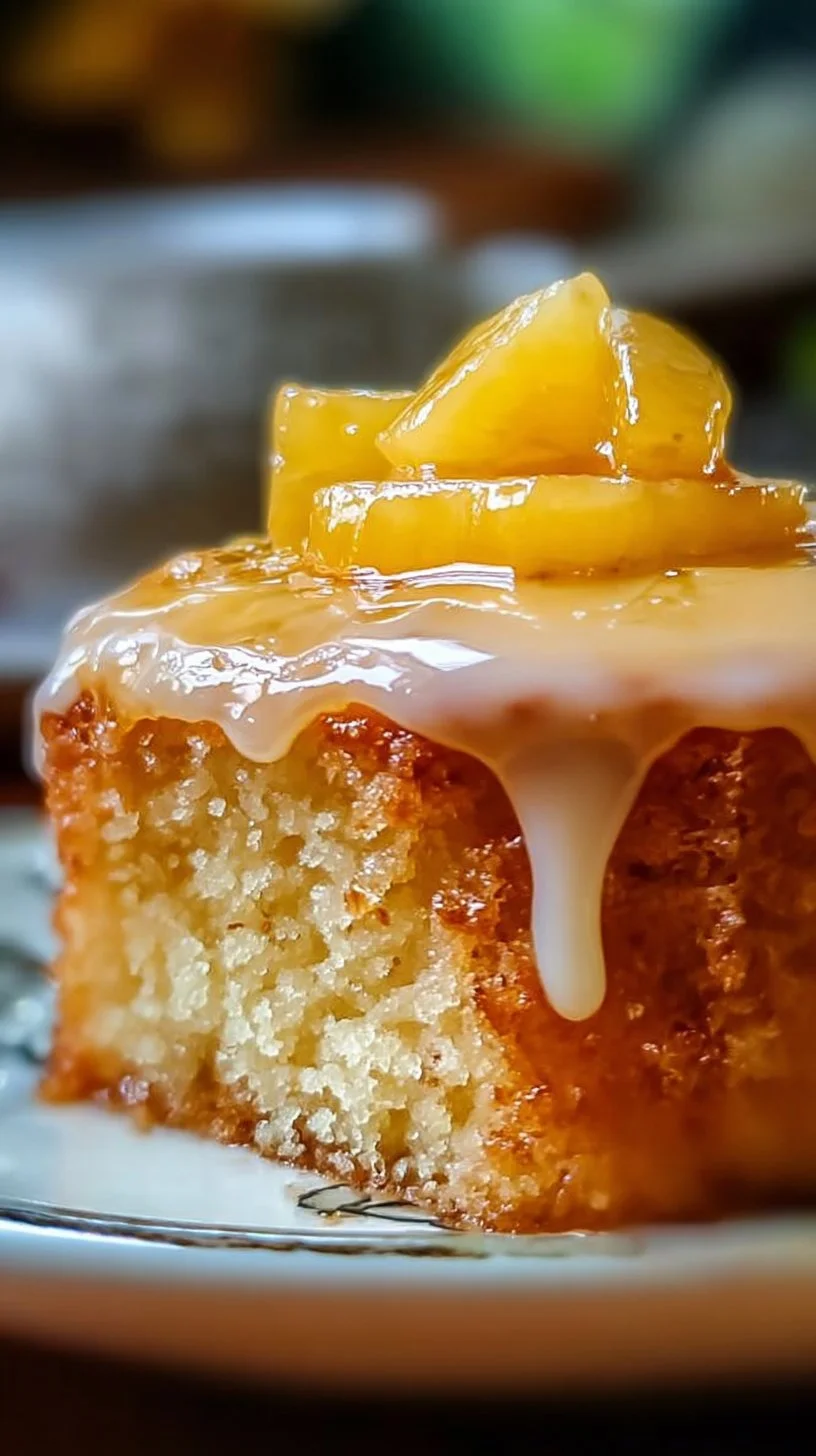
There is a rare kind of comfort that arrives on a fork and a sigh: a slice of cake stained with the sun of a faraway shore, its crumb moist with tropical promise. Juicy Pineapple Heaven Cake is one of those sentimental desserts that travel not only across oceans but through memory — the sort that arrives at family tables after a long journey, at beachside picnics where the air tastes like salt and sugar, and at kitchens where hands remember the rhythms of mixing and the hush that follows the oven’s buzz. I think often of a small coastal town where a baker toasted in a salt breeze slid a glazed round from a pan and offered it to a stranger, and the two of them shared a moment of unexpected home. If you seek a companion for those moments, this cake will speak in a language of sweet acid, buttery comfort, and the soft, yielding texture that invites conversation.
As you read, you may want to drift to a recipe I came across on a different road of sweetness — one which explores similar, cloud-like textures and homely glazes — the memory of which nudged me to write this piece: a Heaven on Earth Cake recipe. That recipe sits like a cousin in a family of tender cakes, each one telling its own story of place and practice. Here, we will move slowly through the history, the making, and the rituals of sharing Juicy Pineapple Heaven Cake, letting the senses and the people who carry the dish guide our way.
The origin story & regional influence behind this dish
Pineapple has always been a fruit that travels with tales. Brought by explorers and cultivated in colonial gardens, the pineapple became both a symbol of hospitality and an accessible sweetness for places that could coax it from earth and sun. Juicy Pineapple Heaven Cake, in its simplest sense, is the meeting of three currents: European-style cake-making brought by settlers and home cooks, tropical produce supplied by local soils and climates, and the domestic ingenuity of communities who adapted pantry staples to celebrate the fruit of their land.
In the American South and in many Caribbean islands, pineapple found a stage on the table for weddings, potlucks, and Sunday suppers. The cake’s tender crumb and bright glaze reflect a resourceful tradition: ripe pineapple — sometimes fresh, sometimes canned — became a way to add moisture and a note of brightness to cakes that needed to carry through humid afternoons. The glaze, thin and almost translucent, speaks of a regional aesthetic that favors gentle sweetness over cloying frostings, a nod to climates where heavy icings feel out of place and where the sensual pleasure of bite and juice is prized.
Around the world, wherever sugar cane, citrus, and pineapple converged, variations took root. In coastal towns of Southeast Asia, the spice markets and coconut groves influenced how people paired pineapple with other flavors; in Latin America, the fruit found companionship with rum, cinnamon, and the communal kitchens of extended families. Each iteration is a palimpsest of migration, trade, and the quiet decisions of home cooks who wanted their cake to taste like the afternoon light on a table.
How to make Juicy Pineapple Heaven Cake
Making this cake is an exercise in patience and affection as much as technique. The act of creaming butter and sugar until the mixture becomes pale and airy is a small ritual. It asks the baker to slow down, to notice the change in color and texture, to feel the transformation under their fingers and in the bowl. When you fold in sour cream and crushed pineapple, the batter hums with promise: a promise of a tender crumb and a perfume that will steam out of the oven and across the kitchen like sunlight.
This particular recipe keeps its wisdom simple and unpretentious. It does not demand exotic equipment or rare spices; it invites you into a kitchen where ordinary things — flour, butter, eggs — meet a tropical guest and the result is something unexpectedly effusive. The glaze, a whisper of powdered sugar and pineapple juice, is applied after the cake cools, and it is in that moment, when syrupy drops cling to the sides and pool on the plate, that the cake becomes a ceremony: a final, gentle dressing that accentuates the fruit’s brightness without masking it.
Ingredients :
1 tsp salt, 1 tsp baking powder, 1 and 1/2 cups all-purpose flour, 1/2 cup unsalted butter, softened, 1 cup white sugar, 2 large eggs, 1 tsp vanilla extract, 1/2 cup sour cream, 1 cup crushed pineapple, well-drained, 1/2 cup icing sugar, 2 tbsp pineapple juice
Directions :
Preheat your oven to 350°F (175°C). This ensures even baking from the start., Grease and flour a 9-inch round cake pan. This step prevents sticking, ensuring your cake releases effortlessly., In a medium bowl, whisk together 1 ½ cups all-purpose flour, 1 teaspoon baking powder, and 1 teaspoon salt. This step distributes leavening agents evenly, crucial for a light cake texture., In a large bowl, cream ½ cup softened unsalted butter with 1 cup granulated sugar until light and fluffy. Notice the mixture’s pale color and airy texture, indicating it’s ready for the next step., Beat in 2 large eggs, one at a time, followed by 1 teaspoon vanilla extract, ensuring each addition is fully incorporated., Gently fold in ½ cup sour cream. This brings moisture, creating a tender crumb while enhancing flavor., Gradually add the dry ingredients into the wet mixture, mixing gently to avoid overmixing. The batter should be thick and smooth., Carefully fold in 1 cup drained crushed pineapple. Its juicy sweetness elevates the cake’s tropical aroma and moist texture., Pour the batter into the prepared pan, spreading evenly. Bake for 30-35 minutes or until a toothpick inserted into the center comes out clean., While the cake bakes, whisk together ½ cup powdered sugar and 2 tablespoons pineapple juice until smooth., Allow the cake to cool before glazing. Pour the glaze over the cooled cake, letting it trickle attractively down the sides. Enjoy the sweet, tropical notes of your Juicy Pineapple Heaven Cake!
Ingredients through a cultural & historical lens
Reading this ingredient list is like reading a map of culinary histories. Flour and eggs are part of a long European lineage of cakes — a map of kitchens that learned to coax leavening from chemistry and friction. Butter, creamed with sugar, carries both a practical purpose and the aura of richness — it lubricates the crumb and signals celebration. But it is the pineapple and the sour cream that turn the map into a meeting place: pineapple as the emblem of place, sour cream as the measure of domestic adaptation.
Sour cream, in many traditions, is the ingredient that guarantees a tender, almost custardy crumb; it speaks to colder climates where cultured dairy was a pantry mainstay. Its pairing with pineapple, a fruit associated with warmth and travel, is a quiet testament to cultural fusion in home baking. When families adopted canned or fresh pineapple, they repurposed it in ways that honored both its origin and the textures they loved. The glaze of icing sugar and pineapple juice is more than decorative — it’s a way to seal the cake with the fruit’s essence, a final kiss that preserves the cake’s identity.
Cooking the dish: sensory notes & traditional techniques
The sensory life of this cake is its most persuasive quality. When the cake is first placed in the oven, the kitchen starts to smell of warm butter and caramelizing sugar; soon a brighter note emerges, the citrusy, green-sweet perfume of pineapple. The crust on top forms a subtle caramel sheen while the interior remains moist, so the first bite splits into textures: the gentle resistance of a tender crust, the soft, yielding crumb, the occasional crunch of crystalline sugar if you’ve let the glaze harden slightly at the edges.
Traditional techniques are less about strict measurements than about listening: the batter should be mixed just until the dry ingredients disappear, no more; the pineapple must be well-drained so the cake doesn’t weigh down and sink. Families pass down these small instructions the way they pass down gestures — a mother tapping the pan to know if the batter is even, an aunt who waits until the cake is slightly warm before glazing so the sugar melts evenly. These are the touches that make the difference between a respectable cake and one that tastes like a particular kitchen, at a particular time.
How different regions prepare their version
Across regions, small adjustments tell stories of resourcefulness and preference. In the American South, you might find this cake accompanied by pecans or a hint of cinnamon, nods to local produce and spice habits. In the Caribbean, cooks sometimes add a splash of rum to the glaze, an island signature that heightens the pineapple’s tropicality and introduces a slow, warming depth. Moving to Southeast Asia, bakers might introduce a ribbon of coconut milk or a scatter of toasted coconut on the glaze, bringing forward the interplay between pineapple and another tropical staple.
Even within families, variations proliferate: some insist on fresh, hand-crushed pineapple for its bright, unprocessed acidity; others favor canned for its consistent sweetness and the ease that modern life demands. The result is a tapestry of versions, each one attached to a place and to memory — a picnic cake, a bakery staple, a Sunday treat — and each one speaking to the local soils, economies, and the small, tender compromises of everyday cooking.
Traditional ways this dish is shared or served
Juicy Pineapple Heaven Cake is, more often than not, a communal affair. It is sliced thin when there are many at the table and thicker when it is meant for reverie with tea. In many households, it arrives on a simple ceramic plate, offered across the table as conversation slows; in others, it is wrapped in wax paper and taken to a neighbor in need of company. During holidays it might be dressed with candied pineapple rings, the sort of flourish that turns the everyday into ritual.
In tropical islands, it is served at church potlucks, at birthday celebrations where the music is loud and the laughter louder. In cooler climates, it is part of winter gatherings where the memory of sun is invoked in each bite. These serving traditions are rituals of hospitality: the cake’s sweetness is a way to say welcome, forgive, remember, celebrate. Sharing it is an act of making space for someone else’s story at your table.
Storing the dish without losing its cultural essence
Storing a cake is, in a sense, storing memory. To keep Juicy Pineapple Heaven Cake true to its character, it is often recommended to wrap it gently in oilcloth or place it under a cake dome, allowing its glaze to set without drying the crumb. Refrigeration is a practical option in warmer climates, but it can harden the butter and mute aroma; many cooks prefer a cool, shaded pantry for a day or two, or to slice and freeze single portions for later, thawing them slowly to revive their softness.
Preservation is not only about texture but about keeping the cake’s intentions intact: a cake meant to be eaten young should not be clung to for too long. Traditional wisdom reminds us that some cakes are happiest when shared quickly, their flavors at their most vivid the day they leave the oven. The gentle ritual of reheating a slice in a warm oven for a few minutes can revive the mouthfeel and the perfume, restoring a sense of immediacy to a stored memory.
Cultural questions people often ask
People often ask whether pineapple belongs in cake at all — an amusing question for those who grew up with the fruit as commonplace. For many, pineapple marks celebration; for others, it signifies frugality, a way to sweeten a simple cake. Another common curiosity is whether canned pineapple is “cheating.” The practical answer is no: canned fruit democratized access, allowing inland and resource-limited kitchens to participate in culinary traditions that once depended on local harvests.
A broader question is what this cake says about identity. Does combining a European technique with a tropical fruit diminish authenticity, or does it expand it? I argue that such combinations are the essence of culinary identity: dishes are living conversations. Each adoption, each substitution, is a line of a family story. When we ask such questions, we are really asking how food remembers the movements of people, how it keeps a ledger of trade, migration, and daily life.
A closing note on food, memory & travel
There is a certain melancholy to thinking of recipes as archives: they are fragile objects that carry the weight of seasons and the fingerprints of those who made them. Juicy Pineapple Heaven Cake is a delicious example; it preserves not only the taste of fruit and sugar but the gestures of hospitality, the adaptations of families, and the quiet ways culinary practice travels. To bake it is to enter a lineage of sun-warmed kitchens, of hands that measured by feeling, of neighbors who brought dishes to fill empty chairs.
Travel teaches you that every place claims its sweetness differently. Some cultures celebrate the dense, dark spice of molasses cakes; others elevate citrus glazes or the gentle tang of cultured dairy. To carry a slice of Juicy Pineapple Heaven Cake from one table to the next is to practice a small diplomacy: offering a flavor that is at once foreign and immediately relational. In that exchange, food becomes memory, and memory becomes a map.
Conclusion
If you are seeking to compare recipes or to see a modern take on a similar cloud-like cake, you might appreciate the way Almost Heaven Cake brings comfort-forward simplicity to the table, offering ideas that pair well with pineapple’s tender acidity. And for those curious about community-sourced versions and how people share ingredient lists online, there’s an interesting variant preserved on social platforms like a Juicy Pineapple Heaven Cake post on Threads that captures the recipe’s life beyond family cookbooks.
May your oven fill your kitchen with the bright, comforting aroma of pineapple and butter, and may every slice you share become a small story of place, memory, and the generous economy of taste.
Juicy Pineapple Heaven Cake
Ingredients
Method
- Preheat your oven to 350°F (175°C).
- Grease and flour a 9-inch round cake pan.
- In a medium bowl, whisk together 1 ½ cups all-purpose flour, 1 teaspoon baking powder, and 1 teaspoon salt.
- In a large bowl, cream ½ cup softened unsalted butter with 1 cup granulated sugar until light and fluffy.
- Beat in 2 large eggs, one at a time, followed by 1 teaspoon vanilla extract.
- Gently fold in ½ cup sour cream.
- Gradually add the dry ingredients into the wet mixture, mixing gently.
- Carefully fold in 1 cup drained crushed pineapple.
- Pour the batter into the prepared pan and spread evenly.
- Bake for 30-35 minutes or until a toothpick inserted into the center comes out clean.
- While the cake bakes, whisk together ½ cup powdered sugar and 2 tablespoons pineapple juice until smooth.
- Allow the cake to cool before glazing. Pour the glaze over the cooled cake.