Garlic Steak Bites
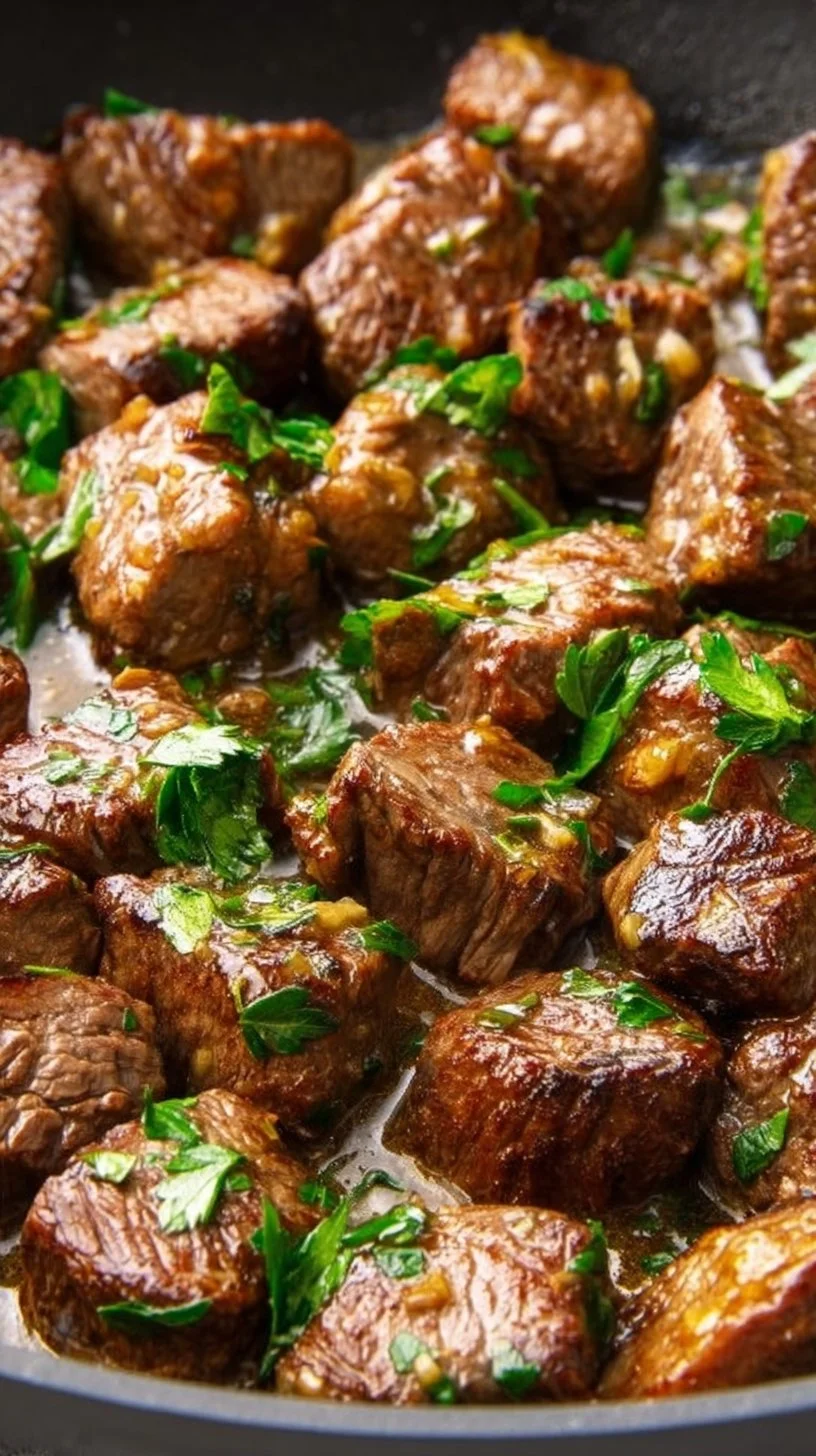
Garlic Steak Bites is a concise recipe that demands precise execution to transform a few high-quality ingredients into a dish with layered aroma, satisfying texture, and concentrated beef flavor. The ingredient list is intentionally short—steak, garlic, butter, salt, pepper, and parsley—so technique becomes the primary driver of success. This article dissects the recipe from a professional chef’s perspective, explaining the culinary logic behind each action and offering practical guidance on heat control, timing, and finishing so the final plate reads like a considered restaurant appetizer rather than a hurried skillet dinner. For further context on complementary preparations that pair well with a butter-forward steak, consider the approach used in the garlic-butter steak cheddar potato bake, where texture contrast and sauce concentration are handled intentionally to support bold protein flavors.
The culinary logic behind this dish
At its core, Garlic Steak Bites is an exercise in flavor concentration. Small, uniformly cut pieces of steak maximize surface area for Maillard reaction—the chemical browning that produces savory, caramelized crust and complex aromatic compounds. Butter serves dual functions: it is the cooking fat that conducts heat and a flavor vehicle, contributing both milk solids for browning and emulsified richness when combined with garlic. Garlic is added early but briefly to infuse the fat; its volatile sulfur compounds dissipate or become bitter if overheated, so timing is critical. Salt and pepper are minimal seasoning agents that enhance the steak’s intrinsic flavors without masking them, while parsley provides a bright, herbal finish to cut the butter’s weight and refresh the palate.
How to make Garlic Steak Bites
This section follows the supplied directions verbatim and then elaborates on execution details immediately after so each step’s purpose and ideal outcome are clear.
Ingredients :
1 lb steak (sirloin or tenderloin), 4 cloves garlic, minced, 1/2 cup butter, Salt and pepper to taste, Fresh parsley (for garnish)
Directions :
- Cut the steak into bite-sized pieces.
- In a skillet, melt the butter over medium heat.
- Add the minced garlic and sauté until fragrant, about 1 minute.
- Season the steak pieces with salt and pepper and add them to the skillet.
- Cook for about 3-5 minutes, stirring occasionally, until the steak is browned and cooked to your desired doneness.
- Garnish with fresh parsley and serve immediately.
Execution notes:
- Step 1: Cut the steak into consistent bite-sized pieces (roughly 1 to 1.5 inches). Consistency ensures uniform cooking; uneven sizes produce a mix of overcooked and undercooked pieces in the same pan. Pat the pieces dry with paper towels before seasoning to remove surface moisture that prevents proper browning.
- Step 2: Melt butter over medium heat rather than high. Butter contains milk solids that brown and then burn quickly; medium heat allows the solids to contribute caramelized flavor without blackening before the steak enters the pan.
- Step 3: Add garlic once the butter is fully melted and begins to foam. One minute is a guideline—watch for a fragrant lift and the very edge of color in the garlic. If the butter starts to brown significantly before the steak goes in, reduce heat or remove the pan from the flame briefly.
- Step 4: Season steak immediately prior to searing. Salt draws moisture to the surface; long pre-salting converts into brine and can inhibit crust formation on small pieces. Freshly cracked black pepper introduces aromatics; add it with the salt to form an immediate seasoning layer.
- Step 5: Add the steak in a single layer where possible, allowing contact with the hot fat. Stirring occasionally keeps all sides exposed to heat while avoiding constant agitation that prevents crust formation. Aim for a 3–5 minute cook window for small pieces—use touch and color as indicators of doneness.
- Step 6: Garnish with parsley right at service to preserve its green color and herbal lift.
Ingredient analysis through a chef’s lens
Each ingredient plays a targeted role. Sirloin or tenderloin are appropriate for quick-cook bites: sirloin offers a beefier flavor and accepts higher heat without losing structure, while tenderloin gives a velvety texture and quick tenderness. The choice affects total cook time and mouthfeel. Four cloves of minced garlic provide intense aromatic presence; minced form increases surface area and accelerates flavor transfer to the butter. Half a cup of butter is generous relative to the protein quantity and functions to coat and carry flavor across the bites while enabling even heat transfer. Salt and pepper are calibrated to enhance; their quantity should be adjusted to taste but added at the right moment to support crust formation. Fresh parsley is a textural and flavor counterpoint—slivered or minced, it cuts through the fat and adds visual freshness.
Kitchen workflow & technique breakdown
Efficient mise en place is non-negotiable for a recipe of this speed. Have steak trimmed, cut, and patted dry; garlic peeled and minced; butter measured; salt and pepper ready; and parsley chopped. Use a heavy-bottom skillet—cast iron or stainless steel—for even heat and superior searing. Heat the pan before adding butter; a hot pan ensures immediate sizzle and controlled browning. However, because butter has a lower smoke point than neutral oils, do not overheat the pan empty. The workflow is: heat pan to medium, add butter, wait for foaming and slight color change, add garlic → smell aromatics → add seasoned steak in an even layer → allow crust development → stir and finish. Timing and pre-planning prevent garlic from burning and the butter from reaching acrid smoke.
Texture control, heat management & timing
Texture is the primary indicator of technical control in this dish. For pronounced crust and a juicy interior, manage heat so that external temperatures are sufficient for quick Maillard reaction but not sustained long enough to overcook the small pieces. Medium to medium-high heat is the target when the steak hits the butter; if the butter begins to brown too quickly, reduce heat slightly and, if necessary, spoon some foaming butter over the pieces to assist even cooking. The 3–5 minute range in the directions assumes medium-rare to medium results for 1–1.5-inch pieces; adjust toward the higher end for thicker cuts or if you prefer medium. Rest time is minimal for small bites; serve immediately so residual heat does not dry the meat. Use the color of the seared exterior and springiness to the touch as reliable cues.
Professional variations
Within the constraints of the ingredient list, small modifications in technique produce notable differences. For a more concentrated sauce, remove the cooked steak and reduce the browned butter and garlic briefly to intensify flavor, then return the steak and toss to coat. For a slightly different aromatics profile, include a pinch of crushed red pepper flakes with the garlic to add background heat without altering core ingredients. If texture contrast is desired, finish with a quick flash under a high broiler for 30–45 seconds—only if the bites are arranged on a heatproof sheet and monitored closely. For pairing suggestions and more composed garlic-butter steak preparations, review how a cream sauce can be used to dress steak in a complementary way such as the technique demonstrated in garlic-butter steak with parmesan cream sauce, where sauce emulsification and seasoning balance provide structure for richer cuts.
Finishing touches & plating philosophy
Garnish and finish are functional. Parsley provides a clean herbal note and visual contrast that prevents the dish from feeling one-dimensional. Finely chop the parsley and sprinkle just before service to preserve its color and volatile aromatics. Consider the plate temperature; a warm plate prolongs the ideal eating window, while a cold plate accelerates firmness and fat setting. Spoon any residual butter and garlic over the bites in a way that avoids pooling—too much fat sitting on the plate reduces perceived tension. For refined presentation, place bites with the seared side up and scatter parsley lightly; the goal is clarity of flavor and texture rather than decorative excess.
Maintaining quality after cooking
Because the recipe is optimized for immediate service, leftovers or delayed service require management. To maintain texture, transfer any uneaten bites to a shallow container and cool rapidly; refrigerate within two hours. Reheat gently in a skillet over low heat with a small knob of butter to revive gloss and warmth—avoid microwave reheating which can toughen the protein and render the butter greasy. For service more than 15–20 minutes after cooking, consider briefly refreshing the bites in a hot pan to reintroduce crust and re-emulsify any separated butter.
Questions from home cooks (chef answers)
Q: Can I use garlic powder instead of fresh garlic?
A: Fresh garlic delivers volatile aromatics and a texture that powder cannot replicate. Garlic powder can be used in seasoning but will not provide the same immediate fragrance when sautéed in butter. If using powder, reduce the powder quantity to avoid bitterness and add it with the steak rather than cooking it in the butter.
Q: My garlic burned before the steak was done; how can I prevent that?
A: Burned garlic typically results from too-high heat or extended exposure. Add garlic after the butter has melted and is foaming but before it begins to darken. Alternatively, add garlic once the steak has started to sear so the pan temperature drops slightly when the protein is introduced.
Q: Is 1/2 cup butter too much for 1 lb steak?
A: The quantity is deliberate to produce a glossy coating and carry the garlic flavor. If you prefer less fat, reduce to 3–4 tablespoons, but expect a thinner coating and less richness. You can also clarify the butter to raise its smoke point if you need a higher searing temperature without increasing burn risk.
Q: How do I achieve a consistent doneness across all pieces?
A: Cut uniform pieces, preheat the pan properly, and do not overcrowd. Work in batches if necessary. Overcrowding lowers pan temperature and causes steaming rather than searing.
Final chef notes
Precision in small, fast-cook recipes is non-negotiable: uniform cutting, controlled heat, and timing of aromatics are the levers that determine success. Rely on sensory cues—sizzle intensity, butter aroma, garlic fragrance, sear color, and tactile feedback—rather than rigid time alone. Treat butter as both a cooking medium and a flavor agent; manage its color and foam to avoid bitterness. Finally, respect the immediate-service requirement: this dish is at its best within minutes of completion when texture, temperature, and aromatic lift are aligned.
Conclusion
For an external reference that aligns with the technique and flavor profile discussed here, review the method in Garlic Butter Steak Bites – Simply Recipes, which emphasizes searing and sauce finish. If you’re looking for variations and user-tested tips, consult the crowd-sourced approaches in Garlic Butter Steak Bites Recipe – Allrecipes. For additional inspiration on how garlic and butter can be used to elevate bite-sized steak preparations with clear technique notes, see Garlic Butter Steak Bites – Jo Cooks.
Garlic Steak Bites
Ingredients
Method
- Cut the steak into consistent bite-sized pieces (roughly 1 to 1.5 inches).
- In a skillet, melt the butter over medium heat.
- Add the minced garlic and sauté until fragrant, about 1 minute.
- Season the steak pieces with salt and pepper and add them to the skillet.
- Cook for about 3-5 minutes, stirring occasionally, until the steak is browned and cooked to your desired doneness.
- Garnish with fresh parsley and serve immediately.