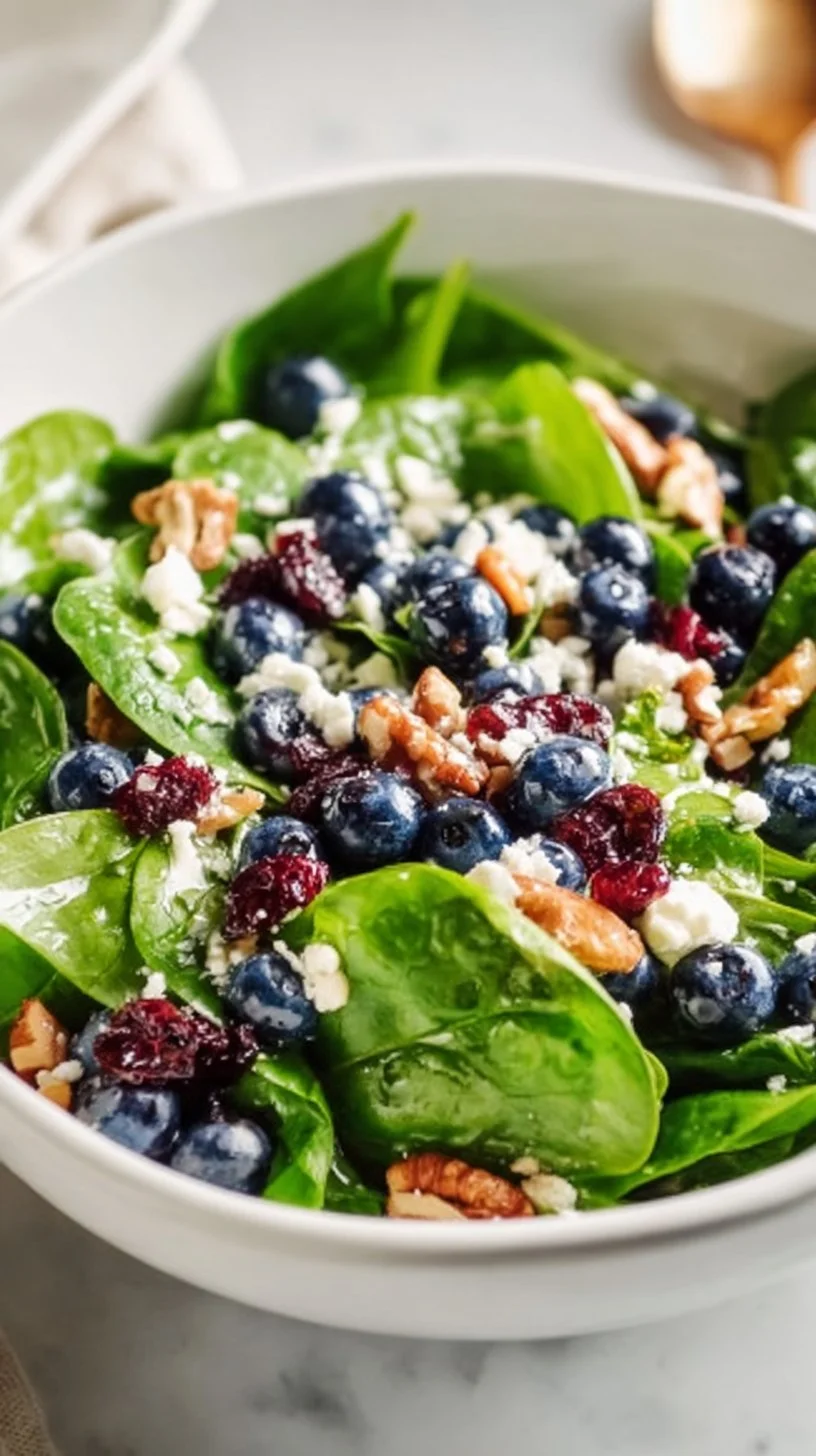
Blueberry Spinach Salad with Honey Balsamic Dressing
AARON Introduction
As a nutrition specialist, I approach recipes through the lens of digestion, nutrient density, and long-term wellness. This Blueberry Spinach Salad with Honey Balsamic Dressing is a straightforward example of how simple ingredients can support daily nutrition goals without complicated preparation. It pairs fresh produce, healthy fats, and a modest sweet-and-tart dressing to create a satisfying, balanced dish you can enjoy regularly.
If you enjoy recipes that emphasize whole foods and bright flavors, you might also appreciate other fruit-forward breakfasts or light meals that build on similar principles, such as a lemon-blueberry ricotta toast that uses fruit to boost nutrient variety and satiety; see one version of that idea at lemon blueberry ricotta toast with honey for inspiration.
In the sections that follow I’ll explain how this salad supports digestion and overall health, walk through the exact recipe, clarify the role of each main ingredient, and offer practical tips for storage, meal prep, and sensible variations. My aim is to keep guidance evidence-based, plainspoken, and useful for everyday life.
How this recipe supports overall wellness
This salad combines several elements that contribute to balanced eating. Leafy greens like spinach provide fiber and micronutrients with very few calories, helping support steady blood sugar and healthy digestion. Blueberries bring concentrated phytonutrients—flavonoids and anthocyanins—along with fiber and natural sweetness, which can make the dish more satisfying and reduce the urge to add refined sugars elsewhere in the meal.
Pecans add monounsaturated and polyunsaturated fats and a bit of protein, making the salad more satiating and helping your body absorb fat-soluble vitamins (A, K, E). Feta contributes protein and calcium and a salty tang that balances the sweet dressing. The honey-balsamic dressing offers flavor complexity in a small volume; fat from the olive oil slows gastric emptying slightly, creating a slower, steadier energy release from carbohydrates.
From a digestion perspective, the fiber in spinach, blueberries, and pecans encourages regularity and supports a diverse gut microbiome—both important for long-term wellness. If you are curious about complementary recipes that maintain this balance of fruit and whole foods across meals, you may find another version of lemon-blueberry ricotta toast helpful as part of a balanced weeknight or weekend plan: lemon blueberry ricotta toast with honey (alternate link).
Overall, this salad is nutrient-dense without being heavy, and it fits well as a main for a light lunch, a side with dinner, or part of a composed plate when combined with additional protein.
How to make Blueberry Spinach Salad with Honey Balsamic Dressing
Below is the recipe exactly as provided. Follow the directions precisely for the intended texture and timing. I’ll add practical tips afterward for serving, meal prep, and minor adjustments that keep the nutritional balance intact.
Ingredients :
3 cups fresh spinach (3 ounces), 1/2 cup pecans, chopped, 1/2 cup dried cranberries (I like the low/no sugar type!), 1/2 cup feta cheese, 1/2 cup fresh blueberries, 1 tbsp olive oil, 1 tbsp water, 3 tbsp honey, 2 tbsp balsamic
Directions :
Make the Salad: Toss all salad ingredients together. , Make the dressing: Add all dressing ingredients to a mason jar and, with the lid on TIGHT, shake well. , Serve + Store + Meal Prep Tips: If making this salad for a potluck-type event where it’s all going to get eaten the same day, pour the dressing on right before serving. Or, set it on the side in a jar and let people dress their own portions. If you’re making this for meal prep, I recommend portioning out the salad into reusable glass containers. Don’t put the dressing on the salad until you are ready to eat it or it will get soggy!Serve leftover un-dressed salad covered in the fridge, and leave dressing in a sealed container at room temp for up to 4 days.
(Note: The ingredient and direction text above are quoted exactly as provided and should not be altered when you prepare the salad.)
Nutrient roles of each main ingredient
Spinach: A low-calorie, high-nutrient green that delivers vitamin K (important for bone health), folate (supporting cell division and pregnancy health), vitamin A precursors, and iron in a plant form. Spinach is also mostly water, which helps with volume and satiety without adding excess energy.
Blueberries: Offer fiber and antioxidants like anthocyanins, which support vascular health and help protect cells from oxidative stress. Blueberries are relatively low in sugar compared with many fruits, making them a great choice for flavor and phytonutrient density.
Pecans: Provide healthy fats (monounsaturated and polyunsaturated), a modest amount of protein, and minerals such as magnesium and zinc. The fats increase the absorption of fat-soluble vitamins and enhance satiety.
Dried cranberries: Add chew, texture, and concentrated sweetness. Choosing low- or no-sugar-added varieties reduces extra refined sugar intake while maintaining flavor contrast.
Feta cheese: Supplies protein and calcium and gives the salad a savory, tangy note that offsets the sweet components. Because feta is lower in fat than many cheeses per ounce, it’s a reasonable way to add dairy without overpowering the dish.
Olive oil: A source of monounsaturated fats that are heart-healthy and contribute to the pleasant mouthfeel of the dressing. Fats also slow carbohydrate absorption a bit, helping to keep blood sugar steady after eating.
Honey and balsamic: Together they create a sweet-tangy dressing. Honey provides quick sugars and flavor complexity; balsamic vinegar contributes acidity that enhances digestion through taste stimulation and can make the salad more pleasing without needing excess salt.
The preparation method & its health impact
This is a raw salad, which preserves heat-sensitive nutrients like vitamin C and many phytonutrients found in berries and greens. Keeping ingredients raw maximizes their fiber content and the enzymes that help with digestion. Tossing ingredients rather than blending keeps more intact fiber and results in slower carbohydrate absorption.
The dressing is emulsified by shaking in a jar; this keeps the oil and acids combined briefly and coats the salad ingredients so flavors are distributed. Avoiding high-heat cooking means fewer oxidized fats and better retention of antioxidants. One small caveat: nuts can become more digestible when lightly toasted, but toasting also alters their fat structure slightly; if you prefer gentle toasting for flavor, do so briefly and at moderate heat.
Ways to lighten, enrich or modify the dish nutritionally
If you want to adapt the salad toward specific goals while keeping its core identity, consider these evidence-based adjustments:
Lighten: Reduce the feta to 1/4 cup or use a lower-fat cheese alternative; cut the pecans to 1/4 cup. Use a little more spinach to increase volume with minimal calories.
Enrich protein: Add a lean protein source when you need a more complete meal—poached chicken breast, canned salmon, or a scoop of cooked quinoa. For a vegetarian boost, add a quarter cup of chickpeas or 2 tablespoons of hemp seeds.
Reduce sugar: Choose unsweetened dried cranberries or omit them; reduce honey to 1–2 tablespoons and increase balsamic slightly to keep balance.
Increase healthy fats: Substitute half of the pecans with sliced avocado or add a tablespoon of chia seeds to the salad for omega-3 alpha-linolenic acid and extra fiber.
Make it more filling for meal prep: Layer the salad in containers with heartier bases (farro or brown rice) and keep the dressing separate to preserve texture.
Keep in mind that small changes shift the calorie and macronutrient profile, so match tweaks to your appetite and activity levels rather than following trends.
Pairing ideas for a balanced, complete meal
This salad works well as a main for a lighter meal or as a side alongside a protein source. For a balanced plate combine it with:
- Grilled or roasted chicken for a protein-forward dinner.
- A piece of fatty fish like salmon or mackerel to add long-chain omega-3s and more iron.
- Legumes or a whole grain side (quinoa, farro) for a plant-based complete meal with fiber and sustained energy.
- For family-friendly or brunch settings, pair it with a warm, savory casserole—for example, a chicken-and-spinach casserole provides a comforting, protein-rich complement; see an idea for that at chicken and spinach casserole with cream cheese.
When assembling a balanced meal, aim for roughly one-quarter protein, one-quarter whole grains or starchy vegetables, and one-half non-starchy vegetables like this salad.
Safe storage, food safety & optimal reheating
Storage: Keep the salad undressed and in an airtight container in the refrigerator. Spinach wilts faster than heartier greens, so consume within 2–3 days for the best texture and nutrient retention. The dressing can be kept in a sealed jar at room temperature for up to 4 days as noted in the recipe, but if your kitchen is warm (above ~75°F / 24°C) store it in the fridge to preserve quality.
Food safety: Because this salad includes fresh produce and dairy, handle with clean hands and utensils. Wash the spinach thoroughly if not pre-washed. Use clean containers for storage and avoid cross-contamination with raw meats.
Reheating: This is a cold salad meant to be eaten fresh or chilled; do not reheat the dressed salad. If you add cooked protein or grains, reheat those separately and cool slightly before adding to the greens to avoid wilting them excessively.
Common nutrition questions about this dish
Is the honey too much sugar? The recipe balances honey with oil and acid; if you are concerned about added sugars, reducing honey to 1–2 tablespoons or using a no-sugar dried fruit will lower simple sugars while preserving flavor.
Can people with nut allergies make this? Yes—replace pecans with pepitas (if tolerated) or roasted chickpeas for crunch. Always check for cross-contact and label ingredients carefully if serving to others.
Is dried cranberry necessary? It adds texture and sweetness. You can omit it or swap for a smaller amount of fresh pomegranate seeds or an extra handful of blueberries to reduce added sugar.
Is this filling enough for a meal? As written, the salad is a light main or a substantial side. To make it a fuller meal, add a protein (chicken, tofu, legumes) and a small portion of whole grains.
How does this affect digestive comfort? The fiber and fat balance tends to support gentle digestion. If you have specific digestive conditions, start with smaller portions of fibrous ingredients and increase gradually to allow your system to adapt.
Final wellness notes
This Blueberry Spinach Salad with Honey Balsamic Dressing is a practical template for everyday eating: nutrient-dense greens, antioxidant-rich fruit, healthy fats, and a flavorful dressing. It supports digestion and satiety when eaten as part of a balanced pattern. Focus on portion sizes that match your hunger and combine the salad with quality proteins or whole grains when you need a more substantial meal. Small, consistent choices like this—enjoyed without rigidity—are what support long-term health.
Conclusion
For another version of this classic combination, you can see how different bloggers layer fruit and greens in their takes on the recipe at blueberry spinach salad with honey balsamic dressing – Blue Bowl. If you’re looking for serving ideas that keep the balance of sweet and savory, a related take is available at Blueberry Spinach Salad with Honey Balsamic Dressing. For a creative seasonal variation that adds grilled fruit while maintaining the same dressing profile, consider this grilled peach and blueberry version at Grilled Peach Blueberry Spinach Salad with Honey Balsamic ….
Blueberry Spinach Salad with Honey Balsamic Dressing
Ingredients
Method
- Toss all salad ingredients together.
- Add all dressing ingredients to a mason jar and, with the lid on tightly, shake well.
- If making this salad for a potluck event, pour the dressing on right before serving or set it on the side.
- For meal prep, portion out the salad into reusable glass containers without dressing to avoid sogginess.
- Serve leftover undressed salad covered in the fridge, and store dressing in a sealed container at room temperature for up to 4 days.