Churro Cheesecake
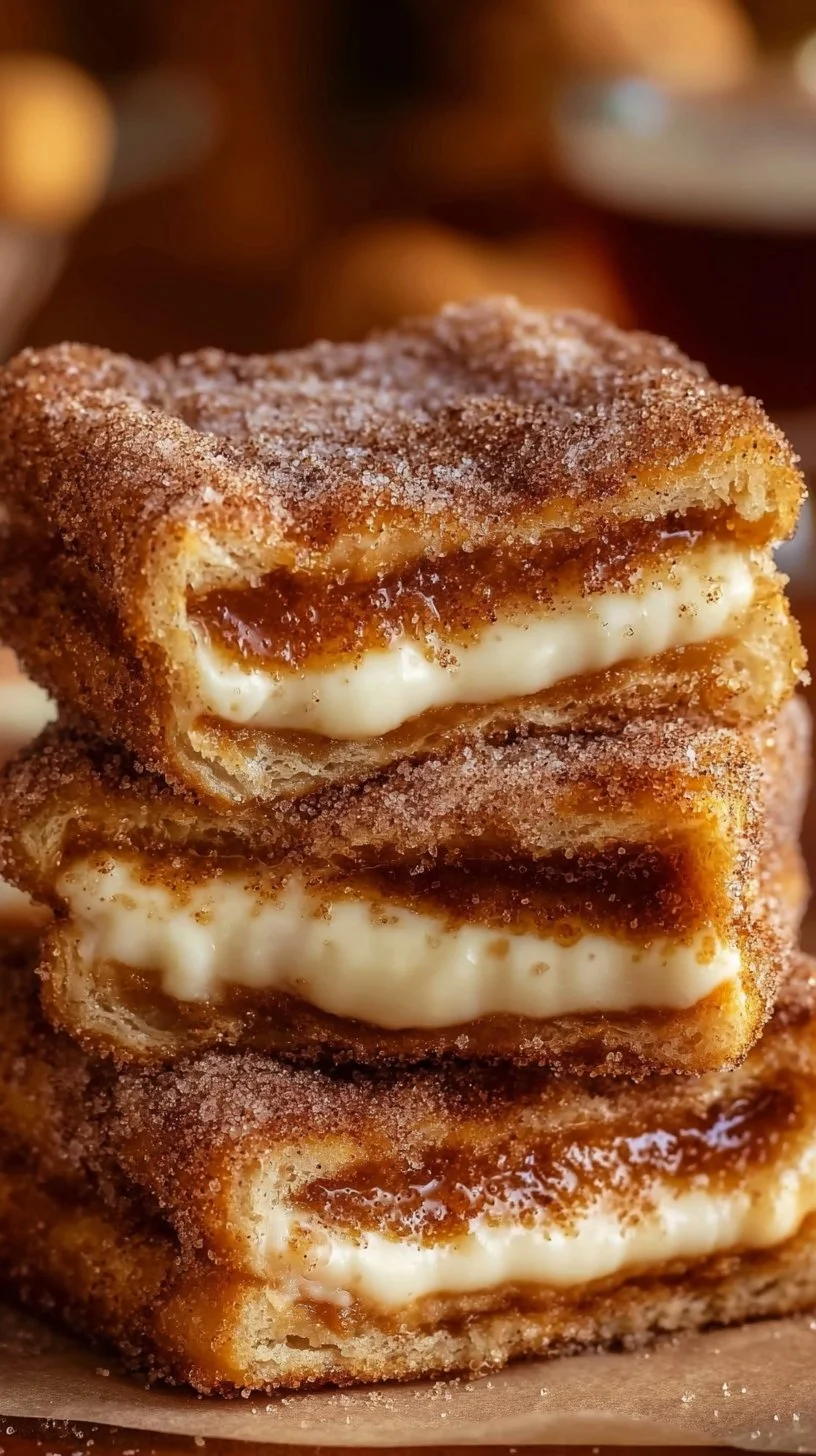
There are some recipes that arrive in our lives not only as food but as small, fragrant portals to a place and a way of being. Churro Cheesecake is one of those recipes — a hybrid that tastes like a sunlit market plaza and the hush of a family kitchen at dusk. Wherever I encounter it, I am transported to corners of the world where sugar and spice are the punctuation marks of everyday ritual: street corners in Madrid where a vendor folds hot dough into paper cones, the pastel-colored bakeries of Mexico City where morning coffee is never without something fried, and the living rooms where aunts pass down secrets about rolling cinnamon and butter with the tenderness of a blessing. If you are curious about variations on this dessert, you might find resonances with other cheeky cheesecakes, such as a delicate riff on springtime flavors in this mini Easter cheesecakes with chocolate eggs, which show how a familiar base can carry local gestures of celebration.
This article is an invitation to linger: to learn where Churro Cheesecake comes from, to trace the notes in its aroma and texture, and to understand how a recipe that pairs crispness with creaminess becomes a vessel for memory and belonging across cultures.
The origin story & regional influence behind this dish
Churros and cheesecake, considered separately, carry very different genealogies. The churro—simpler in origin, more rustic in the telling—has been traced to Iberian shepherds who fried strips of dough for sustenance while tending flocks, and later to the bustling streets of Madrid and Lisbon where the fried-dough stick became a breakfast companion. Cheesecake, in contrast, is the product of ancient dairy cultures from the Mediterranean to northern Europe: a custardy, celebratory cake that evolved from peasant food to high dessert.
The story of Churro Cheesecake is not one of pure ancestry but of cultural crossroads. It arrives from places with colonial histories, migration, and trade, where sweet, fried dough met the creamy comforts of European baking. In the Americas, Spanish and Latin American comfort-food traditions met New World dairy abundance and American-style cheesecakes, and the result is a dessert that feels familiar in more than one register. It carries the cinnamon-scented nostalgia of churros and the silky, dense gratitude of cheesecake in one bite.
Regional influence reveals itself in details: a Mexican kitchen might fold in a salted caramel drizzle or use a darker piloncillo sugar for depth; a Tex-Mex bakery could serve slices alongside spicy coffee; a Californian artisan pastry chef might experiment with flaky, laminated dough for an even more layered crunch. Run your senses along the edges of those differences and you will find how geography and ingredient availability shape a recipe’s soul.
How to make Churro Cheesecake
Ingredients :
1 tablespoon ground cinnamon, ½ cup granulated sugar, Two 8-ounce packages refrigerated crescent roll dough or sheets, 16 ounces full-fat cream cheese, softened, ¾ cup granulated sugar, 1 large egg, 1½ teaspoons vanilla extract, 3 tablespoons unsalted butter, melted and slightly cooled
Directions :
Ingredients through a cultural & historical lens
Look closely at the ingredient list and you can read a map of hemispheres and histories. Cinnamon, for example, once traversed maritime trade routes from Southeast Asia to European royal courts; today it is the humble signature of street-food culture in Spain and Latin America alike. Granulated sugar sits beside it as a legacy of plantations and transoceanic exchange: a crystalline reminder that our sweet rituals are woven from threads of commerce and migration. Refrigerated crescent roll dough is a modern convenience—an emblem of industrialized baking that has democratized textures once reserved for skilled bakers. Cream cheese, brought to prominence in the United States and now ubiquitous worldwide, lends the cheesecake its velvet center, speaking to dairy economies and refrigeration’s impact on home baking.
When you assemble these seemingly ordinary components, you are engaging with a layered history. The interplay between the processed (crescent dough) and the artisanal (butter, vanilla) mirrors how many communities today balance convenience and tradition. Instead of seeing this as a loss, many cooks have embraced it as continuity: the way a busy family might use a ready-made dough yet fold in a grandmother’s cinnamon-sugar ritual to keep memory active.
Cooking the dish: sensory notes & traditional techniques
The making of Churro Cheesecake is less about precise technique and more about choreography — a sequence of tactile, olfactory moments that feel like a small domestic festival. Imagine unwrapping the crescent dough: it unfurls with a faint, yeasty perfume that hints at breads baked in the mornings of many towns. As the dough is layered and pressed, you feel the cool give beneath your fingers; when butter is brushed or melted into the layers, the aroma swells into something buttery and warm, invoking sidewalks off which pastry steam rises.
Then comes cinnamon and sugar — a dusting that transforms the dough in the same instant it transforms the air. Cinnamon’s sweet-bitter perfume cuts through the cream cheese’s mild tang, and the contrast is where memory lodges: the first bite when heat and chill meet, when a crispy edge cracks and the cream drops like a cloud into the yolk of your tastebuds. Traditional churro-making would call for hot oil and a piping bag to achieve ridged, fried tubes; here, that sensibility is borrowed as texture rather than method. The dessert captures the fried-churro fantasy in the crunch of brushed butter and sugar on dough baked to amber.
If you trace this process across kitchens, you’ll notice a generational dialogue: elders instructing youth on the right moment to fold, parents teaching how much cinnamon is “enough,” and neighbors offering tips on oven warmth as if you were discussing weather. In such moments the kitchen becomes a gathering place, and technique becomes a shared language of care.
Within this section I also think of how other cheesecake traditions have been adapted to fit local rhythms; for a tangier and spice-forward comparison, some bakers look to flavor crossovers like a speculoos cheesecake with strawberries, where cookie spice and fruit reimagine the classic structure and show how layered taste can carry a sense of place.
How different regions prepare their version
Across Latin America and the southwestern United States, Churro Cheesecake takes on local colors. In Mexico, cooks might integrate cajeta or dulce de leche as a ribbon between dough and filling, honoring the country’s fondness for thickened milk sweets. In Spain, bakers who prize texture may insist on a thinner, almost filo-like crust to mimic the crispness of a true churro, while in parts of the U.S., pastry shops flirt with flamboyant toppings: salted caramel, toasted pecans, or a drizzle of espresso glaze to counterbalance the sugar.
In Puerto Rico or Cuba, where sticky-sweet roasting traditions meet citrusy notes, you might find a hint of orange or lime cut into the cream to lighten richness. Californian kitchens, with their farm-to-table ethos, sometimes replace commercial dough with homemade laminated pastry and use artisanal salts and single-origin vanilla to coax more aromatic complexity. This range of approaches is not competitive; it is conversational. Each regional telling keeps the core heart — the marriage of cinnamon-scented dough and creamy cheese — while letting local ingredients, climate, and cultural memory steer the flavor.
Traditional ways this dish is shared or served
Churro Cheesecake is, by temperament, a communal dessert. It is cut into wedges that invite sharing, unspooling conversation as much as sugar. In many households, it appears at end-of-week dinners, at fiestas where laughter rises like steam, and at café tables where friends linger over small cups of strong coffee. Serving styles tell stories: a bakery may place a slice in a box with a paper doily and a handwritten thank-you; at home it arrives on a mismatched plate, still warm, and passed around without formality.
The act of sharing is ritualistic. One person offers the first slice to an elder, another promises the slice with the crispiest edge to the child who has been patient. In some neighborhoods, Churro Cheesecake becomes a celebratory offering during holidays, a way of saying that sweetness and memory persist. The way the dessert is plated—perhaps with a dusting of cinnamon, perhaps with a modest drizzle of condensed milk—signals intent: modest or elaborate, intimate or performative.
Storing the dish without losing its cultural essence
Preserving Churro Cheesecake is an exercise in respect: keep it chilled, yes, but also keep it sociable. In practical terms, refrigeration holds the cheesecake’s structure and keeps the cream cheese fresh, while a short exposure to room temperature before serving revives the aroma of butter and cinnamon. Stored slices can be wrapped in parchment and placed in an airtight container to protect the sugar-crust from moisture; when you reintroduce warmth, do so gently, as minutes in a low oven or a few moments at room temperature coax the textures back to life.
But there is also a cultural ethos to storage. In many homes, leftovers are not sealed away for convenience alone; they are repackaged into small plates for neighbors, shared with those who could use comfort. The practice of dividing a dessert into offerings for others keeps its cultural meaning alive: conserving not only flavor but connection. Reheating should honor the original intent—restore crispness where possible, avoid turning the custard rubbery—and always be paired with the ritual of giving.
Cultural questions people often ask
People often ask: does this count as a churro or a cheesecake? The answer is both and neither; it is a hybrid that affirms how food circulates—never static but always in dialogue. Another common question is whether the ready-made dough cheapens the tradition. I have found that the measure of authenticity is not the provenance of an ingredient but the intentions behind the cooking: the hands that press, the patience in sugaring, the stories told while it bakes.
Others are curious about how to keep the crunch if they must store it. The secret, collectors of memory will tell you, is separation: keep the crunchy top in a separate, breathable container until the last moment, or revive it with a brief whisper of heat rather than extended warming. And many ask whether this dessert can be made for feasts that demand dietary sensitivity; adaptations abound, but they change the flavor map and thus transform the stories the dish carries. If you choose to adapt, do so with awareness of the trade-offs between flavor and necessity.
A closing note on food, memory & travel
Travel teaches us that recipes are living postcards: they are written in flour and sugar and language and arrive with smudges of time, travel, and human touch. Churro Cheesecake is a perfect exemplar of this idea—part street-food memory, part sit-down indulgence, and wholly a carrier of personal and collective stories. When I taste it in different cities, I taste local light, the pitch of conversation in cafés, the precise way an elder says the word “just a pinch.” Each community that claims this dessert claims also a piece of the ritual: the hush at first bite, the laughter at crumbs on cheeks, the practice of saving the corner slice for someone beloved.
Food is not simply sustenance; it is a language of place. It tells you where a person has been, which hands shaped the dough, which spices were favored in the kitchen long before you arrived. To make or to share a Churro Cheesecake is to travel without leaving your table, to carry with each forkful the cumulative warmth of markets, kitchens, and open-hearted exchanges.
Conclusion
For a practical reference that celebrates the uncomplicated joy of a Churro Cheesecake, I often point readers to a straightforward home-friendly guide like Churro Cheesecake (So Easy!) – Celebrating Sweets which highlights approachable techniques, and for those who enjoy bar-style interpretations there is a thoughtful variation in Churro Cheesecake Bars Recipe – Creations by Kara that shows how the same flavors can be reimagined into shareable formats. These pages serve as companions to the cultural and sensory story told here, offering concrete manifestations of a dessert that carries many homes within it.
Churro Cheesecake
Ingredients
Method
- Preheat your oven to 350°F (175°C).
- In a mixing bowl, blend the softened cream cheese, ¾ cup of granulated sugar, egg, and vanilla extract until smooth and creamy.
- Unroll the crescent roll dough and pinch together any seams to create a solid sheet of dough.
- Layer half of the crescent dough into the bottom of a greased 9-inch pie pan, pressing firmly.
- Spread the cream cheese mixture evenly over the dough.
- Top with the remaining crescent dough, pinching the seams together to cover the filling completely.
- Brush the top layer of dough with melted butter.
- Mix the cinnamon and remaining ½ cup of sugar together, and sprinkle it over the top.
- Bake in the preheated oven for 30 minutes or until golden brown.
- Allow the cheesecake to cool before slicing.
- Serve warm or chilled, and enjoy sharing it with others.