Chocolate Mousse Brownies
*** Introduction ***
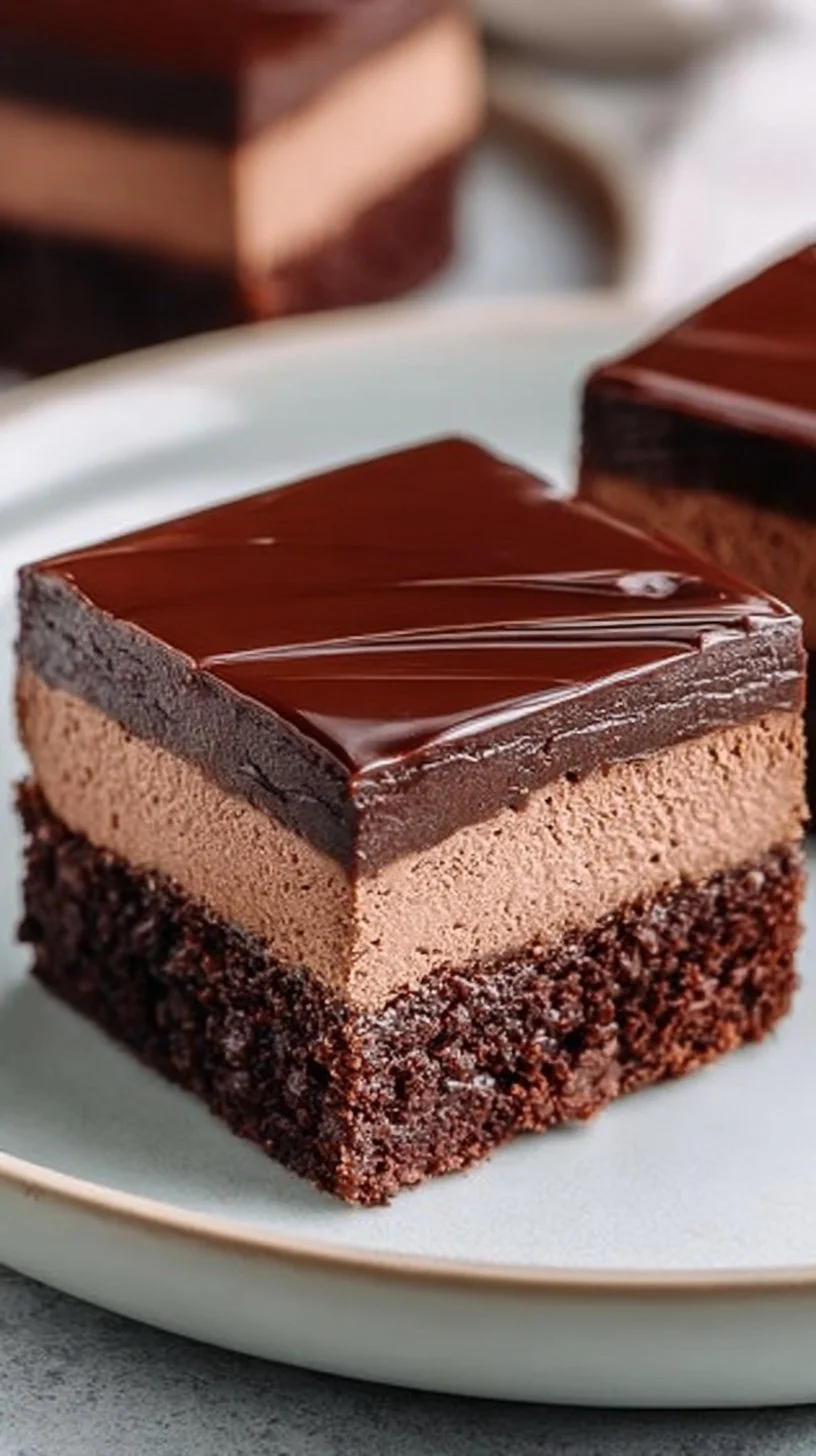
Chocolate Mousse Brownies combine two distinct chocolate textures: a dense, fudgy base and a light, airy mousse cap. The contrast is deliberate and requires control of temperature, aeration, and timing to preserve both textures through baking, cooling, and chilling. This guide presents the recipe mechanics, explains the purpose of each step and ingredient, and offers professional techniques that ensure a precise, reproducible finish. For comparative layering techniques and ideas for glossy finishes on brownie bases, consult this complementary example of layered chocolate and fruit treatment at related layered brownie techniques.
*** The culinary logic behind this dish ***
The architecture of Chocolate Mousse Brownies relies on two culinary systems: a baked matrix (the brownie) and an emulsion/foam system (the mousse). The brownie requires sufficient fat and sugar to develop a moist crumb and a shallow crust, while not overbaking to preserve internal chew. The mousse depends on proper tempering of chocolate and stable whipped cream to maintain aeration and glossy mouthfeel. Combining them requires attention to residual heat—if the brownie is too warm when the mousse is applied, the melted chocolate will thin and the mousse will deflate or weep. Conversely, an overly cold brownie can cause the mousse to set unevenly. The final chilling step harmonizes both systems, allowing the mousse to stabilize without saturating the brownie.
*** How to make Chocolate Mousse Brownies ***
Ingredients :
1 cup of unsalted butter, 2 cups of granulated sugar, 4 large eggs, 1 teaspoon of vanilla extract, 1 cup of all-purpose flour, 1 cup of unsweetened cocoa powder, 1/2 teaspoon of salt, 1 cup of heavy cream, 8 ounces of semisweet chocolate, chopped, 1 tablespoon of powdered sugar (for dusting)
Directions :
- Preheat your oven to 350°F (175°C) and grease a 9×13 inch baking dish., 2. In a saucepan, melt the butter and sugar together over medium heat, stirring until smooth. Remove from heat and let cool slightly., 3. Stir in the eggs and vanilla extract, mixing well., 4. In a separate bowl, combine the flour, cocoa powder, and salt. Gradually mix dry ingredients into the wet mixture until well combined., 5. Pour the brownie batter into the prepared baking dish and spread evenly., 6. Bake for 25-30 minutes or until a toothpick comes out with a few moist crumbs. Allow brownies to cool completely., 7. In another bowl, beat the heavy cream until soft peaks form. Melt the semisweet chocolate in the microwave or double boiler and let it cool., 8. Gently fold the melted chocolate into the whipped cream until fully combined., 9. Spread the chocolate mousse over the cooled brownies., 10. Chill in the refrigerator for at least 2 hours before serving., 11. Dust with powdered sugar before serving and enjoy!
Note: The recipe steps are quoted verbatim above; the following text explains the reasoning and technique behind each step and ingredient.
*** Ingredient analysis through a chef’s lens ***
Unsalted butter: Provides saturated fat that contributes to fudginess and flavor clarity. Using unsalted butter gives precise control over sodium; salt is added separately to calibrate balance.
Granulated sugar: Acts as sweetener and structural tenderizer. In this method sugar is melted with butter which dissolves some crystals, contributing to a shinier crust and a denser, fudgier interior by partially inverting sucrose under heat.
Eggs: Provide emulsification, coagulation for structure, and moisture. Stirring eggs into warm fat creates a smoother batter and encourages a glossy finish.
Vanilla extract: Flavor amplifier. Use high-quality pure vanilla; a teaspoon offers aromatic lift without competing with cocoa.
All-purpose flour: Provides gluten structure but in a restrained quantity (1 cup) to avoid an overly cake-like result. The ratio of flour to fat and egg is calibrated for a brownie rather than a cake.
Unsweetened cocoa powder: Contributes concentrated chocolate flavor, color, and acidity. Use dutch-processed or natural consistently; this recipe assumes neutral leavening behavior.
Salt: Enhances chocolate perception and balances sweetness.
Heavy cream: The mousse base; fat content stabilizes aeration and produces a silkier mouthfeel than lower-fat creams.
Semisweet chocolate: Must be melted and cooled before folding to avoid collapsing the whipped cream; its cocoa solids set the mousse and create depth of flavor.
Powdered sugar: Fine finish dusting that adds visual contrast and a discreet sweetness on the mousse surface.
*** Kitchen workflow & technique breakdown ***
Efficient workflow preserves texture and prevents step conflict. Sequence tasks so the brownie can cool completely while you prepare the mousse components. Start by preheating the oven and preparing the baking dish; melt butter and sugar early enough that it can cool slightly before adding eggs—this prevents scrambling. While the brownies bake, sanitize and chill the bowl for whipping cream; a cool bowl yields faster, more stable peaks. After baking, allow the brownies to reach room temperature on a wire rack; placing warm brownies in the refrigerator will create condensation and accelerate sogginess.
When melting chocolate for the mousse, use a double boiler or short microwave bursts (15–20 seconds), stirring between intervals. Overheated chocolate will seize or develop grain; allowing it to cool to a warm but not hot temperature ensures it will blend with whipped cream without melting it. Timing is critical: the chocolate should be fluid but not so hot that it liquefies the whipped cream. Plan the mousse assembly so the whipped cream reaches soft peaks immediately before the chocolate is ready.
For distributed techniques on small mousse portioning and handling aerated chocolate fillings, review specialist preparation methods such as those used in individual mousse cups at mini chocolate mousse cups.
*** Texture control, heat management & timing ***
Texture is the primary driver of enjoyment in this dish. For the brownie: bake to the moment when a toothpick removes with a few moist crumbs. This ensures the center remains dense and not dry. Residual heat will carry cooking beyond oven time; allow a resting period in the cooled pan out of direct refrigeration to equalize internal temperature.
For the mousse: whip heavy cream to soft peaks — overwhipping to stiffer peaks risks grainy mouthfeel after folding. Melted chocolate should be cooled to approximately 95–100°F (35–38°C) for optimal folding; this temperature is warm enough to be fluid but cool enough not to collapse the foam. Gentle folding with a spatula using broad strokes preserves volume; rapid or aggressive mixing deflates the mousse and will give a heavy texture.
Chilling for at least two hours is necessary: it sets the chocolate within the mousse and allows the mousse to consolidate on the brownie surface. Shorter chilling leaves the mousse too soft for clean slicing; longer chilling firms the mousse but may slightly reduce perceived aeration.
*** Professional variations ***
Maintain ingredient proportions when experimenting. To intensify chocolate depth, replace up to 25% of the cocoa powder with melted dark chocolate in the batter; adjust sugar to taste. For a lighter mousse, temper a portion of egg yolks with warm melted chocolate and fold into stabilized whipped cream, creating a hybrid mousse similar to a classic French mousse — however that requires food-safety consideration for raw yolks. For textural contrast, layer a thin sheet of tempered chocolate or ganache between an almost-firm brownie and the mousse to prevent moisture migration during extended storage; examples of integrating contrasting textures are explored in presentations such as chocolate confetti treats. Use caution: adding layers increases chill time and requires stricter temperature sequencing.
*** Finishing touches & plating philosophy ***
A restrained finish emphasizes technique. Dusting with powdered sugar provides contrast and a subtle sweetness; sift through a fine mesh to avoid clumping. For clean portions, chill until the mousse registers firm and use a warm, dry knife wiped between cuts to produce sharp edges. Serve slices on plates that are slightly chilled to maintain mousse integrity for longer service. Consider micro-contrasts—small spoonfuls of high-acid fruit coulis or thin salted caramel can accentuate the chocolate but should be applied sparingly to avoid compromising the mousse structure.
For other approaches to combining chocolate and fruit finishes that maintain a controlled presentation, study balanced bar-style finishes such as chocolate-covered cherry bars.
*** Maintaining quality after cooking ***
Storage control prevents textural decay. Refrigerate the assembled pan wrapped loosely with plastic to protect from absorbing other fridge aromas. The mousse will firm further over 24 hours; however, prolonged refrigeration (beyond 3–4 days) increases the risk of surface syruping as moisture migrates. For single-serve, portion immediately and store slices on individual trays separated by parchment to avoid sticking. When transporting, maintain a cool environment and avoid stacking slices to protect the mousse cap.
If planning advance service, bake and cool the brownie one day prior; assemble the mousse within the service day to preserve peak aeration.
*** Questions from home cooks (chef answers) ***
Q: What causes a mousse to weep on top of brownies?
A: Weeping occurs when the melted chocolate or residual heat liquefies the whipped cream matrix or when the whipped cream has not been stabilized. Ensure the brownies are fully cooled and the melted chocolate is cooled to warm (not hot) before folding. Avoid overbeating cream to avoid drainage.
Q: Can I use whipped topping instead of heavy cream?
A: Commercial whipped toppings contain stabilizers and different fat matrices; they will yield a different mouthfeel and may hold longer but lack the richness and silkiness of heavy cream. If used, expect altered texture and flavor.
Q: How to achieve a glossy mousse surface?
A: Achieve a smooth surface by using a straight-edged offset spatula, working quickly, and chilling uninterrupted. A light plastic wrap contact during initial chilling prevents skinning and preserves gloss.
Q: My brownie overbaked; is there a fix?
A: Overbaked brownies become dry; counteract by brushing a thin syrup (equal parts water and sugar, and a splash of espresso) across the surface before mousse application to reintroduce moisture without sliding the mousse.
*** Final chef notes ***
Precision in temperature and timing is the controlling factor in combining a baked item with an aerated topping. Respect the thermal stages: cool the brownie fully, temper the melted chocolate, and fold with restraint. Small adjustments—chilling the whipping bowl, calibrating oven temperature with an oven thermometer, and using a digital thermometer for chocolate—yield consistent results. The sensory result sought is a brownie with a glossy, slightly crackled top edge and an airy yet substantial mousse that yields without collapsing.
Conclusion
For additional inspiration and variant techniques on Chocolate Mousse Brownies, review this tested recipe that emphasizes assembly and presentation at Chocolate Mousse Brownies | The Domestic Rebel and this refined approach linking brownie texture to mousse structure at Chocolate Mousse Brownies | Love and Olive Oil.
Chocolate Mousse Brownies
Ingredients
Method
- Preheat your oven to 350°F (175°C) and grease a 9x13 inch baking dish.
- In a saucepan, melt the butter and sugar together over medium heat, stirring until smooth. Remove from heat and let cool slightly.
- Stir in the eggs and vanilla extract, mixing well.
- In a separate bowl, combine the flour, cocoa powder, and salt. Gradually mix dry ingredients into the wet mixture until well combined.
- Pour the brownie batter into the prepared baking dish and spread evenly.
- Bake for 25-30 minutes or until a toothpick comes out with a few moist crumbs. Allow brownies to cool completely.
- In another bowl, beat the heavy cream until soft peaks form.
- Melt the semisweet chocolate in the microwave or double boiler and let it cool.
- Gently fold the melted chocolate into the whipped cream until fully combined.
- Spread the chocolate mousse over the cooled brownies.
- Chill in the refrigerator for at least 2 hours before serving.
- Dust with powdered sugar before serving and enjoy!