Black Forest Cake Mini Dessert Cups
Introduction
As a nutrition specialist, I look for ways to help people enjoy food while supporting digestion, long-term wellness, and balanced eating. Black Forest Cake Mini Dessert Cups are a delightful treat that fits well into a mindful approach: they offer sensory satisfaction in a small portion, which can help with portion control and pleasure without overwhelming the appetite. When you approach desserts with intention—paying attention to ingredients, serving size, and how they fit into the broader day—you can include them in a healthful pattern rather than seeing them as off-limits.
For readers who like portable, single-serving sweets, this style of dessert shares similarities with other small-format recipes; if you want inspiration for other mini desserts, consider a recipe such as mini Easter cheesecakes with chocolate eggs that use similar ideas about layering, texture, and portion size.
How this recipe supports overall wellness
Mini dessert cups offer a few practical wellness advantages when compared with larger cakes or unmeasured servings. First, they provide portion-controlled indulgence—each cup is a predetermined serving, which helps regulate caloric intake and prevents the common pattern of eating “just a little more” from a large cake. Second, the combination of components—cake crumb for carbohydrate, heavy cream for fat, and cherries for fruit—offers a mix of macronutrients that can slow glucose absorption, aiding digestion and satiety.
From a digestion perspective, including some fat (here from the whipped cream) with carbohydrates can moderate blood-sugar peaks by slowing gastric emptying. Cherries contribute fiber and phytonutrients that support gut health and antioxidant defenses, which are part of long-term wellness. Enjoyed occasionally within a balanced eating pattern, this dessert can satisfy cravings and help prevent overconsumption later in the day.
If you like small layered cakes, you may also enjoy the texture and balance of mini strawberry chocolate cakes, which use similar strategies for combining fruit, cake, and cream.
How to make Black Forest Cake Mini Dessert Cups
Ingredients :
1 lb chocolate cake, 3/4 cup powdered sugar, 1 cup heavy cream, 1 cup cherry pie filling, 1/4 cup semisweet chocolate shavings, 1 cup cherries with stems
Directions :
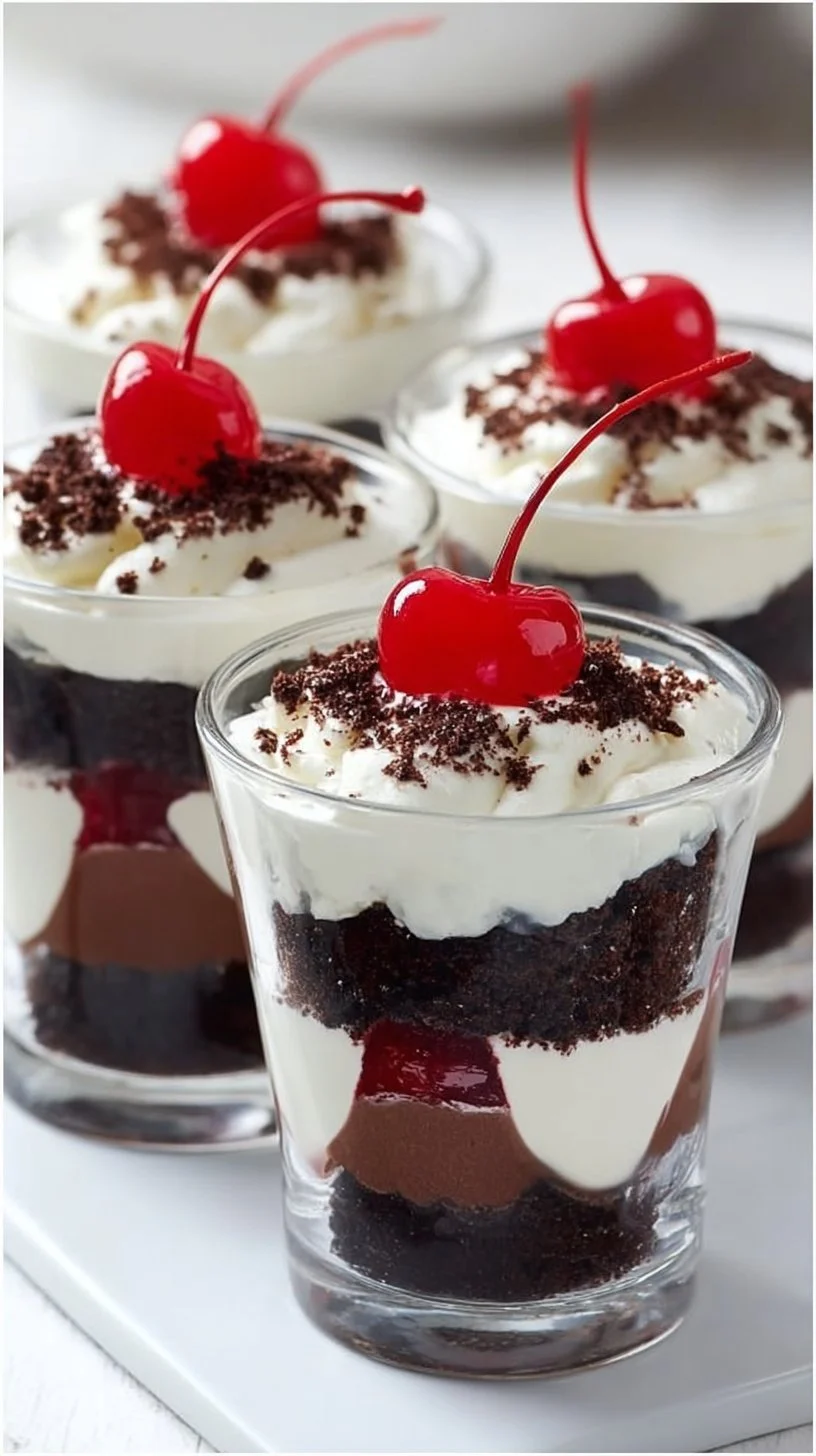
Crumble chocolate cake and set aside. Whip heavy cream and powdered sugar until it forms firm peaks. Fill about 1/2 inch of the mini cups with chocolate cake crumbles. Next, pipe whipped cream about 1/2 inch. Then add 1 tsp of cherry pie filling. Repeat layers. You will end up with 2 layers of each ingredient. Top with whipped cream and garnish with cherry and chocolate shavings. Chill for at least 2 hours and serve.
These instructions are straightforward: prepare the crumb base, whip the cream to firm peaks, assemble in layers, chill, and serve. The small cups make the finished product easy to portion and enjoy in a single sitting.
Nutrient roles of each main ingredient
- Chocolate cake (1 lb): Primarily provides carbohydrates and some protein depending on the cake recipe. The cake brings energy (calories) and the sensory satisfaction of baked structure. From a nutrient-density perspective, cake is not a major source of micronutrients, but it contributes to the pleasure and social aspects of eating.
- Powdered sugar (3/4 cup): Pure carbohydrate (sucrose) used to sweeten the whipped cream. It enhances flavor and helps stabilize whipped cream slightly. Because it’s refined sugar, it’s best used in moderation; in small amounts, it provides quick energy and tastes good.
- Heavy cream (1 cup): A source of dietary fat, primarily saturated fat, that contributes richness, mouthfeel, and satiety. Fat is important for absorbing fat-soluble vitamins from other foods and slowing digestion to promote fullness. Heavy cream also contributes calories, so small amounts go a long way.
- Cherry pie filling (1 cup) and cherries with stems (1 cup): These provide fiber, vitamin C, potassium, and various antioxidants such as anthocyanins, which are prominent in dark cherries. The pie filling often contains added sugar, so it supplies both fruit nutrients and added sugars; using fresh cherries as garnish introduces more fiber and a lower-sugar option.
- Semisweet chocolate shavings (1/4 cup): Adds flavor and a small amount of antioxidants from cocoa, as well as fat and sugar. Semisweet chocolate has less sugar than milk chocolate, making it a reasonable garnish for balance.
Together, the ingredients combine to provide carbohydrates, fat, small amounts of protein, fiber from fruit, and bioactive compounds from cherries and chocolate. The portioned format keeps the overall intake controlled.
The preparation method & its health impact
Layering crushed cake, whipped cream, and cherry filling produces a dessert with varied texture—crumbs for structure, cream for richness, and fruit for brightness. From a health viewpoint, two points stand out:
- Portion control through assembly: Building the dessert in small cups and limiting how many are prepared helps manage total energy intake. Chilling also firms the cream, making the experience more satisfying, which can reduce the urge to have multiple servings.
- Combining macronutrients for better digestion: Each cup contains both carbohydrates (cake and sugar) and fat (cream and chocolate). Fat slows gastric emptying and reduces the speed at which glucose reaches the bloodstream, promoting steadier digestion and a longer feeling of fullness than carbohydrates alone. The cherries add fiber and water, supporting digestive transit and adding nutrients that work against oxidative stress.
Whipping cream to firm peaks introduces air and increases volume, so less cream can provide the desired creamy sensation. The technique of layering also encourages mindful eating—because each cup is crafted and visually appealing, it promotes slower consumption and greater awareness of fullness cues.
If you enjoy experimenting with cake-in-cup formats, the assembly ideas here are similar to those in recipes like Biscoff cheese cupcakes, which also play with texture and portion size.
Ways to lighten, enrich or modify the dish nutritionally
You asked me not to change the ingredient list or directions, so the following suggestions are optional approaches you can use without altering the original recipe itself. These are modifications you can make alongside or around the dessert experience to improve nutritional balance or fit personal goals:
- Lighten servings through portion planning: Serve one mini cup per person and pair it with a protein-rich main or snack to avoid over-reliance on dessert for satiety.
- Enrich the overall meal: Add a protein-rich accompaniment like Greek yogurt or a small handful of nuts on the side of the dessert course (not mixed into the recipe) to boost protein and healthy fats, which helps stabilize blood sugar after the dessert.
- Swap elements in practice (if you choose outside the recipe): For those who prefer less added sugar, garnish with fresh cherries rather than extra pie filling, or reduce the powdered sugar when whipping cream. Small changes like this can lower the sugar load while keeping the experience similar.
- Increase fiber elsewhere in the meal: Serve the cups with a fruit-forward salad or a whole-grain-based main to ensure the meal overall provides sustained energy and digestive benefits.
For creative alternatives using a cake-mix format, you might find ideas for texture and structure in recipes like cake mix cookie bars, which show ways to incorporate cake bases into different portable treats.
Pairing ideas for a balanced, complete meal
To keep the overall meal balanced, think about protein, fiber, and vegetables alongside your dessert. Examples:
- Weeknight dinner: Grilled salmon or tofu, a quinoa and roasted vegetable salad, and one mini Black Forest cup. The protein and fiber in the main course support blood-sugar balance and keep you satisfied.
- Brunch or special occasion: Scrambled eggs with herbs, a mixed green salad with citrus vinaigrette, and a mini dessert cup to finish. Eggs provide high-quality protein; the salad adds fiber and micronutrients.
- Light lunch option: A hearty grain bowl with lentils, roasted vegetables, and a dollop of yogurt, followed by one dessert cup. The legumes increase fiber and protein, making room for a controlled sweet treat.
Pairing desserts with meals that have adequate protein and fiber is a practical way to enjoy sweets without derailing fullness or digestive comfort.
Safe storage, food safety & optimal reheating
These dessert cups are best chilled and served cold. Because they contain whipped dairy and fruit fillings, follow these food-safety practices:
- Refrigerate promptly: After assembly, chill the cups within two hours (sooner in warm environments) and keep them below 40°F (4°C).
- Storage time: Consume within 2–3 days for best quality and to minimize bacterial growth. Whipped cream can separate over time and fruit layers may release moisture, changing texture.
- Avoid reheating: These cups are not intended to be heated. Reheating whipped cream will break its structure and alter texture and safety. If you prefer a warm dessert, prepare a fresh warm component and combine it with a chilled element at serving, rather than reheating assembled cups.
- Covering and contamination: Store in airtight containers or under plastic wrap to prevent absorption of refrigerator odors and to protect from cross-contamination.
Following these steps preserves flavor, texture, and safety.
Common nutrition questions about this dish
- Will this dessert cause digestive upset? For most people, one small cup should be well tolerated. However, individuals with lactose intolerance or sensitivity to saturated fat may experience discomfort from heavy cream. Consider lactase enzyme supplements or smaller portions if you have known lactose sensitivity.
- How does the sugar affect health? The dessert contains added sugars from powdered sugar and pie filling. Taken occasionally and in small portions, added sugars can be part of a balanced diet. Prioritize a daily pattern that includes fiber, protein, and vegetables alongside occasional treats.
- Is this suitable for children? The portion-controlled cups are well suited for children in terms of size. For younger children, monitor added sugar intake across the day and consider using fresh cherries to reduce processed sugar from pie filling.
- How often can I enjoy this? Frequency depends on overall diet and energy needs. For many people, an occasional dessert a few times a week fits into a balanced eating pattern, especially when meals during the day provide ample protein, fiber, and vegetables.
Final wellness notes
Desserts like Black Forest Cake Mini Dessert Cups can support a healthy relationship with food when enjoyed mindfully. Small portions, sensory pleasure, and pairing with nutrient-rich foods help you get both enjoyment and nourishment. Focus on overall dietary patterns—variety, adequate protein, fiber, and regular meals—so that treats become part of a sustainable, flexible plan rather than a source of guilt. Notice how the dessert makes you feel: satisfied, energized, or sluggish; use that feedback to adjust portion size or meal pairings next time.
Conclusion
If you want a practical, single-serving presentation of Black Forest flavors, this mini dessert approach is both satisfying and controllable. For variations and ideas that use the same mini-cup concept, you can explore a ready-made adaptation at DLux Mini Dessert Cups Black Forest Cake. For tutorials on similar mini Black Forest styles and techniques, see the guide at Mini Black Forest Cakes | Crazy Kitchen. If you’re interested in cookie-based single-serve Black Forest alternatives, a helpful recipe is available at Black Forest Cookie Cups – Yay! For Food.
Black Forest Cake Mini Dessert Cups
Ingredients
Method
- Crumble the chocolate cake and set aside.
- Whip the heavy cream and powdered sugar together until firm peaks form.
- Fill about 1/2 inch of the mini cups with chocolate cake crumbles.
- Pipe whipped cream to fill another 1/2 inch.
- Add 1 teaspoon of cherry pie filling.
- Repeat layers until all ingredients are used and finish with a layer of whipped cream.
- Garnish with cherries and chocolate shavings.
- Chill for at least 2 hours before serving.