Baked Chicken Cordon Bleu
Introduction
There are nights when a single scent can carry you halfway across an ocean. For me, the first time I encountered Baked Chicken Cordon Bleu was not in a restaurant; it was in a modest apartment above a bakery in Geneva, where the oven heat and the smell of melting cheese braided with the crisp, yeasty air below. SOFIA — the name of that apartment’s windowbox basil plant and, for a time, my companion to many late dinners — became shorthand for the intimate and wandering life I led then: chasing recipes like stray maps back to their people. This dish, with its layered hush of ham and Swiss encased in chicken, is small in its theater yet vast in the stories it carries. It feels like a postcard from mid-century hotels and quiet family tables both, a comfort that crosses borders.
In that apartment I learned how food anchors the moment: the plate warming cupped hands, the hush that falls when someone takes the first bite, the way steam writes private letters against cold glass. The Baked Chicken Cordon Bleu is a quiet testament to such moments — a simple composition of breaded poultry and filled interior that somehow reads like a long, familiar song. If you seek a companion recipe to its gentle, homey elegance, I once tucked a tray of easy baked donut bars into the oven of that same kitchen to accompany tea for neighbors; these small, joyous pairings map how dishes find one another across time and place.
The origin story & regional influence behind this dish
At first glance, Cordon Bleu wears France like a borrowed coat — the phrase itself meaning “blue ribbon,” evoking the prestige of culinary orders and fine hotels. Yet the lineage of Baked Chicken Cordon Bleu is layered, like the dish: Swiss cheese, ham, and breaded chicken fused into something that only reveals its ancestry when you trace each ingredient. The Swiss contribution is plain: aged Alpine cheeses, their nutty tang and meltability, were natural companions to the ham and poultry of Central Europe. The practice of rolling meat around filling is older still, a technique seen from Italy’s involuted roulades to Eastern Europe’s stuffed cutlets.
By the mid-20th century, this dish morphed into a symbol of post-war culinary optimism. Hotels and households in the United States and Europe adopted it, polishing the recipe into a form that could be elegant and accessible simultaneously. The story of Baked Chicken Cordon Bleu is therefore not a single-origin myth but a conversation between regions: French nomenclature, Swiss dairy, and an American appetite for composed, plated comfort. For a modern echo of how European-style chicken preparations evolve in home kitchens, many cooks today also experiment with crispy, flavorful variations such as the parmesan-crusted chicken with creamy garlic sauce, showing that regional techniques continue to cross-pollinate.
How to make Baked Chicken Cordon Bleu
Making this Baked Chicken Cordon Bleu in a home kitchen is more like composing a small, private ritual than performing a technical task. It asks you to slow, to feel for the right fragrant moment when butter and mustard gesture toward warmth, and to wrap each breast as if tucking a letter into an envelope.
Ingredients :
4 chicken breasts, 4 slices of ham, 4 slices of Swiss cheese, 1 cup breadcrumbs, 1/2 cup all-purpose flour, 2 eggs, beaten, Salt and pepper to taste, 1/2 cup Dijon mustard, 1/2 cup heavy cream
Directions :
- Preheat the oven to 375°F (190°C)., 2. Flatten the chicken breasts to about 1/2 inch thick. Season with salt and pepper., 3. Place a slice of ham and Swiss cheese on each chicken breast, then roll them up tightly. Secure with toothpicks if necessary., 4. Dredge each roll in flour, dip in beaten eggs, then coat with breadcrumbs., 5. Place the rolls in a baking dish and bake for 25-30 minutes until golden and cooked through., 6. While the chicken is baking, prepare the creamy Dijon sauce by mixing Dijon mustard and heavy cream in a saucepan over low heat. Stir until warmed., 7. Serve the chicken hot with the Dijon sauce drizzled on top.
Those ingredients are modest but potent: the mustard and cream together create a sauce that sings of French bistros, while the ham and Swiss carry the cooler, pastoral notes of Alpine dairies. The act of flattening the chicken — nothing more than coaxing it into a willing canvas — and rolling it up with ham and cheese is a small, tactile ceremony. It is done with hands rather than instruments, and each roll tells of the person who formed it: a hurried parent, a deliberate diner, a traveler folding memories into food.
Ingredients through a cultural & historical lens
Each item in this list reads like a regional telegram. The ham speaks of pigs raised where cold winters encourage curing; a ribbon of smoke or salt that recalls cellars where meat hung from rafters. Swiss cheese is less a single flavor than a memory of high pastures — grasses, thistle, the patient stewardship of curds left to ripen. Dijon mustard is a condensed history of French commerce and spice routes, a piquant line to the cities of Burgundy where sharpness was prized. Breadcrumbs and flour echo thrift and improvisation: a way to transform leftovers into crispness, to make a meal sound and substantial.
The inclusion of heavy cream in the sauce is an indulgence with roots in cuisines where dairy is abundant; it softens the mustard’s edge and recalls a European inclination to silk and robe sauces in warm embrace. Salt and pepper, so small on the list, are the final, democratic gestures — seasoning that unites ingredient geographies into a coherent, local story. When you assemble these elements, you are not only making a dish; you are convening the climates, shepherding practices, and markets that birthed them.
Cooking the dish: sensory notes & traditional techniques
Cooking Cordon Bleu at home is less about precision and more about listening. The breadcrumb crust should sing when tapped — a dry, pleasing sound that promises crunch. As it browns in the oven, the aroma is layered: the yeast and toasted fat of the crumbs mingling with the warm, nutty breath of melted Swiss, while the ham releases a rounded salt that quiets the mustard’s high notes. The sauce — Dijon and cream rendered together — should steam with a sharp, lemony clarity before it softens into velvet.
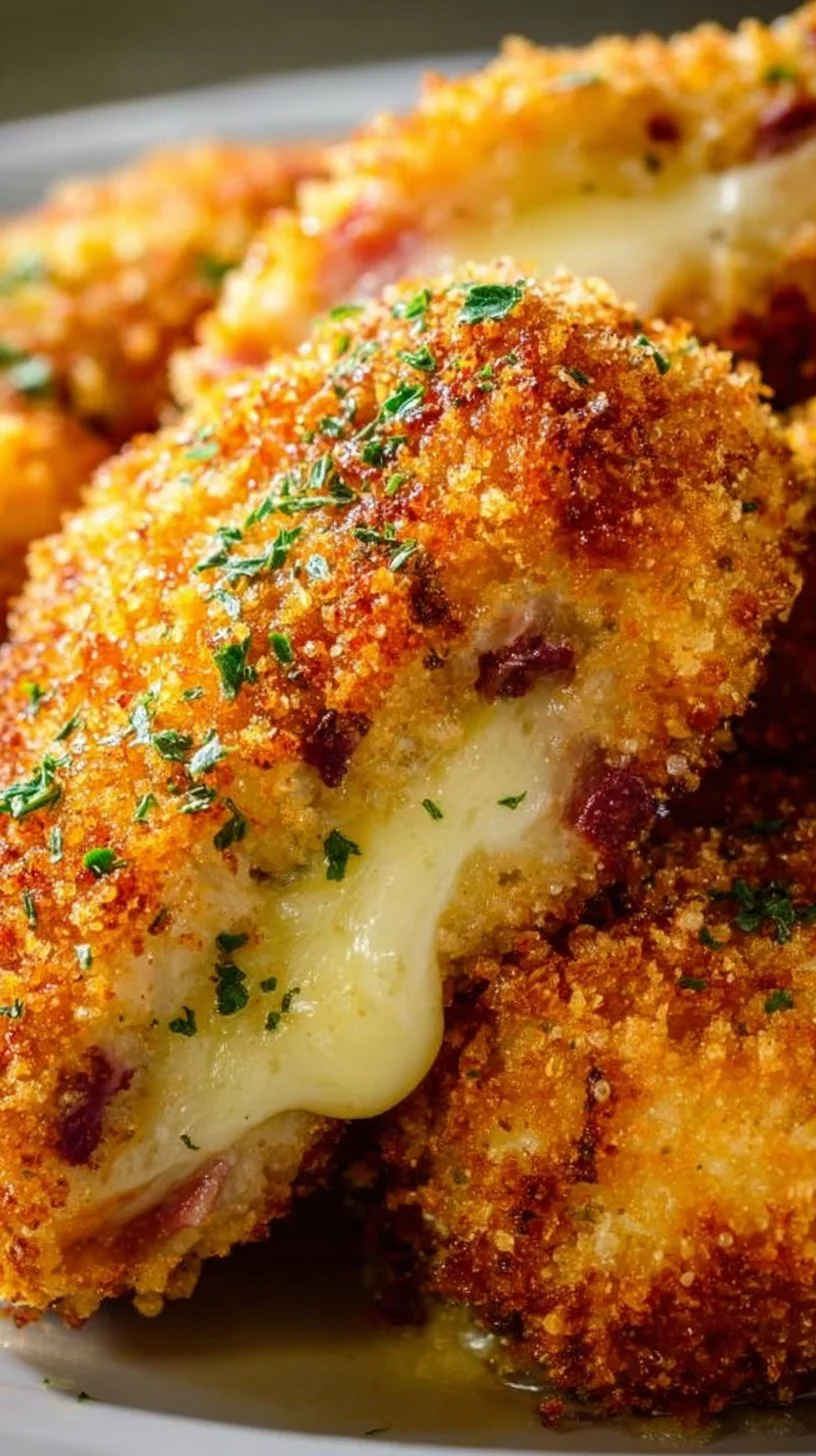
Traditional technique here is tactile: rolling the chicken tightly enough to hold the cheese but not so tight the meat tears; using toothpicks not as a technical necessity but as a modest intimacy, a way of saying this roll is handmade. In many households the breadcrumb is not processed panko but the end crumb of yesterday’s bread, dried in a low oven and then crushed — a thrifty tradition that feeds both economy and flavor. Serve it freshly baked so the contrast between crisp exterior and molten interior is at its most dramatic; this contrast is the dish’s emotional center.
How different regions prepare their version
Across Europe and into America, Cordon Bleu alters like a language with local accents. In Switzerland and parts of Germany, you might find smoked ham and a harder, tangier cheese replacing Swiss. In France, the dish can be found under different names and with sauces that lean toward wine or mushroom reduction rather than cream. Scandinavia introduces dill and a rye-leaning breadcrumb; the Nordic preference for cured, smoky flavors can shift the dish toward a more austere brightness.
In the United States, the recipe often becomes more robust — larger breasts, thicker crumbs, sometimes a layer of prosciutto or specialty cheeses in pursuit of novelty. Southern American tables might enliven the mustard with a touch of sweetness or add a peppered crust for heat. The adaptability of this dish is its gift: it accepts local produce and seasoning like a passport, translating itself to the vernacular of place without losing its blueprint.
Across regions, one sees the same impulse: to take a familiar shape and dress it in what the land offers. Such variations are not betrayals but conversations — the original chords heard differently in new rooms. For a playful next-step inspiration on adapting familiar chicken preparations, consider how recipes like easy baked donut bars are reimagined in home kitchens as well, showing the same spirit of reinvention.
Traditional ways this dish is shared or served
Cordon Bleu arrives at tables that value ceremony and comfort. It is a midpoint dish — formal enough for a small celebration, unpretentious enough for a family weeknight. In my travels, I have eaten it as part of a quiet Sunday lunch where grandparents presided and children were taught how to cut a roll cleanly, and at an urban bistro where it was plated with a sprig of thyme and a side of roasted root vegetables. In many families, it is a dish for winter — warming, substantial, a little luxurious.
There is a ritual to serving: water glasses are cleared so the steam may speak; plates are prepared to receive the sauce as if to welcome rain; conversations pause while the first cut reveals cheese like a pale glacier releasing melt. Sharing Cordon Bleu is often a generational act — recipes passed down with notes about oven quirks or a grandmother’s secret for extra-crispy crumbs. Such communal transmission keeps the dish alive. In some households, the dish appears at weddings or birthdays, an emblem of approachable festivity and mid-century conviviality — a bridge between public elegance and private comfort. Families also pair it sometimes with differently textured sides, echoing regional habits; those who favor crispness might choose a bright salad, while others prefer mashed potatoes as a soft counterpoint, much like the way home cooks riff on parmesan-crusted chicken with creamy garlic sauce in their own kitchens.
Storing the dish without losing its cultural essence
Leftovers are not failures here; they are continuations. Storing Cordon Bleu in the refrigerator is straightforward, but keeping its soul requires attention to texture. The crust will soften over time; reheating in a dry oven at moderate temperature restores some crispness, and a brief nap under the broiler brings back a toasted note. The sauce should be kept separate when possible; re-warmed cream and mustard will rejoin the chicken at the table like lovers reunited — warmed gently and poured with a steady hand.
If you must freeze, wrap individual rolls to protect their form and freeze the sauce separately. Thaw slowly and reheat carefully: haste blunts the edges of flavor. Sharing these leftovers — packing them for a picnic or offering them to a neighbor — is part of the cultural life of the dish. In this way Cordon Bleu continues to circulate through networks of memory and care, claiming spaces beyond the initial meal.
Cultural questions people often ask
Why is it called “Cordon Bleu” if it’s not purely French? Names are passports and sometimes exaggerations. The moniker speaks more to prestige than to strict origin. People ask whether this is authentic French cuisine, and the honest answer is that it is a hybrid — a transnational comfort food that borrowed a French phrase to signal class and refinement. Others wonder about substitutions: can one change the cheese or ham? Yes, and no — substitutions are legitimate as dialects, but each change shifts the story.
There are also ethical and seasonal questions: should one use cured ham or fresh ham? Local, sustainably raised poultry or supermarket breasts? The choices reflect not just taste but values, and those decisions become part of the dish’s evolving biography. Cordon Bleu invites such questions because it is, at once, unassuming and symbolic: a bridge between domestic life and culinary aspiration.
A closing note on food, memory & travel
Food is the landscape of memory. A dish like Baked Chicken Cordon Bleu is a map scribbled in flavors and gestures. Each time we roll, coat, and bake, we are rehearsing gestures taught by hands that learned in kitchens of different temperatures and accents. Traveling with this recipe in my suitcase — not the literal suitcase but the mental trunk where recipes live — I have met it in countless kitchens and conversations. It has been an anchor for strangers who became friends and a comfort for those sitting across from family members with years of shared seasons.
Recipes are stories you can taste. As you make this Cordon Bleu, think of the people who taught you to bread and roll, who taught you the patience to let a sauce thicken by degrees. Think of where your ingredients come from, and of the hands that raised the animals and milked the cows and baked the bread. These are the threads that sew a meal into memory.
Conclusion
For a straightforward home-baked approach with helpful step-by-step photos, the article Baked Chicken Cordon Bleu | Don’t Go Bacon My Heart offers a warm, accessible perspective. If you prefer a classic, widely trusted version with user reviews to guide timing and technique, see Easy Baked Chicken Cordon Bleu Recipe – Allrecipes. For a version that demonstrates how this dish can be both easy and elegant in a home kitchen, Chicken Cordon Bleu – RecipeTin Eats presents inspiring variations and plating ideas.
Baked Chicken Cordon Bleu
Ingredients
Method
- Preheat the oven to 375°F (190°C).
- Flatten the chicken breasts to about 1/2 inch thick. Season with salt and pepper.
- Place a slice of ham and Swiss cheese on each chicken breast, then roll them up tightly. Secure with toothpicks if necessary.
- Dredge each roll in flour, dip in beaten eggs, then coat with breadcrumbs.
- Place the rolls in a baking dish and bake for 25-30 minutes until golden and cooked through.
- While the chicken is baking, prepare the creamy Dijon sauce by mixing Dijon mustard and heavy cream in a saucepan over low heat. Stir until warmed.
- Serve the chicken hot with the Dijon sauce drizzled on top.