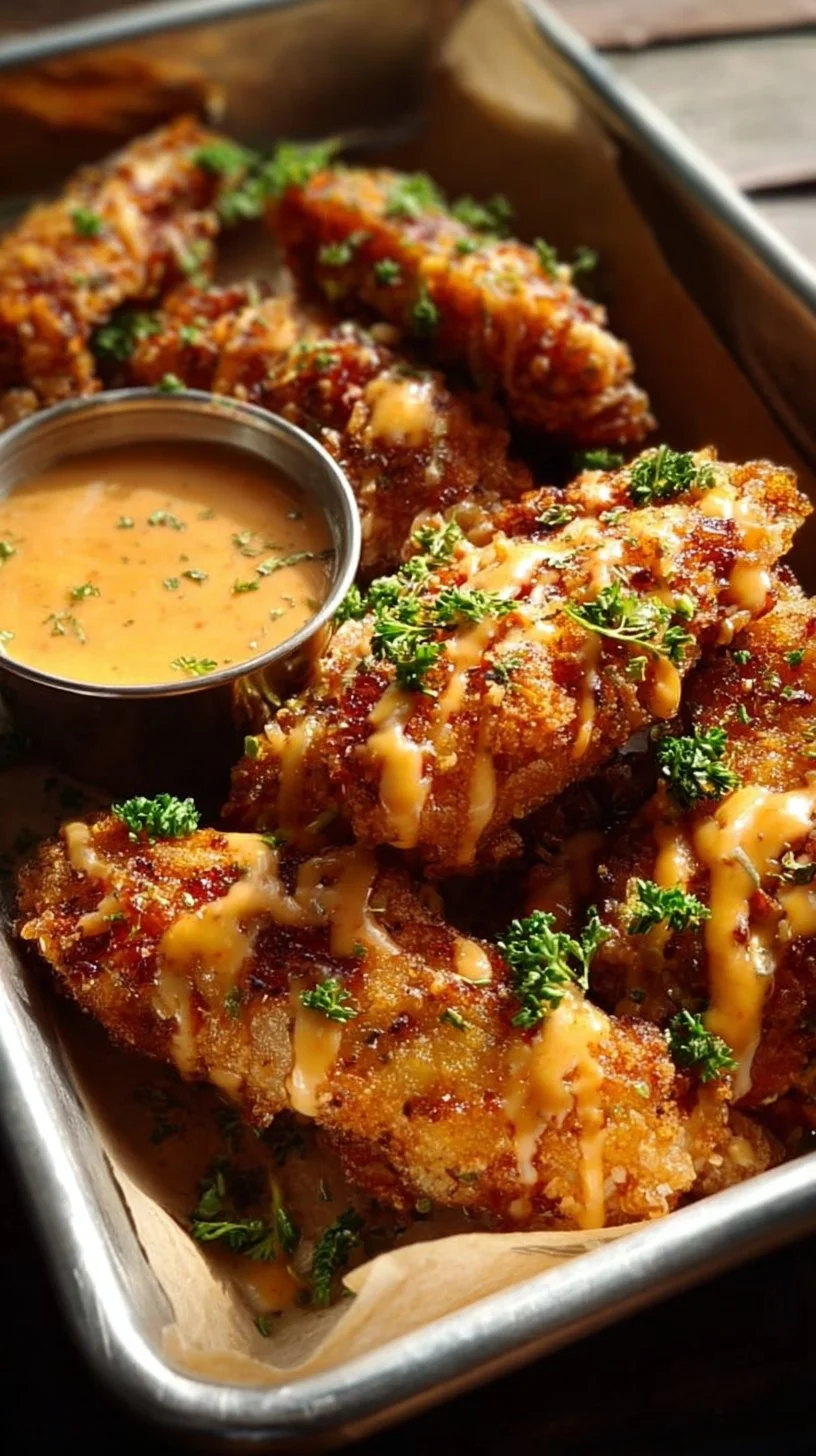
Bang Bang Chicken
Introduction
Bang Bang Chicken is a concise lesson in contrast: crisp, warmly spiced crust surrounding tender, milky chicken, finished with a glossy, sweet-heat emulsion. As a working chef, I regard this preparation as an exercise in controlled textural separation and purposeful flavor layering. The marinade, the multi-stage breading, and the sauce are not incidental; each component performs a defined role in heat transfer, browning chemistry, moisture retention, and balanced finish. For reference on parallel crisping techniques and breadcrumb management used in other crisp chicken applications, consider comparative examinations such as parmesan-crusted chicken technique, which highlights similar trade-offs between crust adhesion and interior succulence.
The culinary logic behind this dish
Bang Bang Chicken relies on three principles: moisture control, surface dryness, and sauce economy. The brief but purposeful buttermilk soak acidifies and tenderizes the muscle fibers, denatures proteins so the interior remains supple, and imparts a thin protein film that helps bind the flour stage. The combined flour and cornstarch blend reduces gluten formation and increases brittle crispness by favoring starch gelatinization over elastic network formation. Panko provides a geometric, airy crust that fractures loudly and leaves pockets for residual heat to vent, preventing sogginess. The bang bang sauce is an emulsion-sweetened lacquer: mayonnaise supplies fat and emulsifiers to carry chili flavor, while Thai sweet chili and Sriracha introduce sugar, acid, and concentrated chili oils to balance and brighten the palate without overpowering texture. Each decision in the method optimizes a single sensory attribute while compensating for inevitable trade-offs elsewhere.
How to make Bang Bang Chicken
Execute this recipe with an eye for timing and staging. The buttermilk soak should be long enough to make the meat palpably softer — the surface should feel less tense under the fingertips after 10 minutes — but not so long that it begins to break down into mush. When setting up the breading station, separate the sequences physically: dry, wet, crumbs. That order creates a thin, consistent adhesive film and maximizes crust adherence during the shock of hot oil. Temperature control during frying is your primary variable: maintain oil that is hot enough to instantaneously vaporize surface moisture (promoting browning) but not so hot that crusts hyper-brown before the center reaches safe doneness. After frying, a resting period of a few minutes lets internal juices redistribute and the crust set — critical for retaining crispness when saucing.
Ingredients :
1 ½ pounds boneless skinless chicken tenderloins, 1 cup buttermilk, ¾ cup all-purpose flour, ½ cup cornstarch, 1 large egg (room temperature), 2 cups panko breadcrumbs, 1 cup mayonnaise, ½ cup Thai sweet chili sauce, 1 teaspoon Sriracha (or more to taste), 2 tablespoons honey, ½ teaspoon garlic powder, ½ teaspoon kosher salt, ¼ teaspoon black pepper, ⅛ teaspoon cayenne pepper (optional), Canola oil (for frying), Parsley (chopped, for garnish)
Directions :
Prepare the Bang Bang Sauce: In a bowl, mix mayonnaise, Thai sweet chili sauce, Sriracha, and honey until smooth., Marinate the Chicken: Soak chicken tenderloins in buttermilk for at least 10 minutes., Set Up Breading: In three shallow dishes, prepare the flour mixture (flour, cornstarch, garlic powder, salt, pepper), egg mixture (egg and Sriracha), and panko breadcrumbs., Bread the Chicken: Dredge each tenderloin in the flour mixture, dip in the egg mixture, then coat with panko., Fry the Chicken: Heat canola oil over medium heat and fry breaded chicken pieces in batches until golden brown (about 6 minutes)., Serve: Drain on paper towels and drizzle with bang bang sauce.
Ingredient analysis through a chef’s lens
Each ingredient is chosen for a functional contribution. Buttermilk is not merely flavor: its acidity and enzymes tenderize and increase protein surface stickiness, improving the bond with dry coatings. The combination of all-purpose flour and cornstarch reduces glutenous toughness; cornstarch gives brittle, glassy crisping because it gelatinizes differently and releases moisture as steam more readily than wheat starch. Egg acts as an emulsified adhesive to weld panko to the meat surface without creating a water-rich barrier that would steam under oil. Panko breadcrumbs’ irregular particles create a discontinuous, porous crust that traps tiny air pockets, yielding a light, shattering crunch rather than a dense, gummy shell. The sauce components are calibrated: mayonnaise stabilizes viscosity and mouth-coating fat; Thai sweet chili supplies sticky sugar and translucent sheen; Sriracha adds capsaicin and umami depth; honey smooths the acidity and encourages glossy finish. Understanding these functions allows targeted adjustments without altering ingredient list: for example, manipulating soak time or frying temperature instead of swapping components. For a technique comparison that emphasizes breadcrumb structure and moisture control, review a complementary preparation like alternate breadcrumb management.
Kitchen workflow & technique breakdown
Sequence the mise en place to avoid cross-contamination and to maintain temperature consistency. Stage the sauce first; it benefits from brief refrigeration to let flavors harmonize while you fry. Marinate next — place chicken in buttermilk and chill; this step is short but active. Set up three shallow pans side by side in the order of use: flour mix, egg wash, panko. Use tongs on one side and a tray for finished pieces on the other. Preheat a heavy-bottomed pot or fryer with a thermometer for precise control; aim for 350–360°F (177–182°C). Work in small batches to avoid temperature collapse; each new batch will reduce oil temperature, which will slow cooking and increase oil absorption. Use a spider skimmer to move pieces and a wire rack over a sheet pan for resting rather than paper towels when possible, because the rack prevents re-steaming and preserves crispness. If space or equipment is limited, stagger production: sauce in first 10 minutes, then shift to breading and frying, keeping finished pieces in the oven at a low temperature (200°F / 95°C) on a rack to maintain warmth and texture without overcooking.
In a professional setting you might compare methodical staging to techniques used in other recipes; for instance, the timing and rack use mirrors efficient crisping in parmesan-crusted chicken workflow.
Texture control, heat management & timing
Crispness is a dynamic equilibrium between surface dehydration and internal moisture retention. The buttermilk soak increases internal moisture slightly, but the thin film of protein it leaves accelerates surface browning. Target frying at 350–360°F; at this range the panko will brown within 3–4 minutes per side depending on thickness, while the interior reaches 160–165°F safe range without charring. If oil is too cool, the crust will absorb oil and become heavy; if too hot, the exterior will color long before the center cooks, producing an overdone crust and undercooked core. Use a probe thermometer through the thickest part of a tenderloin to confirm doneness rather than relying on color alone. After cooking, rest on a wire rack for 3–5 minutes; this short rest lets residual carryover heat finish the cook while allowing steam to escape from the crust. When saucing, apply sparingly or serve sauce on the side for components that require longer hold times; a full coating immediately after frying will quickly reduce surface crispness. For plated immediate service, a light drizzle and a final scatter of chopped parsley gives visual contrast and a fresh herbal note without compromising texture.
For alternative holding strategies that preserve crust integrity prior to service, consult techniques in high-volume preparations such as those summarized in commercial crisp-holding techniques.
Professional variations
Adapting this formula yields controlled shifts in flavor and mouthfeel without altering the ingredient list. To increase umami depth without adding new ingredients, toast panko briefly in a dry pan before breading to introduce nutty caramelization notes. Adjust heat by varying Sriracha: increase in the egg wash for integrated warmth, or reserve for the sauce for concentrated heat. For a lighter crust, reduce egg wash viscosity with a tablespoon of water, which will thin the coating and produce a less aggressive shell. If you prefer more lacquered finish, use a portion of sauce warmed and brushed on at the brief hold stage to augment sheen while limiting sogginess. These adjustments respect the original components while tailoring the final presentation for different service contexts.
Finishing touches & plating philosophy
Plating Bang Bang Chicken should emphasize textural contrast and precise proportion. Avoid drowning the protein in sauce; a measured drizzle across the middle preserves areas of exposed crust for textural variation. Visually, the pale tang of mayonnaise-based sauce juxtaposes the golden-brown crust; scatter finely chopped parsley to punctuate color and provide a fresh aromatic note. For composed plates, place chicken lengthwise on a bed of lightly dressed greens to introduce acidity and a cool counterpoint to the warm crust. In a family-style service, serve sauce on the side in a shallow bowl to allow diners to control application, which preserves maximum crispness for those who prefer it.
Maintaining quality after cooking
Holding fried items is a logistical challenge. Use a low oven (around 200°F / 95°C) with a perforated insert or wire rack to keep pieces warm while permitting air circulation; do not stack on absorbent paper, as steam will rehydrate the crust. If keep-warm time will exceed 15–20 minutes, consider holding the breaded but unfried tenderloins refrigerated and perform a quick fry to re-crisp to order — this two-stage approach preserves texture and reduces oil absorption. If sauced product must be held, keep sauce separate and apply in small increments prior to service to maintain a percentage of crisp surface for mouthfeel contrast.
Questions from home cooks (chef answers)
Q: Why soak in buttermilk for only 10 minutes? A: The tenderloins are thin; extended acid exposure will denature proteins excessively and yield a mealy texture. Ten minutes achieves surface tenderization and improved adhesive properties without structural breakdown. Q: Can I bake instead of fry? A: Baking will produce a different crust: use convection, pre-toast panko, and spray the crust with oil to encourage Maillard reactions; expect a drier bite and less immediate shatter. Q: Why include cornstarch with flour? A: Cornstarch reduces gluten development and gives a glassier, crisper crust; it modifies gelatinization temperature, changing how the crust fractures under bite. Q: Can I make the sauce ahead? A: Yes; it holds well refrigerated for 2–3 days because mayonnaise and sugar stabilize it. Bring to cool temperature before use. Q: How to salvage soggy crusts? A: Return to 375°F oil for a very brief re-fry (30–60 seconds) or set under a high broiler for seconds; both drive off surface moisture and re-crisp without long reheats.
Final chef notes
Execute each stage with intention: soak only long enough to tenderize; maintain a staged breading line; fry to target temperature and rest briefly on a rack; apply sauce sparingly. The interplay between acid-tenderized interior and aggressively crisp exterior is the defining characteristic of this dish. Preserve that contrast in service decisions and your resultat will display the technical clarity that distinguishes professional execution from merely adequate home preparation.
Conclusion
For an alternate interpretation that emphasizes extreme crisping and a sweeter lacquer, review the focused approach in Bang Bang Chicken Recipe (Incredibly Crispy) | The Kitchn, which offers complementary techniques for surface treatment. If you seek a streamlined, home-friendly method with similar flavor balance, Bang Bang Chicken Recipe | Simple Home Edit provides a practical reference. For an instructional take with timing and plating suggestions that align with what’s described here, consult Bang Bang Chicken – Damn Delicious.
Bang Bang Chicken
Ingredients
Method
- Prepare the Bang Bang Sauce: In a bowl, mix mayonnaise, Thai sweet chili sauce, Sriracha, and honey until smooth.
- Marinate the Chicken: Soak chicken tenderloins in buttermilk for at least 10 minutes.
- Set Up Breading: In three shallow dishes, prepare the flour mixture (flour, cornstarch, garlic powder, salt, pepper), egg mixture (egg and Sriracha), and panko breadcrumbs.
- Bread the Chicken: Dredge each tenderloin in the flour mixture, dip in the egg mixture, then coat with panko.
- Fry the Chicken: Heat canola oil over medium heat and fry breaded chicken pieces in batches until golden brown (about 6 minutes).
- Serve: Drain on paper towels and drizzle with bang bang sauce.