Hot Honey Feta Chicken

Introduction
Sofia arrives like an opening chord: warm stone underfoot, a marketplace lullaby of voices, oranges piled like small suns, and the sharp, floral tang of feta tucked into a paper cone. In my chest this city lives as a memory of meals eaten in squares where the past and present fold into one another—a place where a single dish can trace routes across seas and histories. The Hot Honey Feta Chicken I write about here is not merely a recipe; it is a small map. It is part homage to the salty, sun-thick cheeses of the Mediterranean and part love letter to roadside tables where a drizzle of honey over heat and salt tells a story of trade, taste, and the human habit of making comfort portable.
When I think of Sofia, I think of evenings that begin dusty and end sweet: an air that smells of wood smoke and jasmine, a hint of lemon and hot pepper from someone’s open kitchen, and the ongoing conversation between sweet and savory that defines so many regional plates. Hot Honey Feta Chicken is a hymn to that conversation—an aroma of caramelizing honey, the sharpness of crumbled cheese, the quiet backbone of lemon and oregano. It is a dish that tastes like the borderlands of cultures, where an ingredient as ancient as honey joins with feta, the modern hot sauce, and the universal symbol of hospitality: the cooked bird.
The origin story & regional influence behind this dish
This dish is a palimpsest, a page on which many culinary traditions have left their handwriting. Feta—crumbled, briny, ancient—comes from pastoral corridors that run through Greece and the Balkans, a cheese matured in brine and culture. Honey has been traded around the Mediterranean since before languages were written, used in ceremonies and as a preservation agent, and often paired with cheese in folklore and festivals. The idea of marrying something sweet and viscous with something salty and crumbly is as old as the coasts and as recent as the pop recipes of food writers who slipped hot sauce into that mix and found a new kind of alchemy.
The modern form—Hot Honey Feta Chicken—is a reflection of the global pantry. Hot sauce, today a utility for the modern table, brings a chile heat that recalls spicy condiments from Anatolia to the Levant. Olive oil and oregano are the warm-weather signatures of the Mediterranean coast. Lemon brings the bright acidity that threads through coastal cuisines from Lisbon to Izmir. When these elements touch a humble chicken breast and melt down over it, the result evokes tavern tables, family dinners, and the itinerant cooks who meld flavors from caravan routes and shipping lanes. It’s a dish whose lineage is less a single origin and more a meeting point: a roadside inn where cultures exchange spices and stories.
How to make Hot Honey Feta Chicken
There is a ceremonial ease to making this: nothing must be fussy. The movement is simple—whisk, pour, scatter, cover, wait—and yet each gesture is meaningful, a small rite of hospitality that turns grocery items into a communal memory.
Ingredients :
4 boneless, skinless chicken breasts, 200 g feta cheese, crumbled, 3 tablespoons honey, 2 tablespoons olive oil, 3 tablespoons hot sauce, 2 cloves garlic, minced, 1 tablespoon fresh lemon juice, 1 teaspoon dried oregano, Salt and pepper to taste, Fresh parsley for garnish
Directions :
Preheat your oven to 375°F (190°C)., In a small bowl, whisk together the honey, hot sauce, olive oil, minced garlic, lemon juice, oregano, salt, and pepper until well combined., Place the chicken breasts in a baking dish. Pour the hot honey mixture over the chicken, ensuring each piece is well coated., Sprinkle the crumbled feta cheese evenly over the chicken breasts., Cover the baking dish with aluminum foil and bake in the preheated oven for 25 minutes., Remove the foil and bake for an additional 10-15 minutes, or until the chicken is cooked through and the cheese is golden and bubbly., Let the chicken rest for 5 minutes before serving., Garnish with fresh parsley just before serving.
Read as ritual: the oven transforms. The foil is a temporary lid that allows flavors to conspire—honey and lemon rising, feta softening into creamy pockets. The subsequent unwrapping and brief return to heat caramelizes edges and allows the feta to learn a gentle golden grammar. Resting is the final polite pause; it honors the chicken’s juices, the quiet reconciliation of salty and sweet.
Ingredients through a cultural & historical lens
Each ingredient in this list carries its own story. Chicken, domesticated across millennia, is the democratic protein—humble on the table of a farmhouse, proud in an inn. Feta, in its brined jacket, speaks of shepherds who tended flocks on limestone slopes and developed techniques to preserve milk through harsh seasons. Honey—one of history’s first sweeteners—sits at the intersection of ritual and commerce; it appears in recipes and rites, in honey cakes for weddings and offerings to passing gods. Olive oil is the physical memory of a coast, pressed from fruit that endures drought and winter, the Mediterranean’s golden memory. Lemon, with its sudden citrus brightness, and oregano, gray and sun-hardened, are the wild perfume of scrublands and terraces.
Hot sauce, a relatively recent global traveler in this mix, is perhaps the most potent sign of culinary globalization: a bottle of concentrated heat that can be traced back to the Americas, which found its way to kitchens worldwide after the Columbian exchange and adapted to local chilies and theories of flavor. Garlic and parsley are local ambassadors of flavor, present in countless kitchens, small acts of generosity that complete a dish.
Taken together, these items are not mere components; they are chapters of a story about trade, migration, and the human tendency to carry tastes as souvenirs. A jar of honey might come from a village in the hills; feta might be from a small producer who learned the craft from their grandmother. The ingredients are a way to taste place.
Cooking the dish: sensory notes & traditional techniques
The sensory experience of Hot Honey Feta Chicken is as layered as the history behind it. When the honey and olive oil first meet heat, they exhale a warm, floral sweetness that lifts like steam from an island market at noon. The hot sauce adds a fleeting prickle that grows steady rather than startling, a peppery echo that fills the cheeks rather than the eyes. Feta, as it softens, releases briny clouds; its texture moves from crumb to creamy pockets, and the cheese’s inherent tartness cuts through the honey’s indulgence in a way that feels inevitable.
Traditional techniques here are not complicated but are rooted in respect. Covering the dish while it bakes is as much about conserving moisture—a technique used across regions—as it is about allowing flavors to marry unhurriedly. Letting the dish rest is a quiet ceremony borrowed from cooks who understand that haste dries the soul of meat. Garnishing with parsley is a final breath of green, a nod to gardens and terraces where such herbs are clipped with sun-browned fingers.
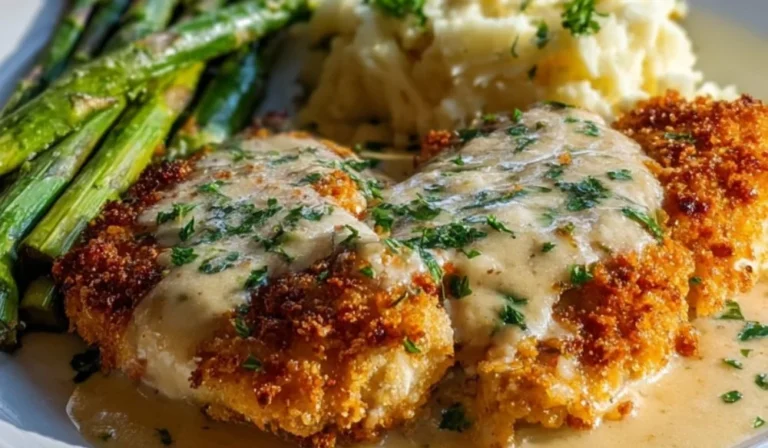
Imagine pulling the foil back in a kitchen with open windows: a gasp of hot-sweet perfume escapes, the feta bobbles and darkens at the edges, and the chicken shows a shuttered, caramelized skin. The visual and aromatic promises are simple and immediate—comfort, conviviality, and the tacit promise of sharing.
How different regions prepare their version
Traveling across regions you find small, telling variations. In Aegean coastal towns, cooks might add a scattering of capers or chopped olives, a salty echo that harmonizes with feta. In the broader Balkans, a touch of smoky paprika may infiltrate the honey mixture, a remnant of Ottoman and Austro-Hungarian spice histories. In urban kitchens in North America, cooks sometimes reach for a bottled hot honey or experiment with infused chiles; in countries where feta is less common, a local brined cheese might stand in and yet transform the dish into something equally native.
In places with a strong grilling tradition—think rural Anatolia or the Greek islands—this flavor profile might be applied to skewered chicken, kissed by wood smoke rather than oven heat. In other kitchens, the dish might be given a breakfast persona: served beside poached eggs and crusty bread, the sweet-sour interplay waking the palate in a different register. Each iteration keeps the essential dialogue between heat, salt, and sweet, but accents it with local rhythms.
Traditional ways this dish is shared or served
Meals that lean on bold contrasts—salt and honey, hot sauce and lemon—are often communal. Hot Honey Feta Chicken naturally gravitates to shared tables: a shallow baking dish set in the center, bread for sopping the glossy honey-feta juices, and glasses of crisp white or a tart rosé circling the table. In the Balkans and Mediterranean, these are the kinds of plates that accompany conversation stretched into the evening, where children dip and adults offer small stories about where the feta came from or how a grandmother used to bake chicken with figs.
Street vendors reinterpret this sharing in another mode: wrapped in flatbread with raw onion and parsley, the dish becomes a portable packet of its origin, easy to eat while watching a city pass by. In a tavern, it might be an evening mezze, paired with roasted peppers and a pitcher of raki or ouzo. The point is not formality; it is the social act of passing a dish and watching hands reach.
Storing the dish without losing its cultural essence
Food begins to tell the next chapter when stored. When preserving Hot Honey Feta Chicken, the goal is to maintain texture and the memory of its flavors. Refrigeration slows the sweetness and tightens the chicken; reheating gently—ideally at low oven heat rather than a fierce microwave—allows the honey to melt back into glossy ribbons and the feta to soften without splitting into chalk. To honor the spirit of the dish, serve leftovers with fresh parsley and a squeeze of lemon: two tiny acts that revive the bright notes and restore a sense of immediacy.
For longer storage, separate the components if possible: keep chicken in one container and the sauce-cheese in another. When combined upon reheating, the textures will be more like the original. The cultural essence is not only in the exact textures but in the ritual of serving—reheating slowly, setting bread or salad alongside, and offering the food as part of a shared moment.
Cultural questions people often ask
People often wonder whether such a pairing—hot honey with feta—offers a traditional precedent or is a modern invention. The answer is both. The practice of marrying sweet and salty is ancient; the particular permutation with chili heat and brined cheese has been amplified by contemporary global taste. Another frequent question is about authenticity: must one use a specific regional feta or local honey? The spirit of the dish is adaptable; what matters is honoring the balance of contrasts and the provenance of what you use. Ask where the feta comes from, buy honey from a known apiary when possible, and share stories about those sources when the dish reaches the table—that is authenticity of a deeper kind.
People also ask how to make the heat gentle rather than aggressive. The cultural response is to treat chili not as punishment but as dialogue: a small amount to converse with honey’s sweetness, not to silence other flavors. The art is in restraint.
A closing note on food, memory & travel
Food is a language of belonging. Every recipe we pass along is a story, and every meal we serve is an invitation to listen. Hot Honey Feta Chicken, in its easy sweetness and briny interruption, is one of those stories that asks to be shared: at a picnic under a plane tree, on a kitchen counter in a rented apartment above a market, or around a table that remembers the faces of those who first taught us how to drizzle and taste. It is simple enough to make on a tired weeknight and generous enough to feed the unexpected visitor. It is a taste that traces routes—across islands, through bazaars, and into the intimate geography of our homes.
In the end, the dish matters less for cookbook pedigree and more for how and with whom it is eaten. A recipe is a map; the people who use it are the travelers. Savor the aroma that rises from the oven. Listen for the small, ordinary conversations that make up an evening. In its golden, salty, gently spicy perfection, this dish offers one more place to sit, one more story to tell, and another reason to believe that the world’s flavors are best when they are shared.
Conclusion
If you want to explore similar riffs on this idea, try a version with an emphasis on crisp textures in this delightful Crispy Hot Honey Feta Chicken | Don’t Go Bacon My Heart, or see another home-kitchen take on the same sweet-and-salty theme in the Crispy Hot Honey Feta Chicken – Closet Cooking. For a variation that leans into bowls and grain accompaniments, this Sheet Pan Hot Honey Chicken Bowls – Ambitious Kitchen offers a convivial way to stretch the idea into a full meal.
Hot Honey Feta Chicken
Ingredients
Method
- Preheat your oven to 375°F (190°C).
- In a small bowl, whisk together the honey, hot sauce, olive oil, minced garlic, lemon juice, oregano, salt, and pepper until well combined.
- Place the chicken breasts in a baking dish. Pour the hot honey mixture over the chicken, ensuring each piece is well coated.
- Sprinkle the crumbled feta cheese evenly over the chicken breasts.
- Cover the baking dish with aluminum foil and bake in the preheated oven for 25 minutes.
- Remove the foil and bake for an additional 10-15 minutes, or until the chicken is cooked through and the cheese is golden and bubbly.
- Let the chicken rest for 5 minutes before serving.
- Garnish with fresh parsley just before serving.