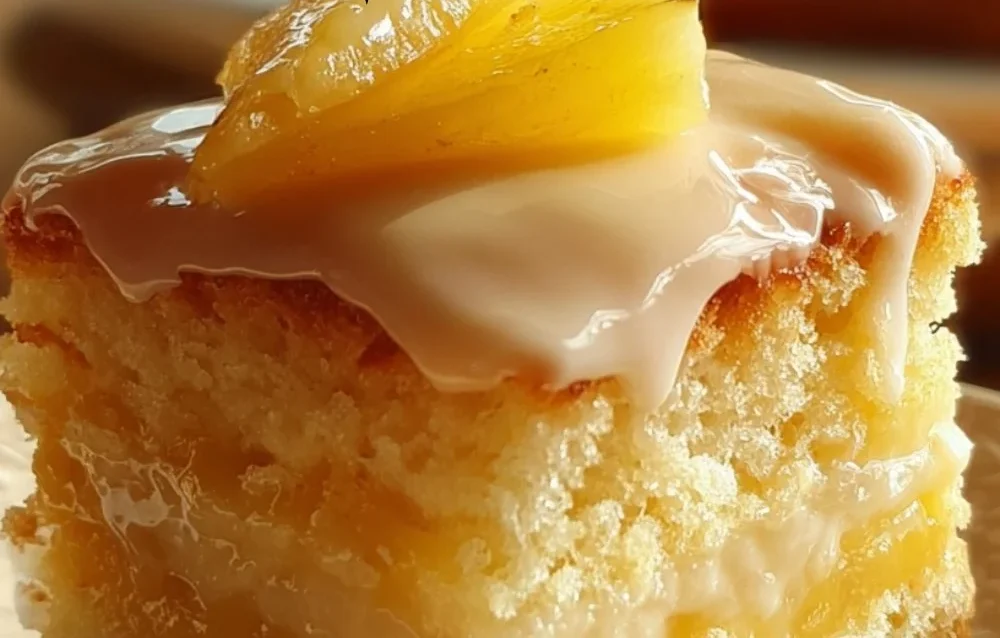
Pineapple Heaven Cake
Introduction
Pineapple Heaven Cake is a concise expression of tropical acidity balanced with tender crumb and textural contrast. As a professional chef I approach this recipe as a study in moisture management, structural leavening, and flavor layering. The formula is simple: crushed pineapple provides both fruit character and hydration, sugar and fat supply tenderness and caramelization potential, eggs and baking powder create structure and lift, and optional coconut and nuts introduce textural contrast. The method is intentionally straightforward to preserve the bright pineapple notes and to deliver an evenly baked sheet cake suitable for slicing, finishing, or incorporating into composed desserts.
The culinary logic behind this dish
The recipe is built around a moisture-first logic. Crushed pineapple contributes free liquid and intrinsic acidity; this changes batter viscosity and interacts with the leavening. Vegetable oil functions as a non-protein fat that coats starch and protein molecules, inhibiting excessive gluten development and ensuring a supple, fine crumb. Eggs provide emulsification and structure; sugar sweetens and participates in Maillard reaction and caramelization at the cake surface. Baking powder is the principal chemical leaven, delivering predictable rise without relying on mechanical foam formation. Flour is the structural matrix; salt enhances flavor and modulates gluten behavior. Vanilla elevates the fruit while optional coconut and nuts add textural and aromatic complexity. Each component is chosen to balance moisture, lift, and a tropical flavor profile without overcomplication.
How to make Pineapple Heaven Cake
Technically, the process hinges on controlling batter development and oven heat. Preheating the oven to 350°F (175°C) stabilizes the thermal environment so the batter immediately receives consistent heat; the leavening begins to act and the crust forms while the interior sets. When combining crushed pineapple, sugar, oil, and eggs, disperse the sugar into the liquid phase to ensure even dissolution and to start the tenderizing interaction between sugar and gluten-forming proteins. Whisking the dry ingredients separately reduces the risk of uneven pockets of baking powder or salt; folding the dry into the wet until just combined limits gluten development and prevents toughness. Stirring in vanilla and optional inclusion of coconut and nuts at the end maintains aroma and prevents those particulates from overmixing into the matrix. Spreading batter uniformly in the prepared 9×13-inch pan ensures even thickness and consistent bake time across the sheet. Baking for 25–30 minutes at the specified temperature is a balance between setting the crumb and achieving an adequate surface color; a toothpick inserted in the center is a reliable empirical test for doneness. Cooling is essential—carryover structure formation completes as the interior temperature descends and residual steam redistributes moisture.
Ingredients :
1 cup crushed pineapple, 1 cup sugar, 1/2 cup vegetable oil, 2 eggs, 2 cups all-purpose flour, 1 tablespoon baking powder, 1/2 teaspoon salt, 1 teaspoon vanilla extract, 1/2 cup shredded coconut (optional), 1/2 cup chopped nuts (optional)
Directions :
- Preheat the oven to 350°F (175°C). Grease and flour a 9×13 inch baking pan., 2. In a large bowl, combine crushed pineapple, sugar, vegetable oil, and eggs. Mix well., 3. In another bowl, whisk together flour, baking powder, and salt. Gradually add the dry ingredients to the wet ingredients, mixing until just combined., 4. Stir in vanilla extract, and if desired, add shredded coconut and chopped nuts., 5. Pour the batter into the prepared baking pan and spread evenly., 6. Bake for 25-30 minutes or until a toothpick inserted into the center comes out clean., 7. Allow to cool before serving. Enjoy your pineapple heaven cake!
Ingredient analysis through a chef’s lens
- Crushed pineapple: This ingredient is both flavor and functional liquid. The fruit’s acidity slightly tenderizes proteins and contributes natural sweetness and pineapple esters that read as bright, tropical top notes. Drain level matters—any retained syrup increases free liquid and will thin batter, shortening bake time but risking collapse; conversely, aggressive draining reduces fruit intensity and moisture.
- Sugar: Beyond sweetness, sugar competes for water, retards gluten formation, and promotes tenderness. It also caramelizes on the surface to develop color. The 1:2 ratio of sugar to flour places this cake in a range that supports a soft but structured crumb.
- Vegetable oil: Liquid oils produce a more tender, consistent crumb than solid fats because they coat flour particles uniformly and remain fluid at refrigeration and room temperatures.
- Eggs: Provide emulsification, structure, and lift. The yolks strengthen and enrich; the whites contribute protein that sets during baking. The balance here allows for a moist interior without needing separate beaten-egg methods.
- Flour: All-purpose flour supplies sufficient protein to set the cake’s structure. Overworking it will yield chew; hence the instruction to mix until just combined.
- Baking powder: Single-acting vs. double-acting will slightly alter rise timing, but the amount is calibrated to the batter’s hydration to produce a modest oven spring appropriate for a sheet cake.
- Salt and vanilla: Salt sharpens flavors and enhances perception of sweetness; vanilla harmonizes the pineapple’s esters and lends aromatic depth.
- Coconut and nuts (optional): These introduce chew and crunch. Shredded coconut contributes oil and aroma; nuts provide texture and toasty flavors when included.
Kitchen workflow & technique breakdown
Begin with mise en place: measure and set out pineapple, sugar, oil, eggs, flour, baking powder, salt, vanilla, coconut, and nuts. Preheat the oven early so it reaches temperature during assembly. Grease and flour the 9×13 pan before mixing; this prevents delays that permit the leavening to act prematurely. Use two bowls—one for wet, one for dry—to ensure the leavening is distributed and the liquids are uniform. When combining wet ingredients, whisk briskly enough to homogenize sugar and oil but avoid aerating to the degree of a sponge cake method; this is not a foam-based recipe. When adding dry to wet, use a rubber spatula and incorporate with folding strokes, stopping when discrete streaks disappear; this minimizes gluten formation and maintains tenderness. If using coconut and nuts, fold them in last to prevent them from sinking during mixing. Pour into pan and smooth with an offset spatula or the back of a spoon to ensure even thickness.
Texture control, heat management & timing
Texture is controlled by batter hydration, mixing restraint, and oven temperature. The given bake temperature of 350°F (175°C) offers reliable Maillard reaction on the surface while allowing the interior to set before overbrowning. An oven thermometer is a valuable tool—many home ovens vary ±25°F, which materially affects crumb and bake time. The 25–30 minute window is tight because sheet cakes have relatively uniform heat penetration; test at the lower bound if the batter was thin or if your oven runs hot. The toothpick test should register a few moist crumbs but no wet batter; residual moisture will redistribute during the first cooling stage. Avoid opening the oven repeatedly in the first 15 minutes; premature heat loss reduces oven spring and can cause uneven setting. Once removed, transfer the pan to a wire rack—air circulation prevents the bottom from becoming soggy from retained steam.
Professional variations
There are professional avenues to evolve this cake while keeping the foundational profile intact. Consider processing the pineapple to different textures: a finer puree will distribute fruit flavor more uniformly; larger pieces will create pockets of juiciness. For increased surface complexity, a thin streusel or coarse sugar sprinkle applied in the final five minutes of bake will produce a contrasting crispness without changing the internal formula. Incorporating toasted nuts offers amplified aroma; toast them beforehand to 320–340°F (160–170°C) until fragrant and golden, then cool and fold in. For plated desserts, bake the cake as instructed, then portion and briefly re-toast cut edges to renew Maillard notes. All suggested variations are conceptual and require adjustments in handling—none replace the original ingredient list or step sequence.
Finishing touches & plating philosophy
Finishings should respect the cake’s balanced moisture. The optional shredded coconut and chopped nuts can be scattered across the top immediately after baking so they adhere to the warm surface and integrate texturally. For composed plating, cut the cooled cake into precise rectangles using a warmed, wiped blade to preserve clean edges. A restrained use of complementary components—light, acidulated crème fraîche, a reduced pineapple syrup, or a fine dusting of toasted coconut—will augment rather than compete. When presenting slices, contrast textural elements: a crisp tuile or a smear of lightly reduced pineapple jus can provide temperature and textural counterpoint. Keep sauces minimal to avoid overwhelming the cake’s inherent moisture balance.
Maintaining quality after cooking
Sheet cakes maintain integrity best when cooled fully, then covered with a breathable wrap to prevent condensation. If you intend to store for more than 24 hours, tight wrap with plastic foil or transfer to an airtight container will slow moisture loss but may soften any surface crispness. Refrigeration will extend shelf life but can firm the crumb since oils solidify; allow slices to come to near room temperature before serving to restore tactile tenderness. For reheating, a brief 20–30 second interval in a microwave or a 5–7 minute gentle rewarm in a 325°F (160°C) oven will refresh the surface and redistribute internal moisture without overcooking.
Questions from home cooks (chef answers)
Q: My cake was dense in the center—what caused this?
A: Density commonly results from underbaking or excess moisture. Verify oven temperature with a thermometer, ensure even batter thickness, and test for doneness with a toothpick. Also check pineapple drainage; retained syrup thins batter and increases interior moistness that requires longer bake time.
Q: The surface browned too quickly—how do I prevent that?
A: If browning precedes interior set, reduce oven temperature by 10–25°F, shift the pan to a lower rack, or tent lightly with foil during the latter half of the bake to slow surface coloration while allowing the center to continue cooking.
Q: My cake tastes flat—how to intensify flavor?
A: Salt and vanilla are subtle amplifiers; ensure you measured both. Toast optional nuts to intensify aromatics. Lastly, allow the cake to rest for an hour; flavor components meld and the pineapple’s esters become more integrated.
Q: Can I use crushed canned pineapple in juice?
A: Yes; be mindful of the retained juice quantity. If the pineapple is packed in heavy syrup, reduce additional sugar or drain to control batter hydration. The recipe assumes typical crushed pineapple with some juice retained.
Final chef notes
This Pineapple Heaven Cake exemplifies how straightforward ingredients, when handled precisely, produce a refined result. The recipe’s strengths are its balance of moisture and structure and its capacity for textural nuance through optional inclusions. Respect the mixing limits to avoid toughness; control oven environment to synchronize surface color and internal set; and use finishing techniques sparingly to enhance rather than obscure the cake’s tropical profile. The technique scales well—maintain proportionality and attention to timing when adapting batch size.
Conclusion
For further inspiration and alternative takes that preserve the citrus-tropical profile while exploring presentation and slow-cooking techniques, consider the Almost Heaven Cake for a comparative approach to moisture management, and review the layered approaches in the Pineapple Sunshine Cake – Belle of the Kitchen for ideas on finishing and textural counterpoints.
Pineapple Heaven Cake
Ingredients
Method
- Preheat the oven to 350°F (175°C). Grease and flour a 9×13 inch baking pan.
- In a large bowl, combine crushed pineapple, sugar, vegetable oil, and eggs. Mix well.
- In another bowl, whisk together flour, baking powder, and salt. Gradually add the dry ingredients to the wet ingredients, mixing until just combined.
- Stir in vanilla extract, and if desired, add shredded coconut and chopped nuts.
- Pour the batter into the prepared baking pan and spread evenly.
- Bake for 25-30 minutes or until a toothpick inserted into the center comes out clean.
- Allow to cool before serving.