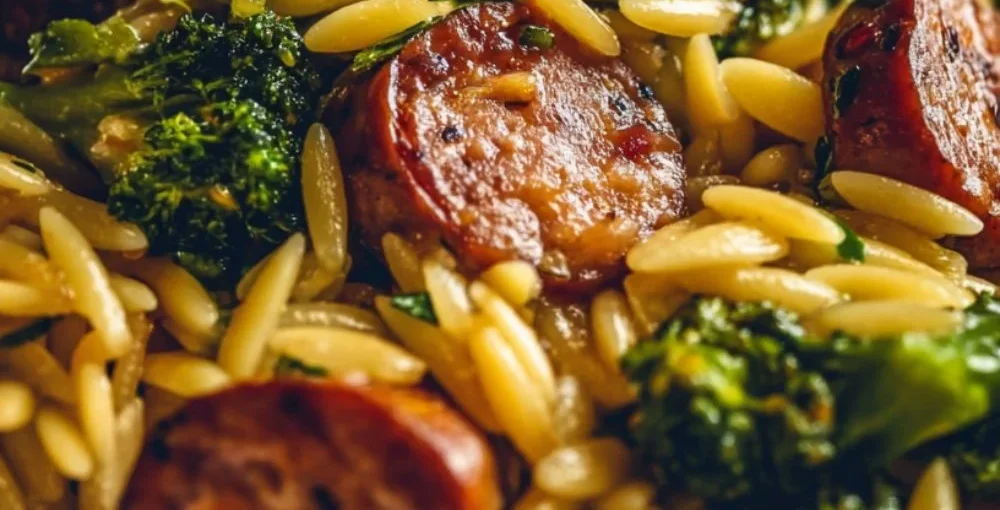
Creamy Rotisserie Chicken Broccoli Pasta
Introduction
I learned to read landscapes through food before I learned to read maps. In Sofia, where the air carries a poetry of mountain air and urban dust, simple dinners feel like conversations with the city: each ingredient a sentence, each simmering pot a local dialect. Creamy Rotisserie Chicken Broccoli Pasta is not a dish I found on a tiled square or a slate-topped bistro table; it is the kind of meal that arrives in the small hours of everyday life, in kitchens lit by a single lamp and filled with the hum of the refrigerator and the chatter of family. It is the panacea of the traveler who longs for home and the local who needs comfort after a day of work. The creaminess of the sauce, the whisper of garlic and onion, the green punctuation of broccoli, and the well-worn convenience of a rotisserie chicken—these elements combine into something both modern and timeless. In Sofia, as in many cities I have wandered, this dish sits at the intersection of convenience and memory, of global ingredients and intimate tables, and it teaches a lesson about how food travels with us and becomes part of the places we inhabit.
The origin story & regional influence behind this dish
This pasta is a collage of culinary migrations. Penne, with its tubular shape and ridges, is a deliberate child of Italian pasta-making traditions—shaped to catch sauce, it carries a small history of regional craft. Rotisserie chicken, golden and fragrant, speaks of market stalls and street corners from Paris to Bangkok; slow-roasted fowl has been the backbone of communal meals since hearth cooking. Broccoli’s presence is more modern, a wave that swept from Mediterranean gardens into 20th-century global kitchens as refrigeration and trade broadened diets. Heavy cream and Parmesan are unmistakably Old World—Italy’s dairy-rich north—and yet their use here, blended with a pre-cooked rotisserie bird, is unmistakably contemporary, an American adaptation for speed and comfort.
The post-war period reshaped eating habits: convenience became a virtue, and the rotisserie chicken—available hot at urban supermarkets—offered a ready-made protein that paired naturally with pantry staples like pasta. The result is a dish that is less an invention than an accretion, layered with influences: Italian technique simplified by American pragmatism, Mediterranean ingredients warmed by a global appetite for quick, sumptuous dinners. Across the globe, its cousins appear in different guises: a creamy chicken pasta in a Roman trattoria, a baked casserole on an American suburban table, a black peppered chicken noodle in a Southeast Asian hawker stall. Each version tells the same story—of movement, adaptation, and the human urge to make fast what feels like home.
How to make Creamy Rotisserie Chicken Broccoli Pasta
Ingredients : 1 lb penne pasta, 1 whole rotisserie chicken (3-4 lbs, shredded (about 4 cups meat)), 4 cups broccoli florets (fresh or frozen), 2 tbsp olive oil, 3 cloves garlic (minced fine), 1 medium yellow onion (diced small), 2 tbsp butter, 1 cup heavy cream, 1/2 cup chicken broth (low-sodium), 1 cup Parmesan cheese (freshly grated), 1/2 cup mozzarella cheese (whole milk, shredded), 1 tsp Italian seasoning, 1/2 tsp garlic powder, 1/4 tsp red pepper flakes (optional)
Directions : Bring a large pot of salted water to boil and cook penne pasta according to package directions until al dente. During the last 3 minutes of cooking time, add broccoli florets directly to the pasta water., Before draining, reserve 1 cup of starchy pasta water in a measuring cup. Drain pasta and broccoli together and set aside., Heat olive oil and butter in your largest skillet over medium-low heat. Cook diced onion for 4-5 minutes until softened, then add minced garlic for 30 seconds until fragrant., Pour in heavy cream and chicken broth, bringing mixture to a gentle simmer for 2-3 minutes. Look for small bubbles around the edges, not a rolling boil., Remove skillet from heat completely before adding cheese to prevent graininess. Whisk in Parmesan and mozzarella until completely smooth, then season with Italian seasoning, garlic powder, salt, pepper, and red pepper flakes., Add drained pasta and broccoli to the creamy sauce, tossing gently with tongs to coat everything evenly. Fold in shredded rotisserie chicken last., Add reserved pasta water 2 tablespoons at a time until you reach a creamy, glossy consistency. Stir in a cold knob of butter just before serving for restaurant-quality finish.
Ingredients through a cultural & historical lens
If you trace each ingredient back a generation, you find a network of places and practices. Penne, in its simple geometry, reflects the Italian philosophy that form follows function: tubular shapes trap sauce, and each region of Italy developed pastas to suit its local condiments. The rotisserie chicken, meanwhile, is the product of industrial convenience and ancient technique—the rotisserie turns a spit-roast into a supermarket standard, but its roots are on the open hearth where turning meat ensured even browning and communal sharing. Broccoli, a modest crucifer, carries the history of Mediterranean agriculture; it arrived in northern Europe and then crossed oceans, becoming a symbol of post-war dietary aspiration—green, fresh, and modern.
The interplay of dairy—heavy cream, Parmesan, mozzarella—and olive oil is a meeting of pastoral and sun-soaked lands. Parmesan is a relic of medieval guilds and aged cellars; its crystalline tang has become shorthand for authenticity. Cream, though treated in classical Italian cuisine with caution, became a beloved binder in transatlantic adaptations—comforting, luxurious, and democratic. Garlic and onion are the backbone of so many cuisines, an aromatic prelude that signals intimacy and generosity. Even the humble chicken broth is a memory of bones simmered slowly, of thrift turned to flavor. Together, these ingredients tell a tale of migration and reinvention, where global commodities settle into kitchens and make new traditions.
Cooking the dish: sensory notes & traditional techniques
This dish is primarily a conversation of textures and aromas. As you sauté onion and garlic in olive oil and a knob of butter, the kitchen fills with a warm, caramelized sweetness; it is the smell of late afternoons and hands busy at work. The cream and broth go in next, and the air shifts to something softer, clouded with the scent of milk fat and savory depth. When Parmesan melts into the warm cream off the heat, it creates a glossy, almost silky sauce; the visual is important as the tactile one—the sauce should cling, not puddle.
The broccoli, blanched in pasta water, brings a bright green snap that offsets the sauce’s plushness. The pasta itself, cooked al dente, offers a pleasing resistance, the kind of bite that keeps a meal honest. Adding reserved pasta water is a humble technique that bridges starch and sauce; the cloudy liquid is a starch-laden liaison that yields a sheen and binds the components. Folding in shredded rotisserie chicken introduces both texture and memory: those caramelized edges and seasoned skin speak of street-side rotisserie ovens and the perfume of long-roasted meat. The finishing knob of butter is a small, almost ceremonial gesture, lending a satiny finish and a quiet richness that rounds the senses.
How different regions prepare their version
Travel through kitchens and you will find variations that reveal regional priorities. In coastal Italy, a version might emphasize olive oil and a scatter of lemon zest instead of heavy cream, preferring a lighter hand that lets the pasta sing. In the American Midwest, the dish may appear as a baked casserole—topped with breadcrumbs and extra cheese—meant for communal serving and the comfort of reheating with family. In Latin America, you may find adobo or cumin whispers in the seasoning, or the addition of roasted corn for a textural counterpoint. In Asia, chefs might swap cream for coconut milk, transforming the pantry into a tropical cadence while still honoring the rotisserie chicken’s charred notes.
Each adaptation is less a betrayal than a conversation. The bones of the dish—pasta, chicken, green vegetable, creamy binder—are adaptable actors on the global stage, ready to assume local costume. What remains constant is the human impulse: to take what is available and fold it into something nourishing and shared.
Traditional ways this dish is shared or served
Dishes like this are often social. In many homes, a large skillet of creamy chicken pasta arrives at the table and becomes an invitation to gather: everyone reaches in, forks scraping glossy sauce, voices softening around the shared act. In urban apartments and student houses, it is a weeknight savior, served with a simple salad and a sense of relief. On potluck tables, the pasta is an ambassador of the home kitchen—familiar to most, generous, and forgiving of small substitutions.
There are ritual moments associated with it too: the passing of a warm bowl at the end of a winter day, the quiet of a solo dinner with a glass of wine and a book, the laughter that rings when a child discovers the joys of green vegetables cloaked in cheese. The dish also finds its way into celebrations of ease—new parents receiving meals from neighbors, friends bringing over containers for a grieving household. Its tradition is communal, nurtured less by ceremony than by the repeated kindness of feeding and being fed.
Storing the dish without losing its cultural essence
Preserving the dish is about preserving the memory. Refrigerate leftovers in a shallow, covered container to cool quickly, and keep the integrity of the sauce by avoiding overcooking when reheating. When you warm it, do so gently: a low heat, a splash of milk or water, and a turning spoon coax the sauce back to life. Freezing is possible, but the texture will shift; cream-based sauces can separate when frozen and thawed, so if you choose to freeze, pack in portions and accept that the reheated version will be a cousin rather than an exact twin.
The cultural essence survives not in perfect texture but in ritual—how you reheat and who you share it with. A reheated bowl eaten at the family table carries more continuity than an untouched, unshared perfect serving. Small touches—grating fresh Parmesan just before serving, adding a drizzle of olive oil, or scattering cracked pepper—revive the sensory memory and honor the dish’s lineage.
Cultural questions people often ask
Why use a rotisserie chicken instead of cooking fresh? The rotisserie bird is a story of time and economy. It brings the patina of slow roasting, the caramelized skin, and the labor already lived, allowing cooks to focus on assembly and gathering. Is cream authentic? Authenticity is a delicate concept—cream may not be traditionally Italian in many pasta contexts, but it is part of the modern lexicon of comfort dishes, a concession to texture and warmth that travelers and immigrant kitchens have embraced. Can broccoli be substituted? Vegetables shift with seasons and places; people often swap what is local—peas, spinach, or tender kale—each substitution writing a small local stanza into the larger poem.
People also ask about making it lighter. Cultural attitudes toward indulgence vary: in some places, a richer sauce is a sign of hospitality; in others, freshness and restraint are prized. The dish’s beauty is its capacity to be both humble and lush, to be pared down or luxuriated according to context and need.
A closing note on food, memory & travel
Every recipe is a map. The Creamy Rotisserie Chicken Broccoli Pasta maps not only ingredients but movements—the hurried pilgrim who buys a rotisserie bird in a market square, the family in a row house passing a skillet across a small table, the student in a cramped kitchen learning that a handful of pantry items can become a meal that remembers home. Travel teaches that comfort is portable and that the act of sharing a creamy, fragrant bowl of pasta is an act of translation: it says, in any language, “I will feed you.” Food becomes a vessel for memory, a way to anchor strangers and places together. In that soft, savory space where garlic and cream meet chicken and broccoli, we find stories: markets and monasteries, kitchens and commutes, the slow accretion of taste across borders. To cook and to eat this dish is to participate in a quiet, ongoing migration of comfort.
Conclusion
If you want to see how other cooks treat the same idea—how a rotisserie bird and pasta become different kinds of comfort—take a look at this Creamy leftover rotisserie chicken pasta – Berry&Maple for a home-kitchen perspective, and compare it with a heartier baked interpretation at Chicken and Broccoli Pasta Bake · Chef Not Required…. Both links open doors to familiar variations, reminding us that recipes are living things, shaped by place, by people, and by the small mercy of shared meals.
Creamy Rotisserie Chicken Broccoli Pasta
Ingredients
Method
- Bring a large pot of salted water to boil and cook penne pasta according to package directions until al dente.
- During the last 3 minutes of cooking time, add broccoli florets directly to the pasta water.
- Before draining, reserve 1 cup of starchy pasta water in a measuring cup.
- Drain pasta and broccoli together and set aside.
- Heat olive oil and butter in your largest skillet over medium-low heat.
- Cook diced onion for 4-5 minutes until softened, then add minced garlic for 30 seconds until fragrant.
- Pour in heavy cream and chicken broth, bringing mixture to a gentle simmer for 2-3 minutes.
- Remove skillet from heat completely before adding cheese to prevent graininess.
- Whisk in Parmesan and mozzarella until completely smooth, then season with Italian seasoning, garlic powder, salt, pepper, and red pepper flakes.
- Add drained pasta and broccoli to the creamy sauce, tossing gently with tongs to coat everything evenly.
- Fold in shredded rotisserie chicken last.
- Add reserved pasta water 2 tablespoons at a time until you reach a creamy, glossy consistency.
- Stir in a cold knob of butter just before serving for restaurant-quality finish.