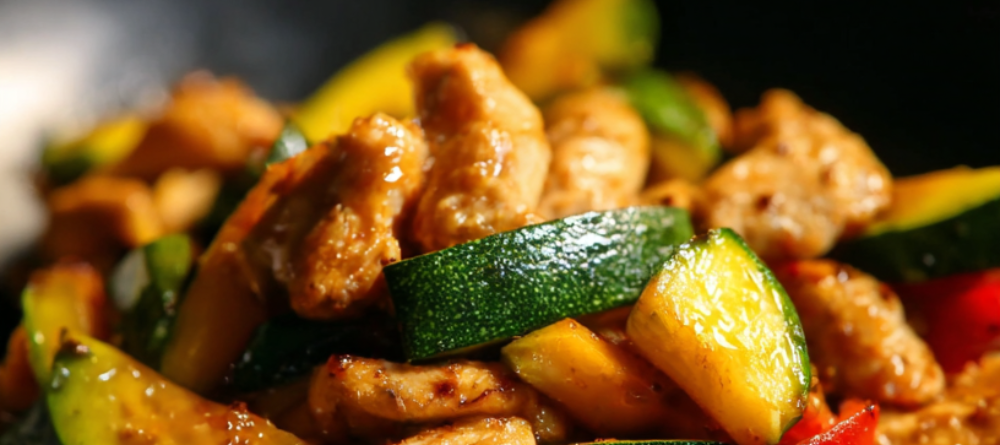
Chicken Zucchini Stir Fry
Introduction
Chicken Zucchini Stir Fry is a dish that rewards restraint, precision, and respect for ingredients. At its core, it is not about excess sauce or aggressive seasoning—it is about balance. Lean protein, high-moisture vegetables, controlled heat, and a sauce designed to glaze rather than drown. This is the kind of weeknight cooking that still honors professional technique: fast, deliberate, and flavor-driven.
Zucchini is often misunderstood. Treated poorly, it turns soft, pale, and watery. Treated correctly, it becomes tender-crisp with a clean vegetal sweetness that complements poultry beautifully. Chicken breast, equally vulnerable to overcooking, demands confident heat and minimal interference. When these two elements meet in a properly heated pan, the result is a stir fry that tastes light yet satisfying, clean yet savory.
This dish succeeds because it follows the fundamental rules of sautéing and stir-frying—high heat, separation of components, and precise timing—rather than fighting them. It is a lesson in simplicity executed well.
The Culinary Logic Behind This Dish
Every successful stir fry begins with a clear understanding of moisture management and sequencing. Chicken and zucchini cook at different rates and release moisture differently. Cooking them together from the start would compromise both.
The chicken is cooked first to establish Maillard browning—the chemical reaction responsible for savory depth. Removing it from the pan prevents overcooking and preserves texture. The vegetables follow, benefiting from the residual fond in the pan without being steamed by excess liquid. Garlic is added only briefly to avoid bitterness, and the sauce is introduced at the very end, where it reduces quickly and coats rather than pools.
The sauce itself is deliberately restrained: soy sauce for salinity and umami, optional oyster sauce for depth, honey or brown sugar for balance, and sesame oil for aroma rather than fat. This is not a marinade; it is a finishing glaze. The goal is clarity of flavor, not saturation.
Ingredient Analysis Through a Chef’s Lens
Chicken (Boneless, Skinless Breast or Thighs)
Breast offers leanness and clean flavor; thighs provide more forgiveness and richness. Both work, but slicing thinly across the grain is non-negotiable. Uniform cuts ensure even cooking and prevent dryness.
Zucchini
High water content, mild sweetness. The half-moon cut increases surface area for searing while maintaining structural integrity. Overcooking is the enemy—zucchini should bend slightly, not collapse.
Red Bell Pepper (Optional)
Adds sweetness, color contrast, and a firmer texture. It acts as a counterpoint to zucchini’s softness and enhances visual appeal.
Garlic
Used sparingly and late. Garlic burns quickly in high heat; its role here is aromatic, not dominant.
Soy Sauce / Tamari
Primary seasoning. Choose a naturally brewed variety for depth. Tamari maintains gluten-free integrity without sacrificing umami.
Oyster Sauce (Optional)
Adds complexity and body. Even a small amount contributes fermented depth that amplifies the chicken.
Honey or Brown Sugar
Not for sweetness alone—this balances salt and encourages light caramelization when the sauce hits the pan.
Sesame Oil
Aromatic fat, not a cooking oil. Added to the sauce so it perfumes the dish without degrading.
Vegetable Oil
Neutral, high smoke point. Essential for proper searing.
Garnishes (Sesame Seeds, Green Onions)
Texture and freshness. They finish the dish visually and aromatically.
Kitchen Workflow & Technique Breakdown
Preparation is the difference between chaos and control in stir-frying.
All ingredients must be sliced, measured, and within reach before heat is applied. Once the pan is hot, there is no time to improvise. The sauce is mixed in advance so it can be added decisively.
The pan—preferably a wok or wide skillet—must be fully heated before oil is introduced. Oil added to a cold pan absorbs into the metal; oil added to a hot pan becomes a cooking medium.
Chicken goes in first, undisturbed initially, allowing a golden crust to form. Movement comes later. Once cooked through, it is removed entirely. This pause is intentional.
Vegetables enter next, benefiting from high heat and quick agitation. Zucchini should sizzle on contact—if it doesn’t, the pan is not hot enough. Garlic follows only after the vegetables have begun to soften.
The return of the chicken signals the final stage. Sauce is poured around the edges of the pan, not directly onto the protein, allowing it to reduce instantly before coating the ingredients.
Texture Control, Heat Management & Timing
This dish lives or dies by texture.
Chicken should be tender, not spongy. That means stopping the cooking just as it finishes, knowing residual heat will carry it forward.
Zucchini must retain structure. The moment it turns translucent, it is approaching overcooked. Three to four minutes is sufficient when heat is high.
Garlic needs no more than thirty seconds. Any longer and it shifts from fragrant to acrid.
Sauce time is brief—one to two minutes. The goal is evaporation and emulsification, not simmering. You are looking for sheen, not liquid.
Throughout the process, heat remains medium-high. Lower heat invites steaming; higher heat risks burning. Control comes from confidence, not adjustment.
Professional Variations: How Chefs Reinvent This Dish
While the core technique remains unchanged, chefs adapt this framework endlessly.
Protein substitutions such as shrimp or tofu follow the same sequencing logic—cook first, remove, return at the end.
Vegetable swaps like broccoli, snap peas, mushrooms, or bok choy are chosen for complementary textures. Harder vegetables enter earlier; delicate ones later.
Heat can be introduced subtly through chili flakes or more assertively with sriracha in the sauce.
Aromatic variation might include fresh ginger added with the garlic, or a splash of rice vinegar at the finish for acidity.
What remains constant is respect for timing and moisture control.
Finishing Touches & Plating Philosophy
This dish should be plated immediately. Stir fry waits for no one.
Serve it hot, either over steamed rice, noodles, or on its own. The base should support, not compete. Neutral grains allow the glaze and aromatics to shine.
Garnish lightly. Sesame seeds add nutty crunch; green onions bring freshness. Over-garnishing distracts from the clean lines of the dish.
The finished plate should look glossy, vibrant, and composed—not sauced to excess, not crowded.
Maintaining Quality After Cooking
Stir fry is best fresh, but leftovers can still be enjoyable with care.
Store in an airtight container for up to three days. Reheat gently in a pan over medium heat to restore texture. Microwaving is acceptable but should be done in short intervals to avoid rubbery chicken.
Freezing is possible for up to one month, though zucchini will soften upon thawing. If freezing, accept the texture change as a trade-off for convenience.
Questions From Home Cooks (Chef Answers)
Can I use frozen vegetables?
Yes, but expect more moisture. Cook them quickly over high heat and avoid overcrowding the pan.
Is this dish gluten-free?
Use tamari instead of soy sauce and omit the oyster sauce.
How do I make it more filling?
Increase the portion of rice or add quinoa. Protein and fiber additions should support, not overpower.
Why did my zucchini turn mushy?
The pan was not hot enough, or it was cooked too long. High heat and restraint are essential.
Final Chef Notes
Chicken Zucchini Stir Fry is a study in disciplined cooking. It asks you to trust heat, respect timing, and let ingredients speak clearly. When executed properly, it delivers flavor without heaviness and satisfaction without excess.
This is not just a quick meal—it is a practical lesson in professional technique applied at home. Master this, and you master the foundation of countless other dishes.
Chicken Zucchini Stir Fry
Ingredients
Method
- Slice the chicken and vegetables, and mince the garlic.
- In a bowl, whisk together the soy sauce, oyster sauce, honey, and sesame oil.
- Heat 1 tablespoon of oil in a skillet or wok over medium-high heat.
- Add the chicken, season with salt and pepper, and cook until golden and fully cooked, about 5–6 minutes. Remove the chicken and set it aside.
- Add the remaining oil to the pan. Sauté the zucchini and bell pepper until just tender, about 3–4 minutes. Then, add the garlic and cook for 30 seconds more.
- Return the cooked chicken to the pan. Pour in the sauce and toss everything to coat. Cook for another 1–2 minutes until everything is heated through.
- Garnish with sesame seeds and green onions. Serve hot over rice, noodles, or as is.