Viral Baked Dumplings
Introduction
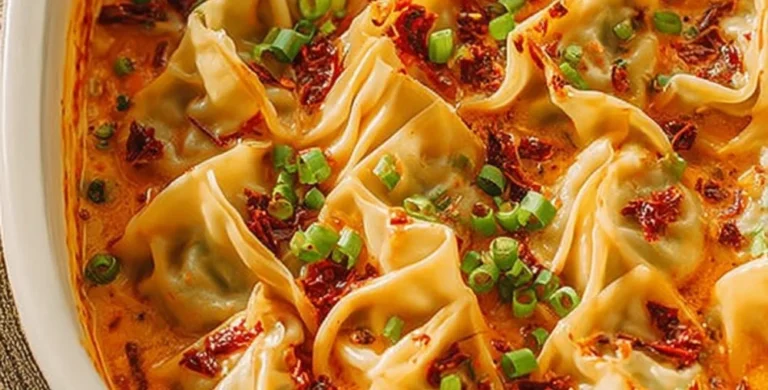
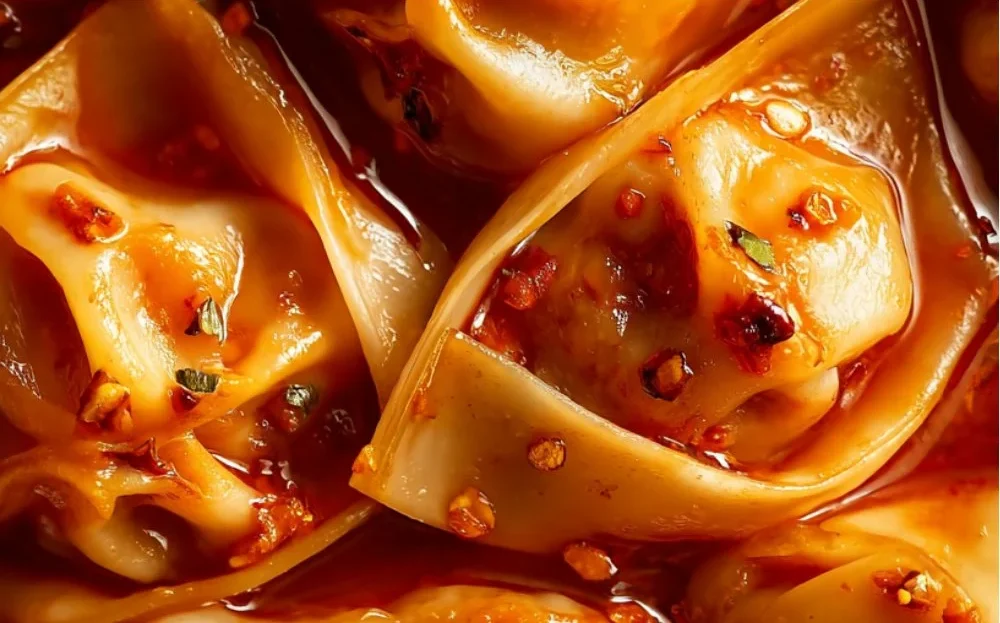
There are dishes that arrive at your table quietly, their aromas sketching maps of places you’ve never been; then there are dishes that arrive like a story told aloud in a crowded kitchen, full of gestures, laughter and small, necessary arguments about how best to fold a dumpling. Viral Baked Dumplings belong to that second kind — a modern, internet-aged heir to ancient practices. In Sofia, where my morning walks spill into markets smelling of roasted peppers and warm bread, the sight of a tray of golden dumplings being shared between friends feels familiar and new all at once. The crackle of their skins, the gentle steam that lifts from their centers, and the tang of red curry sauce spooned beside them form a small ceremony of comfort and curiosity.
That comfort travels. On social feeds they appear as bite-sized miracles, in tiny casseroles or on flatbreads, each region and household adding a flourish that makes them feel tenderly local. As you read this, you might be seeking not only a method but a memory — how to cinch the world into a single bite. For more examples of dishes that have moved between kitchens and screens, I often look back at collections of viral trending recipes that show how food reimagines itself as it moves.
In Sofia, I learned to listen for the human notes around a recipe: the grandmother who taught her granddaughter how not to overfill each parcel, the student who brings a tray to a potluck because oven-baked dumplings keep warm longer than steamed ones, the street vendor who swaps a spoonful of curry for a smile. These small acts give Viral Baked Dumplings their pulse — a recipe animated by movement, memory and the logic of sharing.
The origin story & regional influence behind this dish
Dumplings have been companions to humanity for millennia, crossing oceans and mountains tucked in folds of dough. Their exact origin is impossible to pin down — a truth that feels appropriate for a food that mutates with geography. The idea of baking dumplings rather than boiling or steaming them is a relatively recent invention in culinary history, and it owes much to the migration of tastes and techniques in the 20th and 21st centuries. Baking brings a different language of texture: the edges crisping into shards of toasty dough, the pockets near the fillings retaining a tender, almost pillowy center.
Layer that with red curry — an embodiment of Southeast Asian fragrant spice — and you get a hybrid that tells stories of trade, travel, and global kitchens. The red curry sauce paired with these baked morsels is not a claim of authenticity so much as a conversation between regions, where the sweetness of coconut milk and the heat of chili paste meet the doughy restraint of a dumpling wrapper. It is a culinary handshake across continents, a reminder that food is rarely stationary; it moves and gathers flavors like a traveler collecting postcards.
Across Europe and into Asia, kitchens adapted dumplings to local ovens, ingredients, and social habits: yeast-risen pastries gave way to quick wrappers, oil replaced lard where the climate and culture demanded it, and dipping sauces turned into batters of spice and cream. Each adaptation became a small testament to regional influence — a narrative held in texture and scent.
How to make Viral Baked Dumplings
Below is the recipe as it travels from one kitchen to another, unchanged in its essentials — a shared text, much like the recipes my grandmother once passed to me folded into paper. I have not altered the ingredients or directions.
Ingredients : Dumplings, Red curry sauce, Olive oil, Salt, Pepper, Optional toppings (e.g., green onions, cilantro)
Directions :
- Preheat the oven to 400°F (200°C).
- Arrange the dumplings on a baking sheet and drizzle with olive oil, then season with salt and pepper.
- Bake in the oven for 15-20 minutes, or until golden brown.
- In the meantime, prepare the homemade red curry sauce by heating ingredients (coconut milk, curry paste, etc.) in a saucepan.
- Serve the baked dumplings warm with the red curry sauce and optional toppings.
These five steps read simply, almost like a poem, and for good reason: the magic lives in repetition, the same way stories do. Folded hands in a kitchen turn into a rhythm, and the oven becomes a communal hearth where neighbors leave offerings: a tray of dumplings, a jar of pickles, an earnest loaf of bread. The instructions are courteously unadorned — they leave space for the human touch, the small improvisations we make when a particular batch of dough is wetter, or when we crave more cilantro than usual.
Ingredients through a cultural & historical lens
Each ingredient is a map. Dumplings, in their blankness, are patient carriers — sockets that wait for whatever memory or impulse a cook slides into them: minced pork from a village market, leftover roasted pumpkin from Sunday, a handful of herbs gathered from a balcony. The red curry sauce is a more defined region on the map; its coconut-sweetness and chilied warmth immediately speak of Southeast Asian coasts and the long histories of coconut cultivation and spice routes. Olive oil whispers of the Mediterranean — its herbal warmth a soft contrast to the sharper heat of curry.
Salt and pepper are the quiet stabilizers, present in kitchens worldwide; their use here signifies a bridging of traditions. Optional toppings such as green onions and cilantro are cosmetic narrators, their bright herbaceous notes translating regional accents into a universal palate.
When you place these elements together, the aesthetics are deliberate: the dumpling’s browned skin anchors the dish; the sauce, glossy and aromatic, provides a narrative counterpoint. Each ingredient carries the baggage of its geographic origin and the intimate stories of those who grew, harvested and chose it. This intersection is why food becomes cultural memory — not only what is eaten, but how it came to be on the table.
Cooking the dish: sensory notes & traditional techniques
There is an alchemy in baking dumplings. The oven’s dry heat draws moisture toward the center, coaxing fillings to become luscious without drowning them, while the outer skin dehydrates unevenly to produce a chorus of textures: a crisp edge, a soft middle, a slightly caramelized base. The aroma in the kitchen is layered: the warm, toasty scent of browned dough, the sweet-spark of coconut in the red curry, a rumble of chili that makes the back of the throat sit up.
Traditionally, dumpling making is a social technique. Neighbors gather around a work surface: one rolls, one fills, another crimp the edges with a practiced thumb. Baking changes the tempo of that social rhythm. Where steaming requires vigilance and careful stacking, baking allows trays to enter the oven and people to sit down, easing into conversation. The red curry, snapped together on the stove, simmers with fragrant basil and kaffir lime leaves where possible — each aromatic leaf folding into the sauce like a note in a chorus.
Although the directions here are simple, the traditional techniques still inform the practice. A cook’s hand knows when a dumpling feels overstuffed; elders insist that a dab of oil on the tray prevents the bottoms from sticking and helps achieve the golden finish. These small, almost-unspoken lessons travel by watching and being watched, by cups of tea and the slow cadence of shared labor.
How different regions prepare their version
Across the globe, this simple idea of baked dumplings dresses itself in local garb. In seaside towns of the Adriatic, you might find fillings rich in smoked fish, with a smear of lemon and parsley to brighten the palate; ovens there give dumplings a slightly more bronzed skin thanks to higher mineral content in local waters used in dough. In Southeast Asian homes, where red curry is already a native tongue, the sauce might be thicker and sweeter, with palm sugar and roasted coconut lending complexity. In contrast, in Central European cities, fillings lean toward hearty root vegetables and cheeses, and the red curry might be tamed with a dollop of sour cream to suit local tastes.
Cities with large diasporas create the most conversation-worthy versions: in London kitchens, dumplings are stuffed with lamb and harissa; in Buenos Aires they arrive with chimichurri-splashed plates. The beauty of the Viral Baked Dumplings concept is its elasticity — a dish that accepts influence without losing its essential logic. For other examples of how global kitchens reinterpret popular forms and how trends circulate, I often reference collections of viral trending recipes, which show how a single idea finds a thousand accents.
This regional variability is not about correctness but about identity. A dumpling in Sofia will speak differently from one in Bangkok, and each voice is right in its place.
Traditional ways this dish is shared or served
Food is a social language. In many cultures, dumplings are offered at community events — family reunions, religious festivals, or the humble gatherings that mark the end of a harvest. Baked dumplings, owing to their ease of transport and ability to stay warm, often appear at picnics or potlucks, where they form a warm, approachable diplomatic envoy between friends. Red curry, served in a shallow bowl alongside, invites communal dipping — hands reaching, laughter overlapping, someone inevitably using a spare piece of bread to mop up the last swirls.
In some places, they are placed at the center of a table on a large platter, garnished with herbs and sesame seeds, a visual promise of generosity. In others, small paper cups of sauce accompany individually plated dumplings for ease of sharing on the go. Regardless of presentation, the ritual of passing plates, ladling sauce, and debating the perfect crispness of the crust is universal — a choreography of conviviality that turns eating into belonging.
Storing the dish without losing its cultural essence
Preservation of food is preservation of memory. Baked dumplings reheat well, but their identity changes slightly if stored improperly: steam can soften their crisp edge, and sauces can separate if chilled. The cultural essence is not only in texture but also in the ritual of sharing, so storage methods that respect both are preferred. Keep dumplings in an airtight container with a paper towel to absorb excess moisture; reheat in an oven or toaster oven to revive the browned shell rather than microwaving, which risks damping the crispness that defines the eating experience.
Sauces deserve their own space — a small jar in the fridge keeps aromas intact. When reassembled, a plate of reheated dumplings with a warm spoonful of red curry regains its character, and eating it can become an act of recollection: a reminder of a kitchen, a voice, a journey. Even when food is preserved, the stories around it — who made it, who shared it — continue to animate it.
Cultural questions people often ask
People ask me whether it is “authentic” to pair red curry with dumplings, or whether baking is a betrayal of tradition. These questions miss the point that authenticity is not a static stamp but an ongoing conversation. Food evolves as communities move and adapt. A question I prefer to hear is: what stories do these combinations tell? Because that is where culture lives — not in rigid binaries but in the messy, beautiful ways people feed one another.
Other questions concern etiquette: is it proper to eat dumplings with hands or chopsticks? The answer fluctuates by setting. At a casual gathering, hands are welcome; at a more formal table, small forks or chopsticks make sense. People also wonder how to make it their own without erasing the dish’s soul. My advice: start with the core respect — keep the balance between the dumpling and the sauce, and let optional toppings sing rather than shout.
A closing note on food, memory & travel
The world is a ledger of recipes, and each of us is an editor. Viral Baked Dumplings are a contemporary entry — an example of how simple, portable, and soulful food can become a bridge between kitchens, cultures, and memories. They remind me of evenings in Sofia where strangers became neighbors over a shared tray and of bus rides where the aroma of curry announced the presence of a lunch packed with care. They teach patience in the oven’s steady heat and joy in the communal passing of plates.
When you fold a dumpling, spoon a warm curry, or pass a tray across a table, you are doing more than cooking. You are participating in a global conversation, one marked by migrations, trade winds and the everyday courage of feeding one another. These bites connect past and present, hearth and horizon, and in their warmth is a simple truth: food carries us home, even when we are still traveling.
Viral Baked Dumplings
Ingredients
Method
- Preheat the oven to 400°F (200°C).
- Arrange the dumplings on a baking sheet and drizzle with olive oil, then season with salt and pepper.
- Bake in the oven for 15-20 minutes, or until golden brown.
- In the meantime, prepare the homemade red curry sauce by heating coconut milk and curry paste in a saucepan.
- Serve the baked dumplings warm with the red curry sauce and optional toppings.