Lemon Blueberry Sweet Rolls
Lemon Blueberry Sweet Rolls are a study in balance: tender enriched dough, bright citrus lift, and pockets of juicy blueberry that punctuate each bite. These rolls hinge on precise temperature control, staged fermentation, and a disciplined approach to incorporation so the dough develops strength without becoming tough. For a compact expression of the same flavor pairing, compare technique and scaling with the blueberry lemon pancake bites, which emphasize intense surface caramelization over extended crumb structure.
The culinary logic behind this dish
This recipe marries a soft, enriched roll dough with acidic lemon and high-moisture fruit. The enriched dough—small amounts of sugar, butter, milk, and egg—creates a tender crumb by shortening gluten strands and adding fat to the matrix. Active dry yeast provides controlled rise and subtle fermentation flavors when proofed at the recommended temperatures. Blueberries contribute both flavor and water; their juices will interact with dough hydration and the baking surface, so distribution and fruit state (fresh vs frozen) affect texture and color. Lemon zest provides volatile oils that are released through gentle handling—grating the zest directly over the dough surface preserves aromatics that would dissipate when heated.
How to make Lemon Blueberry Sweet Rolls
This is an enriched yeast dough application where the technical priorities are dough strength, controlled fermentation, and fruit placement. Maintaining a warm but not hot liquid for proofing is essential because yeast activity is highly temperature dependent: too cool and fermentation stalls; too warm and you risk killing the yeast or overproofing. Rolling and cutting technique determines final crumb orientation and how the fruit is embedded within the spiral, which in turn affects bake time and caramelization.
Ingredients :
2 cups all-purpose flour, 1/4 cup sugar, 1 packet active dry yeast, 1/2 teaspoon salt, 1/4 cup milk, 1/4 cup water, 1/4 cup butter, melted, 1 egg, 1 cup blueberries, fresh or frozen, Zest of 1 lemon, 1/2 cup powdered sugar, 1 tablespoon lemon juice
Directions :
- In a bowl, mix flour, sugar, yeast, and salt., 2. In a small saucepan, heat milk, water, and melted butter until warm., 3. Add the warm mixture to the dry ingredients along with the egg. Mix until a dough forms., 4. Knead the dough for about 5 minutes until smooth., 5. Place the dough in a greased bowl and let it rise until doubled, about 1 hour., 6. Roll out the dough into a rectangle and spread blueberries and lemon zest over it., 7. Roll the dough tightly and cut into rolls., 8. Place in a greased baking dish and let rise for another 30 minutes., 9. Bake at 350°F (175°C) for 25-30 minutes until golden brown., 10. For the glaze, mix powdered sugar and lemon juice together until smooth., 11. Drizzle the glaze over the warm rolls before serving.
Ingredient analysis through a chef’s lens
Each component plays a specific functional role. All-purpose flour supplies the gluten scaffold; with 2 cups the dough aims for a soft but workable hydration level when combined with the given liquids. Sugar not only sweetens but feeds yeast and contributes to browning through caramelization. The single egg contributes lecithin and emulsification, giving the dough extensibility while preserving tenderness. Butter adds richness and shortens gluten strands for a softer crumb. Milk introduces lactose and proteins that enhance browning and mouthfeel. Salt regulates yeast activity and sharpens flavor perception.
Blueberries add localized increases in moisture and acidity. If using frozen berries, they will release more liquid during proofing and baking; that can be mitigated by briefly draining or gently patting frozen berries before use. Zest is a concentrated source of essential oils; because heat dissipates these volatiles, grating zest just before assembly produces the most vivid lemon profile. The glaze (powdered sugar and lemon juice) balances sweetness with acidity, and because it’s applied when the rolls are warm, it melts slightly into the surface, creating a glossy finish with an integrated bite of lemon.
For a complementary but larger-scale presentation using similar flavor architecture, see the technical considerations on the lemon-blueberry cake, which highlights crumb structure control under higher hydration.
Kitchen workflow & technique breakdown
Sequencing and station organization are critical. Begin by weighing or measuring dry ingredients together to ensure even yeast distribution. Warm the liquids to roughly 100–110°F (38–43°C); this temperature range is warm enough to activate yeast but below the threshold that damages yeast cells. Proof visually—bubbles and slight expansion in 5–10 minutes if yeast is active—before adding to flour.
Mix until a cohesive mass forms, then transition to a short knead. Five minutes of kneading by hand is sufficient to develop an extensible but not overworked crumb in an enriched dough; over-kneading tightens the gluten and yields a dough that resists rolling. Use a greased bowl for the first rise to prevent skin formation and allow for easy handling. Timing—around one hour to double at room temperature—assumes ~75°F (24°C) ambient; if your kitchen is cooler, give the dough more time; if warmer, watch carefully for overproof.
When rolling and filling, work quickly. Place the berries and zest on the rolled rectangle so they are evenly distributed but not piled, which prevents excessive juice pooling. If using frozen berries, a light dusting of flour can minimize seepage. Roll tightly to create defined spirals; a serrated knife or dental floss can produce cleaner cuts than a dull blade.
Plan oven time and temperature in advance and preheat to ensure immediate heat transfer. Bake on the middle rack for the most even color and set crumb.
To compare finishing philosophies for lemon-forward spreads, review layered ricotta toast technique that uses lemon and blueberry contrasts in a different textural framework at lemon-blueberry ricotta toast with honey.
Texture control, heat management & timing
Crumb texture is managed by balancing hydration, fat, and kneading. The small amount of fat in this formula shortens some gluten strands but leaves enough cohesion to trap gas—yielding a fine, tender crumb. Monitor dough temperature: final dough temperature influences proof rate; aim for a finished dough temperature around 75–78°F (24–26°C) for predictable fermentation. If dough feels cold or sluggish, move it to a warmer area rather than increasing sugar or yeast, which would alter flavor.
Baking at 350°F (175°C) is moderate and allows gentle oven spring before crust browning. Oven spring occurs in the initial 10–12 minutes of baking when trapped CO2 expands and residual yeast activity generates further gas; a moderate oven allows this expansion without premature crust hardening. Watch for golden brown top color—this signals Maillard reactions that add nutty notes. If tops brown too quickly, tent with foil to preserve bake time for the interior.
Glaze application timing affects both appearance and mouthfeel. Drizzling the glaze over warm—but not piping-hot—rolls allows it to thin and penetrate slightly without melting away, resulting in a glossy, slightly set surface that adheres to the bakery crust.
For a concise technical comparison of lemon-blueberry flavor integration on small format toasts, consult the related method at lemon-blueberry ricotta toast with honey.
Professional variations
Without changing the ingredient list, emphasis can shift through technique:
- Increase fruit color and jammy pockets by macerating blueberries briefly with a teaspoon of sugar, then patting off excess liquid before layering.
- For distinct layers, freeze the rolled log for 10–15 minutes before cutting; chilled dough slices maintain spiral integrity, especially with juicy fruit.
- For a more pronounced lemon aroma, gently fold a small amount of zest into the dough during the final knead to distribute oils without compromising dough structure.
These variations preserve the ingredient integrity while altering texture and presentation through process adjustments only.
Finishing touches & plating philosophy
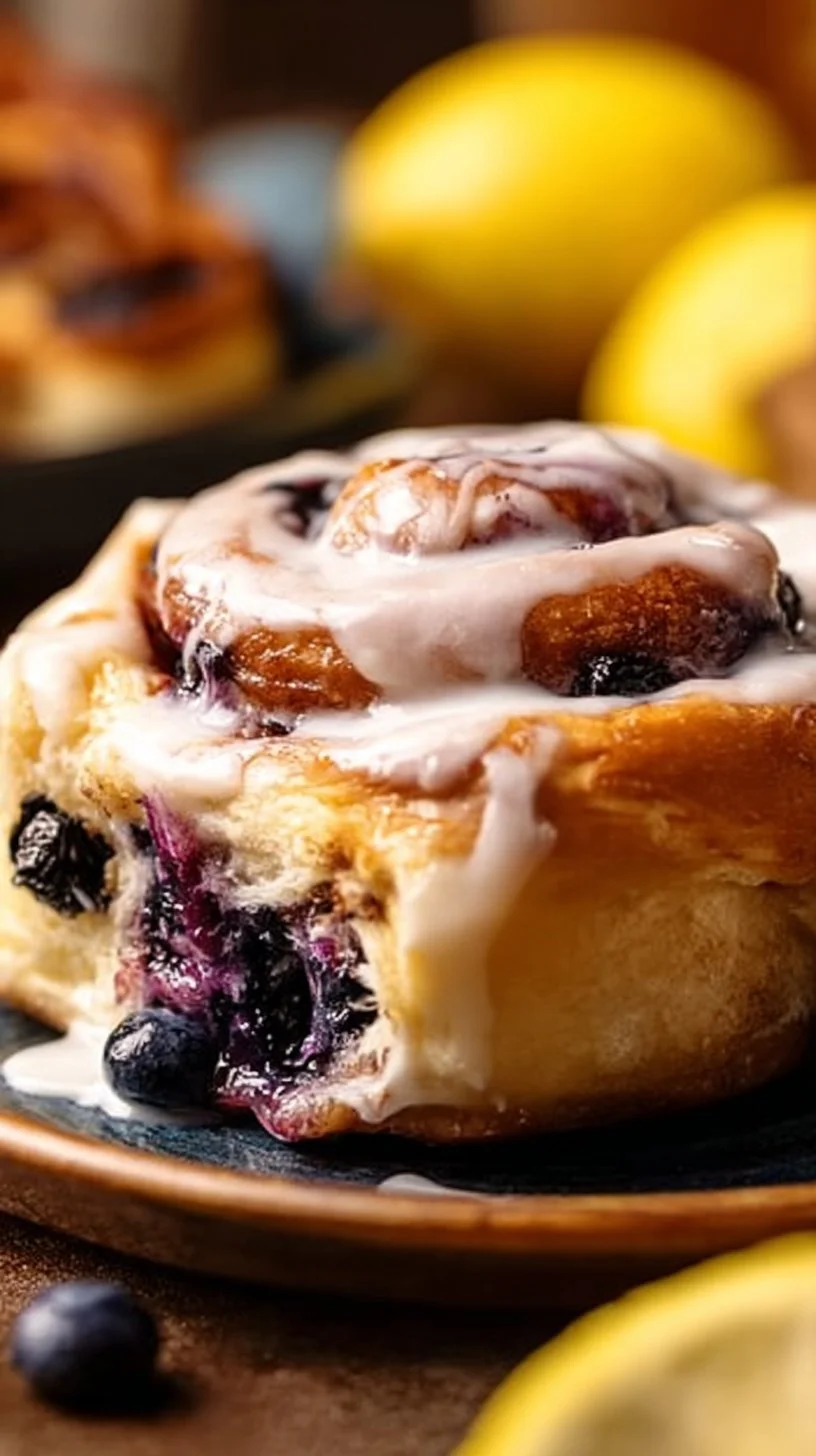
Finishing is about contrast and restraint. The lemon glaze should be bright rather than cloyingly sweet; the 1 tablespoon lemon juice to 1/2 cup powdered sugar ratio yields a glaze that is thin enough to coat but thick enough to hold. Spoon the glaze from the center outward to emphasize spirals and avoid pooling in the pan. For plating, present the rolls warm to preserve aroma and the tactile interplay between the set glaze and tender interior. A minimal plate treatment—neutral white surface, knife with clean serration—keeps focus on color contrast between golden crust, purple-blue berry seams, and pale citrus glaze.
Maintaining quality after cooking
Sweet rolls continue to change after baking: residual moisture redistributes, and fruit juices can soften the crumb over time. For short-term storage (same day), leave loosely covered at room temperature to avoid steam buildup that would cause sogginess. For next-day consumption, cool completely then store in an airtight container at room temperature; refresh in a 300°F (150°C) oven for 5–7 minutes to revive surface texture. Avoid refrigeration when possible, as cold storage accelerates staling in enriched doughs due to retrogradation of starch. If freezing, wrap individual rolls tightly and thaw at room temperature before reheating.
Questions from home cooks (chef answers)
Q: Should I use fresh or frozen blueberries?
A: Both work. Fresh berries maintain shape better; frozen berries release more juice. If using frozen, consider a brief drain or patting to remove ice crystals, and distribute them with a light dusting of flour to reduce bleed.
Q: My dough was sticky after kneading. What now?
A: Slight tackiness is normal in enriched dough. Add only minimal flour during kneading—excess flour yields a dry crumb. Let the dough rest 5–10 minutes; hydration will even out and gluten relax, making handling easier.
Q: Rolls collapsed during the second rise—why?
A: Overproofing is the usual cause. If the dough doubles and then begins to deflate, it’s passed its optimal fermentation window. Shorten second rise in warmer kitchens or proof in a slightly cooler environment.
Q: How can I intensify lemon flavor without changing ingredients?
A: Grate zest immediately before use and distribute it on the rolled dough; the volatile oils are most aromatic when freshly zested.
Final chef notes
This recipe is a technical exercise in controlled enrichment and precise fruit management. The simplicity of the ingredient list demands exacting technique: correct liquid temperature for yeast activation, judicious kneading to balance strength and tenderness, and careful placement of high-moisture fruit to avoid sogginess. Attention to these fundamentals yields rolls with a delicate crumb, bright lemon lift, and concentrated pockets of blueberry that provide textural contrast and bursts of flavor. Execute in stages with intentional timing—proof, shape, proof, bake—and allow heat to do the final transformation.
Conclusion
For a classic approach and tested proportions of lemon and blueberry in sweet rolls, consult the detailed method at Blueberry Lemon Sweet Rolls – Sally’s Baking Addiction which explores assembly and finishing. If you are seeking a lemon-forward variation with extra citrus emphasis and step-by-step photos, the Lemon Lover’s Lemon Blueberry Sweet Rolls – Ambitious Kitchen article is a useful reference. For alternate glazing technique and presentation ideas that complement this recipe, review the treatment at Lemon Blueberry Sweet Rolls – Saving Room for Dessert.
Lemon Blueberry Sweet Rolls
Ingredients
Method
- In a bowl, mix flour, sugar, yeast, and salt.
- In a small saucepan, heat milk, water, and melted butter until warm.
- Add the warm mixture to the dry ingredients along with the egg. Mix until a dough forms.
- Knead the dough for about 5 minutes until smooth.
- Place the dough in a greased bowl and let it rise until doubled, about 1 hour.
- Roll out the dough into a rectangle and spread blueberries and lemon zest over it.
- Roll the dough tightly and cut into rolls.
- Place in a greased baking dish and let rise for another 30 minutes.
- Bake at 350°F (175°C) for 25-30 minutes until golden brown.
- For the glaze, mix powdered sugar and lemon juice together until smooth.
- Drizzle the glaze over the warm rolls before serving.