Easy Peanut Butter Balls
Introduction
There is a particular quiet joy to simple things. In Sofia, where the mornings press cool air into narrow streets and the scent of ground coffee drifts from corner cafes, I have learned to read a culture through what it keeps on its kitchen counters rather than in its fine dining rooms. Easy Peanut Butter Balls belong to that intimate category of food: modest, portable, and stubbornly affectionate. They are the kind of treat that arrives at a school bake sale, rests in the picnic basket by the river, or fills a tin passed around a kitchen table during long conversations. They say something about the people who make them—not about wealth or trend, but about care, memory, and the economy of pleasure.
These little rounds of sweetness travel well in memory. Whether made in a studio apartment in downtown Sofia, a farmhouse in Georgia, or a high-rise in Singapore, they carry the same gentle promise: soft, peanut-scented center, a crystalline whisper of powdered sugar, a touch of honey warmth beneath the tongue. If you want other homespun dishes to pair them with on a weeknight or to gift at a gathering, consider exploring a curated list of easy dinner recipes that share their spirit of uncomplicated comfort.
The origin story & regional influence behind this dish
The peanut itself is a traveler’s tale in miniature. Native to South America, it was carried by explorers, traders, and the currents of colonial exchange to West Africa, Asia, and the southern United States, and along the way it shaped cuisines and economies. Peanut-based confections—pastes, brittle, and balls—appear in many places because the legume is forgiving: rich in fat, subtly sweet, easy to mash and bind. The idea of rolling a sweetened nut paste into a ball is deceptively global.
Peanut butter balls as we encounter them in many Western kitchens are heir to several converging histories: the American love affair with peanut butter in the 20th century, European sweet-making techniques that favored sugar as a preservative and binder, and the human instinct to make portable, kid-friendly confections. In regions where honey is a staple, such as parts of the Balkans or the Mediterranean, honey’s presence nods to older traditions of sweetening and preserving. In the American South, similar treats might appear with molasses or corn syrup—each sweetener imparting a cultural fingerprint. These balls are an intersection of pantry pragmatism and ritualized gentleness—the kind of thing that mothers, grandmothers, and friends produce to say: here, you are loved.
How to make Easy Peanut Butter Balls
Making these is little more than an act of folding memory into motion. It requires a bowl, a steady hand, and patience to roll each ball like a small promise. The recipe is forgiving; its simplicity is its virtue. In many households, children are invited to help, their small palms shaping imperfect spheres and claiming the mixture’s spoon as a badge of honor. In others, these balls are made at night, in the hush after a day’s work, their compact sweetness prepared for the next day’s surprise.
But the ritual can be as important as the ingredient list. In a village kitchen, the person rolling might tell a story—of a grandmother who always used a particular jar of honey, of a cousin who arrived late and still got the first ball. In an apartment where friends gather, the rotation of who forms the last ball becomes a gentle competition, a way to measure how close everyone is. How to make them, then, is also how to make a moment.
Ingredients :
1 cup peanut butter, 1/2 cup honey, 2 cups powdered sugar
Directions :
- In a bowl, mix together the peanut butter and honey until smooth.
- Gradually add the powdered sugar, mixing until well combined.
- Roll the mixture into small balls and place them on a baking sheet.
- Refrigerate for about 30 minutes to set. Enjoy!
Ingredients through a cultural & historical lens
The list seems spare, almost ascetic, yet each element carries a history. Peanut butter—today a ubiquitous pantry staple in many countries—was once a novelty, industrialized and marketed in the early 1900s as both a nourishing food and a convenience. It became a symbol of modernity: protein-rich, shelf-stable, and democratic. Honey has a far older story; it is a link to the pre-industrial world, a sweetener harvested and treasured since antiquity. To use honey in this recipe is to echo centuries of bees and hands, of seasonal foraging and florals that vary by region—acacia honey will taste different from thyme or heather honey, and that difference is felt in the final bite.
Powdered sugar is a culinary negotiator. It binds and smooths, giving the peanut-honey mix a soft sheen and a delicate, melt-in-the-mouth finish. But it also speaks to the globalization of sugar economies and the way refined sweetness reshaped desserts across continents. Together, these ingredients map out a history of trade, industry, and home economies—small, edible markers of wider movements.
Cooking the dish: sensory notes & traditional techniques
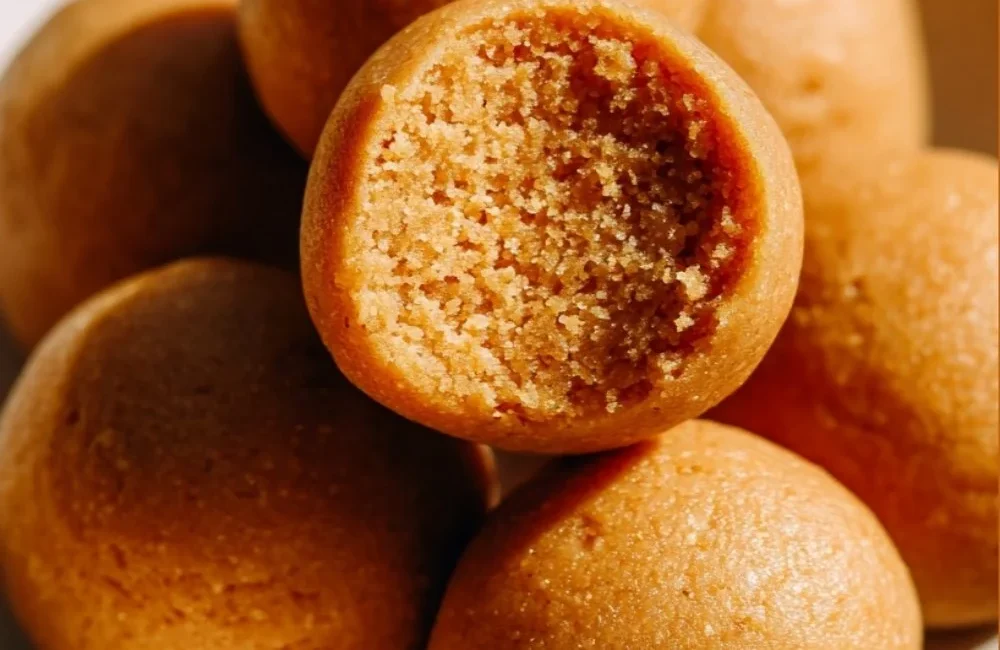
There are no flames here, no browning pans—this is a cool, tactile kind of making, one that invites touch. The first step is always the same: the peanut butter and honey meet and knit together, their aromas coaxing you closer. Peanut butter offers a savory, roasted note; honey provides floral warmth and an almost syrupy patience. As powdered sugar is folded in, the mixture thickens, becoming pliant and slightly chalky in the palms—like modeling clay that will yield and keep its shape.
Traditional techniques are less about heat and more about rhythm. In some homes, the stirring is done with a wooden spoon handed down from a grandmother; in others, it is a child’s small hands turning the spoon with a concentration that borders on ceremony. Rolling the balls is where texture matters: the right density gives a creaminess that dissolves on the tongue, while too much sugar makes a dry, chalky bite. The refrigerator is where the spheres rest and settle—30 minutes in a cool dark space to firm up, the same way a village lad would tuck pastries into the cellar to keep them for travelers. Aromatically, the room will carry a gentle peanut-sweetness, the kind that makes one think of late afternoons and well-worn cardigans.
How different regions prepare their version
Around the world, people translate the same essential idea into local language. In the southern United States, peanut-based sweets might take on the smoky tang of roasted peanuts and the molasses undertone of regional sweeteners. In West Africa, groundnut paste is mixed with local spices and sometimes toasted, yielding a spicier, earthier profile. In parts of the Mediterranean, honey’s prominence might lead to variations that include sesame or tahini, turning the simple ball into a sesame-rich kozinaki cousin.
Even within one country, family traditions diverge. Some add a pinch of salt to lift the sweetness; others roll the finished balls in coconut or crushed nuts. The core remains recognizable: a concentrated peanut essence bound with sweetness. These local versions are less about culinary innovation and more an expression of belonging—the way ingredients available at a market shape the bodies of recipes.
For readers looking for other small, adaptable recipes that travel through kitchens the way these do, a collection of quick and easy recipes can offer companion ideas for any kitchen, whether you are traveling light or entertaining a crowd.
Traditional ways this dish is shared or served
Peanut butter balls rarely debut as centerpieces. Instead, they appear as offerings—an afterthought that reveals attention. They are tucked into lunchboxes, laid out on a tea tray, or stacked into jars given as gifts at holidays. In many households they are made in batches and divided among neighbors, an act of social glue as much as culinary generosity. At celebrations, they are among the small sweets that allow mingling—hands reach for one between dances and stories.
There is also the gentle domestic drama of who gets the first ball. Often, the maker reserves the inaugural piece for an elder as a sign of respect; sometimes the first ball is the one that never makes it into the tin because the maker keeps it for themselves, a private indulgence savored with a cup of tea in the late afternoon. These practices are tiny rituals but they anchor people to places and to each other.
Storing the dish without losing its cultural essence
Storage is simple but meaningful. Refrigeration for 30 minutes sets the shape, but the refrigerator also becomes a kind of archive where small pleasures are preserved for later intimacy. Place the balls in an airtight container, separate layers with parchment if you wish, and they will keep for several days—each retrieval a small pilgrimage to a familiar flavor. For longer preservation, some families freeze them, wrapping each in wax paper, knowing they will thaw into nearly the same texture as fresh.
Storing is not just practical; it is custodial. To store these treats thoughtfully is to honor the hands that made them and the people who will consume them. It is to recognize that food carries memory, and that preserving it preserves the thread of those memories.
Cultural questions people often ask
People often wonder: Are these a child’s snack or a grown-up treat? The answer is both. They are innocent in appearance but elegant in their way of delivering comfort. Another common question is whether they are healthy—context matters; they are energy-dense, a small indulgence rather than a meal. People also ask about substitutions—can the honey be replaced? Historically, yes; different regions and families have used different sweeteners, each change a note in the recipe’s chorus, but for the purpose of cultural continuity, keeping certain elements preserves lineage.
A more reflective question is why such simple recipes endure. The answer rests in human connection—these treats are easy to make and easier to share; they require little ceremony and much affection. They are small rituals, accessible to anyone, and in that accessibility lies their power.
A closing note on food, memory & travel
Travel teaches you to recognize how food binds you to place. A peanut butter ball made in Sofia tastes faintly different from one made in Savannah, not only because the peanut butter brand or the honey might differ, but because of the air in which it was made, the hands that shaped it, the stories shared across the kitchen table. Food is a map of migrations, of economies, and of intimate exchanges. It keeps history soft and edible.
When you make Easy Peanut Butter Balls, think of them as more than a quick treat. They are a way to practice small acts of hospitality; they are translations of local histories into private pleasure. They are proof that the gentlest recipes often carry the deepest culture: they are made in moments when someone looked up from their work and decided to make something just so another person could smile.
Conclusion
If you want a family-tested take on this very idea of simplicity and warmth, you might enjoy seeing another home’s method at 4-ingredient Peanut Butter Balls – Kitchen Fun With My 3 Sons, which captures the same affectionate spirit.
Easy Peanut Butter Balls
Ingredients
Method
- In a bowl, mix together the peanut butter and honey until smooth.
- Gradually add the powdered sugar, mixing until well combined.
- Roll the mixture into small balls and place them on a baking sheet.
- Refrigerate for about 30 minutes to set.
- Enjoy your homemade peanut butter balls!