Carrot Cake Truffles
Introduction
I carry recipes like passports: dog-eared, stained at the edges, each one a map to a place I have loved. The first time I tasted a carrot cake truffle it was not on a polished bakery shelf but at a sunlit kitchen table in a small coastal town where a neighbor, Sofia, pressed a cocoa-dusted morsel into my palm like a benediction. She called them her “little comforts,” and in that moment the sweet, warm fragrance of cinnamon and cream cheese felt like belonging. In the same way that a traveler remembers the hush of a cathedral or the chatter of a market, I remember the texture — dense crumbs softened by frosting, encased in glossy white chocolate — and the hush that followed as we ate: a shared, almost reverent pause.
This introduction sits at the crossroads of memory and flavor, and if you want a practical detour while you travel through these pages, you might marvel at how many simple sweets are kin; a beloved kitchen trick is to transform leftover cake into new confections, as in this playful riff on bars from a different family of baked goods found at a cake-mix cookie bars recipe. That link is a small way of saying: across kitchens and continents, people reimagine leftovers into gifts.
The origin story & regional influence behind this dish
Carrots in cakes are an ancient idea with modern pomp. In medieval Europe, when sugar was a luxury, cooks sweetened cakes with carrots, turning practical thrift into delicacy. The carrot cake we know — warmly spiced, often crowned with cream cheese — became a Jewish delicacy in American cafes and later a staple of Southern tables, where nuts and coconut might appear like echoes of colonial trade routes. The truffle adaptation feels quintessentially modern and cosmopolitan: it shrinks a layered, ceremonial dessert into a singular bite that travels easily, much like the people who carry these recipes.
In the American South, where kitchens often speak in stories, carrot cake truffles sit comfortably beside pecan pies and sweet potato casseroles. In coastal Mediterranean towns, similar sweet balls — rolled and dipped — might be flavored with orange blossom or dusted in toasted sesame, the truffle’s concept translating across climates and spice markets. The white chocolate shell of these truffles evokes a winter holiday in a northern kitchen, yet the warm cinnamon and nutmeg inside hum with Carolina porches and bustling farmers’ markets. Each version is a geography of taste, a compact chronicle of trade, migration, and domestic ingenuity.
How to make Carrot Cake Truffles
Ingredients :
1 cup carrot cake crumbs, 1/2 cup cream cheese frosting, 1 cup white chocolate chips, 1/2 teaspoon cinnamon, 1/4 teaspoon nutmeg, 1/4 cup shredded coconut (optional), Chopped pecans or walnuts (optional)
Directions :
- In a mixing bowl, combine the carrot cake crumbs, cream cheese frosting, cinnamon, and nutmeg. Mix until well combined., 2. Roll the mixture into small balls and place them on a baking sheet lined with parchment paper., 3. Refrigerate the balls for about 30 minutes to firm up., 4. Melt white chocolate chips in a microwave or double boiler., 5. Dip each truffle into the melted white chocolate, allowing excess to drip off., 6. If desired, roll in shredded coconut or chopped nuts before the chocolate sets., 7. Place the coated truffles back on the parchment paper and refrigerate until the chocolate hardens., 8. Serve chilled and enjoy your delicious truffles!
There is a humble elegance to these instructions: no pretense, only transformation. In the way Sofia taught me, making truffles is less about rigid technique and more about rhythm — the gentle coaxing of crumbs into a new shape, a pause for the chocolate to cool, a final flourish of coconut or nut. It is a recipe that invites conversation and hands-on sharing, the kind of baking that asks to be done side by side.
Ingredients through a cultural & historical lens
Look at each ingredient as a footnote in a wider story. The carrot — once a pantry root that sweetened humble puddings — became a symbol of resourceful kitchens. Cream cheese frosting, American in its rise to fame, is the tangy foil to the carrot’s mild sweetness; its popularity rose in the 20th century as refrigeration spread and dairy production scaled up. White chocolate is a modern confectionary invention, its ivory sheen a product of industrial cocoa processing and an appetite for novelty.
Cinnamon and nutmeg carry the imprint of distant plantations and centuries of trade. Their fragrance is migratory: a pinch can transport you to a Dutch spice market, a colonial port, or a winter festival. Coconut and pecans whisper regional accents — coconut suggesting tropical shores where palm groves sway, pecans invoking the American South with its slow, tree-lined landscapes. Even the act of using crumbs — the habit of rescuing cake remnants — sketches a family economy, a gentle refusal to waste and a desire to create small, elegant gifts from what remains.
Cooking the dish: sensory notes & traditional techniques
The first thing to note is the smell: cinnamon unfurls like a familiar melody; nutmeg breathes warmth into the mix. When you press moist crumbs and frosting together, you feel the mixture yield and cohere under your palms, the texture dense yet springy, ready to be shaped. Chilling is an essential breath between steps — a moment of restraint that allows the fat in the frosting to firm, making the truffles hold their roundness.
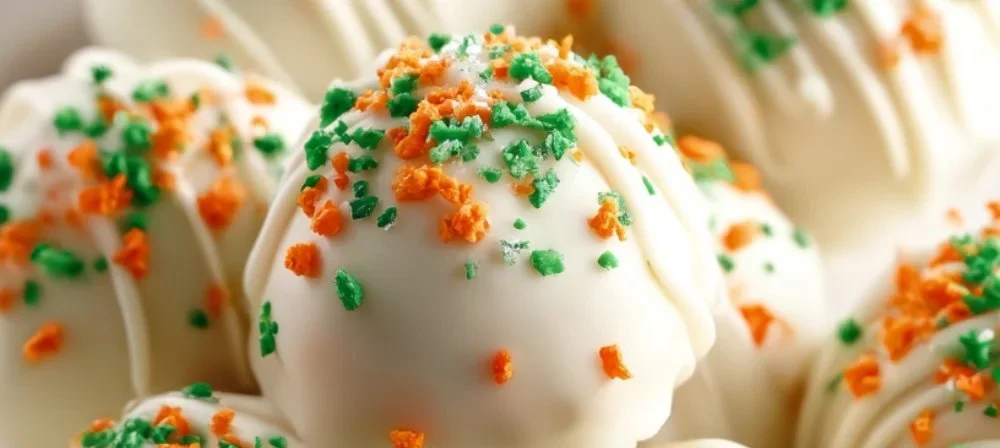
Dipping in white chocolate is an act of theater. The glossy coating snaps under a thumbnail and reveals the tender, cake-like center. In many family kitchens, this is where stories happen: an elder demonstrates how to tap the spoon against the bowl so the excess drips away; a child learns how to roll the ball between cupped hands until it is smooth. These gestures are handed down alive, less recipe than ritual.
Traditional techniques vary: in some kitchens, truffles are rolled in cocoa or cinnamon rather than dipped; other households prefer a ganache exterior. But the essence remains the same — encapsulation, transformation, the compression of layers into a single, convivial bite.
How different regions prepare their version
Travel the map and you will find cousins of the carrot cake truffle: in the Middle East, date balls rolled with toasted sesame or desiccated coconut; in Italy, ricotta-based confections dusted with cocoa; in parts of India, carrot halwa is condensed and sweetened into laddoo-like morsels studded with cardamom. In the American South, you’ll encounter truffles studded with pecans and dusted with coarse sugar, each crunch a reminder of the landscape where those nuts are grown.
Even within a single country, families stake their claims with small variations — a grandmother’s insistence on extra nutmeg, an aunt who prefers coconut because it reminds her of childhood holidays. I once found a version in a seaside village that folded in candied orange peel, a citrus brightness that made the truffles taste like a seaside pastry shop. Wherever they arise, these variants reveal how local ingredients and memories shape a recipe.
For another playful instance of repurposing sweetness from one form to another, consider how cake crumbs can be used in inventive bars and cookies, as illustrated by this cake-mix cookie bars idea, which speaks to the same impulse behind truffles: nothing left behind, everything transformed.
Traditional ways this dish is shared or served
Carrot cake truffles are small gifts and intimate offerings. They appear in mason jars at holiday markets, threaded onto platters at bridal showers, and tucked into lunchboxes like secret treasures. In many communities, they are a post-funeral comfort — bite-sized consolations offered amid mourning — or a celebratory token at weddings, where guests take home a taste of the couple’s shared history.
In Sofia’s kitchen they were a Sunday thing: someone would sweep crumbs from the cake plate, and by afternoon there would be a tray of firm little balls glistening in the refrigerator. The truffles’ portability makes them excellent for travel and exchange; giving a box of truffles is a way of handing over an edible memory, a message in sugar and spice that says, “I thought of you.”
Across cultures, these confections are served with different beverages: coffee in northern Europe, sweet tea in the American South, or a cardamom-spiced milky tea in South Asia. Each pairing reframes the truffle’s sweetness and invites conversation about place.
Storing the dish without losing its cultural essence
Storage is practical but also cultural. Refrigeration keeps cream cheese-based fillings firm and is common in modern kitchens, yet some traditional sweets were stored in cool cellars long before electricity. When you chill truffles, you preserve their texture but also their ritual: the moment of taking them out, the coolness meeting the warmth of a hand, the way condensation beads that briefly before being wiped away in polite haste.
Transporting truffles for gifting invites ritual packing: layers of tissue, a sprinkle of cinnamon, a handwritten note. In many cultures, the way a treat is wrapped is part of its meaning. Preserve that with care. If you must store them for longer, freeze in a single layer and thaw gently in the fridge; the flavors remain, though the first bite may never quite match the immediacy of a freshly made truffle handed over in a warm kitchen.
Cultural questions people often ask
People wonder where comfort ends and revival begins — is transforming cake into truffles a way to save waste or a modern reinvention of tradition? The answer is both. Many culinary practices began in necessity and became ceremony. Others ask: are truffles authentic? Authenticity, in this sense, is porous; it lives in kitchens, not museums. A truffle made in São Paulo or Savannah is authentic to the hands that rolled it and the history it carries.
Another common question is about sweetness: how do you balance the sugar of frosting with the delicate spices? The simple truth is that balance is a matter of memory. Some families prefer a cleaner sweetness and would temper the frosting; others lean into rich decadence. The truffle accommodates both, and in doing so becomes a mirror for taste.
A closing note on food, memory & travel
Food is a compass. A single bite can point to a market square, a lullaby, a childhood corridor where sun sliced through curtains. Carrot cake truffles compress seasons and journeys into a hand-sized sphere: cinnamon like autumn markets, nutmeg like distant spice caravans, cream cheese like a snowy morning in a small town. They are portable stories, and they are invitations — to linger, to share, to remember.
If you pack truffles for a train ride, let them sit beside a worn notebook. If you present them to a new friend, tell the story of the first time you tasted them. Recipes like these are not static objects but living rituals that shift with every hand that shapes them. In the end, cooking is travel without moving, and eating is the act of returning.
For another playful example of how kitchens conserve and renew the past, you may enjoy this reinterpretation of leftover cake into a new bar form, a reminder that economies of flavor are a universal language: a recipe that transforms cake into cookie bars.
Conclusion
If you want to explore further variations or health-conscious takes on this concept, a good place to start is this thoughtful adaptation on healthier carrot cake truffles that honors both tradition and well-being: Healthy Carrot Cake Truffles – Danilicious. For a homey, tried-and-true version with storytelling warmth, there is also a warm, community-minded rendition that celebrates the simple joy of bite-sized sweets: Carrot Cake Truffles | The Girl Who Ate Everything.
Carrot Cake Truffles
Ingredients
Method
- In a mixing bowl, combine the carrot cake crumbs, cream cheese frosting, cinnamon, and nutmeg. Mix until well combined.
- Roll the mixture into small balls and place them on a baking sheet lined with parchment paper.
- Refrigerate the balls for about 30 minutes to firm up.
- Melt white chocolate chips in a microwave or double boiler.
- Dip each truffle into the melted white chocolate, allowing excess to drip off.
- If desired, roll truffles in shredded coconut or chopped nuts before the chocolate sets.
- Place the coated truffles back on the parchment paper and refrigerate until the chocolate hardens.
- Serve chilled and enjoy your delicious truffles!