Texas Tamale Pie
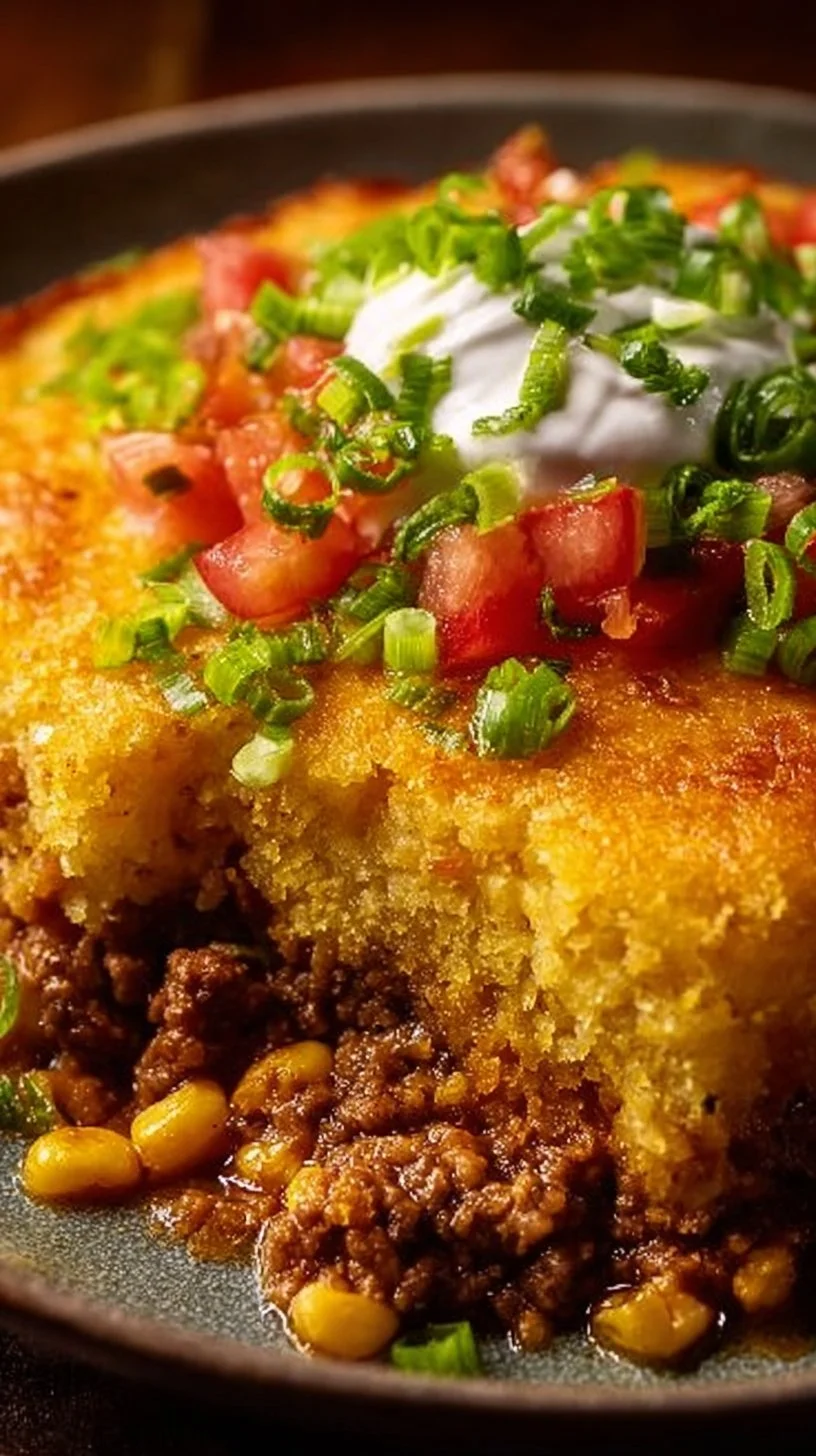
There are dishes that announce themselves the moment they enter a room — a warm, wheaty perfume, a comforting hum that seems to stitch people together — and Texas Tamale Pie is one of those. Eating it feels like slipping into a well-worn cardigan on a chilly evening: familiar, practical, and deeply reassuring. As a traveler who follows the currents of flavor across landscapes and into people’s lives, I have found that this casserole is less a recipe than a ritual in many homes from Austin to the borderlands. It carries the heat of chilies and the hush of cornmeal, and somewhere between those notes lives a conversation about place, migration, and memory. For a light-hearted detour between chapters of savory tradition, this piece even reminds me of playful kitchen projects like an Easter egg-inspired treat that turns baking into a craft, where food becomes both sustenance and story.
In the kitchens I visit, the tamale pie is often spooned into plates while stories are told — about long drives across the plains, neighborhood potlucks, or a grandmother who measured by sight. The dish invites sharing and lends itself to improvisation, yet the Texas version presents a particular balance: chili-seasoned meat, black beans and tomatoes that lend a tenor of the border, and a cornmeal crust that speaks to corn’s ancient presence in the Americas. It is, in short, a mosaic of histories baked into a single pan.
The origin story & regional influence behind this dish
Tamale pie wears its lineage like layered clothing. It is a distant cousin to the tamales of Mesoamerica — hand-formed parcels of masa and fillings wrapped and steamed — and to meat pies and casseroles of the American South. The name itself, "tamale pie," is a wink toward tamales, a recognition of cornmeal and savory fillings, but it is also a distinctly American adaptation: easier to make in larger quantities, more forgiving for a weeknight than rolling individual tamales, and perfectly suited to communal tables.
Texas sits at the crossroads of indigenous Mexican foodways, Spanish colonial influences, and the migratory patterns of settlers from the American South. The state’s culinary DNA includes barbecues and chilis, ranching traditions and roadside cantinas, and those strands knot together in the tamale pie. The use of black beans and diced tomatoes with green chilies in the recipe resonates with borderland flavors; chili powder and cumin ring with southwestern spice; cornmeal calls to indigenous staples. In households across Texas, this dish can reflect a family’s story: whether passed down from Mexican-born mothers who adapted tamales into a quicker form, or from mid-century American cookbooks that sought to Americanize ethnic dishes for the modern stove.
Across regions beyond Texas, versions evolve — in California, you might find green chiles and a greater emphasis on fresh cilantro; in the Plains, beef-driven renditions emphasize heartiness for cold winters. Yet no matter where it appears, Tamale Pie often marks gatherings — potlucks, church suppers, and Sunday dinners — where feeding the many is both a practical step and an act of generosity.
How to make Texas Tamale Pie
Preparing this pie is less about technical precision and more about layering flavors and memories. The directions below honor a sequence that many families have used for decades: a browned, seasoned meat base, a cornmeal batter that sets into a soft crust, cheese melting on top, and cooling time that allows the components to settle — like stories that require a quiet moment before they can be told properly.
Ingredients :
1 pound ground beef, 1 medium onion chopped, 1 can 15 ounces black beans, drained and rinsed, 1 can 15 ounces diced tomatoes with green chilies, 1 tablespoon chili powder, 1 teaspoon cumin, 1 teaspoon garlic powder, 1 teaspoon salt, 1/2 teaspoon black pepper, 1 cup cornmeal, 1 cup milk, 1 large egg, 1 cup shredded cheddar cheese, 1/2 cup sliced black olives optional, 1/4 cup chopped fresh cilantro for garnish
Sometimes ingredients lists are read as a shopping checklist, but here they are a map: the black beans bringing a soft, earthy counterpoint; tomatoes with green chilies offering a gentle, smoky brightness; the cheddar working as a familiar, melting bond. The cornmeal is the anchor — its texture and grain carrying with them a long history of cultivation, trade, and tradition. A playful household might glance toward festive desserts like a no-bake holiday pie while planning a menu, but in most kitchens, the focus is on making ample portions that will stretch to feed the table.
Directions :
- Preheat your oven to 350°F.
- In a large skillet over medium heat, cook the ground beef and chopped onion until the beef is browned and the onion is soft, about 5-7 minutes. Drain any excess fat.
- Stir in the black beans, diced tomatoes with green chilies, chili powder, cumin, garlic powder, salt, and black pepper. Simmer for 5 minutes.
- In a separate bowl, combine the cornmeal, milk, and egg, mixing until smooth.
- Grease a 9×13-inch baking dish. Pour half of the cornmeal mixture into the dish, spreading it evenly.
- Layer the beef mixture over the cornmeal, then pour the remaining cornmeal mixture on top.
- Sprinkle the shredded cheddar cheese and black olives over the top.
- Bake in the preheated oven for 30-35 minutes, or until the top is golden brown and set.
- Let it cool for 10 minutes before slicing. Garnish with chopped cilantro before serving.
These steps feel like an invitation to slow the pace of a weekday and let the oven do the steady work. In small towns and bustling city apartments alike, this sequence has been practiced with slight variations — a different cheese, a sprinkle of onions on top, or an added spoon of homemade salsa. But the rhythm remains: brown, season, layer, bake, and wait.
Ingredients through a cultural & historical lens
To eat the ingredients is to taste a cross-section of the Americas. Cornmeal connects contemporary tables to indigenous agriculture, where maize was not merely food but a cornerstone of cosmology and life. Black beans and tomatoes speak to crops that traveled with human migrations and adapted to diverse soils. Ground beef stands at the heart of ranching economies and frontier traditions that shaped much of Texas. Spices such as chili powder and cumin trace the movement of tastes, from indigenous chiles to European and global trade that folded new flavors into local kitchens.
When you assemble these ingredients, you’re participating in a story of adaptation: how a portable, hand-held food — the tamale — inspired a pan-based pie that could feed a family without the labor of wrapping each portion. Families adapted with what was available, and in doing so they created something new yet recognizably tethered to older practices. The dish is a testament to culinary resilience and creativity: a way communities made provision and celebrated with limited means.
Cooking the dish: sensory notes & traditional techniques
The experience of making and serving Texas Tamale Pie is tactile and olfactory. As the ground beef sizzles with onion, the kitchen fills with a browned, savory aroma that promises warmth. The scent of chili powder and cumin blooming in the pan evokes sun-baked fields and smoky evenings. When the cornmeal batter hits the baking dish, it carries a raw, slightly sweet scent that bakes into a toasty nuttiness; once set, it becomes tender and grainy, a contrast to the saucy, spiced filling beneath.
Traditional techniques here are straightforward but meaningful. Browning the meat until it offers those caramelized hints is as much about flavor as it is about ritual — the sound of spatulas, the steam that fogs windows, the brief pause to scrape fond from the skillet. Letting the dish rest after baking is another unspoken tradition: cutting too soon will result in a sloppy plate, but waiting gives the layers their dignity. In some homes, the final garnish of cilantro is an act of grace, a green punctuation that links the present moment to long-standing herb gardens and markets.
How different regions prepare their version
Traveling across states and borders, one sees tamale pie refashioned in multiple tongues. In South Texas and New Mexico, recipes lean into green chiles, queso fresco, and a more pronounced chile heat. In central Texas, the dish might take on a heartier, meat-forward bravado, nodding to brisket and chili traditions. Conversely, in parts of the Midwest, the casserole finds comfort in sweeter cornmeal bases or the use of kidney beans instead of black beans, aligning the dish with local pantry staples.
Regional cooks also change the texture: some prefer a denser, cornbread-like top, while others aim for a lighter, more spoonable set. Toppings vary as well — chopped onions, diced avocado, a dollop of sour cream — and each variation is an expression of local palates, ingredient availability, and familial memory. What remains constant is the dish’s role at communal tables: it is meant to be shared, to be reheated, to travel in lunch boxes.
Traditional ways this dish is shared or served
Tamale pie frequently appears at gatherings where the goal is abundance. It’s a fixture at potlucks because it scales easily and travels well. In community kitchens, it is served with tortillas or cornbread and accompanied by rice, fresh salsa, and a scattering of garnishes. At home, a wedge might be presented with a simple salad, whereas at a neighborhood fundraiser it could be paired with iced tea and paper plates, the sameness of the plate becoming part of a collective memory.
The act of serving is often familial: the eldest ladles, the youngest sets plates, and conversations move around memories of other meals. For many, a slice of tamale pie is nostalgic — it recalls childhood dinners when budgets were tight but hospitality was abundant. In that way, the dish serves as a culinary bridge between generations.
Storing the dish without losing its cultural essence
Leftovers are a beloved feature of tamale pie. Properly cooled and stored in an airtight container, it keeps well in the refrigerator for several days and reheats in a low oven to revive its texture. The cultural essence — the flavors and the communal memory — survives best when the reheating is done gently; a microwave may quicken the process, but an embrace in the oven revives the crust and brings back the browned notes.
Freezing is also common for those who batch-cook, though some argue that freezing slightly alters the cornmeal’s morning-after tenderness. Even so, taking a piece out of the freezer on a busy night becomes an act of provision, translating the home-cooked tradition into modern rhythms.
Cultural questions people often ask
Does tamale pie replace tamales? No — it is a distinct expression, inspired by tamales but not a substitute. Is this dish authentically Texan? It is as Texan as many foods are: hybrid, adaptive, and reflective of multiple heritages. Can it be made vegetarian? Yes — beans and vegetables can stand in for meat, preserving the spirit of sharing while honoring dietary choices.
People also ask about the health and historical implications of such comfort foods. The answer often leads into conversations about how cuisines evolve to meet needs: caloric density for labor-intensive lives, ease for large families, and the communal pleasure of feeding others. Each question opens a door into how food tells the story of people and place.
A closing note on food, memory & travel
Food is travel in the most intimate sense: a geography one can taste, a history one can eat. Texas Tamale Pie sits at an intersection of stories — indigenous corn cultivation, Mexican culinary influence, American adaptation — all baked into a single dish that feeds more than hunger. It comforts, convenes, and keeps lines of conversation open between the past and the present.
Conclusion
If you want to explore variations and visual ideas for serving Texas Tamale Pie, this recipe resource offers a cornbread and jalapeño-topped take that highlights regional topping choices: Texas Tamale Pie – Cornbread Jalapeño Topped Chili con Carne. For a version that leans into approachable weeknight cooking, see this family-friendly interpretation: Texas Tamale Pie – Fitty Foodlicious. To read more about the cultural threads and community recipes echoing through Texan kitchens, this collection offers broader context: Texas Tamale Pie. And for a classic cornmeal crust perspective with step-by-step guidance, this home-cooking site complements the traditions described here: Tamale Pie (with Classic Cornmeal Crust) | Valerie’s Kitchen.
May your kitchen be a map and your table a port of stories — and may each slice you share carry warmth, history, and a welcome to those who gather.
Texas Tamale Pie
Ingredients
Method
- Preheat your oven to 350°F (175°C).
- In a large skillet over medium heat, cook the ground beef and chopped onion until the beef is browned and the onion is soft, about 5-7 minutes. Drain any excess fat.
- Stir in the black beans, diced tomatoes with green chilies, chili powder, cumin, garlic powder, salt, and black pepper. Simmer for 5 minutes.
- In a separate bowl, combine the cornmeal, milk, and egg, mixing until smooth.
- Grease a 9x13-inch baking dish. Pour half of the cornmeal mixture into the dish, spreading it evenly.
- Layer the beef mixture over the cornmeal, then pour the remaining cornmeal mixture on top.
- Sprinkle the shredded cheddar cheese and black olives over the top.
- Bake in the preheated oven for 30-35 minutes, or until the top is golden brown and set.
- Let it cool for 10 minutes before slicing. Garnish with chopped cilantro before serving.