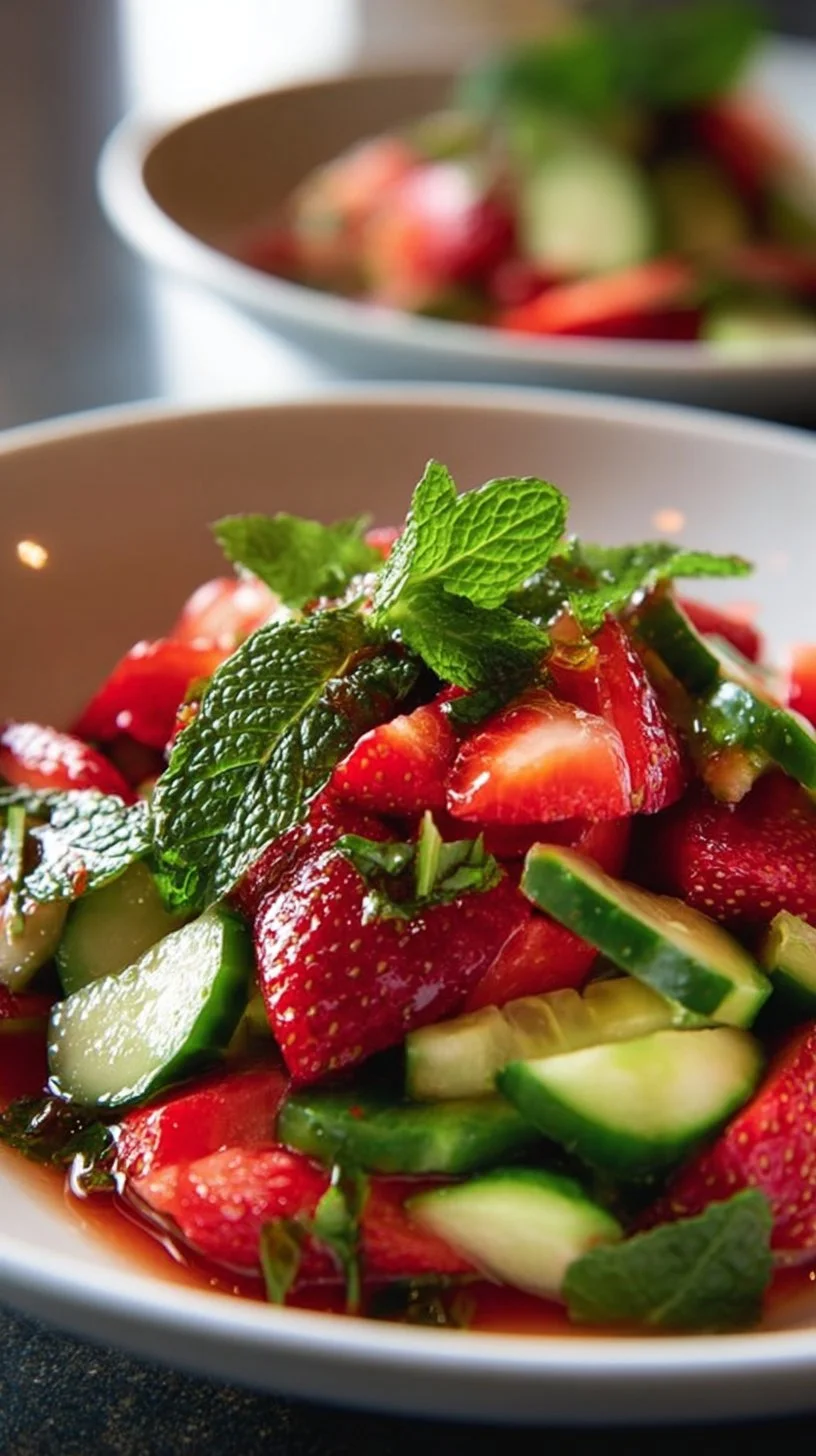
Cucumber Strawberry Salad
AARON Introduction
As a nutrition specialist, I encourage recipes that are simple, nutrient-dense, and supportive of digestion and long-term wellness. The Cucumber Strawberry Salad is one of those recipes: light, hydrating, and easy to adapt for many eating patterns. It brings together crisp cucumber, sweet strawberries, a touch of healthy fat, and optional savory notes from cheese and nuts. This combination offers a pleasant contrast of textures and flavors that can help make vegetables and fruit more enjoyable at any meal.
When we think about food for long-term health, two practical ideas matter: balance and digestion. Balance means including fiber, some healthy fats, and a source of flavor to keep you satisfied without adding excess refined sugars. Digestion means focusing on whole foods that are gentle on your gut and simple to prepare so nutrients are available and well-tolerated. If you like strawberries used in desserts, you might also enjoy creative ways strawberries appear elsewhere, such as in recipes like chocolate-covered strawberry brownies that pair fruit with pantry staples in balanced portions.
This article will walk through how this salad supports wellness, how to make it without changing the original recipe, and provide practical tips on nutrition, storage, and pairing so it fits into a sustainable eating pattern.
How this recipe supports overall wellness
This salad is a good example of a small, nutrient-forward dish that contributes to daily dietary goals in several ways. First, it emphasizes whole foods—fresh fruit and vegetables—so it supplies vitamins, minerals, and fiber with minimal processing. Fiber from the cucumber and strawberries supports regular digestion and helps moderate blood sugar responses to the natural sugars in fruit.
Second, the olive oil and optional nuts supply monounsaturated fats and small amounts of vitamin E, which are important for heart health and for helping your body absorb fat-soluble nutrients. Including a modest fat source with fruit and vegetables also increases meal satisfaction and can help reduce cravings later.
Third, the salad’s fluid-rich ingredients (cucumber and strawberries are mostly water) support hydration, which is a simple but often overlooked component of digestion and overall well-being. If you enjoy contrasting textures or a touch of indulgence, the optional cheese adds a savory note and small amounts of protein and calcium, making the dish feel more balanced.
This recipe also supports mindful eating: its bright colors and fresh aromas encourage slower, more engaged eating, which can improve digestion and satisfaction. If you’re exploring fruit-forward dishes beyond salads, consider how desserts and snacks can be portioned mindfully, as in these mini strawberry chocolate cakes that highlight portion and enjoyment while maintaining balance.
How to make Cucumber Strawberry Salad
Below are the original ingredients and directions for the recipe, presented exactly as provided. I will follow these with practical technique notes and small tips to help you get consistent results without altering the recipe itself.
Ingredients :
1 cup strawberries, hulled and sliced, 1 large English cucumber, thinly sliced, 1/4 cup crumbled feta or goat cheese (optional), 2 tbsp chopped fresh mint or basil, 2 tbsp slivered almonds, sunflower seeds, or walnuts (toasted, optional), 1 tbsp fresh lemon juice or balsamic vinegar, 1 tsp honey or maple syrup, 2 tbsp olive oil, Salt and black pepper, to taste
Directions :
- Prepare Ingredients: Wash and dry strawberries and cucumbers. Hull and slice strawberries; thinly slice cucumbers into rounds or half-moons., 2. Mix Dressing: In a small bowl or jar, whisk together lemon juice, honey, olive oil, salt, and pepper. Adjust to taste., 3. Assemble Salad: In a large mixing bowl, combine cucumbers, strawberries, herbs, and cheese (if using)., 4. Toss Lightly: Drizzle with half the dressing and gently toss to coat without crushing the fruit., 5. Garnish & Serve: Transfer to a serving platter. Sprinkle with nuts/seeds and additional herbs. Drizzle with remaining dressing and serve immediately.
Technique tips (without changing the recipe)
- Use a sharp knife to slice the strawberries and cucumber. Clean, even slices reduce bruising and keep the salad visually appealing.
- Toasting nuts or seeds briefly in a dry pan enhances their flavor and crunch—do this on low heat for a few minutes, shaking the pan, until fragrant.
- If you want cooler fruit without making it watery, chill the strawberries briefly but slice them just before assembling to prevent excess juices.
- Whisk the dressing in a jar with a tight lid and give it a shake right before dressing the salad; this helps re-emulsify the oil and acid for even coating.
- Toss gently and sparingly with dressing—use half first, then add more if needed—to avoid crushing the berries.
Nutrient roles of each main ingredient
Understanding what each ingredient contributes can help you make small, purposeful adjustments over time while keeping the original recipe intact.
- Strawberries (1 cup): High in vitamin C and fiber, strawberries support immune function and digestive regularity. They are also a low-calorie source of natural sweetness and antioxidants like anthocyanins, which are associated with reduced oxidative stress in diet-based studies.
- English cucumber (1 large): Cucumbers are mostly water, providing hydration and some fiber from the skin if left on. They are very gentle on the digestive tract and contribute volume and crunch without many calories, which is useful for satiety.
- Feta or goat cheese (1/4 cup, optional): Adds savory flavor, small amounts of protein, calcium, and healthy fats. The tang helps balance the sweetness of strawberries and can increase meal satisfaction, which supports portion control.
- Fresh mint or basil (2 tbsp): Herbs offer antioxidants and volatile compounds that can aid digestion by promoting salivation and gentle enzyme activity, improving flavor without added salt or sugar.
- Slivered almonds/sunflower seeds/walnuts (2 tbsp, optional, toasted): Provide healthy fats, a bit of protein, and texture; nuts and seeds also bring micronutrients like magnesium and vitamin E.
- Lemon juice or balsamic vinegar (1 tbsp): Acids help brighten flavors and can aid digestive comfort by promoting saliva and gastric juices when eaten in small amounts with meals.
- Honey or maple syrup (1 tsp): A touch of sweetness to balance acidity. Small amounts can improve palatability without overwhelming the dish with sugar.
- Olive oil (2 tbsp): Supplies monounsaturated fats that help absorb fat-soluble nutrients and contribute to fullness.
- Salt and black pepper: Used to taste, they enhance flavor and can help balance sweetness and acidity in a satisfying way.
The preparation method & its health impact
This salad’s preparation is minimally processed and emphasizes raw, fresh ingredients. That approach preserves water-soluble vitamins (like vitamin C in strawberries) and heat-sensitive phytonutrients. Raw preparation tends to keep fiber intact, which is beneficial for gut motility and feeding the beneficial bacteria in our intestines.
Gently tossing rather than mashing preserves texture and reduces the release of juices, which helps prevent rapid sugar exposure from the fruit and keeps the salad pleasant to eat. Including fat in the dressing (olive oil) is important: it modestly slows gastric emptying and supports nutrient absorption, making the dish more satisfying and less likely to cause a quick return of hunger.
Toasting nuts lightly improves digestibility and flavor without adding oils or heavy processing. Overall, the gentle, simple prep supports nutrient retention, comfortable digestion, and enjoyable eating—three pillars of sustainable, health-focused cooking.
Ways to lighten, enrich or modify the dish nutritionally
Although you asked not to change the original recipe, it’s useful to describe options for those aiming to tweak nutrition while keeping the core concept the same.
- To lighten: Reduce the oil to 1 tablespoon and omit nuts or cheese. Add a few extra herbs and a squeeze of lemon to increase flavor without adding many calories.
- To enrich (more protein): Serve alongside a small portion of grilled chicken or canned tuna to add protein for a more complete meal. Alternatively, sprinkle a tablespoon of hemp seeds for a plant-based protein boost.
- To increase fiber: Keep cucumber skin on and add a handful of spinach or arugula under the salad to increase vegetables without changing the overall flavor profile.
- To reduce sugar: Use only 1 tsp of honey or omit it entirely if your strawberries are very ripe and sweet. Balsamic vinegar offers a less sweet option with complexity.
- To make it plant-forward: Omit the cheese, increase the nuts/seeds, and add a scoop of cooked quinoa on the side for a fiber-and-protein boost.
These small adjustments can make the salad more fitting for different meal goals while preserving the original recipe’s spirit.
Pairing ideas for a balanced, complete meal
This salad can be a versatile side or a light main. For a balanced plate, aim to combine it with a lean protein and a modest source of complex carbohydrate or additional vegetables:
- Grilled salmon, a small serving of wild rice, and the salad for a heart-healthy plate rich in omega-3 fats.
- A bowl of lentil soup and the salad as a fresh side to increase fiber and plant proteins.
- A piece of whole-grain flatbread and a portion of hummus alongside the salad for a Mediterranean-style lunch.
Pairing the salad with a source of protein helps stabilize blood sugar and promotes lasting fullness, while pairing with whole grains or legumes adds complex carbohydrates and fiber to round out the meal.
Safe storage, food safety & optimal reheating
Because this recipe is mostly raw and includes fresh fruit, it’s best eaten immediately for texture and flavor. If you need to store leftovers, follow these tips:
- Store components separately when possible. Keep the dressing in a small jar and the chopped fruit and cucumber in an airtight container to prevent sogginess.
- Refrigerate within two hours of preparation, or sooner if your kitchen is warm. Use within 24–48 hours for best quality; strawberries will brown and soften over time.
- If you’ve included nuts, store them separately and add just before serving to preserve crunch.
- Reheating is not necessary and not recommended for this salad, since it is intended to be served cold or at room temperature. If you pair it with a warm protein, reheat only the protein and keep the salad chilled.
Following these simple practices preserves both food safety and the eating experience.
Common nutrition questions about this dish
Will the fruit sugar spike blood glucose?
In this recipe, the small portion of fruit is balanced by fiber, fat, and optional protein (if cheese or nuts are included). That combination slows digestion and usually results in a moderate blood glucose response for most people. If you monitor blood sugar specifically, pairing the salad with a protein or whole grain is a reliable strategy to reduce glycemic impact.Is this salad suitable for weight management?
Yes—its high water and fiber content can help with satiety. Focus on portion control for the oil, nuts, and cheese if calorie reduction is your goal. Small adjustments (such as reducing oil) can lower calories while keeping volume.Are the nuts necessary?
They are optional for texture and healthy fats. If you have nut allergies, sunflower seeds are a great alternative. Seeds provide similar nutrients without the allergen risk.Is it gut-friendly for sensitive stomachs?
Generally yes—cucumbers are mild and strawberries are typically well tolerated. If you have fructose sensitivity or other digestive conditions, adjust portions or consult a specialist.
Final wellness notes
This Cucumber Strawberry Salad is a simple, nourishing dish that supports hydration, provides fiber, and includes healthy fats to aid nutrient absorption and satiety. It’s adaptable for many eating patterns and is most beneficial when combined with a modest source of protein or whole grains for a complete meal. Approach each meal as an opportunity for balance—colorful produce, a little healthy fat, and attention to portion can add up to sustainable habits that support digestion and long-term wellness. Small, consistent choices like this salad are the foundation of an enjoyable and healthful eating pattern.
Conclusion
For those looking for recipe variations or creative inspiration, the salad idea is well represented online—see a practical version at Walder Wellness strawberry cucumber salad, another simple take at The Yummy Bowl cucumber strawberry salad, and a bright, visual interpretation at Lemon Tree Dwelling strawberry cucumber salad. These resources can help spark ideas while you keep the core principles of balance, digestion, and nutrient density central to your cooking.
Cucumber Strawberry Salad
Ingredients
Method
- Wash and dry strawberries and cucumbers. Hull and slice strawberries; thinly slice cucumbers into rounds or half-moons.
- In a small bowl or jar, whisk together lemon juice, honey, olive oil, salt, and pepper. Adjust to taste.
- In a large mixing bowl, combine cucumbers, strawberries, herbs, and cheese (if using).
- Drizzle with half the dressing and gently toss to coat without crushing the fruit.
- Transfer to a serving platter. Sprinkle with nuts/seeds and additional herbs. Drizzle with remaining dressing and serve immediately.