Greek Yogurt Brownies
There are dishes that arrive in your life like weather — sudden, familiar, and shaped by journeys you did not know you had taken. Greek Yogurt Brownies belong to that soft, surprising weather: a crossroad of home baking and a Mediterranean lilt, where velvet cocoa meets tangy curd, and comfort is reframed as something lighter, more deliberate. I first met these brownies on a rain-slick afternoon in a seaside café where the owner, a woman who had spent summers in Crete and winters in Vermont, served a square warm enough to steam the air with chocolate. She told me she used yogurt because “it remembers the milk of the island,” and in that sentence the brownie became a little map — of islands, of dairy, and of a household economy that prized texture and thrift as much as taste.
Across the world I have followed brownies from New York tenements to Aegean terraces, tracing stories that thread through ingredients, tools, and memory. Even within the universe of brownies, there are cousins you meet along the road: the playful romance of heart-shaped brownies at a wedding bake sale in Lisbon, the citrus-bright interruptions of lemon brownies (lemonies) at a Sicilian vigilia, or the chewy, glutinous flirtation of mochi brownies in a Tokyo izakaya. Each variation is a conversation, and Greek Yogurt Brownies speak in a voice equal parts comfort and restraint: dense and fudgy, with a whisper of tang that wakes the chocolate.
The origin story & regional influence behind this dish
The idea of using strained yogurt or curd in baking is older than the label “Greek.” Yogurt has been central to cuisines from the Balkans to the Persian plateau and into the Levant for millennia: a way to keep milk edible in warmer climates, to thicken sauces, and to lend a gentle acidity that balances richness. The notion of placing yogurt into a chocolate cake or a brownie is far more modern — an inventive bridge formed when home bakers began to think of texture and health together, a late-20th-century nod to frugality and nutrition.
In Greece, thick strained yogurt — often called “Greek” yogurt in global markets — is a pantry constant. Its inclusion in both savory dishes and sweets reflects a culinary culture that prizes dairy’s balancing power. When European and North American home bakers began experimenting with yogurt in quick breads and cakes, the results reverberated across kitchens: a denser crumb, moister mouthfeel, and an acidity that made chocolate taste brighter. This adaptation became especially popular in places where there was both an appetite for traditional comfort desserts and a growing interest in lighter, more wholesome approaches to baking.
Think of the regional influence as two streams meeting: one of Mediterranean dairy tradition and one of Anglo-American baked-quick-dough culture. The result is bilingual cuisine — a brownie that speaks to the rustic, cultured tang of the Mediterranean and to the melting chocolate nostalgia of Western households. It is, in a very human way, a recipe for migration: ingredients know how to settle into new soils, and gourmets and home cooks alike have welcomed that softened, delicious translation.
How to make Greek Yogurt Brownies
Ingredients :
2/3 cup Sugar-Free Chocolate Chips (divided), 1 teaspoon Coconut Oil, 3/4 cup Plain Greek Yogurt, 1 large Egg, 1/4 cup Almond Milk (or soy milk, or any milk of choice), 1/2 cup Granulated Sweetener (sugar-free brown erythritol or coconut sugar or brown sugar), 1 teaspoon Vanilla Extract, 1/2 cup Oat Flour (or all-purpose flour lightly packed, swept), 1/2 cup Unsweetened Cocoa Powder, 1 teaspoon Baking Powder, 1/4 teaspoon Salt
Directions :
- Preheat the oven to 350°F (180°C). Line an 8-inch x 8-inch brownie pan with parchment paper and slightly oil the pan. Set aside., 2. In a microwave-safe bowl, melt 1/3 cup chocolate chips and coconut oil. Set aside to cool for a few minutes at room temperature., 3. In a mixing bowl, whisk the dry ingredients: flour, cocoa powder, sweetener, baking powder, and salt. Set aside., 4. In another large bowl, whisk plain Greek yogurt, egg, vanilla extract, milk, and the melted cooled chocolate mixture., 5. Sift the dry ingredients into the wet ingredients and stir with a silicone spatula until just combined., 6. Stir in the remaining 1/3 cup chocolate chips and distribute evenly in the batter., 7. Pour the batter into the prepared brownie pan., 8. Bake for 20-23 minutes or until a toothpick inserted in the brownie comes out clean., 9. Cool immediately on a cooling rack for an hour before cutting.
The recipe is an elegant negotiation between technique and temperament; it allows the yogurt to do the heavy emotional lifting — tang, moisture, a whisper of firmness — while the chocolate provides the gravity. To follow it is to participate in a tiny ritual that asks little but gives much.
Ingredients through a cultural & historical lens
Each component is a story compressed into a cooking pot. Chocolate is the global traveler here: cacao’s migration from Mesoamerica carries with it colonial histories and the sweetness of trade routes. Cocoa powder, as a pulverized, more democratic form of chocolate, became central to 19th- and 20th-century baking when accessibility broadened. Flour, whether oat or all-purpose, speaks to regional grain economies: oats in northern climates, wheat elsewhere. The choice of oat flour is itself a modern gesture toward whole grains and local milling traditions.
Greek yogurt, the star, speaks most loudly. Traditionally strained by cloth, it has been a technique of preservation and a way to make milk’s richness portable and season-proof. In domestic economies, yogurt is versatility made edible: a spoonful turns soups silky, marinades tangy, and in this case, deserts less guilty and more balanced. The coconut oil and almond milk nod to the globalized pantry: oils and plant milks that cross borders and diets, used in households that have absorbed influences from trade, health trends, and migration.
Even the sweetener is a crossroads. The recipe’s allowance for sugar-free erythritol or coconut sugar reflects contemporary concerns — dietary preferences, glycemic considerations — layered atop older traditions. These substitutions are conversation pieces between past and present: a way to keep cultural memory alive while letting modern lives dictate the form.
Cooking the dish: sensory notes & traditional techniques
In a kitchen warmed by late light, the batter smells like an old library of spices and memory. The melted chocolate — dark and glossy — gives a perfume of deep wood smoke and distant rain; mixed with yogurt, it breathes a new, softer narrative. The sound is important too: the faint scrape of a spatula, the quiet gurgle when yogurt meets melted chocolate, the small, domestic percussion of a pan set down on an oven rack.
Traditional techniques here are less about strict methodology and more about respect for texture. Straining yogurt, if you choose to thicken it beyond what the shop supplies, is an act of patience and care linked to ancestral habits. Sifting the dry ingredients is not merely a mechanical step but a way to introduce air — to prevent density from becoming heaviness. The act of allowing the melted chocolate to cool before meeting the egg and yogurt is also a practice of gentle restraint, one that respects the ingredients’ dignity.
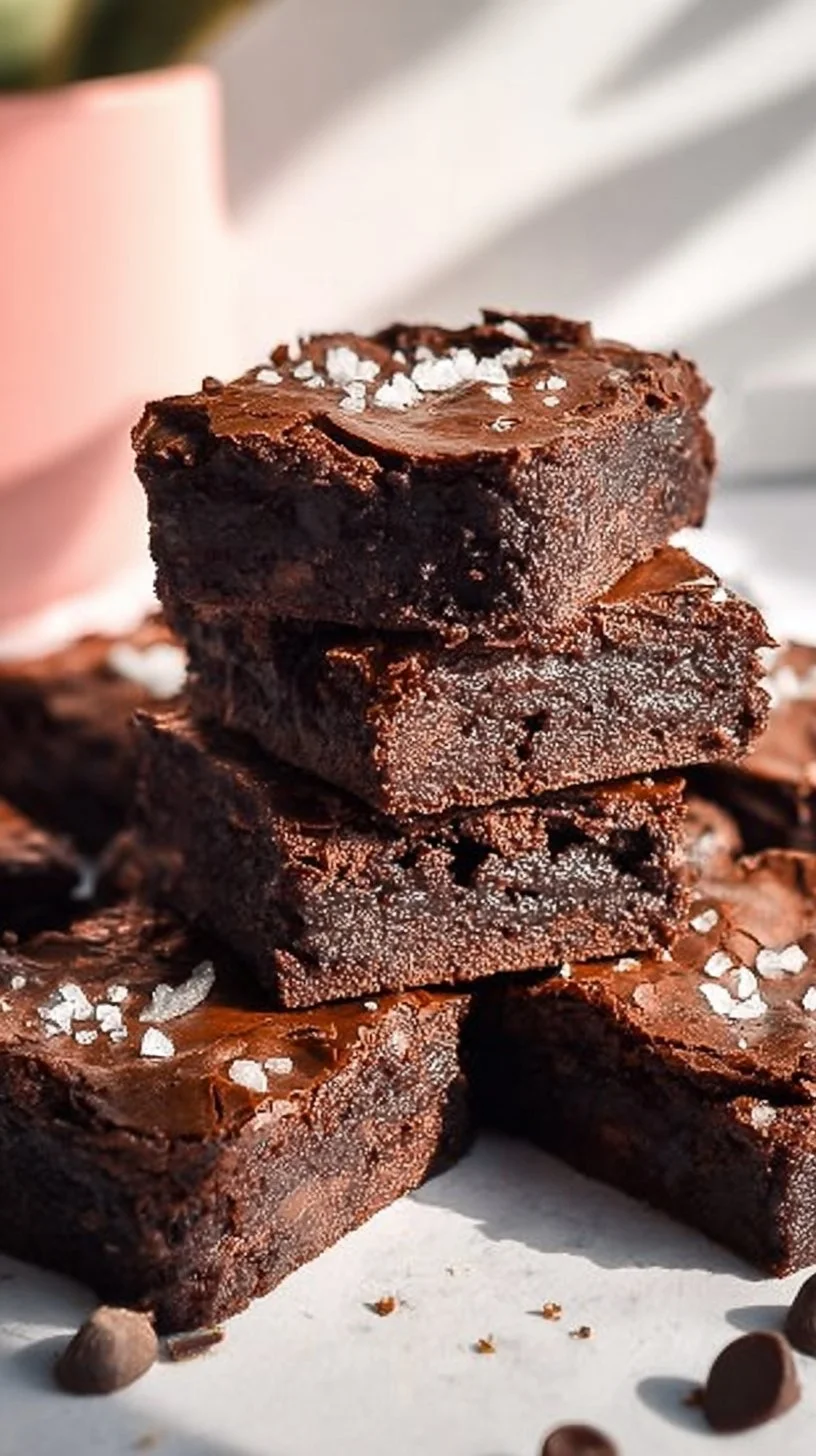
When these brownies come from the oven, their crust offers a delicate tension: a thin, satin skin that gives way to a fudgy, almost truffle-like interior. The first bite is a study in contrasts — the bitter and the sweet, the tart and the lush. That tartness, the whisper of yogurt, lingers like a remembered conversation and invites another piece.
How different regions prepare their version
Across kitchens, variations become local dialects. In the Aegean, one might find a hint of citrus zest folded into the batter, an echo of lemon groves that line the coast. In Northern Europe, where oats are familiar and slow, oat flour may replace wheat with more regularity, lending a grainy sweetness that speaks to porridge and hearth. In East Asia, inventive home bakers sometimes fold in bits of glutinous rice or sesame, a nod to textures valued in rice-based desserts, leading to hybrids reminiscent of the mochi brownies I have seen served alongside tea.
In places where dairy is not as common, Greek yogurt’s role is often taken by strained plant-based yogurts, creating a parallel lineage. Elsewhere, bakers will adapt the sugar to panela, jaggery, or other local sweeteners, each imparting a flavor and a history: the molasses note of cane sugar from tropical coasts, the earthiness of palm sugars in island kitchens. What remains constant is the crossroads aesthetic — a chocolate cake that can be both indulgent and tempered by a cultured dairy note.
Traditional ways this dish is shared or served
Brownies have always been social food — easy to portion, easy to share. Greek Yogurt Brownies lend themselves to domestic ritual: a square offered with coffee on a balcony overlooking a white-washed village, wrapped in waxed paper as a traveler’s lunch, placed on a plate at the end of a family meal when the conversation has gone tender. In parts of the Mediterranean, sweets are often modestly portioned and served with tea; here the yogurt element keeps the dessert from feeling excessive, allowing it to be served with more frequency and less ceremony.
At festive tables you might see them dressed simply: a dusting of cocoa, a scattering of toasted nuts, or a smear of honey and a sprinkle of sea salt — each addition a small regional signature. The manner of sharing is as much about intimacy as it is about taste: these are not showpieces but memory-keepers, the kind of dessert that moves from hand to hand at gatherings where people speak in softened voices and remember names.
Storing the dish without losing its cultural essence
Storage, in this context, is preservation of both texture and story. Because yogurt imparts moisture, these brownies prefer cool, dry storage; wrapped in cloth or placed in a shallow tin, they keep for several days at room temperature in cooler climates, or in the refrigerator in warmer ones. Refrigeration will firm them and deepen flavors, much like a stewed fruit gains intensity overnight.
When shared later, rewarming a single square — briefly, in a low oven or a pan — recreates the perfume of freshly baked cocoa and softens the crumb to its initial generosity. Transporting them is an act of hospitality: wrap them in parchment, tuck them beside a bottle of local wine or a jar of olives, and you have a parcel that carries not only taste but also the feel of a place.
Cultural questions people often ask
People often ask whether this adaptation is “authentic,” as if authenticity were a single, fixed point rather than a moving conversation. The truest answer I’ve found in kitchens is that dishes are authentic to the lives that cook them; when Greek yogurt crosses continents and becomes a baking agent in brownies, it is not less authentic — it is translated. Another frequent question concerns health: does using Greek yogurt make a brownie “healthy”? It depends less on any ingredient’s virtue than on the care with which the dish is made and eaten. The yogurt shifts the mouthfeel and the nutritional profile, offering a different balance that many cultures would view as an improvement in moderation.
Finally, bakers wonder about substitutions: what if there is no yogurt? The recipe is a doorway, and every culture finds its own threshold. Sour cream, fromage blanc, even thick plant-based yogurts have been welcomed in different kitchens; each brings a local accent.
A closing note on food, memory & travel
Food, for me, is a slow map. A simple brownie becomes a locus of stories: a woman in Crete who stoops to strain yogurt into a bowl; a family in the Midwest who trades butter for yogurt at the suggestion of a daughter returning from Athens; a café in a port town where travelers arrive looking for something familiar and leave with something new. The Greek Yogurt Brownie occupies a rare, generous space between worlds — an edible metaphor for how we carry change and keep what matters.
If you bake this recipe, do so with the awareness that you are participating in that conversation. Cut the first piece intentionally, offer it to someone whose stories you want to hear, and let the chocolate and the tang of yogurt make room for memory. In kitchens and cafes across continents, I have watched people bend toward a plate and find, in the humble square, a place to land. That is travel, too: a return to warmth, a rediscovery of small pleasures, and the realization that every recipe is a passport stamped with family names, seasons, and the quiet art of hospitality.
Conclusion
For further variations and practical takes on Greek yogurt brownies, you might enjoy this lighter-spin recipe from The Big Man’s World: Greek Yogurt Brownies (Under 100 Calories!) – The Big Man’s World, and for a family-friendly perspective with helpful notes see Greek Yogurt Brownies – Foodie With Family.
Greek Yogurt Brownies
Ingredients
Method
- Preheat the oven to 350°F (180°C). Line an 8-inch x 8-inch brownie pan with parchment paper and slightly oil the pan. Set aside.
- In a microwave-safe bowl, melt 1/3 cup chocolate chips and coconut oil. Set aside to cool for a few minutes.
- In a mixing bowl, whisk the dry ingredients: flour, cocoa powder, sweetener, baking powder, and salt. Set aside.
- In another large bowl, whisk together plain Greek yogurt, egg, vanilla extract, almond milk, and the cooled melted chocolate mixture.
- Sift the dry ingredients into the wet ingredients and stir with a spatula until just combined.
- Stir in the remaining chocolate chips, distributing evenly into the batter.
- Pour the batter into the prepared brownie pan.
- Bake for 20-23 minutes or until a toothpick inserted in the brownie comes out clean.
- Cool immediately on a cooling rack for an hour before cutting.