Red Velvet Cheesecake Swirl Cake
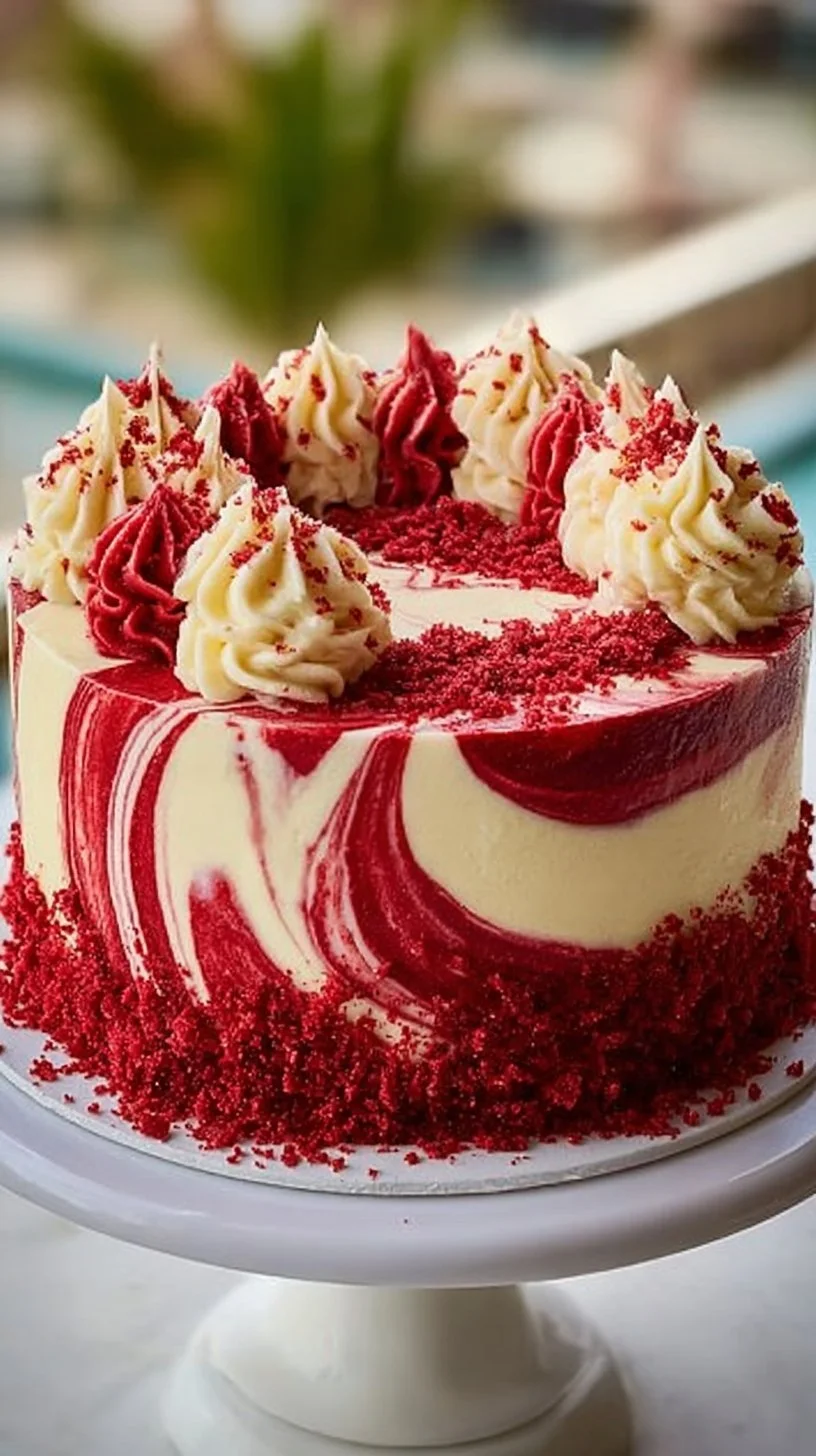
This Red Velvet Cheesecake Swirl Cake is an exercise in controlled contrasts: a tender, cocoa-kissed red velvet crumb offset by the dense, tangy silk of cream cheese. The pairing requires precise balance — enough acid and cocoa in the cake to produce that characteristic flavor and color without overpowering the delicate cheesecake pockets introduced into the batter. For reference points on integrating cream cheese into individual portions and bars, review the technical approaches used in Biscoff cheese cupcake preparations, which illustrate staging, temperature control, and the use of stabilized fillings.
As a professional chef, my focus is on process: how ingredient temperature, mixing speeds, and folding technique dictate crumb structure and swirl definition. This article breaks down the recipe into its functional components and supplies rationale for each step so you can reproduce consistent results and troubleshoot deviations.
The culinary logic behind this dish
The Red Velvet Cheesecake Swirl Cake is a hybrid that depends on two interrelated systems: the aerated red velvet sponge and the emulsion-based cream cheese filling. The sponge relies on chemical leavening (baking soda) activated by an acidic medium (buttermilk and white vinegar), which produces carbon dioxide for lift and also accentuates cocoa flavor. Vegetable oil contributes fat that remains liquid at room temperature, promoting a moister, more tender crumb than a butter-based cake.
The cheesecake component is an emulsion of cream cheese and powdered sugar stabilized by handling and cooling; it is not a baked cheesecake layer here, but a dense, sweet-tangy mass that will set within the sponge while baking. Introducing spoonfuls of the cheesecake mix into the batter creates local density contrasts that limit the spread of air cells, producing visible, creamy swirls. The knife-swirl step is purposeful: shallow arcs will preserve lift, while overworking the batter risks deflating the sponge and blending the two components into an indistinct marbling.
How to make Red Velvet Cheesecake Swirl Cake
Execution requires orchestration of temperature, timing, and handling. Start by preparing pans and preheating the oven so that once batter is combined, you can move quickly to bake. Room-temperature eggs and cream cheese promote emulsification; cold cream cheese will leave lumps and a grainy texture. Whisking dry ingredients separately ensures even distribution of leavening and cocoa; over-mixing once liquid is introduced will develop gluten and toughen the crumb.
When combining wet and dry ingredients, incorporate just until homogeneous: a few streaks are preferable to an overworked batter. For the swirl, use measured spoonfuls of cheesecake mixture placed at even intervals across the surface, then perform a single controlled swirl with a narrow paring knife to trace intentional patterns. Bake until edges are set and the center registers slight wobble — the residual heat will finish setting the cheesecake pockets without overbaking the cake. Cool briefly in pans to let structure stabilize, then release to racks to prevent trapped steam from softening the crust.
Ingredients :
2 ½ cups all-purpose flour, 1 ½ cups granulated sugar, 2 tablespoons unsweetened cocoa powder, 1 teaspoon baking soda, ½ teaspoon salt, 1 cup buttermilk, 1 cup vegetable oil, 2 large eggs, 1 teaspoon white vinegar, 1 tablespoon red food coloring, 16 ounces cream cheese (room temperature), 1 ½ cups powdered sugar, 2 teaspoons vanilla extract
Directions :
Grease and line two 9-inch round cake pans with parchment paper. Preheat oven to 350°F (175°C).
<, p id=”instruction-step-2″>2. In a large bowl, whisk flour, sugar, cocoa powder, baking soda, and salt., p id=”instruction-step-3″>3. In another bowl, mix buttermilk, oil, eggs, vinegar, vanilla, and food coloring., p id=”instruction-step-4″>4. Combine wet and dry mixtures, stirring until smooth and red., p id=”instruction-step-5″>5. In a separate bowl, beat cream cheese until smooth. Add powdered sugar and vanilla; beat until fluffy., p id=”instruction-step-6″>6. Pour red velvet batter into pans. Add spoonfuls of cheesecake mixture and swirl with a knife., p id=”instruction-step-7″>7. Bake for 30-35 minutes. Cool for 10 minutes in pans, then completely on racks., p id=”instruction-step-8″>8. Frost with remaining cheesecake mix or cream cheese frosting. Decorate with swirls and crumbs.
Ingredient analysis through a chef’s lens
- Flour: All-purpose flour provides a balanced protein level to build structure without creating a heavy crumb. The 2 ½ cups quantity sets the framework for moisture absorption; accurate measurement (preferably by weight) is essential to maintain the intended balance between tenderness and stability.
- Sugar: Granulated sugar serves both as sweetener and as an influence on tenderness through its hygroscopic nature. It also contributes to Maillard browning at the crumb surface.
- Cocoa powder: The small amount supplies the classic red velvet cocoa underpinning without turning the cake into a chocolate cake. Unsweetened is essential to control sweetness and acidity balance.
- Baking soda: Reacts with acidic ingredients to produce lift. Even distribution in the dry mix prevents localized over-rise or metallic flavor pockets.
- Salt: Enhances overall flavor and sharpens the perception of cocoa and cream cheese.
- Buttermilk and white vinegar: Both drive acidity — buttermilk for flavor depth and slight tang, vinegar to ensure reliable chemical leavening when combined with baking soda.
- Vegetable oil: Keeps crumb moist and yields a silkier texture than solid fats; its neutrality allows cocoa and cream cheese flavors to dominate.
- Eggs: Contribute structure and emulsification. Whole eggs provide both fat and protein necessary for stable aeration.
- Red food coloring: Visual identity; use gel or paste for intensity without excess liquid.
- Cream cheese, powdered sugar, vanilla: The cheesecake swirl is an emulsion where room-temperature cream cheese ensures a smooth result. Powdered sugar keeps the mix fine and integrates without grittiness; vanilla adds aromatic lift.
For further technical comparisons of cream-cheese treatments in cakes and bundts, consider the controlled stuffing techniques in Black Forest cake mini dessert cups which highlight portioned fillings and their bake-time behavior.
Kitchen workflow & technique breakdown
A disciplined mise en place reduces idle time and temperature differentials. Bring cream cheese and eggs to room temperature 45–60 minutes ahead. Preheat the oven and prepare pans so the batter moves directly from bowl to oven. Use two bowls for dry and wet to avoid overmixing; combine with a flexible spatula or low-speed paddle to minimize gluten development.
When transferring batter to pans, divide evenly by weight or use a scoop to ensure uniform height. Spoon the cheesecake mixture in measured dollops; spacing governs how the swirls intersect during baking. For the knife swirl, make a single set of deliberate movements — a few clean passes in an S-curve are preferable to frenetic twisting, which homogenizes the two components. If you require reference workflow patterns for bar- and push-pop-style baked goods and staging, review the production cadence used for cake mix cookie bars and cake push pops, which both emphasize portion control and time-to-bake synchronization.
Texture control, heat management & timing
Heat application is the controlling variable for crumb development and cheesecake set. The specified 350°F (175°C) is intentionally moderate: it offers predictable crust formation while allowing the interior to reach the correct internal temperatures without extreme browning. Use oven thermometry to confirm accuracy; many domestic ovens vary by 10–25°F.
During baking, the visual and tactile cues matter more than time alone. The edges should spring back slightly; the center will still exhibit a gentle quake owing to the embedded cheesecake pockets. Overbaking results in dryness and a cracked cheesecake appearance; underbaking leaves the filling loose. Remove pans to a wire rack and cool 10 minutes before demolding — this partial cooling reduces structural shock and allows gelatinization of starches and setting of proteins. Complete cooling on racks prevents condensate from forming under the cake, which would soften the crust and mute textural contrasts.
Professional variations
Variations are useful for adapting the technique to service contexts while maintaining culinary integrity. For plated desserts, bake in an unlined sheet pan to produce a single-layer slab you can portion after cooling. For individual portions, decrease bake time and use a water bath for the cheesecake component to prevent cracking. Swap part of the vegetable oil for browned-butter-infused oil (cooled but liquid) to introduce toasted nutty notes without solid fat inclusions. To emphasize cocoa nuances, use a blend of natural and Dutch-processed cocoa (adjust acidity accordingly) but maintain the recipe proportions to avoid structural imbalance.
When scaling for high-volume production, stage the cheesecake filling in a piping bag for consistent dollops and perform the swirl with a single dedicated tool to standardize appearance across batches.
Finishing touches & plating philosophy
Frosting with the remaining cheesecake mix or a cream cheese frosting creates continuity of flavor and visual cohesion. If using the same cheesecake mix as frosting, whip it with a small amount of heavy cream to aerate and increase spreadability; chill briefly to attain pipeable consistency. For clean presentation, apply a thin crumb coat, chill to set, then finish with a smooth top layer and a controlled application of crumbs or cocoa dusting.
For plated servings, consider a small quenelle of lightly sweetened whipped cream or a terse salt-sprinkle of toasted pecans to introduce textural counterpoints. When cutting, use a warm, dry knife wiped between passes to preserve clean edges and visible swirl patterns.
Maintaining quality after cooking
Storage and temperature govern shelf life and textural fidelity. Because of the cream cheese content, refrigerate the cake once fully cooled; this maintains the filling’s structure and reduces microbial risk. Store in an airtight container to prevent drying; if surface dryness occurs, a brief tent with plastic wrap will retain moisture without compressing decorations.
For service at room temperature, remove the cake from refrigeration 30–45 minutes before plating to allow flavors to bloom and the fat in the cream cheese to soften, improving mouthfeel. Avoid leaving the cake at ambient temperature for extended periods (more than two hours) due to dairy safety considerations.
Questions from home cooks (chef answers)
Q: My cheesecake pockets sank and created large holes. What went wrong?
A: Most commonly, overmixing the red velvet batter after combining wet and dry ingredients deflates incorporated air. Also, if cheesecake dollops are too heavy or overconcentrated in one area, they can create larger voids. Use measured spoonfuls spaced evenly and perform a single, shallow swirl.
Q: The cream cheese was grainy. How do I avoid that?
A: Graininess results from cold cream cheese or insufficient beating. Bring cream cheese to room temperature and beat until smooth before adding powdered sugar, which should be sifted if lumpy. Beat at medium speed to create a cohesive emulsion without aerating excessively.
Q: The cake is too dense. Why?
A: Density can come from too much flour (measure by weight), overmixing, expired baking soda, or insufficient acid to activate the leavening. Confirm ingredient freshness and measure precisely.
Final chef notes
Precision in temperature and timing, an understanding of how emulsions behave under heat, and careful staging are the pillars of consistent success with this recipe. The interplay between a tender, oil-based red velvet crumb and a stabilized cream cheese swirl rewards restraint: measured spooning, shallow swirling, and vigilant bake monitoring preserve the textural and visual contrasts that define the dessert.
When adopting this recipe for a professional kitchen, standardize dollop sizes and use timers tied to rack position in the oven to account for hot spots. Maintain ingredient readiness to ensure smooth emulsions and even aeration. The payoff is a composed cake with clean, defined swirls and balanced flavor — the hallmark of technique applied with intention.
Conclusion
For additional inspiration on cream cheese swirl techniques in bar formats, see this tested method at Red Velvet Cheesecake Swirl Brownies – Sally’s Baking Addiction, which demonstrates staging and dolloping strategies transferable to this cake. For variations on bundt-style presentations and swirl aesthetics, review the approach used in Red Velvet Cream Cheese Swirl Bundt Cake – Sprinkle Bakes.
Red Velvet Cheesecake Swirl Cake
Ingredients
Method
- Grease and line two 9-inch round cake pans with parchment paper. Preheat the oven to 350°F (175°C).
- In a large bowl, whisk together the flour, sugar, cocoa powder, baking soda, and salt.
- In another bowl, mix buttermilk, oil, eggs, vinegar, vanilla, and food coloring.
- Combine the wet and dry mixtures, stirring until smooth.
- In a separate bowl, beat the cream cheese until smooth. Add powdered sugar and vanilla; beat until fluffy.
- Pour the red velvet batter into the prepared pans. Add spoonfuls of the cheesecake mixture and swirl with a knife.
- Bake for 30-35 minutes, until the edges are set and the center registers slight wobble. Cool for 10 minutes in pans, then transfer to racks to cool completely.
- Frost with any remaining cheesecake mix or cream cheese frosting, and decorate with swirls and crumbs.