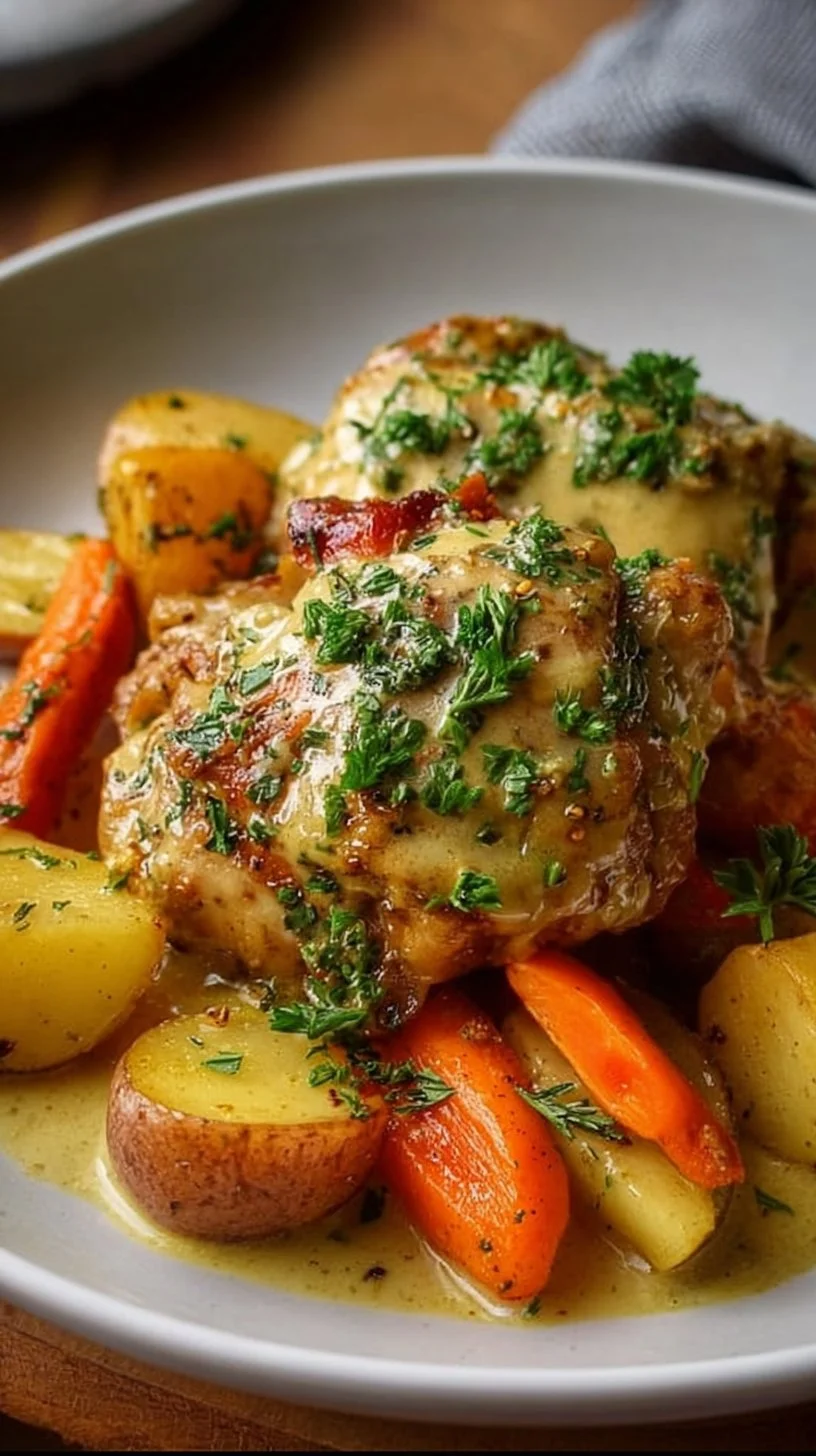
Creamy Baked Dijon Chicken Thighs
Introduction
As a nutrition specialist, I approach weeknight recipes with a focus on nutrient density, digestion-friendly composition, and sustainable eating patterns that support long-term wellness. Creamy Baked Dijon Chicken Thighs is a practical, comforting dish that balances protein, healthy fats, and roasted root vegetables — a combination that can support steady energy, satisfaction, and good digestion when eaten as part of an overall varied diet. For those who like to explore different textured and saucy baked chicken preparations, you might also enjoy a classic variation like baked chicken cordon bleu, which similarly pairs protein with complementary sides to round out a meal.
In the sections that follow I’ll explain how this recipe supports overall wellness, walk through the exact method to make it, highlight the nutritional role of each main ingredient, discuss how the cooking method affects health, offer safe storage and reheating guidance, and answer common nutrition questions. My aim is to keep information evidence-based, practical, and easy to apply — focusing on digestion, balanced macros and micros, and making this dish fit into long-term healthy habits.
How this recipe supports overall wellness
This recipe combines bone-in, skin-on chicken thighs with a creamy Dijon sauce and a mix of root vegetables. From a wellness perspective, that mix provides:
- Protein: Chicken thighs offer a good amount of complete protein, important for muscle maintenance, immune function, and repair. Including protein at meals helps with satiety and steady blood sugar levels.
- Balanced fats: The recipe uses olive oil and heavy cream, plus the chicken skin, which together provide a mix of monounsaturated and saturated fats. When consumed in moderation and balanced with vegetables and whole grains, these fats support absorption of fat-soluble vitamins and provide an enjoyable mouthfeel that encourages satisfaction and adherence to healthy patterns.
- Fiber and micronutrients: Carrots, parsnips, potatoes, and red onion contribute fiber, potassium, vitamin A precursors (beta-carotene in carrots), vitamin C, and polyphenols that support digestive health and general nutrient intake.
From a digestion viewpoint, combining protein and fiber at a meal is helpful: protein slows gastric emptying modestly and paired fiber supports regularity and stable blood glucose responses. The simple spice blend (thyme, paprika, rosemary, garlic/onion powders) enhances flavor without relying on excess salt, which supports long-term cardiovascular health when overall sodium intake is moderated.
Portion and balance matter: pairing a reasonable portion of chicken and sauce with a generous vegetable serving, and adding a side of whole grains or leafy greens when needed, helps keep this dish nourishing and aligned with long-term wellness goals.
How to make Creamy Baked Dijon Chicken Thighs
Ingredients :
8 bone-in, skin-on chicken thighs, 1/2 cup Dijon mustard, 1/4 cup heavy cream, 1 tablespoon olive oil, 2 tablespoons honey, 1 teaspoon garlic powder, 1 teaspoon onion powder, 1 teaspoon dried thyme, 1 teaspoon paprika, Salt and freshly ground black pepper, to taste, 2 medium carrots, peeled and cut into 1-inch pieces, 2 parsnips, peeled and cut into 1-inch pieces, 2 medium Yukon Gold potatoes, cut into 1-inch cubes, 1 medium red onion, cut into wedges, 1 tablespoon olive oil, 1 teaspoon dried rosemary, Salt and freshly ground black pepper, as needed
Directions :
Set oven temperature to 400°F (205°C) and allow to fully preheat., Combine carrots, parsnips, potatoes, and red onion in a large bowl. Drizzle with olive oil, sprinkle with rosemary, salt, and pepper. Mix well, then spread evenly in a large baking dish., In a separate bowl, whisk together Dijon mustard, heavy cream, olive oil, honey, garlic powder, onion powder, thyme, paprika, salt, and pepper until smooth and fully blended., Pat chicken thighs dry with paper towels. Arrange thighs skin side up over the vegetables in the baking dish. Brush liberally with the prepared Dijon cream sauce, ensuring the thighs are well coated., Place the baking dish on the middle rack. Bake uncovered for 40–45 minutes or until chicken is cooked through, golden, and juices run clear when pierced. Vegetables should be tender., Switch oven to broil for 2–3 minutes, watching closely, to further brown chicken skin if desired., Allow chicken to rest for 5 minutes before serving. Plate with roasted vegetables and spoon over pan sauce as desired.
This recipe is straightforward and well-suited for home cooks. The roasting method concentrates flavors and makes the most of simple seasonings. The resting step at the end preserves juiciness and helps the sauce settle so it can be spooned over the vegetables.
Nutrient roles of each main ingredient
Understanding what each ingredient contributes can help you adapt portions to your goals while keeping the dish balanced.
- Chicken thighs (bone-in, skin-on): Serve as the primary protein source and provide iron, zinc, and B vitamins (especially B12 and niacin). The bone and skin add flavor and can slightly slow cooking, which helps retain moisture. Skin contributes fats that increase satiety; if you’re watching saturated fat intake, you might remove the skin after cooking or choose leaner cuts occasionally.
- Dijon mustard: Offers robust flavor with minimal calories and sodium compared with creamy condiments. Mustard contains vinegar and mustard seed compounds that some people find stimulating to digestion (it can encourage salivation and gastric secretions), which can support the eating experience for many.
- Heavy cream: Adds fat for a silky sauce and supports absorption of fat-soluble nutrients in the meal. Heavy cream is calorie-dense; using the listed 1/4 cup across 8 thighs provides richness without overly inflating per-serving saturated fat when portioned sensibly.
- Olive oil: A source of monounsaturated fat and vitamin E; it’s been associated with heart-healthy dietary patterns when it replaces saturated fats and is consumed within an overall balanced diet.
- Honey: A small amount of simple sugar for balance and caramelization. It provides quick energy but should be used modestly in regular meals.
- Vegetables (carrots, parsnips, Yukon Gold potatoes, red onion): These root vegetables give fiber, complex carbohydrates for steady energy, potassium, vitamin A precursors, and antioxidants. The fiber supports digestive regularity and provides substrate for gut microbes, which is beneficial for long-term gut health.
- Herbs and spices (thyme, rosemary, paprika, garlic/onion powders): Add bioactive compounds and flavor without adding calories; herbs can also contribute trace antioxidants that support overall dietary quality.
If you’re interested in similar chicken-and-cream flavor profiles prepared with different techniques, try recipes like parmesan-crusted chicken with creamy garlic sauce, which emphasizes a crisp coating and creamy accompaniment.
The preparation method & its health impact
Roasting is a gentle, dry-heat method that preserves nutrients in vegetables better than boiling and concentrates natural flavors, which often reduces the need for added salt. Leaving the chicken bone-in and skin-on during cooking helps the meat stay moist, decreasing the tendency to overcook — overcooking can toughen proteins and reduce palatability, which can lead to less satisfaction and poorer adherence to healthy eating.
Baking the vegetables beneath the chicken allows juices and pan sauce to mingle with the vegetables, enhancing flavor without needing extra butter or cream on the sides. Broiling briefly at the end browns the skin, improving texture and sensory satisfaction, but watch closely to avoid charring; excessive charring can create bitter flavors and produce compounds best limited in regular intake.
From a digestion standpoint, roasting makes vegetables softer and often easier to chew and digest than raw versions, which can be helpful for people with dental or digestive sensitivity. Combining protein and fiber in the same dish helps moderate post-meal glucose responses and supports fullness.
Ways to lighten, enrich or modify the dish nutritionally
This recipe is already balanced, but here are evidence-based, practical modifications depending on your goals:
To lighten:
- Reduce heavy cream to a smaller amount and substitute half with plain low-fat yogurt added off-heat to avoid curdling. Note: this is a modification idea; do not change the original recipe as written when preparing it.
- Remove chicken skin after roasting to cut saturated fat while retaining flavor during cooking.
- Increase the ratio of vegetables to chicken to boost fiber and lower the meal’s overall energy density.
To enrich nutrients:
- Add a handful of chopped leafy greens (e.g., baby spinach) tossed into the baking dish for the last 5–8 minutes to increase vitamin K, folate, and magnesium.
- Scatter a tablespoon of toasted nuts or seeds over plated servings for additional healthy fats, vitamin E, and texture.
To adapt for different needs:
- For lower-carb eating, reduce the potato portion and add more non-starchy vegetables.
- For larger appetites or post-exercise recovery, serve with a whole grain (quinoa, farro) or a legume side for extra complex carbs and fiber — for instance, a small serving of farro pairs nicely and helps create a complete plate.
If you want a complementary pasta-based side or inspiration for pairing with creamy chicken flavors, consider a recipe like dreamy garlic butter chicken and bowtie pasta as an example of balancing a creamy protein with whole-grain or legume-based pasta.
Pairing ideas for a balanced, complete meal
To make a complete, nutrient-dense plate, aim to include:
- Non-starchy vegetables: A side salad of mixed greens, citrus segments, and a light vinaigrette adds freshness and vitamin C to aid iron absorption from the chicken.
- Whole grains or legumes: A modest serving of barley, brown rice, or lentils pairs well with the creamy sauce and adds fiber, B vitamins, and complex carbohydrates for sustained energy.
- Fermented or fresh vegetable condiment: A small scoop of sauerkraut or a quick cucumber-yogurt salad can introduce beneficial bacteria and extra moisture to aid digestion.
Portion guidance: a reasonable serving would be 1–2 chicken thighs depending on appetite and energy needs, with at least 1–1.5 cups of vegetables and a 1/2–1 cup cooked whole grain or legume if including a starch. Adjust based on personal calorie needs and hunger cues.
Safe storage, food safety & optimal reheating
Food safety is essential:
- Refrigerate leftovers within two hours of cooking. Store in an airtight container and consume within 3–4 days.
- For longer storage, freeze portions in freezer-safe containers for up to 2–3 months. Thaw in the refrigerator overnight before reheating.
Reheating tips to preserve texture and safety:
- Reheat in an oven at 325–350°F (160–175°C) until the chicken reaches an internal temperature of 165°F (74°C). This helps restore some crispness to the skin and warms the vegetables evenly.
- For quicker reheating, use a skillet over medium heat with a splash of water or olive oil, covering briefly to heat through, then uncover to crisp the skin.
- Avoid repeatedly reheating the same portion multiple times; reheat only what you plan to eat that sitting.
Always use a thermometer if unsure about internal temperatures to ensure safe consumption.
Common nutrition questions about this dish
Q: Is the heavy cream a problem for heart health?
A: Heavy cream is calorie-dense and contains saturated fat, so regular large servings could affect overall saturated fat intake. However, when used in moderation as in this recipe and balanced with vegetables and whole foods, it contributes to enjoyment and satiety. If you need to lower saturated fat, use smaller amounts or occasionally substitute lower-fat dairy, noting that texture and flavor will change.
Q: Is chicken skin unhealthy?
A: Chicken skin contains more fat, including saturated fat, than skinless meat. Eating skin occasionally as part of an overall balanced pattern is reasonable. If you want less fat, you can remove the skin after cooking or alternate between skin-on and skinless preparations.
Q: Will the honey spike blood sugar?
A: The small amount of honey in the sauce provides sweetness but is distributed across servings. Paired with protein, fiber, and fat in this dish, the glycemic effect is moderated. If you’re monitoring carbohydrate intake closely, reduce or omit honey and rely on natural roasting caramelization for sweetness.
Q: Is this meal good for digestion?
A: Yes — it combines protein with fiber-rich root vegetables and is roasted to a tender texture, which can be easier to digest than raw alternatives. Eating mindfully, chewing thoroughly, and including hydrating beverages support digestion further.
Final wellness notes
This recipe is a practical example of how flavor, satisfaction, and nutrient balance can coexist. Choosing a mix of protein, healthy fats, and fiber-rich vegetables supports steady energy, aids digestion, and helps create meals you’ll want to repeat — a key part of building long-term healthy habits. Small choices like increasing vegetable portions, moderating creamy components when needed, and including whole grains or legumes when appropriate make this a versatile dish for many goals. Enjoy it as part of a varied diet that emphasizes whole foods, mindful eating, and the pleasure of shared meals.
Conclusion
If you want to explore similar variations and techniques for creamy Dijon chicken at home, this Creamy Dijon Chicken – Budget Bytes recipe offers a simple skillet-focused approach that emphasizes budget-friendly ingredients. For a low-carb version with comparable flavors, see Creamy Dijon Chicken Thighs – Keto Cooking Christian, which adapts the profile for ketogenic patterns. To compare timing and stovetop techniques for a quick weeknight option, the 30-Minute Chicken Dijon with Creamy Sauce – Familystyle Food page demonstrates an efficient skillet method that may fit busy evenings.
Creamy Baked Dijon Chicken Thighs
Ingredients
Method
- Set oven temperature to 400°F (205°C) and allow to fully preheat.
- Combine carrots, parsnips, potatoes, and red onion in a large bowl. Drizzle with olive oil, sprinkle with rosemary, salt, and pepper. Mix well, then spread evenly in a large baking dish.
- In a separate bowl, whisk together Dijon mustard, heavy cream, olive oil, honey, garlic powder, onion powder, thyme, paprika, salt, and pepper until smooth and fully blended.
- Pat chicken thighs dry with paper towels. Arrange thighs skin side up over the vegetables in the baking dish.
- Brush liberally with the prepared Dijon cream sauce, ensuring the thighs are well coated.
- Place the baking dish on the middle rack. Bake uncovered for 40–45 minutes or until chicken is cooked through, golden, and juices run clear when pierced. Vegetables should be tender.
- Switch oven to broil for 2–3 minutes, watching closely, to further brown chicken skin if desired.
- Allow chicken to rest for 5 minutes before serving. Plate with roasted vegetables and spoon over pan sauce as desired.