Easter Poke Cake
Introduction
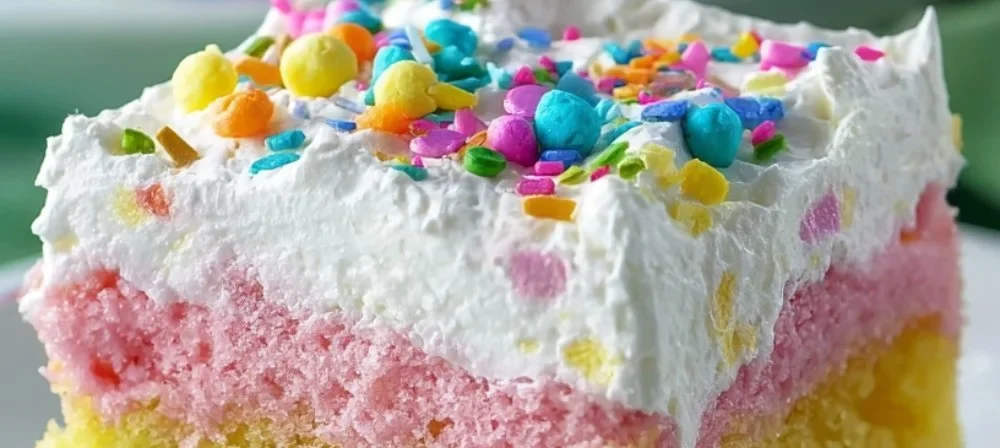
This Easter Poke Cake is a study in deliberate contrast: a commercial white cake base that provides predictable structure paired with a brightly flavored gelatin infusion that saturates the crumb and delivers concentrated pockets of sweetness. The technique is straightforward but exacting — it relies on controlled oven heat, precise timing during cooling, and a purposeful method for introducing the gelatin so the matrix of the cake accepts and retains it. For cooks who want to understand how packaged components can be elevated through technique, examining this recipe alongside similar cake-mix preparations — such as Easter cake-mix cookie bars — clarifies how standardized mixes can be transformed into layered, textured desserts with professional results.
The culinary logic behind this dish
A poke cake converts a simple sheet cake into a hybrid between a sponge and a molded dessert. The white cake mix yields a tender, leavened matrix with a relatively fine crumb and predictable hydration. Poking holes creates channels through that crumb so a flavored liquid — here, dissolved gelatin — penetrates the interior rather than only residing on the surface. Gelatin functions both as a carrier of flavor and as a setting agent; once chilled, it firms the cake’s interior and provides a contrasting, slightly denser mouthfeel against the soft crumb. The whipped topping adds a creamy, aerated layer that tempers the gelatin’s sweetness and contributes a glossy, visual finish. Each component addresses a texture or flavor role: structure, moisture, concentrated flavor, and a cooling, creamy finish.
How to make Easter Poke Cake
The procedural logic is sequential and temperature-sensitive. Begin by assembling the dry and wet ingredients for the cake: this controls hydration and aeration during mixing. The batter should be combined to develop structure without overworking the starch-protein network; the specified two minutes of beating achieves adequate incorporation of air while minimizing gluten overdevelopment. Baking per package instructions delivers a uniform crumb — do not underbake, as an under-set crumb will collapse when liquid is introduced.
After a brief 10-minute cooling period, the cake is still warm enough to accept the gelatin more readily; warmth increases crumb permeability and encourages the gelatin to wick into the channels created by poking. Dissolving the gelatin in boiling water ensures full solubilization; adding cold water reduces the temperature so the liquid is warm rather than scalding when poured. Use a skewer or fork to create consistent holes across the surface — spacing and depth determine how evenly the gelatin distributes. Pour the gelatin slowly, allowing it to fill cavities rather than pooling unevenly. Refrigeration for at least two hours is essential to allow the gelatin to set and to harmonize temperature across components before topping with whipped cream and fresh berries for garnish.
Ingredients :
- 1 box of white cake mix
- 1 cup water
- 1/3 cup vegetable oil
- 3 large eggs
- 1 (3 oz) box of strawberry or raspberry gelatin
- 1 cup boiling water
- 1 cup cold water
- 1 container of whipped topping
- 1 cup fresh strawberries or raspberries for garnish
Directions :
- Preheat the oven to 350°F (175°C). Grease a 9×13 inch baking dish.
- In a bowl, combine cake mix, water, oil, and eggs. Beat for 2 minutes.
- Pour batter into the prepared pan and bake according to package instructions.
- Once baked, remove from the oven and let cool for 10 minutes.
- Meanwhile, dissolve gelatin in boiling water, then stir in cold water.
- Use a skewer or fork to poke holes all over the top of the cake.
- Pour the gelatin mixture over the cake, ensuring it fills the holes.
- Allow the cake to chill in the refrigerator for at least 2 hours.
- Before serving, spread the whipped topping over the cake and garnish with fresh strawberries or raspberries.
Ingredient analysis through a chef’s lens
- White cake mix: Industrially balanced for moisture, sweetening, and leavening, it provides consistency. Its low fat content compared to scratch cakes means the crumb will absorb liquids readily — an advantage when infusing with gelatin.
- Water and vegetable oil: Water hydrates dry components and activates leaveners; oil contributes to tenderness and shelf stability. Oil-based fats prevent firming in refrigeration versus butter, which can solidify and alter mouthfeel.
- Eggs: Provide emulsification, structure, and steam-based lift. The specified three eggs supply protein for coagulation and help stabilize the crumb against the subsequent gelatin infusion.
- Gelatin: Acts as both flavor vehicle and setting agent. Dissolved in hot water, gelatin molecules uncoil and, on cooling, re-associate into a network that traps water and flavor compounds.
- Boiling and cold water: The two-stage hydration ensures full gelatin bloom and reduces temperature to a safe pouring level that won’t denature the whipped topping or scorch the cake.
- Whipped topping: Provides a stable, cool finish that complements the set gelatin; commercially stabilized toppings resist weeping and maintain appearance during display.
- Fresh berries: Deliver acidity, texture, and aromatic compounds that cut sweetness and add freshness; their color also creates visual contrast.
Kitchen workflow & technique breakdown
A disciplined mise en place is essential. Pre-measure the dry and wet ingredients, and preheat the oven to 350°F (175°C) so the cake enters a stable thermal environment. Grease the 9×13 pan uniformly; a light oil spray or room-temperature softened fat applied with a pastry brush prevents adhesion without pooling. When combining cake mix, water, oil, and eggs, follow the two-minute beating instruction precisely: this timeframe incorporates air and hydrates starches without developing excess gluten. Overbeating will yield a denser crumb after baking; underbeating leaves pockets of unmixed dry components.
Transfer batter evenly into the dish, using a spatula to level the surface for uniform rise. Bake according to the package to reach a stable set — test for doneness with a toothpick in the center; it should come out with just a few moist crumbs, not wet batter. After removing from the oven, the 10-minute cooling period allows the crumb to contract slightly, stabilizing the channels to be created. While cooling, dissolve the gelatin in 1 cup boiling water until clear and free of granules; cooling it with 1 cup cold water reduces temperature and prevents thermal shock when poured.
Create an even pattern of holes using a skewer, fork, or even the handle of a wooden spoon; aim for consistent depth to the pan’s underside without piercing through. Pour the gelatin mixture in a slow, steady stream, concentrating over each hole to ensure the liquid is absorbed rather than running off the surface. If the gelatin is too hot, it will partially cook proteins at the surface and create an undesirable texture; if too cool, it will gel before penetrating. Refrigerate the pan flat for at least two hours to allow uniform setting. For related technique on managing large, tray-style baked goods, review comparative preparations such as cake-mix cookie bars to see how bulk handling and cooling affect final texture.
Texture control, heat management & timing
Texture results from controlling heat and timing at three junctures: baking, cooling before infusion, and chilling after infusion. Oven calibration is critical; a variance of 15–25°F will alter crumb set and porosity. Use an oven thermometer and adjust rack placement so the cake bakes evenly without excessive browning. Cooling for exactly 10 minutes is purposeful: the crumb is still warm enough to accept liquid but stable enough not to collapse. Poke depth determines whether gelatin sits in surface cavities or permeates the crumb; uniform holes produce consistent mouthfeel across servings.
Managing gelatin temperature is equally important. Gelatin dissolved in boiling water must be tempered to warm — not hot — when poured. If it is too hot, it will redistribute heat aggressively, risking an overly moist, soggy top layer; if too cool, it will gel on contact and sit on the surface rather than infusing. Chilling for a minimum of two hours allows the gelatin network to form and equilibrate with the cake’s moisture. Longer refrigeration further firms the set, but extended cold exposure can cause whipped topping to become chilled and lose aeration; add the whipped topping just prior to service to keep it light.
Professional variations
Variations can be executed while respecting the recipe’s ingredient list and procedural order. Use the same strawberry or raspberry gelatin but intensify fruit presence by macerating a portion of the berries and spooning them on the whipped topping at service — this adds natural juices and texture without changing the base technique. For a more refined finish, strain the dissolved gelatin to ensure clarity before pouring. To increase visual appeal, pipe the whipped topping using a flat or star tip into uniform swirls, and place berries strategically to create a deliberate color and texture contrast. For service in a professional setting, keep the pan chilled and slice with a hot, dry knife between servings to preserve clean edges.
Finishing touches & plating philosophy
The whipped topping should be spread with a light hand to preserve the set gelatin beneath. Use an offset spatula to create a smooth, even surface or a small patterned sweep for texture. When garnishing, consider balance: one berry per serving or a small cluster along a diagonal creates compositional interest and distributes acidity. For plates, present a single square with a small spoonful of additional fresh berries and a minimal swipe of reduced berry syrup (if available) to echo the gelatin’s flavor. Keep portion sizes consistent; this dessert’s sweetness and density benefit from measured squares rather than oversized servings.
Maintaining quality after cooking
Refrigeration is mandatory once assembled. Store covered to prevent absorption of other refrigerator odors and to minimize dehydration. The set gelatin will hold its structure for 48–72 hours, though the cake’s crumb will gradually soften as moisture migrates. The whipped topping is best applied close to service; if applied early, a stabilized topping will fare better than a fresh whip, which can collapse and weep. To refresh slightly dried edges, cover the pan tightly with plastic wrap and allow it to sit at refrigerator temperature for several hours to redistribute moisture before serving.
Questions from home cooks (chef answers)
Q: Can I use fresh fruit juice instead of cold water when preparing the gelatin?
A: Fresh juice can augment flavor but dilutes the gelatin if substituted directly for the cold water called for in the recipe. If you use juice, ensure the total liquid volume and the gelatin concentration remain sufficient to set. Using juice in small percentages as part of the cold water can increase aroma without risking gel failure.
Q: How deep should I poke the holes?
A: Depth should reach most of the way through the crumb but stop short of the pan’s bottom to maintain structural integrity. Aim for holes approximately two-thirds to three-quarters of the cake’s depth; consistent depth yields consistent infusion.
Q: Will the cake be soggy after pouring the gelatin?
A: Properly baked and cooled cake will absorb the gelatin into the crumb, resulting in a set, moist interior not a soggy one. Excessively hot gelatin or extremely shallow holes can cause surface pooling and sogginess. Slow pouring and correct gelatin temperature mitigate that risk.
Q: Can I make this ahead for a gathering?
A: Yes. The cake can be completed up to 24–36 hours in advance if stored correctly. Apply whipped topping within a few hours of service for best presentation.
Final chef notes
This recipe leverages commercial consistency as a foundation for technique-driven refinement. The critical controls are heat, timing, and the state of the gelatin at the moment of contact with the cake. Execute each stage with intention: calibrated oven, disciplined mixing, consistent poking, and measured chilling. Attention to those variables yields a dessert that is visually appealing, texturally balanced, and reliable in professional or home environments.
Conclusion
For an example of a variation and additional presentation ideas, see the detailed walkthrough at Easter Poke Cake – OMG Chocolate Desserts, which explores decorative finishes. If you want an alternative take on using cake mixes in tray-baked desserts, consider the methods described in Easter Poke Cake | Wishes and Dishes, where texture and layering are emphasized. For further inspiration on styling and piping techniques that complement this dessert, review the composed plating suggestions at Easter Poke Cake – Amanda’s Cookin’ – Cake & Cupcakes.
Easter Poke Cake
Ingredients
Method
- Preheat the oven to 350°F (175°C). Grease a 9×13 inch baking dish.
- In a bowl, combine white cake mix, water, vegetable oil, and eggs. Beat for 2 minutes.
- Pour batter into the prepared pan and bake according to package instructions.
- Once baked, remove from the oven and let cool for 10 minutes.
- Dissolve gelatin in 1 cup boiling water, then stir in 1 cup cold water.
- Use a skewer or fork to poke holes all over the top of the cake.
- Pour the gelatin mixture over the cake, ensuring it fills the holes.
- Allow the cake to chill in the refrigerator for at least 2 hours.
- Before serving, spread the whipped topping over the cake.
- Garnish with fresh strawberries or raspberries.