Lemon Blueberry Cake
Introduction
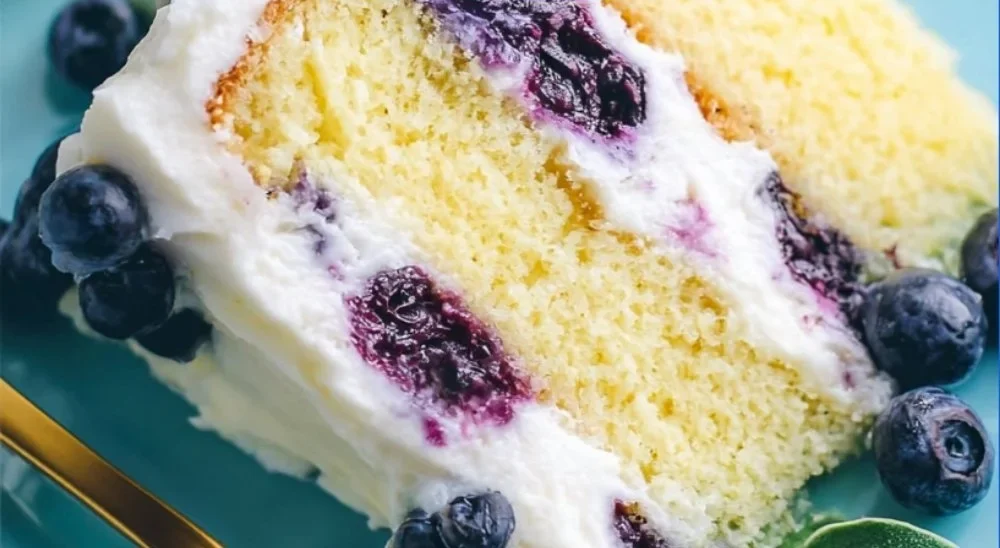
There are cities that arrive soft as a memory and others that batter you awake; Sofia is of the former kind, with afternoons that slip golden through lime trees and a market where apricots are sold by the fistful. When I first encountered a lemon blueberry cake here, it was at a small café tucked behind the National Gallery—a place where grandmothers sipped coffee like a ritual and a young baker had returned from study abroad carrying recipes threaded with two worlds. The cake sat on a wide plate, its surface dotted with little indigo moons and a glaze that caught the light like river glass. The first bite was sun on the tongue: tartness that sang against gentle sweetness, the faint perfume of lemon zest, and blueberries that burst like miniature confidences. In that moment, I thought of how travel compresses time—how a familiar fruit can anchor a stranger’s memory to a particular street corner. For a recipe that seems purely domestic, the Lemon Blueberry Cake carries the geography of taste: northern orchards, coastal lemon markets, and markets where both fruits arrive as seasonal rumor and sudden abundance. If you want a companion to this narrative, consider how other simple bakes shape afternoons elsewhere, like the humble cake-mix cookie bars that anchor many kitchens in practicality and nostalgia.
The origin story & regional influence behind this dish
Lemon and blueberry are not an accidental pairing. The bright acidity of citrus has long been used across Mediterranean and continental Europe to cut richness and preserve summer’s brightness; blueberries—wild in forests from the Americas to northern Europe—bring a late-summer sweetness that is both delicate and profuse. The Lemon Blueberry Cake is a kind of culinary palimpsest, its layers bearing traces of many traditions: the English love of fruit-spotted cakes that journeyed with colonizers and immigrants; the French penchant for tart contrasts and silky creams; and the American devotion to the layer cake as a celebration cake, unpretentious yet capable of great ceremony.
In regions where lemons are temple-bright and ubiquitous—Sicily, the Amalfi Coast, parts of southern France—the citrus note in cakes reads as sun and sea: clean, luminous, almost salt-tinged in memory. In cooler, forested locales that favor wild berries, the blueberry offers a woodland sweetness that evokes foraging walks and the weight of jars simmering on stovetops. The modern Lemon Blueberry Cake lives at the intersection of these worlds, a bridge between orchard and thicket, and between the kitchen as workshop and the kitchen as house of memory.
How to make Lemon Blueberry Cake
To make a lemon blueberry cake is to perform a small rite of domesticity: you gather, you fold, and you wait as chemistry turns batter to crumb. The process feels slow in the best way—an uncrowded choreography where each movement invites reflection on the people who taught you to stir, to zest, to cool. In many kitchens I have visited, the act of making such a cake is accompanied by conversation about weddings, births, arguments smoothed over with shared slices, and the recipes kept in old notebooks. The making of this cake is less about precision and more about attention: to the scent of lemon peel releasing its volatile oils, to the soft indentation a fingertip leaves in cooled cake, to the quiet relief of butter and sugar becoming something light and forgiving.
Ingredients :
2 cups all-purpose flour, 1 1/2 cups sugar, 1/2 cup unsalted butter, softened, 1 cup milk, 3 large eggs, 2 teaspoons baking powder, 1/2 teaspoon salt, 1 tablespoon lemon zest, 1 cup blueberries, 1 cup lemon curd, 1 cup mascarpone cheese, 1/4 cup powdered sugar, 1 teaspoon vanilla extract
Directions :
- Preheat your oven to 350°F (175°C) and grease two 9-inch round cake pans., 2. In a large bowl, cream together the softened butter and sugar until light and fluffy., 3. Add the eggs one at a time, mixing well after each addition., 4. Stir in the milk and lemon zest., 5. In another bowl, whisk together the flour, baking powder, and salt. Gradually add the dry ingredients to the wet mixture, mixing until just combined., 6. Gently fold in the blueberries., 7. Divide the batter between the prepared pans and smooth the tops., 8. Bake for 25-30 minutes or until a toothpick inserted in the center comes out clean., 9. Allow the cakes to cool completely in the pans before transferring to a wire rack., 10. To make the frosting, whip the mascarpone cheese with powdered sugar and vanilla extract until smooth., 11. Layer the cakes with lemon curd between them and frost the top and sides with the mascarpone frosting., 12. Serve and enjoy your delicious lemon blueberry cake!
(The above list is as simple and exact as the recipe should be—no need for embellishment beyond the reverence due to the hands that move through it.)
Ingredients through a cultural & historical lens
Each ingredient carries a history. Flour is the quiet scaffold of agrarian societies—the grain variety, the millstone, the rhythm of harvest; sugar is the complicated traveler, its sweetness braided with histories of trade and colonization; butter is a product of animals and season, of churn and cold barns. Milk and eggs whisper of households with small flocks and routine chores. Lemon zest is a perfume of place—grown in groves warmed by particular suns and soil. Blueberries, once foraged by Indigenous peoples and later cultivated on a mass scale in North America, bring a wild note that pairs with modern agriculture. Mascarpone points to Italian dairy traditions; its silkiness evokes Lombardy kitchens where cream thickens with patient hands. Powdered sugar and vanilla finish the narrative with comforts of global exchange: sugar refined and spices traded across oceans.
When you assemble these ingredients, you are assembling histories as much as flavors. In certain regions, adaptations happen: the sugar might be raw cane in tropical places; the butter might be cultured in lands that favor tang; the milk could be sheep or goat in Mediterranean contexts, adding a faint rustic tang. These shifts remind us that a recipe is a conversation across time and borders.
Cooking the dish: sensory notes & traditional techniques
The sensory music of a lemon blueberry cake is composed in layers. The first chord is citrus: when you zest a lemon, tiny oils spray into the air and transform a room for a moment—sharp, floral, almost electric. The batter, once butter and sugar have been creamed into lightness, becomes a velvet runway for the blueberries: they sink, bob, and then, in the oven’s dry heat, they bloom—little pockets of purple sweetness that stain the crumb like watercolor. The crust gets the faintest suggestion of caramelization around the edges, while the interior holds a moist, yielding crumb that yields under a spoon the way a well-loved book’s spine softens.
In many homes I have visited, the traditional technique is not measured in grams but in gestures: the way a grandmother rubs zest into her palm to release oils, the respectful pause to cool before slicing, the ritual of spreading lemon curd as one might spread a letter’s margin with affection. The mascarpone frosting, whipped to a silken finish, acts like a gentle bridge between tart lemon and soft blueberry—its texture is a whisper of cream that anchors the cake rather than adjudicates between the flavors.
For those who grow their own fruit, the cake acquires another layer of time and place. Wild blueberries impart a firmer texture and a floral perfume that domestic berries sometimes lack. Homegrown lemons, with thicker peels and an intense aroma, can make the cake resonate with a region’s sunlight long after the season has passed.
How different regions prepare their version
Cross-country and cross-coast, the Lemon Blueberry Cake bends to local customs. In the American Northeast, where blueberries are a near-sacred late-summer harvest, the cake often leans into rustic abundance: heavier with berries, sometimes baked in a single deep pan and slathered with lemon glaze that runs like ribbon down the sides. In Mediterranean climates, bakers might enrich the batter with olive oil for a silken crumb and a faintly peppery undertone, and the lemon presence can be more pronounced, sung loudly by the zest or a ribbon of curd.
In Northern Europe, where cream and dairy rule, mascarpone might be swapped with thickened crème fraîche or whipped cream, lending a tang that balances the lemon. In places where sugar is used sparingly, bakers rely on the fruit’s natural sweetness and use lemon curd sparingly as a nod, rather than a flood, of sweetness. Some home bakers incorporate almond flour into parts of the batter, a practice learned from regional nut-cake traditions, which adds a nutty weight that contrasts with the blueberries’ brightness. Elsewhere, variations may lean toward convenience—sheet cakes and single-layer versions that feed a crowd—echoing the same comforting ethos found in a kitchen that favors simple sheet-cake traditions for community gatherings.
Traditional ways this dish is shared or served
Layer cakes like this one are not merely desserts; they are ceremonial objects. They appear at birthdays, weddings, Sunday lunches, and impromptu teahours where conversation is dense and the air is scented with citrus. In some villages, a lemon-scented cake is offered to neighbors as a token after a harvest, or brought to weddings where the couple’s first shared slice is both symbolic and delicious. In cafés, a slice is often paired with a small, robust coffee or a bright tea—each cup a counterpoint to the cake’s sweet-tart score.
The cake also travels well. Bakers will wrap it for train journeys, slices cushioned with paper, and it will be shared in picnic groves, on ferry decks, atop dusty mountain paths. Its portability makes it a companion to travel stories: a slice eaten on a bus, the warmth of cake against the spine of a passport.
Storing the dish without losing its cultural essence
Storing this cake is an act of care. Refrigeration preserves the mascarpone’s silk but can also chill the flavors into quietness; many will remove a slice to come to room temperature before serving, releasing the lemon’s perfume again. If meant to last, the cake keeps best wrapped gently and stored in a cool place where the curd can settle without soaking the crumb too dramatically. Freezing slices—individually wrapped—has become a modern convenience; when thawed, the cake retains much of its soul, though purists may argue that the fresh-cracked zest and the immediate, sunlit burst of berry cannot be truly recreated.
Culturally, the act of storing or sharing the cake reveals values: communities that share a cake fresh and warm emphasize immediacy and presence; those who save slices for later practice thrift and prolonged remembrance. Both are forms of reverence.
Cultural questions people often ask
People ask if this cake is “traditional.” The answer is: tradition is a living thing. While the Lemon Blueberry Cake may not be centuries old in its current form, it draws on centuries of practice—flour milling, citrus cultivation, berry foraging, cream-making. People wonder about substitutions: can mascarpone be replaced? Yes, but the swap changes the narrative; each ingredient carries context. Others ask when to serve it: any time is a good time, though it is particularly resonant in late spring and summer when lemons feel like sunlight and blueberries taste like fields.
Travelers often ask where to find the best versions. The truth is that the best cake is often the one associated with a story—the grandmother who always adds an extra spoonful of curd, the baker who tosses berries in flour to keep them from sinking, the café owner who names a slice after a neighborhood. Those human details are what make a recipe travel-worthy.
A closing note on food, memory & travel
Food is the most economical form of storytelling: a slice carries a city, a sermon, a recipe folded into an apron, and a child’s sticky fingers at a kitchen table. The Lemon Blueberry Cake is modest and worldly; it wears many faces and is at home in markets and galleries, in seaside homes and mountain cabins. When I travel now, I look for that particular intersection of tart and sweet as a way to measure place—the lemon as light, the blueberry as an echo of the land, and the cake itself as a way to hold time still for a moment.
Conclusion
If you want to explore modern takes and detailed step-by-step photos, many bakers have adapted this balance of lemon and blueberry into layered presentations; one beautiful interpretation is offered by Sally’s Baking, which highlights the layered, celebratory aspect of the cake. For a slightly different approach that emphasizes balance and texture, take a look at Preppy Kitchen’s blueberry lemon cake, where method and aesthetic meet in a way that honors both tradition and contemporary taste.
Lemon Blueberry Cake
Ingredients
Method
- Preheat your oven to 350°F (175°C) and grease two 9-inch round cake pans.
- In a large bowl, cream together the softened butter and sugar until light and fluffy.
- Add the eggs one at a time, mixing well after each addition.
- Stir in the milk and lemon zest.
- In another bowl, whisk together the flour, baking powder, and salt.
- Gradually add the dry ingredients to the wet mixture, mixing until just combined.
- Gently fold in the blueberries.
- Divide the batter between the prepared pans and smooth the tops.
- Bake for 25-30 minutes or until a toothpick inserted in the center comes out clean.
- Allow the cakes to cool completely in the pans before transferring to a wire rack.
- To make the frosting, whip the mascarpone cheese with powdered sugar and vanilla extract until smooth.
- Layer the cakes with lemon curd between them and frost the top and sides with the mascarpone frosting.
- Serve and enjoy your delicious lemon blueberry cake!