Homemade Starbucks Copycat Cranberry Bliss Bars
Introduction
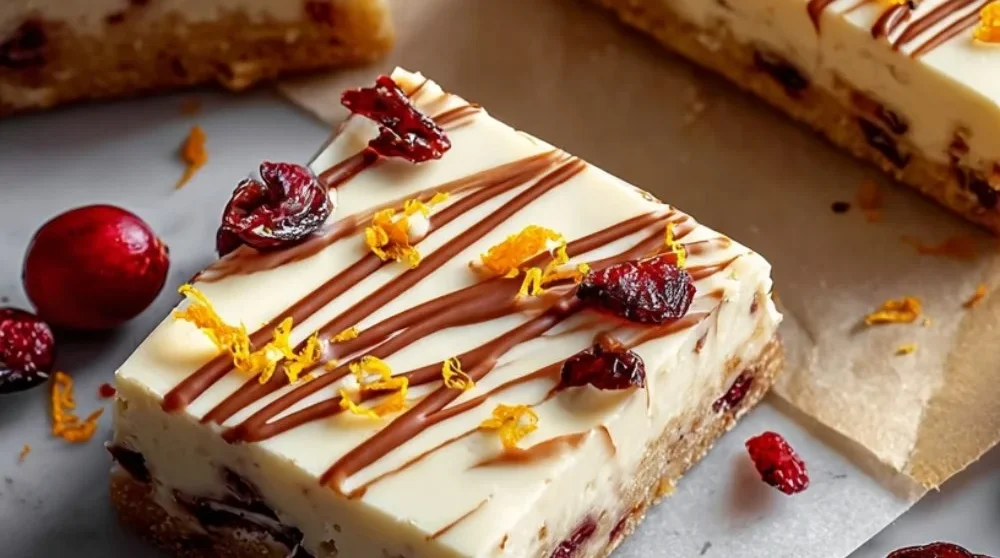
There are recipes that arrive like a postcard from somewhere you have not yet been — an image, an aroma, a promise. The Cranberry Bliss Bar is one of those edible postcards. I first encountered it in the warm gloss of a December morning in a glass case beneath a hurried barista’s hands, the city outside yawning in winter light. The frosting was a pale, almost luminous layer, studded with ruby flecks of dried cranberry and flecks of white chocolate that seemed to catch the shop’s fairy lights. I thought I could taste a holiday market in Boston, a gust of coastal wind off the cranberry bogs of Cape Cod, and the human ritual of giving wrapped into a single square.
In my travels I have learned to read desserts the way a sailor reads wind: by texture, by scent, by the way a community folds a flavor into its calendar. If you like the idea of hybrid, convivial sweets that live between cake and cookie, there are kindred spirits across bakeries everywhere — for instance a cinnamon-forward riff I found in a different bliss bar that lived up to the name of its inspiration cinnamon roll bliss bars. These small pieces of pastry memory teach us how modern cafés create ritual: a seasonal offering becomes a tradition, and the recipe becomes something people adopt into kitchens far from the company’s first storefront.
The origin story & regional influence behind this dish
The Cranberry Bliss Bar has a modern American origin story, one that speaks to commerce and seasonality as much as to taste. Coffee shops popularized these dense, buttery bars as holiday specials, aligning them with the rituals of giving and gathering that peak in midwinter. Yet the ingredients themselves — tart cranberries, rich butter, and sweet white chocolate — are older and more geographically rooted. Cranberries are as native to North America as the map that shows Massachusetts like a thumb print; they were harvested by Indigenous peoples long before colonists arrived, used dried or fresh in a myriad of ways from stews to pemmican. The bar, then, is a contemporary meditation on a very old crop, a modern patisserie gloss over a fruit that carries the colder, marshy provinces of the northeast in its DNA.
At the cultural level, this bar is a lesson in how regions export flavor. A holiday item born in an urban café can carry the hinterland’s produce into dense city neighborhoods. It becomes a hybrid: a café’s upscale bar made with supermarket dried cranberries, and yet echoing a New England bog. Across the United States such bars are adapted at home; some households prefer the tartness amplified, others the sugar nudged down — each small choice marking a regional palate. The way Americans adopted packaged convenience into beloved home cooking mirrors other American favorites; sometimes that adoption is deliberate and celebratory and sometimes it is a happy accident akin to the invention of a popular cake mix cookie bars that stitches convenience into festivity.
How to make Homemade Starbucks Copycat Cranberry Bliss Bars
To make these bars is to perform a small domestic ritual. The oven’s hum, the weight of a wooden spoon against a glass bowl, the soft give when butter yields under a paddle — these are gestures that translate industry into intimacy. Begin by bringing the butter to a softened readiness, as if coaxing the very element of richness into a more yielding mood. When you combine brown and granulated sugars with butter, the aroma lifts and becomes molasses-warm, conjuring wrapped presents and the dim amber light of winter evenings. Folding dried cranberries into the batter is a moment of punctuation: those flecks of scarlet promise bright tartness against the dulled velvet of the bar. White chocolate chips, melted in the oven’s heat, become pearls of cream that puncture the tartness with a gentle, candy-sweet balm.
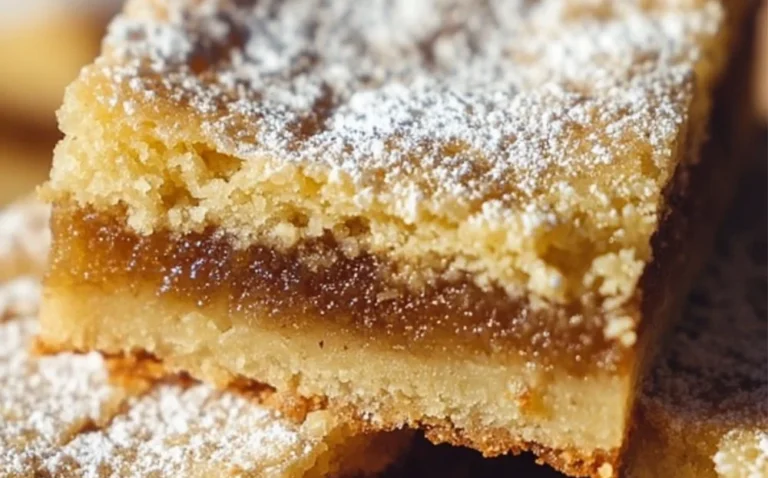
When they come from the oven, the bars have a fragrant, almost honeyed crust. Cooling them is an act of patience and civility; the frosting — a soft, tangy cream cheese spread — arrives like a benediction, smoothing the surface and catching tiny shards of cranberry on its wake. The finished bar is more than the sum of its parts: it is a texture of moments — crisp edges that give way, chew in the center, a velveteen frosting and occasional snap of white chocolate — and it carries a particular domestic warmth that makes it suitable for sharing at a kitchen island or wrapped in waxed paper for a friend’s holiday car ride.
Ingredients :
1 cup all-purpose flour, 1/2 teaspoon baking powder, 1/2 teaspoon salt, 1/2 cup unsalted butter, softened, 1 cup brown sugar, 1/2 cup granulated sugar, 2 large eggs, 1 teaspoon vanilla extract, 1 cup dried cranberries, 1/2 cup white chocolate chips, 1/2 cup cream cheese, 1 cup powdered sugar, 1 tablespoon milk, 1 teaspoon vanilla extract for frosting
Directions :
- Preheat your oven to 350°F (175°C) and grease a 9×13 inch baking dish., 2. In a bowl, combine flour, baking powder, and salt. Set aside., 3. In a large bowl, beat together the butter, brown sugar, and granulated sugar until creamy., 4. Add eggs one at a time, beating well after each addition, then stir in vanilla extract., 5. Gradually add the flour mixture to the wet ingredients, mixing until just combined. Fold in cranberries and white chocolate chips., 6. Spread the batter evenly into the prepared baking dish., 7. Bake for 25-30 minutes or until a toothpick inserted comes out clean. Let cool completely., 8. For the frosting, mix cream cheese, powdered sugar, milk, and vanilla until smooth. Spread over the cooled bars., 9. Slice into squares and serve.
Ingredients through a cultural & historical lens
Read ingredient lists like a map. Flour and sugar carry a global history of trade and labor; butter signals dairy traditions of temperate regions; cream cheese has the tang of New York and Pennsylvania dairying; white chocolate is a twentieth-century confection invention that traces the globalization of cocoa derivatives and milk solids into sweet forms. Dried cranberries map to a specific terroir: bogs, cold harvests, and the labor of drying fruit for long winters. Each ingredient is a node in a network — settlers adapting Indigenous crops, urban cafés translating rural produce into pastry products, grocery shelves offering convenience that enables the recipe to travel beyond its original storefront. The juxtaposition of tart fruit and sweet, lush frosting is an American holiday aesthetic, a flavor profile that declares “celebration” and “comfort” at once.
Cooking the dish: sensory notes & traditional techniques
The practice of making these bars is less about precision and more about mood and timing. The creaming of butter and sugar releases a heady scent of brown sugar’s molasses notes that immediately evokes kitchens where family and neighbors gather. Baking in a single pan is a communal technique: you create an object meant to be shared, then portioned. The toothsome crumb, the slight crust, the melting white chocolate are textures that speak to a particular American approach to dessert — one that balances chew and cream rather than seeking ethereal lightness. The frosting’s cool tang brushes the palate after the bar’s buttery warmth, much like a coastal wind after the heat of a sunlit day. In households where this bar became a fixture, the act of spreading frosting became as important as the first slice; families argue gently over how thick the frosting should be, and some insist on extra cranberries scattered on top as if stamping their family’s seal.
How different regions prepare their version
Local taste and pantry availability gently bend recipes. In New England, where cranberries are a regional pride, some cooks will substitute a portion of dried cranberries with chopped fresh ones in season, giving the bar piquant pockets of juice. In the Midwest, you might find a heartier sugar balance and the addition of nuts for heft. In the UK, cooks more often fold in glace cherries or swap white chocolate for milk chocolate to echo local preferences. Across the Pacific, Australian bakers might introduce macadamia nuts or use slightly less sugar, translating the bar into a drier, more biscuit-like experience. Even as the format remains the same — a tray-bake, squared and shared — the small regional gestures map to different agricultural histories and palate preferences, showing how one branded dessert can adapt when it becomes part of home cooking.
For another playful example of a bar that transforms fruit and chocolate into a festive tray-bake, consider how cherry and chocolate become the star in a different kitchen tradition: chocolate-covered cherry magic bars.
Traditional ways this dish is shared or served
The Cranberry Bliss Bar slipped into ritual as a holiday coffee companion, a plate at the office party, a carrier of goodwill in school bake sales. It is often plated alongside shortbread, spiced cookies, and steaming mugs of coffee or spiced tea. Families pass it around at potlucks and holiday gatherings; some wrap individual squares in parchment as hostess gifts, tied with twine and a sprig of evergreen. In many places, these bars mark transitions: the end of the workday, the start of a holiday weekend, the conclusion of a winter market. This is a dessert meant for sharing, for conversation, for music in the background and laughter that spills from one room to another.
Storing the dish without losing its cultural essence
Storage is both practical and ritual. Kept refrigerated, the frosting retains its cool creaminess and the bars maintain a dense, cohesive texture. For travel, wrap squares individually in waxed paper and tuck them into a tin lined with parchment; this preserves the intimacy of the gesture — a baked offering made portable. When reheating is desired, a quick warm in a low oven restores a memory of freshness, though the bar’s culture is most intact when shared at room temperature with a steaming cup of coffee. Preserving the cultural essence is less about temperature and more about the manner of presentation: served from a communal platter, passed around, or unwrapped as part of a meaningful exchange.
Cultural questions people often ask
People often ask whether an item like this is “authentic.” In a sense, culinary authenticity is a conversation rather than an absolute; a Starbucks copycat exists as homage and adaptation. Others ask if the bar can be “healthified.” Yes, but each alteration changes the pastry’s mood; reduce sugar at your own risk, and understand that the bar’s identity — festive, indulgent, communal — shifts with every swap. People wonder too about origins: who first thought to marry tart native fruit with white chocolate and cream cheese frosting? The answer is collective: harvest culture, café creativity, and marketing acumen all collide. Finally, many ask how to make the bar feel local: use regional butter, local-grown cranberries if available, and a jar of homemade jam in the frosting for a personal signature.
A closing note on food, memory & travel
A bar is a small, portable memory. It is the taste of a city’s morning, a coastal town’s harvest, a kitchen table at a family reunion. In my travels I have watched strangers become friends over shared squares and heard stories of childhood winters resurfacing with the first bite. Recipes like these enable us to carry place in our pockets, to fold the identity of a region — the cranberries of the northeast, the comfort of a cafe counter, the conviviality of holiday exchange — into something we can bake and share anywhere. They are reminders that food is a living archive, a way of bearing a landscape and a season across continents and into living rooms.
Conclusion
For home cooks who want to compare variations and step-by-step adaptations beyond my traveler’s reflections, Belle of the Kitchen offers a clear copycat approach that faithfully channels the café original as Belle of the Kitchen’s Cranberry Bliss Bars copycat, and for another interpretation with helpful notes you can see how seasoned bakers approach it at I Am Baker’s Cranberry Bliss Bars copycat.