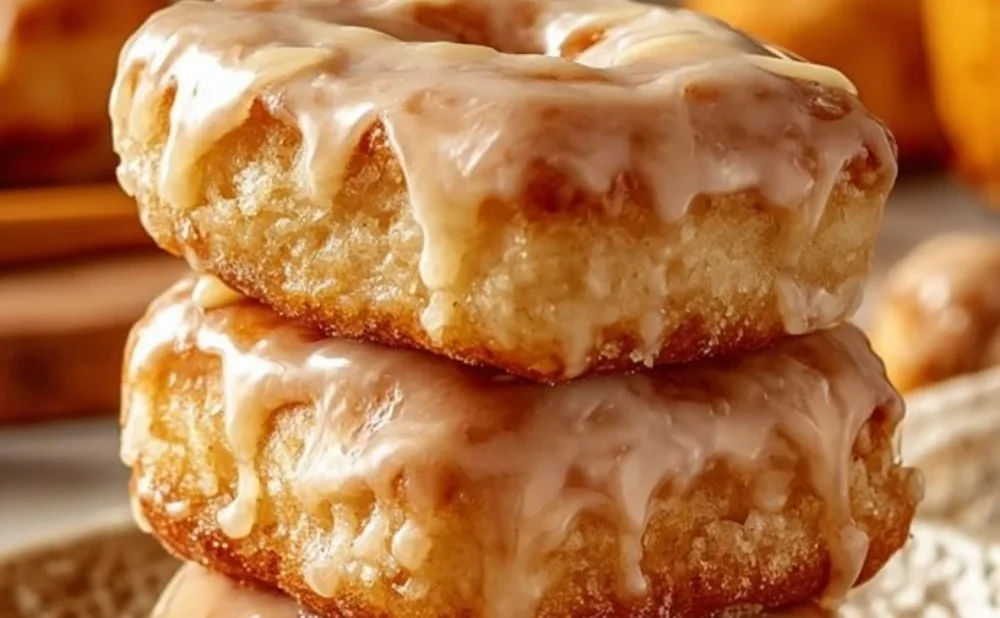
Easy Baked Donut Bars
Introduction
Easy Baked Donut Bars condense the structural logic of a classic donut into a sheet-baked format that favors even crumb development and efficient service. The method replaces individual frying with a single pan bake, which changes the thermal gradient and therefore the textural priorities: crust development becomes a thin, focused edge while crumb softness and uniform rise are the primary objectives. This piece will outline the technical choices that make these bars successful in both home and professional environments, and will reference complementary resources for broader recipe frameworks such as easy dinner recipes for context on streamlined preparation and timing.
The culinary logic behind this dish
Converting a yeast- or chemically-leavened donut into a bar form requires re-evaluating leavening distribution, batter hydration, and baking time. The formula provided uses chemical leavening—baking powder—paired with eggs and milk to create an aerated, cake-like crumb. Baking in a pan produces a larger mass that retains heat, so the recipe’s relatively short bake time (20–25 minutes) reflects a balance between achieving full starch gelatinization and preventing overbrowning at the edges. The glaze—powdered sugar and maple syrup—adds surface sweetness and a controlled hydration layer that seals in aroma while preserving a slight tackiness for toppings. Each ingredient functions not only for flavor, but for structural contributions: sugar for tenderness and browning, eggs for coagulation, and butter for mouthfeel and crumb lubrication.
How to make Easy Baked Donut Bars
Ingredients :
2 cups all-purpose flour, 1 cup granulated sugar, 1 tablespoon baking powder, 1/2 teaspoon salt, 2 large eggs, 1 cup milk, 1/4 cup melted butter, 1 teaspoon vanilla extract, 1 cup powdered sugar, 2 tablespoons maple syrup, Toppings of choice (sprinkles, chopped nuts, chocolate chips, etc.)
Directions :
- Preheat the oven to 350°F (175°C) and grease a baking pan., 2. In a large bowl, combine flour, sugar, baking powder, and salt., 3. In another bowl, whisk together eggs, milk, melted butter, and vanilla extract., 4. Pour the wet ingredients into the dry ingredients and mix until just combined., 5. Spread the batter into the prepared pan and bake for about 20-25 minutes or until a toothpick comes out clean., 6. For the glaze, mix powdered sugar and maple syrup until smooth., 7. Once the donut bars have cooled, drizzle the glaze on top and add customizable toppings as desired., 8. Slice into bars and serve.
The directions above must remain unchanged; they are concise, but every step implies specific technique that merits unpacking. Below I will examine the intent behind each instruction and provide precise execution guidance to improve consistency and texture.
Ingredient analysis through a chef’s lens
Flour: All-purpose flour sets the protein baseline. Its gluten potential will determine crumb resilience. In a batter like this, short mixing avoids overdeveloping gluten; a tender bar is the objective rather than chew.
Sugar: Granulated sugar serves dual roles—sweetness and oven-crust browning via caramelization and Maillard facilitation. The amount is modest relative to flour, creating a balanced crumb that browns predictably.
Baking powder: One tablespoon is a relatively robust dose for two cups of flour; it provides immediate rise during baking (the “oven spring”) and mitigates density that would otherwise occur in a sheet bake.
Salt: A half teaspoon sharpens flavor and enhances sugar perception; it also stabilizes protein structure at the molecular level.
Eggs: They act as emulsifiers and structural binders. The egg proteins coagulate when heated, setting the crumb matrix.
Milk: Hydration level is moderate. Milk contributes lactose for browning and additional proteins that promote a fine crumb.
Butter: Melted butter introduces fat that shortens gluten strands, increasing tenderness, and gives a slightly richer mouthfeel than oil would.
Vanilla extract: Aroma enhancer; critical for perceived sweetness and complexity.
Powdered sugar + maple syrup glaze: Powdered sugar dissolves to a smooth surface glaze; maple syrup is a flavorful liquid sweetener that thins the glaze and adds a specific aromatic profile. Toppings add texture contrast and visual finish.
Kitchen workflow & technique breakdown
Efficiency and temperature control are essential. Preheat the oven to a stable 350°F (175°C) and position a rack in the center to ensure even convection contact with the pan. Grease the baking pan with a thin, even film of butter or neutral oil; too much fat pools and alters edge crispness.
Dry mixing: Combine the dry ingredients in a large, wide bowl. Sifting is optional but beneficial if the powdered sugar or flour is clumped; sifting reduces the need for vigorous mixing later.
Wet mixing: Whisk eggs lightly until homogenous; add milk and cooled melted butter to avoid cooking the eggs. Incorporating the wet ingredients at room temperature reduces the risk of fat solidifying and promotes a homogenous emulsion.
Combining: Pour wet into dry and mix until just combined—this is explicitly called out in the directions because overmixing activates gluten and yields a tougher bar. A few small streaks of flour are acceptable; carryover mixing will finish incorporation while the batter rests briefly.
Baking: Spread the batter in an even layer, using an offset spatula to level the surface. The stated bake time is short; test with a toothpick placed near the center. A clean toothpick indicates sufficient starch gelatinization and protein set. If crumbs cling, allow an extra minute or two; do not extend significantly beyond 25 minutes to avoid drying.
A practical workflow minimizes downtime: while the oven preheats, mix dry ingredients; while dry and wet components are combined, prepare the pan and line utensils. After placing the pan in the oven, prepare the glaze so it is ready when the bars reach an appropriate temperature.
For related recipes emphasizing rapid execution and simplicity, see quick, easy recipes for inspiration on complementary sides or pacing.
Texture control, heat management & timing
Texture in these bars is governed by hydration and oven hold. The batter’s hydration, from milk and melted butter, must be sufficient to allow steam formation during the initial bake phase; steam contributes to oven spring and keeps the crumb open and tender. However, excess moisture will extend bake time and risk a gummy center.
Heat management: Use a calibrated oven whenever possible. Convection ovens will brown faster—reduce temperature by 15–20°F or monitor bake time closely. If baking at higher altitude, increase liquid modestly and reduce leavening slightly to avoid overexpansion.
Timing: The recipe’s 20–25 minute window targets a balance between internal set and surface coloration. Remove the pan when the center is set but still yields slightly to gentle pressure; the residual heat will finish gentle coagulation without overbaking. Cooling on a rack prevents steam from condensing at the bottom; a trapped moisture layer will soften the base excessively.
Glazing timing: Apply the glaze when the bars are cool to the touch but still slightly warm; a fully hot surface will thin the glaze excessively and cause it to run off, while a very cold surface will prevent the glaze from adhering smoothly. Aim for a temperature where the glaze forms a glossy skin within several minutes.
Professional variations
Maintain the core proportions, but consider these professional adjustments without altering the original recipe’s specified ingredients or quantities:
- Intensified flavor: Use brown butter instead of simple melted butter to introduce nutty, caramelized notes—do this only if you adhere to the same measured quantity and cool the butter before mixing to avoid cooking the eggs.
- Texture contrast: Add a small sprinkle of coarse sugar to the surface before baking for a crisp top, understanding this will alter the finish but not the internal formula.
- Infused milk: Heat milk with a split vanilla bean or a citrus peel, cool, and incorporate for layered aroma without changing the measurement of milk.
Each variation preserves the given ingredient list while manipulating technique to amplify sensory profile.
Finishing touches & plating philosophy
Finish with restraint. The maple glaze should be smooth and even—use a spoon or piping bottle to control deposition, then distribute toppings immediately before the glaze sets. Textural contrast is critical: a scattering of toasted nuts, or a modest handful of chocolate chips, creates counterpoints to the tender crumb. For presentation, slice bars with a hot, dry chef’s knife to ensure clean edges; wipe the blade between cuts.
Plating should prioritize clean geometry and a single accent: one or two bars per plate, positioned centrally with a light dusting of powdered sugar or a targeted drizzle of extra maple syrup to enhance gloss. Avoid over-decoration that competes with the simplicity of the bar’s flavor.
Maintaining quality after cooking
Storage: Cool completely before covering. To maintain best texture for up to 48 hours, wrap tightly in plastic and store at room temperature in a dry environment; refrigeration will firm the crumb and mute flavor, so reserve cold storage for longer retention only.
Reheating: For brief refresh, reheat single bars on a low oven (300°F/150°C) for 4–6 minutes to reestablish a slight surface warmth and renew aroma. Microwave reheating will soften structure and is not recommended for sustaining texture.
Transport: For delivery, place bars on a rigid base to prevent crushing and separate layers with parchment. Glaze that has fully set is less likely to smear.
Questions from home cooks (chef answers)
Q: Can I substitute oil for melted butter?
A: Oil will maintain moisture but will alter mouthfeel, reducing the richness imparted by butter. If substituting, use a neutral oil at the same volume and expect slightly less tender, though still acceptable, results.
Q: My bars came out dense—why?
A: Overmixing the batter or using expired baking powder are common causes. Mix until just combined, and ensure leavening is within its effective shelf life. Also confirm accurate oven temperature.
Q: Can I make the batter ahead?
A: You can prepare the dry and wet components separately. Combine them and bake immediately; waiting will permit the leavener to lose potency and require timing adjustments.
Q: How thick should the batter layer be?
A: The batter should fill the pan to a depth that matches the intended bake time (20–25 minutes). Spreading it evenly ensures uniform bake; an excessively deep layer will extend bake time and risk a gummy interior.
Final chef notes
This recipe privileges balance: moderate sweetness, tender crumb, and a glossy, flavorful glaze. Respect the mixing limits and the glazing window; these control the final sensory profile more than marginal ingredient swaps. When scaling, maintain the ratio of dry to wet components and monitor bake time closely, as mass and pan size affect thermal dynamics.
Conclusion
For a comparative take on bar-style and maple-glazed preparations, review a classic sheet-donut approach such as the Old-Fashioned Buttermilk Bar Donuts Recipe | The Kitchn to observe differences in acidified dairy and its impact on crumb. If you are specifically interested in maple-focused glazes and finishing techniques, Gemma’s method for Homemade Maple Bar Donuts – Gemma’s Bigger Bolder Baking offers useful glazing ratios and application notes. For baked variants exploring a similar maple glaze on a cake-base, see Baked Maple Donuts – The Faux Martha for an alternate texture profile. Finally, for a visual and procedural reference on classic maple bars and topping choices, consult Maple Bars – Love Bakes Good Cakes.
Easy Baked Donut Bars
Ingredients
Method
- Preheat the oven to 350°F (175°C) and grease a baking pan.
- In a large bowl, combine flour, sugar, baking powder, and salt.
- In another bowl, whisk together eggs, milk, melted butter, and vanilla extract.
- Pour the wet ingredients into the dry ingredients and mix until just combined.
- Spread the batter into the prepared pan and bake for about 20-25 minutes or until a toothpick comes out clean.
- For the glaze, mix powdered sugar and maple syrup until smooth.
- Once the donut bars have cooled, drizzle the glaze on top and add customizable toppings as desired.
- Slice into bars and serve.