Red Velvet Cheesecake Layer Cake
Introduction
There are certain cakes that feel like a passport stamp for the palate: a layered memory that travels with you long after the fork is set down. The Red Velvet Cheesecake Layer Cake is one of those rare constructions that reads like a love letter to celebration—velvety crumb, tang of cream cheese, a jewel-like jam glaze. I first met this cake on a rain-soft afternoon in a small patisserie where the windows fogged with conversation and the air smelled of cocoa and citrus. It arrived not as a mere dessert, but as a gathered story, a confection that held a crust of chocolate cookie like a shoreline to a creamy sea of cheesecake, and red velvet islands rising above it. Everywhere I’ve tasted it since—on city sidewalks, in countryside kitchens, at seaside tables—it has been accompanied by a similar hush, a familial hush that says: this is for remembering.
As a travel writer, food is my map. In the case of this layered confection, the map is layered too: crust, cheesecake, cake, frosting, glaze—each stratum a terrain shaped by migration, innovation, and the comfort of sweet rituals. This cake asks to be shared, photographed, sliced slowly, and stored reverently. It embodies what many desserts strive to be: architecture and affection at once.
The origin story & regional influence behind this dish
The red velvet cake has a genealogy that traces back to both practical and theatrical impulses. Historically, its distinctive hue arises from a confluence of chemistry and showmanship—acidic ingredients interacting with natural cocoa can produce a reddish tint, and the advent of red food coloring in the 20th century turned that hidden blush into a bold, visual hallmark. Red velvet was popularized across the United States through hotel kitchens and Southern hospitality tables, where the drama of color matched the warmth of welcome. Cheesecake, on the other hand, is a global elder sibling: from the ancient Greek cheesebread to the chilled New York style that took American diners by storm.
The Red Velvet Cheesecake Layer Cake is a modern hybrid—an American confection born of regional pride and cosmopolitan tastes. It channels Southern cake tradition through the glossy, white embrace of cream cheese frosting, while the cheesecake layer nods to urban patisserie techniques. In many parts of the U.S., especially the South and Northeast, the merger of red velvet and cheesecake is a celebratory act: weddings, birthdays, and holiday tables bear witness to this union. In other places, where neither red velvet nor American-style cheesecake is native, the cake arrives as a cosmopolitan curiosity—a demonstration of culinary cross-cultural conversation.
How to make Red Velvet Cheesecake Layer Cake
This is a cake that rewards patience and reverence. It is also a choreography of temperatures and rests: a baked cookie crust that cools before a soft cheesecake is poured; two red velvet layers cooled completely before assembly; a chilled cheesecake that marries texture and temperature with the lighter cake. The making is a gentle insistence—measure, press, bake, cool, and assemble—an almost meditative ritual that invites conversation in the kitchen and a predictable hush at the table.
What follows are the exact ingredients and directions as the recipe requires: the backbone of a cake that crosses borders and binds memories. Treat the list and the steps like a letter from an old friend—follow them, but also listen to the hum of the oven and the sigh of the cream cheese when it reaches the right softness. The soul of the cake sits between strict measures and the human gestures that shape them.
Ingredients :
2 cups (200 g) chocolate cookie crumbs (Oreo or similar, without filling), ½ cup (115 g) unsalted butter, melted, 2 ½ cups (315 g) all-purpose flour, 1 ½ cups (300 g) sugar, 2 tbsp cocoa powder, 1 tsp baking soda, 1 tsp baking powder, 1 tsp salt, 1 ½ cups (360 ml) buttermilk (or milk + 1 tbsp vinegar), 1 cup (240 ml) vegetable oil, 2 large eggs, 2 tsp vanilla extract, 1 tsp white vinegar, 1–2 tbsp red gel food coloring, 16 oz (450 g) cream cheese, softened, ½ cup (100 g) sugar, 2 large eggs, 1 tsp vanilla extract, ½ cup (120 ml) sour cream or heavy cream, 1 cup (230 g) unsalted butter, softened, 4 cups (480 g) powdered sugar, 2 tsp vanilla extract, ½ cup (120 ml) strawberry or raspberry jam, 2 tbsp water, 1 tsp lemon juice, Red velvet crumbs (from cake trimming), Dark chocolate chips, Extra frosting for piping
Directions :
- Mix the chocolate cookie crumbs with melted butter until the mixture resembles wet sand. Press this mixture evenly into the bottom of a 9-inch springform pan. Bake in a preheated oven at 350°F (175°C) for 10 minutes, then allow to cool completely before adding the cheesecake layer., 2. Preheat the oven to 350°F (175°C). Grease and line two 9-inch round cake pans. In a large bowl, whisk together the flour, cocoa powder, baking soda, baking powder, and salt. In a separate bowl, blend sugar, vegetable oil, eggs, buttermilk, white vinegar, vanilla extract, and red gel food coloring until smooth. Gradually combine the wet ingredients with the dry ingredients, mixing just until smooth to avoid overmixing. Divide the batter evenly between the two pans and bake for 25 to 30 minutes, or until a toothpick inserted in the center comes out clean. Let the cake layers cool completely., 3. In a medium bowl, beat softened cream cheese and sugar until smooth and creamy. Add eggs one at a time, beating well after each addition. Mix in vanilla extract and sour cream or heavy cream until fully incorporated. Pour the cheesecake batter over the cooled cookie crust (or into a prepared pan if not using the crust). Bake at 325°F (160°C) for 40 to 45 minutes, just until the cheesecake is set but still slightly jiggly in the center. Allow to cool fully and then chill in the refrigerator., 4. Place one red velvet cake layer on your serving plate and spread a thin layer of cream cheese frosting on top. Carefully add the chilled cheesecake layer on top of this, spreading a light layer of frosting on the cheesecake to help the next cake layer stick. Add the second red velvet cake layer on top. Finish by frosting the entire cake with the remaining cream cheese frosting, smoothing the sides and top evenly., 5. Warm the strawberry or raspberry jam with water and lemon juice over low heat until it becomes pourable. Let the glaze cool slightly before gently pouring it over the top of the cake, allowing it to drip down the sides. Decorate the cake using piped cream cheese frosting, red velvet cake crumbs from trimming, and scatter dark chocolate chips over the top for extra texture and visual appeal.
Ingredients through a cultural & historical lens
Ingredients are more than measures; they are the geography of taste. Chocolate cookie crumbs recall industrialized biscuits that traveled globally in tin boxes; their dark, almost salty presence grounds the cake in modern pantry culture. Cream cheese and sour cream—dairy elements revered for their tang—tell of refrigerated kitchens and the postwar availability of new ingredients that transformed cakes into more sumptuous things. Buttermilk, or its improvised kin (milk with vinegar), is a thread that connects to older home-baking methods where acidity was not a flaw but a feature: it tenderizes, it reacts, it creates color.
The red gel food coloring—small vial, big statement—is a reminder of the performance baked into many celebratory foods. Where once a hue might have been achieved by beetroot or cochineal, the modern kitchen reaches for a vivid dye. This, too, speaks to changing aesthetics: food as spectacle and symbol. Meanwhile, jam warmed with lemon and water is the simplest bridge between sweet and bright, an act of preservation turned flourish. Reading these ingredients in their cultural light is to understand that the cake is as much about availability and desire as it is about taste.
Cooking the dish: sensory notes & traditional techniques
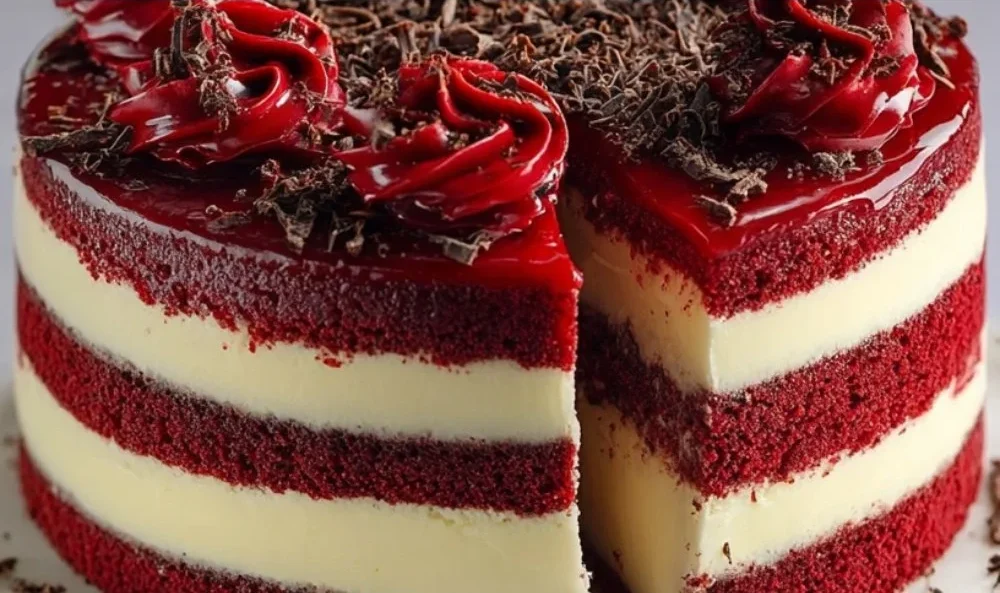
Making this cake is a sensory slow-burn. The first inhale is of warm chocolate cookie crust—baked, slightly toasty, and familiar. As the cheesecake sets and chills, it develops a dense, silken hush; a fork glides through it with a satisfying resistance that yields. The red velvet layers are soft, almost satin-like in mouthfeel, their cocoa present but restrained, lending a whisper of complexity. When assembled, the cream cheese frosting plays the part of both chorus and bridge: cool, slightly tangy, with a satin sheen against the deep red crumb.
Traditional technique here is more ritual than mystery: pressing crumbs into pans, letting layers cool, and allowing cheesecake to chill are acts rooted in patience. Many cultures emphasize rest in baking—allowing flavors to settle, textures to set. In the American South, for instance, frosting is an expression of hospitality; spreading it becomes a ceremonial last step before a cake is shown and broken. In homes where ovens are older and kitchens smaller, the cake might be made in stages across days, each pause adding anticipation to the final moment of sharing.
How different regions prepare their version
Where this cake travels, it bends. In the American South, bakers might emphasize cream cheese frosting more heavily, piping generous rosettes and pairing slices with coffee that is black and bold. In urban patisseries in the Northeast, the cheesecake layer could be enriched with a hint of citrus or wrapped in a finer sable crust. In parts of Asia where red is auspicious, the cake’s color gives it new life at weddings and Lunar New Year tables, sometimes adapted with local jams or a lighter whipped frosting. In Europe, it might be served in smaller, precisely cut slices, the richness tempered by espresso. Each variation is a dialogue between the original and the local, a conversation where texture and sweetness are the language.
Traditional ways this dish is shared or served
This cake often arrives at occasions that ask for ceremony: birthdays where candles are set trembling on glossy frosting; anniversaries where slices are shared slowly as stories are traded; weddings where tiers are carved with all the rituals those events demand. In many households, it becomes the “showstopper”—the dessert saved for visitors, for formal dinners, for the moment when a family’s best china is brought out. The way it is served—on a large platter, with crumbs scattered like confetti, jam bleeding slightly over the edge—can say as much about the gathering as the conversation at the table. In community bake sales and holiday potlucks, it is often presented as an offering, a visual promise that sweetness and care are present in abundance.
Storing the dish without losing its cultural essence
Storing this layered cake is an act of stewardship. Because of the cheesecake and cream cheese frosting, refrigeration is kind and necessary—not just for safety but for preserving texture. Wrapped with care, it will keep its structure and its memory; left at room temperature, its cream might lose its clarity and the cake its cool, satisfying contrast. In many cultures, the act of saving a slice for later is itself ritual: tucked into a foil-lined box, eaten the next morning with strong tea, it becomes a second act of the celebration. When transporting across distances—by train, plane, or car—support and insulation are as important as flavor: much like travel itself, the cake requires protection to arrive whole, ready to make new memories.
Cultural questions people often ask
People often ask: Why the red? It is both chemistry and choice—an echo of historical reactions and modern aesthetics. Others ask whether cheesecake and red velvet clash; the answer is in the balancing—tang and cocoa, density and crumb, all coaxed into accord by their shared sweetness. A frequent curiosity is about authenticity: is this cake “traditional”? It is and it isn’t; it is traditional in its reverence for celebration, and modern in its hybrid form. There are also questions about who this cake “belongs” to—American bakers, Southern tables, cosmopolitan pastry chefs—and the healthiest answer is that it belongs to everyone who slices it and passes it on.
A closing note on food, memory & travel
Food is a palimpsest of places we’ve been and the people we have loved. The Red Velvet Cheesecake Layer Cake is a particularly illustrative page: it carries Southern hospitality, urban pastry craft, and the universal impulse to make an occasion taste like a story. From a small cafe to a grand reception hall, it gathers voices—grandmothers who insist on thick frosting, young bakers curious about texture, travelers who buy a slice for warmth against a cold street. Each forkful is a small suturing of past and present, a way of carrying home inside a single dish.
Conclusion
For those who wish to explore a step-by-step, lovingly photographed version of this hybrid dessert, the original recipe can be found at Red Velvet Cheesecake Cake – Recipe Girl, which serves as a useful complement to the cultural and sensory travel notes here.
Red Velvet Cheesecake Layer Cake
Ingredients
Method
- Mix the chocolate cookie crumbs with melted butter until the mixture resembles wet sand.
- Press this mixture evenly into the bottom of a 9-inch springform pan.
- Bake in a preheated oven at 350°F (175°C) for 10 minutes, then allow to cool completely.
- Preheat the oven to 350°F (175°C). Grease and line two 9-inch round cake pans.
- In a large bowl, whisk together the flour, cocoa powder, baking soda, baking powder, and salt.
- In a separate bowl, blend sugar, vegetable oil, eggs, buttermilk, white vinegar, vanilla extract, and red gel food coloring until smooth.
- Gradually combine the wet ingredients with the dry ingredients, mixing just until smooth to avoid overmixing.
- Divide the batter evenly between the two pans and bake for 25 to 30 minutes, or until a toothpick inserted in the center comes out clean.
- Let the cake layers cool completely.
- In a medium bowl, beat softened cream cheese and sugar until smooth and creamy.
- Add eggs one at a time, beating well after each addition.
- Mix in vanilla extract and sour cream until fully incorporated.
- Pour the cheesecake batter over the cooled cookie crust and bake at 325°F (160°C) for 40 to 45 minutes, just until set.
- Allow to cool fully and then chill in the refrigerator.
- Place one red velvet cake layer on your serving plate and spread a thin layer of cream cheese frosting on top.
- Carefully add the chilled cheesecake layer on top, spreading a light layer of frosting on the cheesecake.
- Add the second red velvet cake layer on top.
- Finish by frosting the entire cake with the remaining cream cheese frosting, smoothing the sides and top evenly.
- Warm the strawberry or raspberry jam with water and lemon juice over low heat until it becomes pourable.
- Let the glaze cool slightly before gently pouring it over the top of the cake, allowing it to drip down the sides.
- Decorate the cake using piped cream cheese frosting, red velvet cake crumbs, and scatter dark chocolate chips for extra texture.