Red Velvet Strawberry Cheesecake
Introduction
This Red Velvet Strawberry Cheesecake synthesizes two classic preparations — a tender red velvet cake base and a dense, tang-forward cream cheese custard — into a single composed dessert. The objective is to achieve a defined dichotomy of textures: the fine, slightly crumbly crumb of a red velvet layer beneath a silken, cohesive cheesecake, finished with a bright, reduced strawberry topping. Execution depends on control of temperature, ingredient temperature, and the order of operations. The following analysis and procedural commentary focus on technique, flavour layering, and pragmatic timing so the finished product is structurally sound, visually precise, and balanced on the palate.
The culinary logic behind this dish
The recipe pairs the cocoa-tinged warmth of a red velvet crumb with a rich, acidic cream cheese matrix. Red velvet is not a chocolate-forward cake; it relies on a small amount of cocoa to add depth and to interact with acids for colour and mild bitterness. Buttermilk and vinegar are included to tenderize the crumb and to interact with leavening for lift. The cheesecake component is essentially an egg-stabilized dairy custard — cream cheese provides structure through protein networks, while eggs coagulate gently under residual heat to produce firmness without dryness. Sour cream contributes lactic tang and increases moisture retention, while a small added flour fraction mitigates weeping and improves slice definition. The strawberry topping is a simple maceration-to-reduction that introduces acidity, sweetness, and a glossy finish, cutting through the richness of the cheese layer and providing a contrasting textural note.
How to make Red Velvet Strawberry Cheesecake
This section reproduces the procedural sequence exactly as provided; refer to subsequent sections for technical rationale, timing adjustments, and troubleshooting.
Ingredients :
1 ½ cups all-purpose flour, 1 cup granulated sugar, 1 tablespoon cocoa powder, 1 teaspoon baking powder, ½ teaspoon salt, ½ cup unsalted butter, softened, 2 large eggs, 1 teaspoon vanilla extract, 1 tablespoon red food coloring, ½ cup buttermilk, 1 teaspoon white vinegar, 3 packages (8 oz each) cream cheese, softened, 1 cup granulated sugar, 3 large eggs, 1 teaspoon vanilla extract, ⅓ cup sour cream, 2 tablespoons all-purpose flour, 2 cups fresh strawberries, hulled and sliced, ¼ cup granulated sugar, 1 tablespoon lemon juice
Directions :
- Preheat your oven to 350°F (175°C). Grease and line a 9-inch springform pan with parchment paper., 2. In a large mixing bowl, combine the flour, sugar, cocoa powder, baking powder, and salt for the cake base., 3. Add the softened butter and mix until the mixture resembles coarse crumbs., 4. In a separate bowl, whisk together eggs, vanilla extract, red food coloring, buttermilk, and vinegar., 5. Gradually add the wet mixture to the dry ingredients, mixing until just combined., 6. Pour the red velvet batter into the prepared pan and spread evenly., 7. In another bowl, beat the cream cheese until smooth. Gradually add the sugar, beating until creamy., 8. Add the eggs one at a time, mixing gently after each addition. Stir in vanilla extract, sour cream, and flour until smooth., 9. Pour the cheesecake batter over the red velvet layer in the pan., 10. Bake for 50-60 minutes, or until the center of the cheesecake is set but slightly jiggly., 11. Allow the cheesecake to cool completely at room temperature, then refrigerate for at least 4 hours or overnight., 12. For the strawberry topping, combine strawberries, sugar, and lemon juice in a saucepan over medium heat. Cook until the strawberries release their juices and the mixture thickens slightly, about 5-7 minutes., 13. Let the topping cool, then spread over the chilled cheesecake., 14. Carefully remove the cheesecake from the springform pan and transfer to a serving platter before slicing.
Ingredient analysis through a chef’s lens
Each ingredient has a deliberate function. The modest 1 tablespoon of cocoa powder is not intended to create a chocolate cake; it gives supporting bitter notes and reacts chemically with the acidic ingredients to enhance colour and softness. The ½ cup of butter in the cake base acts as both flavor and shortener, generating a tender crumb by coating flour proteins and inhibiting excessive gluten formation.
Buttermilk and white vinegar perform two roles: acid-mediated tenderization and activation of leavening. The listed single teaspoon of baking powder contributes lift, but the overall batter structure depends on eggs and proper aeration during mixing.
On the cheesecake side, three 8-ounce packages of cream cheese form a dense, stable matrix. The egg-to-dairy ratio controls firmness; three eggs yield a custard that will set but remain creamy when removed at the advised “slightly jiggly” point. Sour cream reduces the perception of fat and improves mouthfeel by introducing fine acidity and moisture. The 2 tablespoons of flour are a stabilizer: it absorbs free water and reduces the risk of post-bake weeping, while giving cleaner slicing.
Strawberries, sugar, and lemon juice form an acid-sweet glaze that both complements and brightens the dairy richness. The reduction step concentrates flavor and yields a glossy, spoonable consistency suitable as a finishing layer.
Kitchen workflow & technique breakdown
Work with mise en place and controlled ingredient temperatures. Bring eggs, butter, cream cheese, and sour cream to near room temperature before beginning — this ensures smooth emulsions and reduces the need for aggressive beating that incorporates excess air. Overbeating the cream cheese can introduce lumps and air pockets; beat until homogenous and smooth, then add sugar gradually to maintain a stable emulsion.
Order of operations minimizes collapses and textural mismatches: prepare and bake the cake base first in the springform pan, then assemble the cheesecake batter and pour over while the base is at room temperature but still stable. Greasing and lining the pan are critical; parchment on the base and sides prevents adhesion and eases release. Use a reliable springform pan with a tight seal to avoid leakage.
When combining wet and dry elements for the cake, mix until just combined to preserve a tender crumb. Over-mixing develops gluten and tightens the crumb, which will fight against the dense weight of the cheesecake layer and can cause separation during baking.
For the strawberry topping, prepare it after the cheesecake is cooling so it reaches a stable temperature by the time the cake is fully chilled. This prevents integrating warm topping into the cooled cheese surface, which can cause melting and glazing faults.
Texture control, heat management & timing
Baking a dual-layer construct demands attention to oven heat and residual setting. The recipe’s 50–60 minute bake at 350°F is a compromise: the cake base requires full bake while the cheesecake requires gentle coagulation. The endpoint — “set but slightly jiggly” — is purposeful. The center will continue to set through carryover heat during cooling, yielding a smooth, custardy interior. Removing the cheesecake too early results in runniness; too late produces a dry, curdled texture and potential cracks.
Temperature gradients are the primary cause of cracking in cheesecakes. Although this recipe does not call for a water bath, if you are working in an oven with uneven heat or if the pan is thin, consider insulating the pan by placing it on a lower rack with a tray of hot water nearby (not inside the pan), but do so only as an informed option — altering bake methodology can change timing. Rapid cooling causes sudden contraction; therefore, allow the cake to cool to room temperature undisturbed before refrigeration. The recommended 4 hours (overnight preferred) allows full gelatinization of proteins and hydration of the crumb, improving slice integrity.
Professional variations
Variations can be used to emphasize texture or flavor without altering the core ingredients or quantities. For instance:
- Swap 1–2 tablespoons of the cake flour with cake flour for finer crumb if desired, but maintain the stated total quantity. (Note: this is an optional technique rather than a change to the provided ingredient list.)
- For a cleaner edge, chill the assembled, unreleased cake briefly and then run a warmed knife around the pan rim before unlatching the springform.
- To intensify strawberry flavor, fold a small amount of the cooled strawberry reduction into a portion of the cheesecake batter before pouring, bearing in mind this will alter marbling and requires precise control.
Maintain the integrity of the original ingredient set and directions when staging any variation.
Finishing touches & plating philosophy
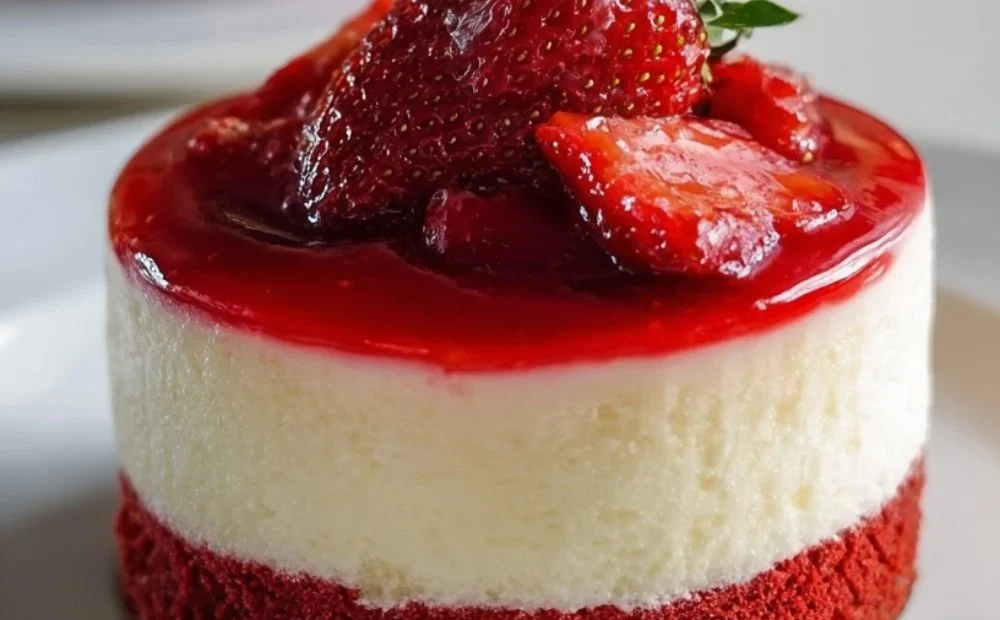
Final presentation should emphasize a clear, defined cross-section: red velvet base, white cream cheese body, and glossy red strawberry cap. After spreading the cooled topping, allow an additional 15–30 minutes in the refrigerator so the glaze surface settles and attains a smooth sheen. For servings, use a chef’s slicing technique: heat the knife in hot water, wipe dry between cuts, and pause briefly to maintain a clean edge. Portion size affects mouthfeel; slices too large overwhelm the balance of base to filling, while slices too small mute the textural contrast.
Plating can be restrained: a delicate smear of reduced strawberry coulis adjacent to the slice, a few halved fresh strawberries, and a micro-herb or neutral powdered sugar dusting will accentuate the dish without competing with its core flavors. Keep garnishes functional — they should add texture, acidity, or visual cue rather than gratuitous decoration.
Maintaining quality after cooking
Storage is refrigeration; the cream cheese custard will remain stable for 3–4 days when properly covered to prevent surface drying and odor absorption. For longer storage, freeze slices wrapped tightly in plastic and foil; thaw in the refrigerator slowly to preserve texture. Note that freezing can alter the cream cheese matrix slightly, producing minor granulation upon thaw; consume within 4–6 weeks for best quality.
Avoid exposing the chilled cheesecake to warm ambient temperatures for extended periods. If transporting, use an insulated carrier with ice packs to keep the internal temperature low and prevent the topping from softening.
Questions from home cooks (chef answers)
Q: Why is my cheesecake cracked?
A: Cracks typically result from rapid temperature changes, overbaking, or excessive mixer speed that incorporates too much air. Ensure a gentle bake, allow the center to be slightly jiggly, and cool slowly at room temperature before refrigeration. Minimize high-speed whipping once eggs are incorporated.
Q: The layers separated during baking — what happened?
A: Separation indicates the base may not have been sufficiently stabilized or was too underbaked before the heavier cheesecake batter was added. Ensure the red velvet layer is evenly distributed and not excessively loose; avoid over-hydrating the cake batter and mix only to combine.
Q: My strawberry topping is too thin — how to thicken?
A: Reduce over medium heat until juices concentrate and the mixture coats the back of a spoon. Cooling will further thicken the glaze. If necessary, a minimal cornstarch slurry can thicken, but that would alter the supplied ingredient list.
Q: How to slice perfectly?
A: Use a long, thin-bladed knife warmed in hot water and wiped dry between each stroke. Make deliberate, single-pass cuts rather than sawing.
Final chef notes
Precision in temperature, ingredient temperature, and timing distinguishes a competent bake from an exceptional one. Respect the sequence: a stable cake base, a smooth, homogenous cheesecake batter, and a completely chilled set before topping. Small details — incremental sugar addition to cream cheese, gentle mixing when incorporating eggs, and patient cooling — materially affect texture, mouthfeel, and visual quality. The recipe as provided is balanced for home-oven conditions; execute with controlled technique and the result will be an elegant, composed dessert with clear flavor delineation and refined texture.
Conclusion
For a visual walkthrough that aligns closely with the method described here, consult this recipe video: Strawberry Red Velvet Cheesecake (video). For an alternate written approach and troubleshooting tips, see this companion recipe: Easy Red Velvet Strawberry Cheesecake. For a no-bake perspective on combining red velvet and cheesecake elements, this resource provides a different technique to compare: Red Velvet Cheesecake (no bake cheesecake!) – Carlsbad Cravings.
Red Velvet Strawberry Cheesecake
Ingredients
Method
- Preheat your oven to 350°F (175°C). Grease and line a 9-inch springform pan with parchment paper.
- In a large mixing bowl, combine the flour, sugar, cocoa powder, baking powder, and salt for the cake base.
- Add the softened butter and mix until the mixture resembles coarse crumbs.
- In a separate bowl, whisk together eggs, vanilla extract, red food coloring, buttermilk, and vinegar.
- Gradually add the wet mixture to the dry ingredients, mixing until just combined.
- Pour the red velvet batter into the prepared pan and spread evenly.
- In another bowl, beat the cream cheese until smooth. Gradually add the sugar, beating until creamy.
- Add the eggs one at a time, mixing gently after each addition. Stir in vanilla extract, sour cream, and flour until smooth.
- Pour the cheesecake batter over the red velvet layer in the pan.
- Bake for 50-60 minutes, or until the center of the cheesecake is set but slightly jiggly.
- Allow the cheesecake to cool completely at room temperature, then refrigerate for at least 4 hours or overnight.
- Combine strawberries, sugar, and lemon juice in a saucepan over medium heat.
- Cook until the strawberries release their juices and the mixture thickens slightly, about 5-7 minutes.
- Let the topping cool, then spread over the chilled cheesecake.
- Carefully remove the cheesecake from the springform pan and transfer to a serving platter before slicing.