Indulge in Decadent Dark Chocolate Raspberry Cheesecake
Introduction
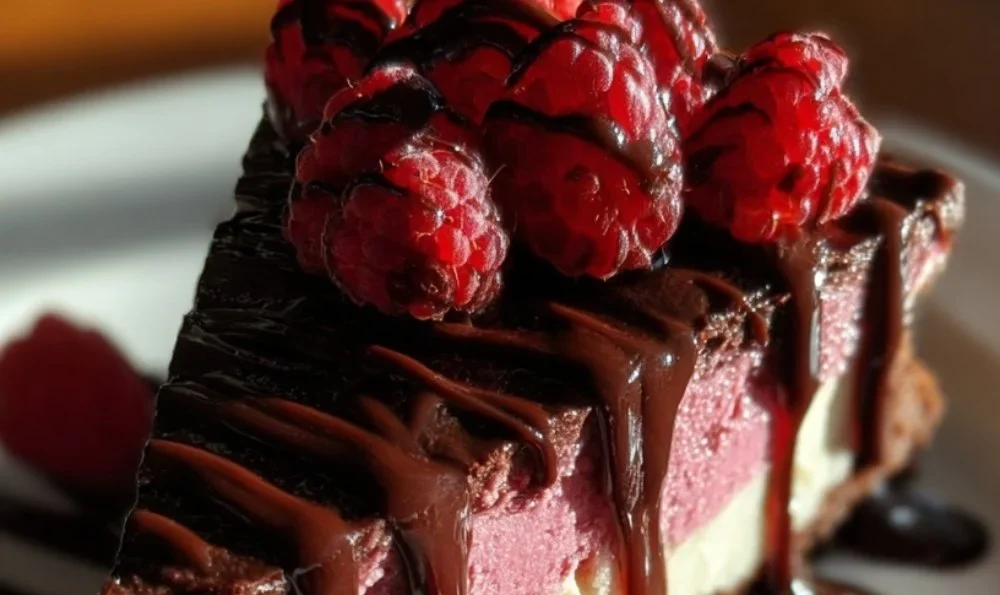
This Dark Chocolate Raspberry Cheesecake is a study in contrasting densities and pure flavor concentration: a crisp, chocolate cookie base; a satin, chocolate-suffused cream cheese matrix; and bright, acidic raspberries that cut through the richness. The objective when producing a dessert of this nature is to balance fat, sugar, and acid while managing heat so that the texture resolves into a velvet cream rather than a curdled custard. Contemporary pastry technique emphasizes control — precise temperature, restrained aeration, and disciplined timing — all of which are reflected in the approach described here. For reference on handling crisp, compact cookie bases and pressure techniques for an even foundation, consult the method used for similar dough consolidation in recipes such as chewy maple cinnamon cookies, where density and bind are critical to success.
The culinary logic behind this dish
Flavor and texture in this cheesecake derive from three primary components: the crust, the chocolate-laced filling, and the fruit. Each component plays a role in the overall sensory equation. The crushed chocolate cookies provide bitter-sweet cocoa notes and structural crunch; melted butter hydrates and glues those crumbs into a cohesive platform that transfers heat evenly during baking. The cream cheese base is high in fat and protein; adding melted dark chocolate lowers the emulsion’s freezing point and contributes cocoa tannins that contrast with the raspberry acidity. Eggs act as the setting agent, providing coagulation without the gelatinic mouthfeel of added gelatin; restrained incorporation prevents excess air, which would destabilize the set and produce undesirable cracking. Fresh raspberries deliver bright aromatic esters and immediate acidity; their placement influences both the visual presentation and the localized texture where fruit juices interact with the filling.
How to make Indulge in Decadent Dark Chocolate Raspberry Cheesecake
Execution is incremental: prepare a stable crust, create a homogenous, low-aeration filling, integrate fruit in a way that preserves its structure, and use temperature and time to achieve a smooth set. The following sections reproduce the original recipe components verbatim and then expand on the rationale for each directive.
Ingredients :
2 cups Crushed Chocolate Cookies, 1/2 cup Melted Butter, 16 oz Cream Cheese, 1 cup Granulated Sugar, 8 oz Melted Dark Chocolate, 1 tsp Vanilla Extract, 3 large Eggs, 1 cup Fresh Raspberries
Directions :
- Make the crust: Combine the crushed chocolate cookies and melted butter until uniformly moistened. Press firmly into the bottom of a pan., 2. Prepare the filling: Soften cream cheese until smooth, mix in sugar, then fold in melted dark chocolate and vanilla. Add eggs one at a time, mixing just until combined., 3. Add raspberries: Fold or arrange raspberries as desired., 4. Bake and observe: Bake until edges are set with a slight wobble in the center., 5. Cool and chill: Let cool before chilling in the refrigerator. Slice and serve with fresh raspberries.
Ingredient analysis through a chef’s lens
Crushed chocolate cookies: Provide structural strength and cocoa bitterness. Choice of cookie will alter fat content and crumble behavior; a denser cookie yields a sturdier base and less oil migration into the filling.
Melted butter: Hydrates and binds; quantity controls compactness and mouthfeel. Too little prevents cohesion; too much softens the crust and can cause grease separation on the plate.
Cream cheese: The backbone of texture. Softer, warmer cream cheese blends more readily and reduces the need for aggressive mixing. Temperature control here prevents lumps and ensures a homogeneous emulsion.
Granulated sugar: Sweetness, but also influences structure — sugar interferes with protein coagulation, raising the temperature at which eggs set and producing a silkier texture.
Melted dark chocolate: Contributes cocoa solids, bitter complexity, and additional fat. It also reduces water activity slightly, impacting chilling dynamics; temper the chocolate gently to avoid seizing when introduced.
Vanilla extract: Aromatic lift; stabilizes perceived sweetness and complements both chocolate and raspberry notes.
Eggs: The principal set agent. Adding them one at a time reduces the shock to the emulsion and minimizes incorporation of air, which can cause rising and cracking.
Fresh raspberries: Immediate acidity and delicate texture. Their high water content can create pockets of juice; positioning and gentle handling are imperative to prevent bleeding into the filling prematurely.
Kitchen workflow & technique breakdown
Efficiency reduces variability. Begin by setting up a mise en place: measure crumbs, melt and cool the butter, temper the dark chocolate until fluid and slightly tempered, and bring the cream cheese to a soft but still cool temperature. A typical workflow:
- Prepare pan and press crust immediately after combining crumbs and butter. Pressing while the butter is still pliable ensures a uniform layer.
- Clean and dry mixing tools to prevent water or residual emulsion from destabilizing the filling.
- Soften cream cheese to approximately 60–65°F (15–18°C) to facilitate smoothing without becoming too loose.
- Incorporate sugar into the cream cheese before introducing eggs; the abrasive action of sugar helps to achieve a smooth texture.
- Add eggs one at a time with minimal mixing; stop as soon as each egg disappears to reduce air entrainment.
This workflow mirrors efficient savory kitchens where sequence and cleanliness determine outcome; similar principles apply in pastry. For broader strategies on efficient sequencing in the kitchen, reference resources that cover general mise en place and day-to-day execution such as the collection of easy dinner recipes, which illustrate the importance of preparation and timing across multiple dishes.
Texture control, heat management & timing
The primary objective during baking is to coagulate proteins without denaturing them into a dry, curdled mass. Visual cues are superior to fixed times: watch for a set perimeter and a central wobble — the exact language of the recipe. That slight wobble indicates the center remains a fluid gelatinous mass that will firm as it cools, producing a creamy mouthfeel. Key controls:
- Oven temperature: Use an accurate oven thermometer. Many professional cheesecake recipes employ moderate temperature (325–350°F / 160–175°C) to minimize surface cracking. Rapid heating causes the exterior to set and contract while the interior continues to expand.
- Pan insulation: Consider insulating the pan by placing it on a lower rack or using a water bath if you regularly experience overcooking or cracks. A water bath increases thermal mass and evens heat transfer; its use is optional here but is a recognized technique for sensitive custards.
- Mixing speed: Low and deliberate. High-speed mixing introduces air bubbles that expand in the oven and collapse during cooling, causing fissures and an uneven texture.
- Bake until edges are set: The high-protein edge firms first. The slight wobble at the center should remain; residual heat will finalize the gel network during the cooling phase.
Timing remains a variable depending on pan size and oven behavior; pay attention to the look and feel rather than a strict minute count.
Professional variations
Without altering the foundational recipe, several professional variations can be used to refine presentation or flavor balance:
- Swap cookie bases: For a firmer contrast, use a higher-butter cookie or a thin blind-baked sable shell as a variation. This changes textural interplay but not the main filling mechanics.
- Chocolate intensity: Adjust chocolate percentage for balance. A 70% dark chocolate increases tannic bite and reduces perceived sweetness; an intensity that complements rather than overpowers raspberries is preferable.
- Fruit placement: For distinct fruit pockets, fold in a portion of the raspberries; for a marbled presentation, use a puree swirl introduced with a piping technique. Be mindful that purees add additional moisture.
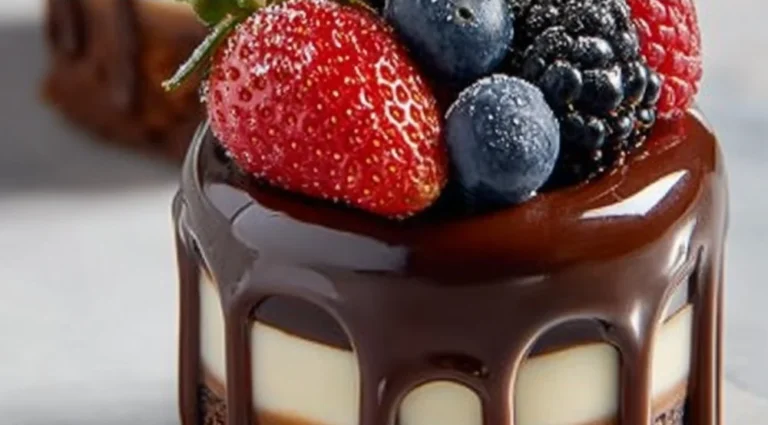
- Surface finish: A thin ganache or a neutral-gloss mirror will provide visual depth but adds an extra finishing step; apply only after the cake has chilled to prevent sliding.
Each variation modifies mouthfeel or flavor dynamics; choose deliberately to maintain structural integrity.
Finishing touches & plating philosophy
A restrained, technique-forward plating enhances perception of quality. Clean slicing is essential — let the cheesecake chill sufficiently so slices hold their form. Wipe the knife between cuts to avoid smearing. Garnish choices should echo the primary flavor drivers: lightly macerated raspberries for syrup that complements the dark chocolate, or a micro amount of flaky sea salt to heighten cocoa notes. Textural accents, such as a shard of tempered chocolate or a crisp tuile, provide contrast but should be thin and brittle so they do not overwhelm the creamy interior.
Balance the plate: a maximalist smear of coulis competes with the filling; instead, a small quenelle of raspberry coulis or a precise dot pattern will support the dessert without masking its intrinsic flavors.
Maintaining quality after cooking
Cooling and storage preserve texture and flavor. After baking, allow the cake to cool gradually to room temperature on a rack to prevent condensation from forming on the surface. Once at ambient temperature, cover and chill thoroughly — at least 4 hours, but ideally overnight — to let the structure stabilize and flavors integrate. For transport, maintain a chilled environment; warmth softens the fat matrix and increases the risk of slumping.
When reheating or refreshing, avoid high heat. Bring slices to a slightly warmer-than-fridge temperature (around 50–55°F / 10–13°C) to reveal optimal silkiness. For guidance on adapting recipes and trends for service and storage, consider cross-referencing contemporary techniques found in collections of viral trending recipes, which often address preservation and presentation for contemporary audiences.
Questions from home cooks (chef answers)
Q: Why is the filling sometimes grainy?
A: Graininess usually results from cold cream cheese or insufficient mixing of sugar; ensure the cream cheese is softened to the recommended consistency and incorporate sugar thoroughly to dissolve grains before adding eggs.
Q: How do I prevent raspberries from bleeding into the batter?
A: Very gentle folding and arranging whole berries at the end reduces rupture. If you need to fold them in, do so with a spatula and minimal strokes; alternatively, reserve some berries for surface decoration.
Q: Why did my cheesecake crack?
A: Rapid temperature shifts and overmixing (introducing air) are common causes. Slow, even heating and minimal aeration reduce cracking. A short rest in the oven with the door ajar post-bake often prevents sudden collapses.
Q: Can I make this in advance?
A: Yes. The cheesecake benefits from an overnight chill; it will maintain quality for up to 3–4 days refrigerated if covered properly.
Final chef notes
Precision is paramount. Respect ingredient temperatures, control aeration, and observe visual cues rather than relying solely on time. The interplay of bitter dark chocolate and bright raspberry acidity will reward careful restraint in sugar and mixing. When executed with attention to these fundamentals, this cheesecake achieves a sophisticated balance: a firm, cocoa-rich base, a velvet chocolate cream cheese center, and punctuated fruit interplay that completes the tasting arc.
Conclusion
For an alternate composition and additional reference on this flavor pairing, review the formulation at Dark Chocolate Raspberry Cheesecake – Yeyfood.com. If you plan to accompany the dessert with a beverage or are considering protein-enriched options for a lighter take, see the pairing notes at White Chocolate Raspberry Indulgence Protein Shake as a concept for contrast. For sourcing presentation elements or exploring catering-ready dessert solutions, consult offerings like Decadent Desserts – AJ’s Fine Foods.
Dark Chocolate Raspberry Cheesecake
Ingredients
Method
- Combine the crushed chocolate cookies and melted butter until uniformly moistened. Press firmly into the bottom of a pan.
- Soften cream cheese until smooth, mix in sugar, then fold in melted dark chocolate and vanilla. Add eggs one at a time, mixing just until combined.
- Fold or arrange raspberries as desired.
- Bake until edges are set with a slight wobble in the center.
- Let cool before chilling in the refrigerator. Slice and serve with fresh raspberries.