Raspberry Cream Napoleons
Introduction
Raspberry Cream Napoleons are an exercise in textural contrast and restrained sweetness. This composed pastry relies on three primary elements — a crisp, laminated shell; an aerated, lightly sweetened dairy component; and fresh, acid-driven fruit — to create a balance that reads as refined rather than ornate. As a professional chef I approach this dessert with attention to thermal behavior of laminates, structural considerations for assembly, and the variables that influence mouthfeel: flakiness versus chew, silky cream versus billowy aeration, and the punctuating brightness of ripe raspberries. Every decision, from oven temperature to the moment of plating, should support clarity of flavor and the integrity of the layers. The following sections articulate the culinary logic, technical steps, and plating strategy you need to execute Raspberry Cream Napoleons with consistent, restaurant-quality results.
The culinary logic behind this dish
At its core, a Napoleon is a study in layering. The laminated pastry provides brittle, tensile fragments that contrast with the cream’s softness; raspberries introduce acidity, texture, and aroma to reset the palate between bites. The choice of whipped heavy cream rather than pastry cream or custard shifts the textural emphasis toward lightness; it keeps the dessert feeling airy and bright, preventing cloying richness. Powdered sugar in the cream functions both as sweetener and stabilizer, slightly stiffening the whipped structure without introducing granular texture. Egg wash accelerates Maillard browning and encourages even color on the outermost layers; a precise oven temperature is essential to maximize lift and define discrete layers in the dough while minimizing fat bleed that would reduce flakiness. The dish is therefore a balance of heat, aeration, sugar chemistry, and fruit acidity — each element tuned to produce a coherent sensory profile: crisp, creamy, bright.
How to make Raspberry Cream Napoleons
Execution requires focus on sequence and temperature. Begin with cold laminated dough; the integrity of the layers depends on the butter remaining semi-solid during handling. Roll the pastry with minimal pressure to avoid compressing the layers, and use a sharp blade to cut clean rectangles — a ragged edge will delaminate during bake. Egg wash should be brushed thinly and evenly to avoid sealing the surface and trapping steam that prevents lift. Bake at the instructed 400°F (200°C) to achieve a rapid steam burst from the water in the dough, which separates layers and produces lift; watch color closely in the last minutes to prevent over-browning.
While the pastry cools, prepare the whipped cream: chill the bowl and whisk to aid rapid aeration and clean protein network formation. Powdered sugar dissolves quickly and helps maintain a smoother cream; add vanilla at the end to preserve aromatic top notes. Assemble immediately after pastry has cooled; the cooled pastry has optimal crispness, and if assembly is delayed for long, the cream will begin to weep and risk softening the pastry. When placing raspberries, handle them gently to avoid crushing; their juice will accelerate pastry softening upon contact. Plate in a manner that showcases the layers vertically; this preserves the intended contrast between textures in each bite. Throughout, respect timing: the window between warm pastry and whipped cream is narrow if you aim for maximum textural distinction.
Ingredients :
Puff pastry sheets, Heavy cream, Powdered sugar, Vanilla extract, Fresh raspberries, Egg wash (1 egg beaten with a tablespoon of water)
Directions :
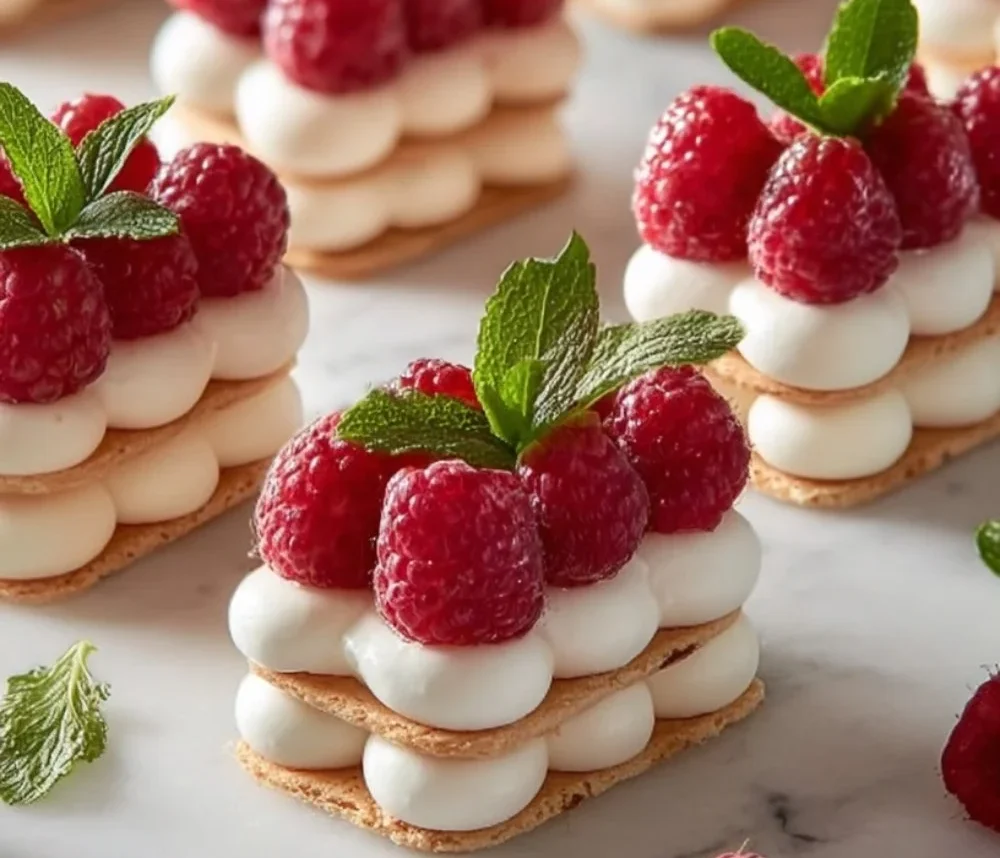
Preheat the oven to 400°F (200°C). Roll out the puff pastry sheets and cut them into rectangles. Place on a baking sheet, brush with egg wash, and bake until golden brown, about 15-20 minutes. While the pastry cools, whip the heavy cream with powdered sugar and vanilla extract until soft peaks form. Once the pastry is cooled, layer two pieces with whipped cream in between. Top with fresh raspberries and a dusting of powdered sugar. Serve immediately and enjoy!
Ingredient analysis through a chef’s lens
Puff pastry: This is the structural backbone. Commercial sheets are convenient and reliable; their quality dictates the lift achievable. The water-to-fat ratio and the consistency of butter layers within the dough determine how much steam is generated and how crisp the finished layers will be.
Heavy cream: Choose cream with ≥35% fat for stable aeration and a satin mouthfeel. Higher fat content forms a denser, silkier whipped cream with less likelihood of weeping. Temperature is critical — cold cream whips faster and produces firmer peaks.
Powdered sugar: Finely milled sugar dissolves without grittiness and contains a small amount of cornstarch that assists stabilization. It sweetens uniformly and adds body without altering the cream’s texture.
Vanilla extract: A finishing aromatic. Add near the end of whipping to preserve volatile compounds that provide top-note perfume.
Fresh raspberries: They bring acidity, texture, and aromatic esters that contrast the fat in the cream. Use ripe but firm berries to avoid excess juice release; overly soft fruit will collapse the pastry architecture.
Egg wash: A simple glaze that encourages even browning. The water in the wash thins the egg and prevents too-thick a coating, which could impede expansion.
Kitchen workflow & technique breakdown
Organization is essential. Mise en place for this recipe is minimal but time-sensitive. Begin by preheating the oven so the baking environment is stable. While the oven comes to temperature, roll and cut the pastry, arrange on sheets, and apply egg wash immediately before loading the oven to minimize exposure of cut edges to ambient humidity. Bake in the center of the oven for even heat distribution; if you bake multiple sheets, rotate them halfway through. Use a metal baking sheet — it conducts heat predictably and aids crisping.
Parallelize tasks: while pastry bakes, chill the mixing bowl and whip attachments in the freezer; this cuts down whipping time and reduces risk of over-whipping. Immediately after baking, move pastry to a rack to cool and begin whipping the cream while the pastry drains residual steam. Assembly should be grouped and rapid: when components are ready, assemble plates in sequence rather than one at a time to preserve final texture.
Texture control, heat management & timing
The principal battle is preventing the pastry from softening under moisture from the cream and fruit. Heat management begins in the oven: a high initial temperature produces strong lamination lift and sets layers quickly. Over-baking will dry the pastry and create an unpleasantly stiff result; under-baking will yield collapse and sogginess. Timing the cream is equally crucial — whip to soft peaks as directed; over-whipping creates a curdled texture, while under-whipping yields a cream that will spread and weep.
Cooling is the other variable: assemble only once the pastry is at or near room temperature. Warm pastry will steam and introduce moisture between layers. Handle raspberries last to reduce contact time between fruit juices and pastry. If the service demands a brief hold, refrigerate assembled napoleons on a rigid tray and cover lightly; however, anticipate some decline in crispness over time.
Professional variations
As a platform for variation, the recipe is adaptable while preserving its concept. A thin layer of neutral-flavored ganache or a smear of preserved fruit between the pastry and the cream can act as a barrier to moisture — used judiciously, this maintains crispness without overpowering the cream’s lightness. For increased structural stability in warmer service conditions, fold a small amount of mascarpone into the whipped cream to add body (note: this introduces a new ingredient and should only be used when appropriate to the service). Flavor layering can be enhanced with finely grated citrus zest in the cream for a bright counterpoint, or a very light dusting of freeze-dried raspberry powder for intensified fruit aroma without added moisture. Each variation should be evaluated for impact on texture and service time.
Finishing touches & plating philosophy
Finish with restraint: a light dusting of powdered sugar enhances visual contrast and introduces a subtle sweetness on first contact. Position raspberries to reveal the layers; avoid crowding the plate to let the textures read visually. Garnishes should serve function: a single raspberry on the top layer signals fruit content, while additional fruit on the side offers an immediate textural reset. Temperature of service matters — slightly chilled cream contrasted with ambient-temperature pastry reads as intended; avoid serving fully warmed cream. Use narrow tongs or a small offset spatula for precise placement to preserve the integrity of the layers.
Maintaining quality after cooking
Optimal flavor and texture exist within a short window after assembly. If you must hold napoleons for service, minimize the interval between plating and service. Store unassembled baked pastry wrapped loosely at room temperature for a day — refrigeration accelerates moisture migration and softens flake. Whipped cream should be kept chilled and prepared as close to service as possible. If advance assembly is unavoidable, consider refrigerating assembled desserts on a rigid tray and expecting some loss of crispness; reserve fresh raspberries for immediate garnish to reduce bleeding. For longer storage of components, freeze baked pastry in an airtight container and refresh in a hot oven for a few minutes to restore crispness before final assembly.
Questions from home cooks (chef answers)
Q: My pastry didn’t rise evenly. What went wrong?
A: Uneven rise often results from inconsistent lamination temperature or from compressing the dough during handling. Keep the butter and dough cold, use a single decisive cut rather than dragging the blade, and avoid overworking the pastry.
Q: The whipped cream wept after assembly. How can I prevent that?
A: Chill equipment prior to whipping and avoid under- or over-whipping. Soft peaks are specified; over-whipping destabilizes the emulsion, causing liquid separation. Also minimize contact time between fruit juices and the pastry.
Q: Can I use frozen raspberries?
A: Frozen berries release far more juice when thawed and will compromise pastry crispness. Use only fresh, firm raspberries for the top and garnish. If frozen must be used, keep them largely frozen until service and expect texture differences.
Q: The top layer lost its crunch within 30 minutes. Any remedy?
A: To prolong crunch, serve immediately. If advance service is necessary, consider placing a thin hydrophobic barrier (a very light brush of neutral chocolate or thin apricot glaze) between the pastry and cream; this reduces moisture migration but alters flavor minimally.
Q: How do I cut the Napoleon cleanly without crushing layers?
A: Use a very sharp, serration-free knife and wipe it between cuts. Pressing down with a straight motion will compress layers; score lightly first and complete the cut in a single smooth pass.
Final chef notes
Discipline in timing and temperature is the hallmark of a well-executed Raspberry Cream Napoleon. The recipe’s elegance comes from restraint: modest sweetness, crisp lamination, and fruit acidity in delicate balance. Respect the pastry’s thermal sensitivity and the cream’s short-term stability; manage your mise en place so that each component enters assembly at the correct moment. Small procedural choices — the thinness of an egg wash, the temperature of the mixing bowl, the momentum of your pastry-cutting motion — have outsized effects on the final product. When these variables are controlled, the dessert presents clean layers, pronounced texture contrast, and a focused flavor profile that reads as refined and purposeful.
Conclusion
For further reference on classic compositions similar to this Raspberry Napoleon, consult this detailed Raspberry Napoleon breakdown that highlights assembly and variations. If you are exploring ways to incorporate chocolate elements with fresh raspberries, this technique-focused Chocolate and Fresh Raspberry Cream Napoleons article demonstrates thoughtful pairing and presentation. For additional community-tested approaches and user feedback on layered raspberry napoleons, see this practical Raspberry Napoleons Dessert Recipe.
Raspberry Cream Napoleons
Ingredients
Method
- Preheat the oven to 400°F (200°C).
- Roll out the puff pastry sheets and cut them into rectangles.
- Place the cut pastry pieces on a baking sheet and brush them evenly with egg wash.
- Bake the pastry until golden brown, about 15-20 minutes. Watch closely in the last minutes to avoid over-browning.
- While the pastry cools, chill the mixing bowl and whisk in the freezer.
- Whip heavy cream with powdered sugar and vanilla extract until soft peaks form.
- Once the pastry is cooled, layer two pieces with whipped cream in between.
- Top each assembly with fresh raspberries and dust with powdered sugar.
- Serve immediately for best texture.