No-Bake Biscoff Layered Delight: Easy Recipe for Bliss!
Introduction
There are recipes that arrive like postcards from a place you have never been, and then there are recipes that feel like tucked-away alleys of cities you have known all your life. The No-Bake Biscoff Layered Delight: Easy Recipe for Bliss! is both postcard and alley — a confection that carries the soothed warmth of European café afternoons, the bright, improvised joy of home kitchens everywhere, and the whisper of childhood memories when a jar of cookie butter was first opened. I first tasted a cousin of this layered dream on a rain-softened afternoon in a small coastal town where the baker knew my name and the espresso sang like a hymn. The aroma was immediately familiar: caramelized sugar, cinnamon’s ghost, the kind of biscuit fragrance that can make strangers slow their steps.
If you travel looking for comfort in food, you learn quickly that comfort is often a translation of place. This is a dessert that translates Belgium’s speculoos tradition into a modern, no-fuss ritual. It belongs equally to the countertops of new parents, the picnic rugs of university students, and the extended tables of families who prefer to hand down a recipe by memory rather than by measurement. For a reader who loves to explore kitchens as if they were map coordinates, this dish is a small continent of flavor and story. If you need other quick, approachable dinners and sweets while you travel your own kitchen, see a collection of easy dinner recipes that pair well with evenings spent savoring something simple and true.
The origin story & regional influence behind this dish
To understand this layered delight is to trace the gentle migration of a spice cookie called speculoos. In the Low Countries, speculaas or speculoos are thin, spiced biscuits molded with figures and baked into crisp histories — holiday treats, market stall staples, and companions to tea. Lotus, a Belgian company, reimagined that familiar spice profile for the modern world; take the crisp, fragrant cookie, and give it a name that rolls off tongues in airports and suburban kitchens alike. Lotus Biscoff cookies and their buttery spread are now part of a quiet, global lineage: the transformation of a regional tradition into an international comfort.
This dessert is not bound to a single region because it borrows from many. The layered no-bake format nods to the American icebox cakes of the mid-20th century, where cookies softened overnight into a creamy mosaic — and echoes Mediterranean and Middle Eastern layered treats where custards and creams meet crunchy elements. The Biscoff element roots it in Northern European spice heritage; the cream and cheese elements tie it to French-style patisserie softness; the no-bake ease is pure contemporary global living: minimal fuss, maximum warmth. It is a dish that proves cultural influence in food is rarely a straight line, but a braided rope of trade, adaptation, and affection.
How to make No-Bake Biscoff Layered Delight: Easy Recipe for Bliss!
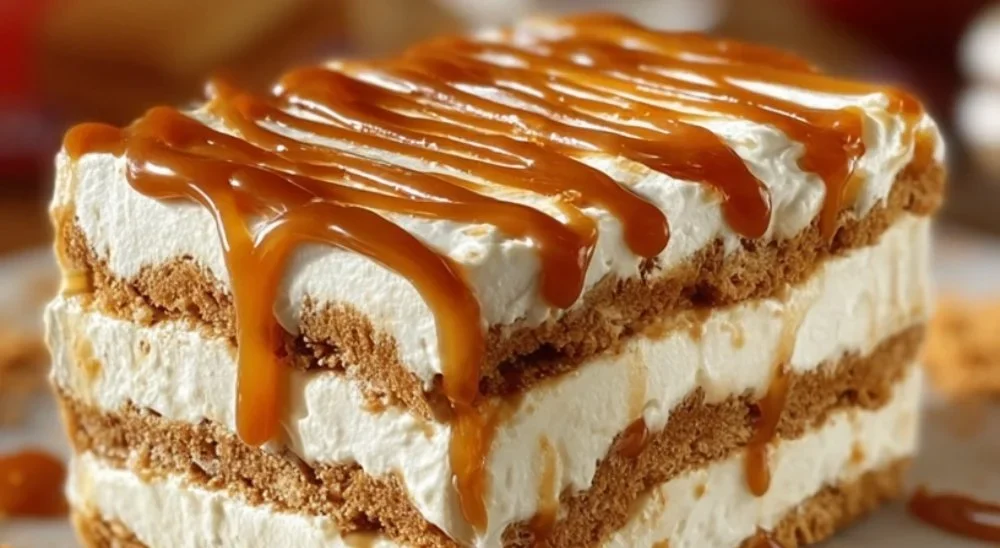
To make this dessert is to enter a practice of patience that pays off in soft layers and generous drizzles. It asks for little more than a steady hand, an honest freezer or fridge, and the ceremonial opening of a jar. There is a kind of ritual in pressing crumbs into a pan, in watching whipped cream find its airy peaks, and in layering whole cookies like little flags across a white field of cream. The process asks that you slow down, that you listen to the change in texture as crumbs yield to butter, the click of a spatula across a dish, the gentle settling of the top layer as the cookie butter threads its way across, glossy and lustrous.
This recipe sits comfortably beside the many simple and celebratory dishes you’ll find when wandering blogs and home-kitchen guides; if you enjoy the straightforward joy of viral favourites, you might explore similar ideas in quick easy recipes. But the joy here is less about novelty and more about how a few ingredients can become an emblem of hospitality: to slice this into squares and offer one to a neighbor is to deliver a small cultural handshake.
Ingredients :
2 packs Lotus Biscoff cookies (about 300g), ½ cup unsalted butter, melted, 2 ½ cups heavy cream, chilled, 1 cup cream cheese (softened), ½ cup powdered sugar, 1 tsp vanilla extract, ½ cup Biscoff cookie butter (melted slightly for drizzle), Crushed Biscoff cookies for garnish
Directions :
Crush half of the Biscoff cookies into fine crumbs. Mix with melted butter until sandy., Press firmly into the bottom of a greased or lined 9×9-inch dish. Chill for 15 minutes., Beat heavy cream until soft peaks form., In another bowl, mix cream cheese, powdered sugar, and vanilla until smooth., Fold whipped cream into the cream cheese mixture until fluffy., Spread half of the cream mixture over the cookie base., Add a layer of whole Biscoff cookies on top., Spread the remaining cream mixture evenly., Top with another layer of crushed Biscoff cookies., Drizzle melted Biscoff cookie butter generously across the top., Sprinkle with extra cookie crumbs for crunch., Refrigerate at least 4–6 hours or overnight for the layers to set., Slice into squares and enjoy!
Ingredients through a cultural & historical lens
Look at the ingredient list and you’ll see a tiny history lesson. Lotus Biscoff cookies carry the spice mix of cinnamon, nutmeg, and brown sugar — the aromatic legacy of trade winds that once carried spices from tropical islands to European ports. Butter and cream signal pastoral traditions, dairy-rich and celebratory, from the lowlands of Europe to the hills of France. Cream cheese is a later addition in the story; it is an American and European hybrid of technique and commerce, bringing a gentle tang that cuts through sweetness.
Powdered sugar and vanilla are the global language of desserts; they read the same in kitchens from Manila to Milan. And then there is cookie butter, a new entry into the pantry canon that repackages an old taste: the biscuit turned into a spreadable, spoonable nostalgia. The combination of these ingredients simultaneously honors an old biscuit tradition and celebrates contemporary convenience — convenience that has become cultural in itself. It is a modern ritual: open jar, spoon, and remember.
For those tracing trends, this dessert sits comfortably amid viral trending recipes — dishes that spread as quickly as their photos, because they speak a simple truth: we crave texture and sweetness tempered by something a little spiced, and we love recipes we can make without a long list of tools.
Cooking the dish: sensory notes & traditional techniques
This is not a dish of dramatic transformations; it is the slow, tender coaxing of textures into harmony. When you crush the cookies and fold them into melted butter, the kitchen fills with a scent that is both caramel and hearth. Pressing that sandy mixture into the pan is like laying the foundation of a small house: compact, steady, promising.
Whipping cream until soft peaks is a quiet triumph. The kitchen cools a little as the cream thickens; there’s a soft, cold breath to the air. Folding in the cream cheese mixture introduces a velvet that is both dense and ephemeral — it holds shape, yet it gives when you slice. The layering of whole cookies produces a satisfying contrast between cream and biscuit; those whole cookies soften just enough to become tender, like memory itself.
Traditional techniques here are less about flame and oven and more about rhythm and timing. The refrigeration step is as important as a baker’s breath before releasing a loaf: it allows the flavors to marry and the textures to settle. In many cultures, this slow waiting turns a dessert into an act of patience and communal anticipation — a dinner party dessert set overnight, a weekend treat kept until guests arrive. It is a recipe that rewards the deliberate.
How different regions prepare their version
Imagine the same recipe traveling through continents. In a Belgian home, one might celebrate the speculoos history by sprinkling a dusting of spice over the cream, a nod to the cookie’s origins. In the American South, people might add a whisper of espresso into the cream, borrowing a trick from tiramisu to deepen the sweetness with bitterness. In Mediterranean kitchens, toasted almonds or a scattering of candied orange peel might find their way to the top, invoking citrus groves that have perfumed desserts for centuries.
In colder climates, a version may include a layer of warm caramel or a quick-fruit compote to add a heated note to the chilled dessert. Elsewhere, families might substitute local biscuits — Marie in some parts of Europe or digestive biscuits in the UK — and the spirit of the dish remains: layered textures, shared memories, comfort in a square. If you love seeing how recipes morph as they travel, consider this one a passport-free lesson in culinary anthropology; and for more home-friendly dishes that adapt across kitchens, explore easy dinner recipes that embrace simplicity and flavor.
Traditional ways this dish is shared or served
This dessert is most often a communal affair. It is sliced into squares, laid on a plate, and passed around the table like a story. It appears at potlucks with a quiet confidence, on afternoon tea trays, at birthday gatherings where the cake table is generous with options. In homes where hospitality is measured by how much dessert is offered, this is the kind of square that disappears first.
Tradition dictates small rituals: a fork tapped on the rim of a glass before the first bite, the hush when someone takes their first mouthful, the immediate request for a second. Some families serve it alongside strong coffee — a ritual that crosses cultures — while others pair it with light, acidic fruit to cut sweetness. There are also quiet solo rituals: a single square wrapped for a friend, a late-night slice shared between two people and a movie, a square slipped into a lunchbox as a love note.
Storing the dish without losing its cultural essence
Storage is preservation not only of texture but of ritual. Keep this layered delight refrigerated, covered with a tight film to prevent the top from collecting other refrigerator odours. The flavors will merge and deepen over 24 hours, often becoming more cohesive and reflective of the dessert’s character. Freeze in portions for longer storage, but remember that freezing changes texture — a softened crumb may lose a little of its pristine crunch, though the comfort will remain.
When traveling with such a dessert, carriers and coolers become part of the story — think of a tiffin or a simple cake box. The act of transporting this dessert mirrors the cultural journey it took to arrive in your kitchen: wrapped, careful, intentional.
Cultural questions people often ask
Why Biscoff? People often ask why this particular cookie has captured such affection. The answer lies in that bridge between specificity and universality: its spices are particular, but its sweetness is universally welcoming. Why no-bake? In many modern households, no-bake desserts are the democratic option — they invite participation without the intimidation of time or temperature.
Others ask whether substitutions are acceptable. The recipe as presented is a story; different homes will tell it differently, but the strongest renditions respect the heart of the dish: spice-forward biscuits, lush cream, and patient chilling. Questions about origins — whether this is Belgian, American, or global — often end in the same conclusion: it is a hybrid, a new folk food that belongs to anyone who has made it and relished it.
A closing note on food, memory & travel
Food is the most generous of maps. A recipe like this does more than sate; it connects. Each bite folds in the scent of distant spice trade winds, the hum of kitchens in small towns, and the tender gestures of those who pass on recipes by memory. To travel with food is to carry light suitcases: a jar of cookie butter in the checked luggage, a story told and retold, a single square wrapped in wax paper for the road.
If you make this No-Bake Biscoff Layered Delight: Easy Recipe for Bliss!, treat it as an artifact of welcome. Share it on porches, in living rooms, at kitchen counters — let it be part of a conversation about where you’ve been, what you’ve tasted, and the small, sticky ways food keeps memory alive.
Conclusion
If you enjoyed the layered simplicity and shared ritual of this Biscoff creation, you might also appreciate other no-bake layered desserts that travel well and comfort easily, such as the Easy No-Bake Blueberry Delight – House of Nash Eats and the bright, citrusy Luscious Lemon Delight – Easy-to-Make, Layered Dessert. Both are lovely companions on a table that favors sweet, simple, and utterly convivial endings to a meal.
No-Bake Biscoff Layered Delight
Ingredients
Method
- Crush half of the Biscoff cookies into fine crumbs and mix with melted butter until sandy.
- Press the mixture firmly into the bottom of a greased or lined 9x9-inch dish and chill for 15 minutes.
- Beat the heavy cream until soft peaks form.
- In another bowl, mix cream cheese, powdered sugar, and vanilla until smooth.
- Fold the whipped cream into the cream cheese mixture until fluffy.
- Spread half of the cream mixture over the cookie base.
- Add a layer of whole Biscoff cookies on top.
- Spread the remaining cream mixture evenly over the cookies.
- Top with another layer of crushed Biscoff cookies.
- Drizzle melted Biscoff cookie butter generously across the top and sprinkle with extra cookie crumbs.
- Refrigerate for at least 4–6 hours or overnight for the layers to set.
- Slice into squares and enjoy!