Sex in a Pan Recipe: The Best Pudding Dessert Ever
Introduction
Sex in a Pan is a composed, multi-layered chilled dessert that relies on contrast — a toasted, nutty base; a tangy, stabilized cream-cheese layer; two distinct pudding strata; and a whipped topping to finish. The recipe as provided is concise and efficient; my approach here examines the technical choices embedded in that formula and explains how to execute each stage with intention. The result should be an assured, reliably structured dessert that balances fat, sugar, and moisture while delivering clear textural demarcation between layers.
This preparation benefits from precise temperature control, controlled hydration of instant pudding mixes, and deliberate handling of the crust to preserve crumb integrity under wet layers. For those who develop a pastry workflow, these techniques translate to other layered desserts and are discussed further in sections on workflow and texture control. If you study composed desserts across categories — from bars to chilled tarts — you will find the same principles at work as in this recipe; see related methodology in desserts and sweet treats for broader context.
The culinary logic behind this dish
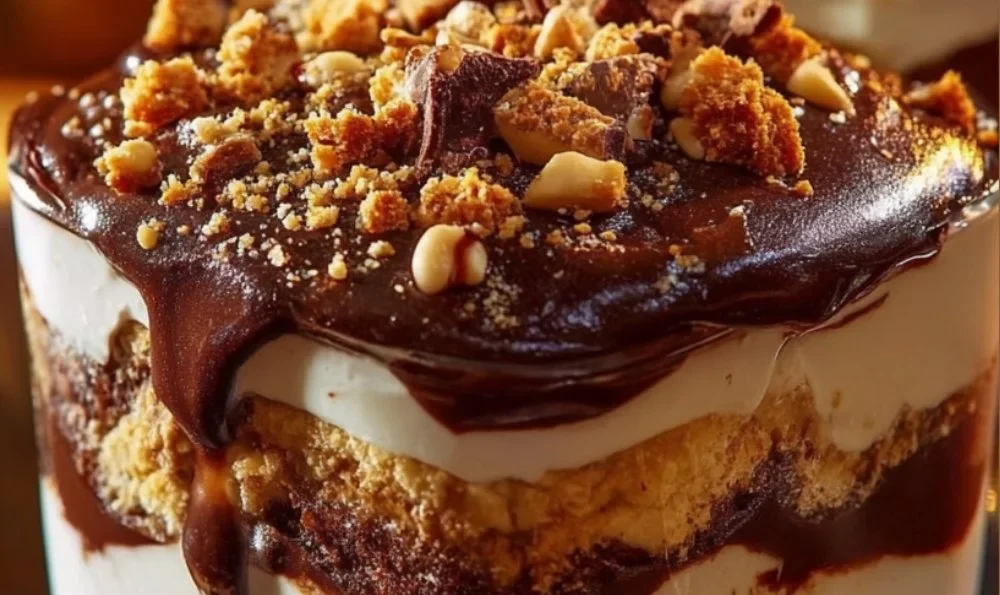
The architecture of Sex in a Pan is built around contrasts: a brittle, buttery pecan crust anchors layers that are otherwise creamy and soft. The cream cheese layer introduces acidity and fat that cut through the sweetness of both puddings; this is essential to prevent cloying after two pudding layers and copious whipped topping. Using instant pudding mix accelerates gelation via pre-gelatinized starches and sugar; reducing the liquid compared to package directions increases final firmness and promotes clean separation between the vanilla and chocolate layers.
The crust functions not only as flavor and texture counterpoint but also as a moisture-management device. Successful assembly requires a crust with sufficient structural cohesion to resist shearing when spreading subsequent layers. Toasting the pecans and baking the crust until fragrant develops nutty aromas and Maillard-derived browning compounds that read as savory undercurrents against the otherwise sweet matrix. The cream cheese layer acts as a buffer: it is denser than whipped cream but lighter than a custard, helping to isolate the crust from the wetter pudding layers and to provide a stable plane for clean slicing.
How to make Sex in a Pan
Ingredients :
For the Pecan Crust:, 1 cup chopped pecans, 3 tablespoons granulated sugar, ½ cup unsalted butter, melted, 1 cup all-purpose flour, For the Cream Cheese Layer:, 8 ounces cream cheese, softened, 1 cup powdered sugar (or ½ cup for less sweetness), 1 cup Cool Whip or freshly whipped cream, For the Vanilla Pudding Layer:, 5.1 oz instant vanilla pudding mix, 2 cups cold milk (less than package directions for structure), For the Chocolate Pudding Layer:, 5.1 oz instant chocolate pudding mix, 2 cups cold milk (creates firmer pudding layer), For the Topping:, 2 cups Cool Whip or freshly whipped cream, Shaved chocolate for garnish (optional but recommended)
Directions :
Preheat oven to 350°F and lightly spray a 9×13 inch baking dish. Combine chopped pecans, sugar, melted butter, and flour until evenly mixed. Press firmly into prepared dish to create an even layer. Bake 20 minutes until lightly golden and fragrant., Allow crust to cool completely before adding other layers. Speed this up by refrigerating for 15-20 minutes to prevent cream cheese layer from melting., Beat softened cream cheese and powdered sugar until smooth (ensure cream cheese is at room temperature to avoid lumps). Gently fold in 1 cup Cool Whip until light and fluffy., In separate bowls, prepare both pudding mixes using only 2 cups milk each (instead of usual 3 cups). Whisk vigorously for 2 minutes until completely dissolved and beginning to thicken., Spread cream cheese mixture evenly over cooled crust, taking care not to pull up crust. Gently spread vanilla pudding layer, followed by chocolate pudding layer. Use offset spatula for smoothest application., Top with remaining 2 cups Cool Whip, spreading evenly to edges. Garnish with chocolate shavings if desired for elegant presentation., Refrigerate for at least 2 hours before serving (overnight is ideal). This allows flavors to meld and layers to set properly.
Ingredient analysis through a chef’s lens
Every ingredient has a structural or flavor function. Pecans contribute oil and crunch; their surface fats also bind with flour and butter to create a cohesive crust when baked. Sugar in the crust lightly caramelizes during the 20-minute bake, improving browning and aroma. The ratio of flour to fat here is calibrated for a compact, sliceable base — too little flour yields grease and collapse, too much yields a dry, crumbly foundation.
Cream cheese provides acidity, density, and emulsified fat. Powdered sugar stabilizes the cream cheese and dissolves more evenly than granulated sugar, minimizing graininess. Using Cool Whip or freshly whipped cream alters mouthfeel: Cool Whip gives stability and longer cold-serve shelf life due to stabilizers; freshly whipped cream provides a silkier, fresher dairy flavor but requires immediate consumption. The puddings are effectively starch gels; reducing milk tightens their gel network, which is why the recipe specifies 2 cups instead of the box recommendation. This choice prioritizes distinct layers and easier slicing.
Kitchen workflow & technique breakdown
Organization is critical for composed desserts. Begin by preheating the oven and preparing the crust so bake time can be simultaneous with mise en place. While the crust bakes and cools, soften the cream cheese to room temperature; cold cream cheese results in lumps that require excessive beating and can overwork the mixture, introducing air and a whipped texture that compromises stability.
To expedite cooling without thermal shock to the crust, place the pan on a wire rack at room temperature for 10 minutes, then transfer to the refrigerator for 15–20 minutes as suggested. This staged cooling minimizes moisture reabsorption into the crust. Prepare puddings in separate bowls side-by-side and whisk each for a full two minutes; the initial vigorous whisking hydrates the starch uniformly, preventing localized pastes and ensuring consistent gelation. Assemble layers in a linear flow: crust → cream cheese → vanilla pudding → chocolate pudding → whipped topping. Use tools such as an offset spatula for spreading; working from the center outward with light, deliberate strokes prevents disturbance of lower layers.
For those managing larger production volumes or adapting timing, consider finishing the crust a day ahead and keeping it chilled; fill just before service to preserve optimal texture. For stepwise method inspiration applicable to other recipes, review technique-focused dinner routines at easy dinner recipes which deploy similar mise en place strategies.
Texture control, heat management & timing
Texture here is achieved by controlling hydration, temperature, and shear. Hydration: reducing milk in instant pudding increases starch-to-liquid ratio, forming a firmer network. Temperature: both the cream cheese mixture and puddings must be cool before assembly; warm fillings will mobilize butter in the crust and liquify layers, causing seepage and loss of clean strata. Shear: when combining cream cheese with powdered sugar, use a stand mixer or hand mixer on low to medium; avoid high speed that incorporates excess air and transforms the layer into an aerated mousse rather than a dense buffer.
Baking at 350°F for 20 minutes browns the crust without overbaking; watch for a uniform light golden color and a fragrant nutty aroma — both are reliable indicators. Cooling is as important as baking: a fully cooled crust prevents migrating moisture and preserves edge definition. Final chilling time is a structural setting period: two hours minimum ensures gelatinized pudding starches reach their service viscosity; overnight chilling increases cohesion and deepens flavor meld.
Professional variations
From a professional standpoint, the formula supports multiple controlled variations without altering ingredient lists. For sharper contrast, increase the toasted pecans to 1¼ cups and reduce flour by 2 tablespoons to intensify nuttiness and create a more pronounced crunch. Substitute freshly whipped cream for Cool Whip in the topping and cream-cheese layer for superior flavor if the service window is short and refrigeration is consistent.
For plated portions, consider cutting with a hot, dry knife between passes to achieve glass-clean slices: dip the blade in hot water, dry, make the cut, and repeat. If offering a gluten-free variation, replace the all-purpose flour with a measured gluten-free flour blend of similar absorbency; however, this will affect texture and may require slight increases in binder. To incorporate current trends and cross-reference viral adaptations, consult viral trending recipes for inspiration on presentation and portioning.
Finishing touches & plating philosophy
Finishing should reinforce the dessert’s architecture. Even, thin chocolate shavings provide a contrast in color and a whisper of bitter cocoa to offset the cream. Use a vegetable peeler on a high-quality dark chocolate bar and place shavings strategically rather than scattering — a central ribbon or staggered rows read as professional. A final, light dusting of finely grated toasted pecan can echo the crust’s aromatics.
When plating individual portions, consider temperature and moisture transfer: place slices on pre-chilled plates for immediate service; ambient warmth will soften the whipped topping. For buffet or family-style presentation, cut squares approximately 2×2 inches to maintain layer proportion and prevent topping collapse during service.
Maintaining quality after cooking
Storage and service temperature dictate the dessert’s textural longevity. Refrigerate covered to prevent desiccation and absorption of refrigerator odors. When using Cool Whip, maintain cold chain to preserve its stabilizers; freshly whipped cream versions deteriorate faster and will weep if held beyond several hours. For optimal texture, serve within 48 hours — after this, starch retrogradation in the puddings and moisture migration can darken the crust and soften the base.
If you must transport, assemble until the chocolate pudding layer and then transport chilled, adding the final whipped topping on-site to protect presentation. When reheating is considered (not recommended for this cold dessert), note that it will lose its defining layered texture.
Questions from home cooks (chef answers)
Q: Why reduce the milk for the pudding mixes? A: Reducing milk increases the solids-to-liquid ratio, producing a firmer gel. This reduces lateral migration between layers and yields cleaner slices.
Q: Can I use store-bought whipped topping versus fresh cream? A: Yes. Store-bought stabilized whipped toppings such as Cool Whip provide longer shelf life and greater structural stability, particularly in warmer service environments. Fresh whipped cream yields superior flavor but requires immediate consumption.
Q: How do I prevent the crust from becoming soggy? A: Ensure the crust is fully cooled before assembly and avoid overly thin cream-cheese application that might fail to act as a moisture barrier. If transport is required, consider glazing the crust with a thin layer of melted chocolate as an additional barrier.
Q: Why is it important to whip the pudding mixes vigorously for two minutes? A: Vigorously whisking ensures uniform hydration of starch granules and sugar dispersion, preventing grainy pockets and ensuring predictable gelation and texture.
Q: How long can I store leftovers? A: Refrigerator storage up to 48 hours preserves texture best. After that, expect noticeable quality decline due to moisture migration and starch changes.
Final chef notes
This recipe performs best when each step is executed with intention. Temperature control, hydration management, and gentle handling are the pillars of success. The components — crust, cream cheese buffer, dual puddings, and topping — are deliberately calibrated to produce contrast and cohesion. When executed with attention to detail, Sex in a Pan transforms a simple pantry set of ingredients into a composed dessert with professional polish.
For additional reference on composed dessert techniques and to see parallel implementations in other recipes, you may find methods and ideation useful in pieces such as the handling of shortbreads and nut crusts in chewy maple cinnamon cookies.
Conclusion
For further reading and variations on this classic, consult these established recipes and write-ups: Sex in a Pan – Kim’s Cravings, a staple rendition with historical notes; Sex in a Pan – Jo Cooks, which offers a clear, user-friendly presentation; and Pudding in a Pan (Sex in a Pan) – A Pretty Life In The Suburbs, providing additional assembly tips and serving ideas.
Sex in a Pan
Ingredients
Method
- Preheat oven to 350°F and lightly spray a 9×13 inch baking dish.
- Combine chopped pecans, sugar, melted butter, and flour until evenly mixed.
- Press firmly into prepared dish to create an even layer.
- Bake for 20 minutes until lightly golden and fragrant.
- Allow crust to cool completely before adding other layers; refrigerate for 15-20 minutes to speed this up.
- Beat softened cream cheese and powdered sugar until smooth, ensuring cream cheese is at room temperature to avoid lumps.
- Gently fold in 1 cup Cool Whip until mixture is light and fluffy.
- Prepare both pudding mixes in separate bowls using only 2 cups milk each; whisk for 2 minutes until dissolved and thickened.
- Spread cream cheese mixture evenly over cooled crust.
- Gently spread vanilla pudding layer, followed by chocolate pudding layer.
- Top with remaining 2 cups Cool Whip, spreading evenly to edges.
- Garnish with chocolate shavings if desired.
- Refrigerate for at least 2 hours before serving (overnight is ideal).